
For wholesalers, importers, distributors, and private-label brands, animal-shaped marshmallows offer more than an attractive snack. Their shapes, sizes, colors, flavors, and packaging formats can be adapted to different consumer preferences and sales channels. Whether used in candy gift boxes, party favors, holiday collections, supermarket confectionery sections, or promotional products, they can help brands build a recognizable product identity. Understanding the available animal designs, manufacturing considerations, product dimensions, and quality characteristics is essential when selecting the right products for a target market.
Animal Shaped Marshmallows-1
1. What Are Animal Shaped Marshmallows?
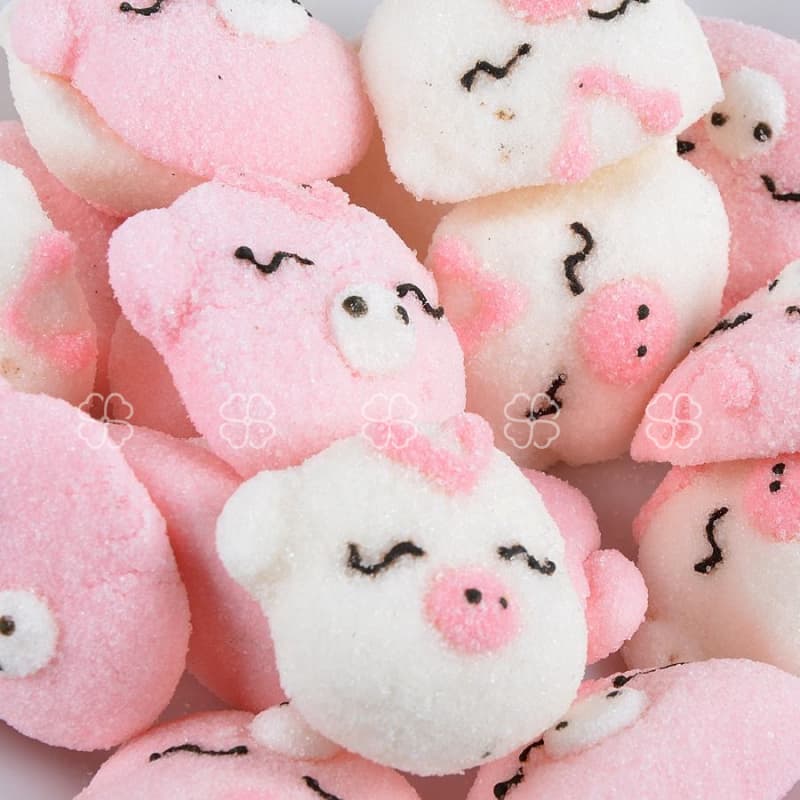
Animal Shaped Marshmallows are soft, aerated confectionery products molded or formed into recognizable animal figures. Unlike conventional cylindrical or pillow-shaped marshmallows, they feature decorative outlines and three-dimensional details that resemble animals such as bears, rabbits, chicks, pigs, pandas, cats, dogs, and other popular characters.
These products generally share the basic characteristics of traditional marshmallows: a light structure, a soft and elastic bite, a sweet taste, and an aerated texture. Their distinguishing feature is their appearance. Depending on the manufacturing method and mold design, an animal marshmallow may have a relatively simple silhouette or a more detailed shape with ears, paws, facial features, wings, tails, and other recognizable elements.
Animal-shaped designs are particularly suitable for products targeting children and family-oriented consumers. They can also support themed confectionery collections, including Easter candy, Christmas assortments, birthday party treats, zoo-themed snacks, and novelty gift products.
For buyers exploring the wider category, understanding the different types of marshmallow candy can help clarify how animal-shaped varieties fit into a broader product portfolio. Traditional marshmallows, decorative shapes, flavored varieties, and customized designs can serve different retail and promotional purposes.
2. Popular Animal Designs in the Marshmallow Market
Animal selection is one of the most important factors influencing the visual appeal of animal-shaped confectionery. Familiar animals are easy for consumers to recognize, while distinctive designs can make a product stand out on retail shelves. Buyers should consider the age group, cultural preferences, seasonal demand, and intended packaging format when selecting animal designs.
2.1 Bear-Shaped Marshmallows
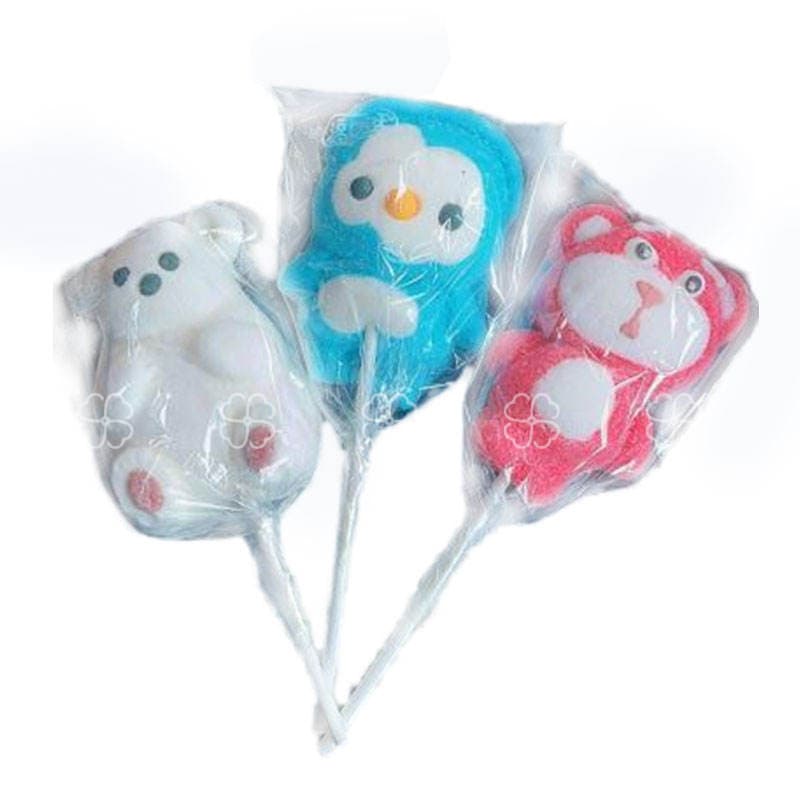
Bears are among the most recognizable animal-inspired confectionery designs. Their rounded bodies, small ears, and friendly facial expressions make them suitable for children’s snacks, gift boxes, and everyday candy assortments. Bear-shaped marshmallows can be designed in different colors, including white, pink, brown, and pastel shades.
Simple bear silhouettes are suitable for compact products, while more detailed designs can feature distinguishable ears, arms, legs, and facial details. For commercial buyers, bear designs offer broad application potential because the animal is familiar across many international markets.
2.2 Rabbit-Shaped Marshmallows
Rabbit-shaped marshmallows are especially suitable for spring-themed and Easter confectionery collections. Long ears, rounded faces, and compact bodies create an easily recognizable design. White, pink, and pastel-colored rabbits can be used in seasonal assortments, party favors, and gift packaging.
Depending on the intended product style, rabbit marshmallows can feature upright ears, sitting poses, or simplified character outlines. Retailers can combine several rabbit designs with other spring-themed candies to create coordinated seasonal collections.
2.3 Chick and Duck-Shaped Marshmallows
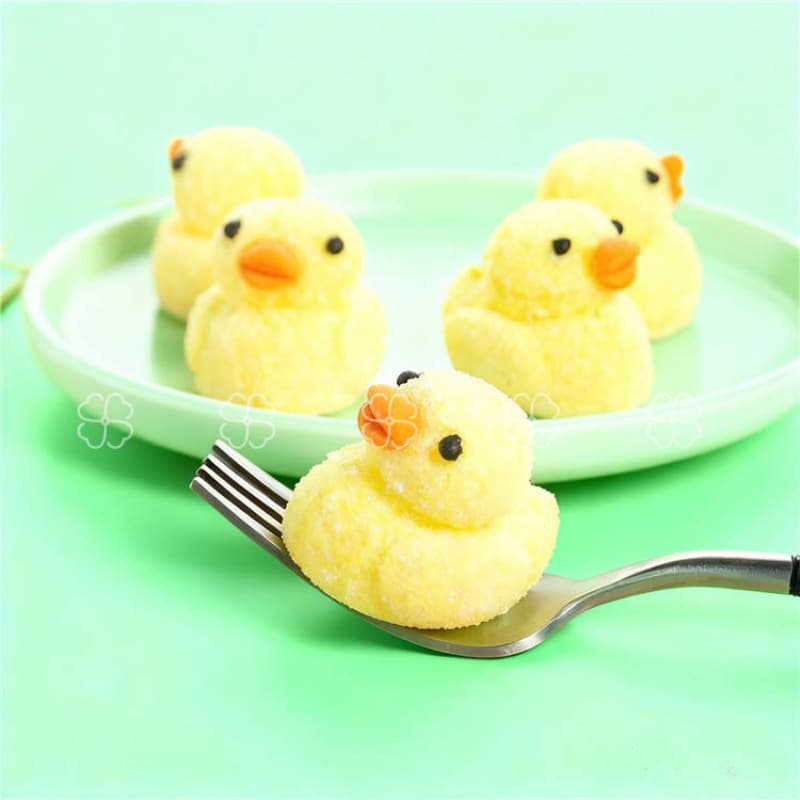
Chicks and ducks are popular choices for colorful, playful confectionery. Their rounded bodies and simple silhouettes work well with yellow, white, and orange color combinations. These designs are suitable for Easter assortments, children’s party products, and animal-themed snack collections.
Because these shapes often use relatively simple outlines, they can be adapted to different sizes and packaging formats. A collection containing chicks, ducks, and rabbits can also create a consistent springtime product theme.
2.4 Panda and Other Wild Animal Shapes
Pandas, lions, elephants, monkeys, and other wild animals can help brands develop more distinctive product collections. Panda designs are particularly recognizable because of their contrasting black-and-white appearance. Lions and elephants offer opportunities for zoo-themed or safari-inspired assortments.
Wild animal designs can be combined into mixed packs, allowing consumers to discover several characters in one package. For wholesalers, this format may be useful when developing novelty confectionery lines for supermarkets, specialty candy stores, and gift retailers.
2.5 Cat, Dog, and Other Pet-Inspired Designs
Cats and dogs have strong recognition among consumers who enjoy animal-themed products. Marshmallows shaped like puppies, kittens, and other familiar pets can be developed with different ear shapes, facial expressions, and color combinations.
These designs may be suitable for birthday party assortments, children’s gift bags, and novelty candy collections. Buyers can also consider combining several pet-inspired designs to create a mixed-animal product rather than relying on a single character.
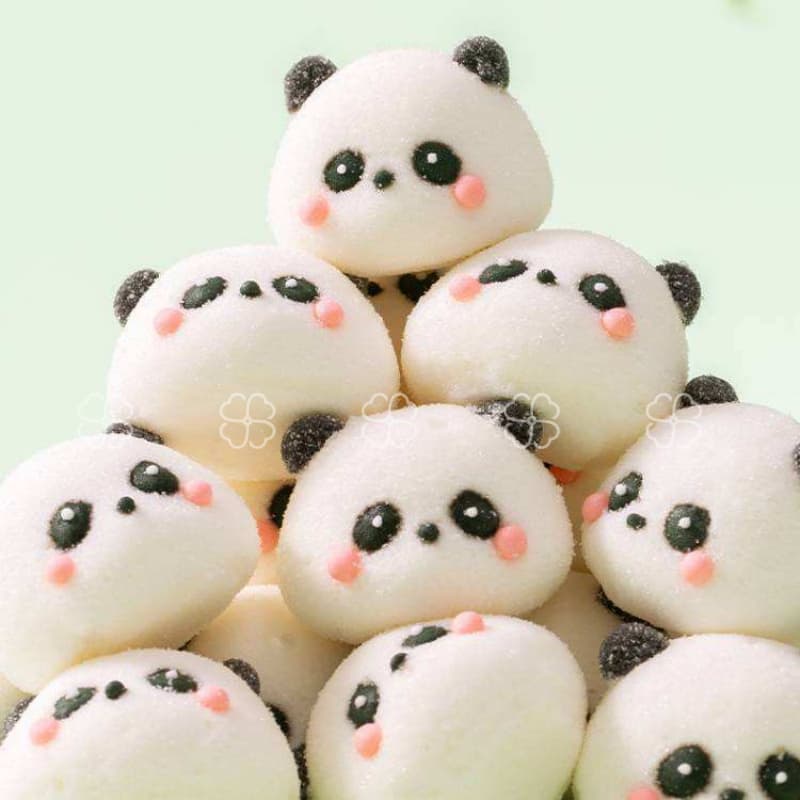
Panda Marshmallows
3. Common Sizes and Shapes of Animal Shaped Marshmallows
Size affects product appearance, serving portions, packaging efficiency, and the consumer experience. A small animal marshmallow may be suitable for mixed candy bags or decorative toppings, while a larger figure can function as an individual novelty treat. The ideal dimensions depend on the design, mold structure, product density, and packaging requirements.
There is no single universal size standard for animal-shaped marshmallows. Manufacturers and buyers should confirm the dimensions and weight of each design through product samples and technical specifications. The following table provides illustrative size categories for product planning, not fixed industry standards or confirmed TOPHEART specifications.
| Size Category | Illustrative Length | Typical Applications | Product Considerations |
|---|---|---|---|
| Mini | 1–2 cm | Mixed candy bags, toppings, party favors | Compact appearance and convenient portioning |
| Small | 2–3 cm | Retail snack packs and seasonal assortments | Balance between visible details and pack quantity |
| Medium | 3–5 cm | Individual novelty treats and gift boxes | More room for recognizable animal features |
| Large | 5 cm and above | Specialty gifts and display-oriented products | Packaging protection and shape stability become important |
In addition to length and width, buyers should evaluate thickness, individual piece weight, and the overall dimensional consistency of each animal design. A figure with protruding ears or legs may require a different mold layout and packaging arrangement from a compact rounded character.
For mixed packs, it is also important to determine whether different animal designs have similar dimensions and weights. Consistency can make filling, counting, and retail presentation easier. When comparing shaped marshmallows, buyers should review the actual product shape, size range, appearance, and intended use rather than relying only on product names or illustrative photographs.
4. Key Features That Define High-Quality Animal Marshmallows
Visual design attracts attention, but product quality determines whether a confectionery item can deliver a consistent consumer experience. Buyers should evaluate several characteristics when reviewing animal-shaped marshmallow samples.
4.1 Soft and Elastic Texture
A desirable marshmallow texture is generally soft, light, and slightly elastic. When consumers bite into the product, it should feel tender rather than excessively hard, dry, or sticky. Texture is influenced by the formulation, aeration process, moisture balance, and storage conditions.
For animal-shaped varieties, the texture must also support the product’s structure. A marshmallow that is too soft may lose its definition during handling, while one that is too firm may not deliver the expected eating experience.
4.2 Clear Animal Details
Recognizable animal features are essential to the product concept. Ears, paws, wings, tails, and facial outlines should be sufficiently defined for consumers to identify the intended animal. The level of detail depends on the mold design, product formulation, and manufacturing process.
Buyers should inspect samples for incomplete shapes, damaged edges, excessive deformation, and inconsistent details. This is especially important when the product is intended for gift boxes or premium novelty collections where visual presentation has a strong influence on perceived value.
4.3 Attractive and Consistent Colors
Color is another important part of animal-themed confectionery. White bears, pink rabbits, yellow chicks, and black-and-white pandas are examples of familiar visual combinations. Multiple colors can make mixed assortments more engaging, but the color design should remain consistent with the intended animal identity.
Buyers should check color uniformity, appearance after packaging, and consistency between production batches. Any color additives used in the formulation should comply with the applicable food regulations in the destination market.
4.4 Flavor Variety
Animal-shaped marshmallows can be developed in different flavor directions, depending on the product concept and target consumers. Common confectionery flavor ideas include vanilla, strawberry, orange, grape, and other fruit-inspired profiles.
Some products use one flavor across the entire assortment, while others combine different flavors and colors. For wholesale buyers, flavor variety can help create multiple product options without changing the basic animal-themed concept.
4.5 Shape Retention and Handling Stability
Animal figures should maintain their recognizable appearance during normal packaging, transportation, storage, and retail handling. Shape retention depends on the marshmallow structure, formulation, moisture conditions, packaging design, and distribution environment.
Products with thin ears, narrow legs, or other delicate features may require additional attention during handling and packaging evaluation. Buyers should test representative samples under realistic conditions before confirming large-scale orders.
Animal Shaped Marshmallows-2
5. How Animal Shaped Marshmallows Are Made
Manufacturing animal-shaped marshmallows involves more than simply creating a decorative outline. The production process must balance aeration, texture, shape definition, and product stability. Although specific production systems vary by manufacturer, the general process may include ingredient preparation, mixing, aeration, forming, setting, finishing, inspection, and packaging.
5.1 Ingredient Preparation and Mixing
Marshmallow formulations commonly use sweetening ingredients, water, and a gelling or stabilizing system. Depending on the formulation, ingredients such as gelatin, starch, or other permitted functional components may be used to develop the required structure and texture.
Ingredient quality and formulation balance influence the finished product’s sweetness, elasticity, moisture characteristics, and processing behavior. The suitability of each ingredient must also be evaluated against the food regulations and labeling requirements of the intended sales market.
5.2 Aeration and Texture Development
Aeration introduces and distributes air within the marshmallow mixture, creating its characteristic light structure. The degree of aeration influences density, volume, and mouthfeel. If the air distribution is inconsistent, the finished product may show differences in texture or appearance.
5.3 Molding and Shape Formation
Animal shapes can be produced through suitable forming or molding methods. Mold design determines the outline and level of detail that can be achieved. Simple animal figures may require relatively straightforward shapes, while more detailed designs need careful consideration of small features and release characteristics.
Manufacturers must also consider how the mixture behaves during forming and setting. A design that looks attractive as a drawing may need adjustments to ensure that the finished marshmallow can be produced consistently and handled efficiently.
5.4 Setting, Finishing, and Inspection
After forming, marshmallows undergo appropriate setting and finishing steps to achieve their intended structure. Depending on the product design, finishing may involve surface treatment or other process-specific operations.
Quality inspection should consider appearance, size, texture, color, weight consistency, packaging condition, and applicable food safety requirements. For detailed background on the differences between decorative and conventional products, buyers can also read what makes shaped marshmallows different from traditional marshmallows.
Animal Shaped Marshmallows-4
6. Food Science and Quality Control Considerations
Several food science indicators can help manufacturers and buyers understand marshmallow quality. These indicators are useful for evaluating product consistency, storage behavior, and process control. However, there is no single set of numerical limits that applies to every animal-shaped marshmallow because formulation, processing methods, and product specifications vary.
The following table summarizes commonly relevant quality indicators and their practical significance. It is a general technical reference rather than a laboratory report or a statement of TOPHEART product specifications.
| Quality Indicator | Typical Evaluation Method | Why It Matters |
|---|---|---|
| Moisture Content | Validated moisture analysis | Helps assess product moisture balance and texture consistency |
| Water Activity (aw) | Water activity meter | Helps evaluate water availability and storage stability |
| pH Value | Calibrated pH meter using a suitable sample preparation method | Supports formulation and process monitoring |
| Texture | Texture profile analysis and sensory evaluation | Assesses softness, elasticity, and firmness |
| Density | Mass-to-volume measurement | Helps monitor aeration and product consistency |
| Dimensional Consistency | Calipers, image inspection, or suitable measurement tools | Evaluates shape uniformity and packaging suitability |
| Microbiological Quality | Applicable microbiological testing | Supports food safety verification and regulatory compliance |
Moisture content and water activity should not be treated as interchangeable measurements. Moisture content indicates the amount of water in a product, while water activity reflects how much water is available for chemical and microbiological processes. Similarly, pH and titratable acidity describe different properties and should not be used as substitutes for one another.
For commercial purchasing, the most useful approach is to agree on product-specific acceptance criteria with the manufacturer. Buyers can request relevant technical information and applicable test documentation to evaluate whether the product meets their market requirements.
7. Packaging Ideas and Retail Applications
Packaging plays an important role in the commercial presentation of animal-shaped marshmallows. The right format should protect the product while making its animal designs, colors, and assortment visible to consumers.
7.1 Individual Retail Bags
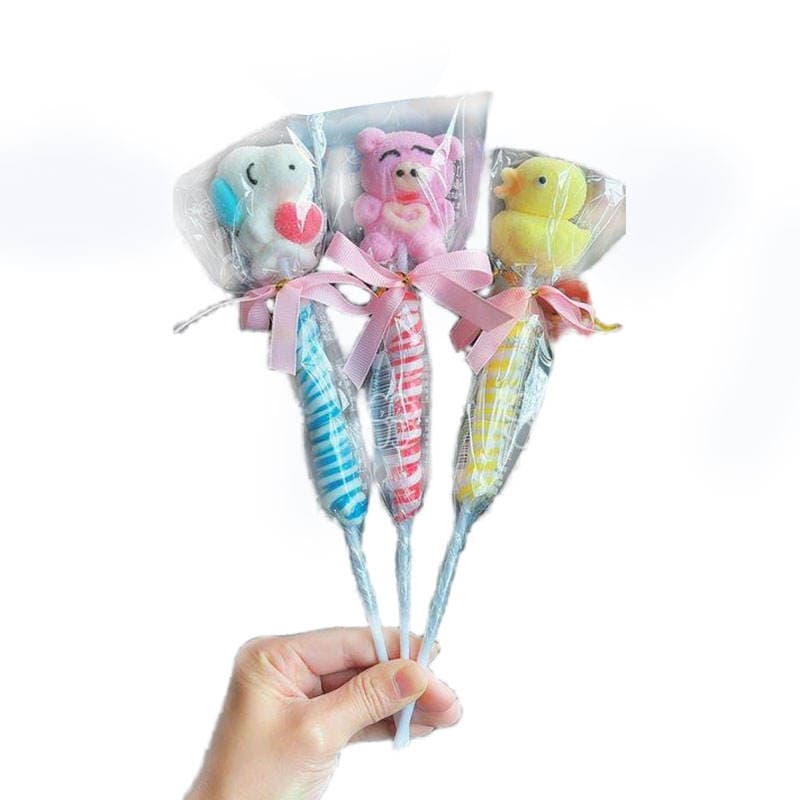
Small retail bags are suitable for convenience stores, supermarkets, candy shops, and checkout displays. Packaging can highlight the animal theme through character illustrations, product photography, and coordinated color schemes. Clear product visibility may help consumers understand the actual shapes included in the package.
7.2 Mixed Animal Assortment Packs
Mixed packs can contain several animal designs in one package. For example, a collection may combine bears, rabbits, chicks, pandas, and other characters. This format offers visual variety and can be positioned as a discovery-oriented snack or a sharing product.
7.3 Seasonal and Holiday Collections
Animal-shaped marshmallows can be adapted for seasonal campaigns. Rabbits and chicks are suitable for Easter themes, while bears, penguins, and other winter-inspired characters may be used in holiday collections. Packaging artwork, color combinations, and assortment choices can be adjusted to support different promotional periods.
7.4 Party Favors and Gift Products
Small animal marshmallows can be included in birthday party bags, event giveaways, themed gift boxes, and children’s celebration products. Larger designs may also be used in specialty confectionery assortments where appearance is a key part of the product concept.
8. Wholesale Buying Guide: What Should Importers and Distributors Check?
Choosing a suitable supplier involves more than comparing product photographs. Importers and distributors should evaluate product consistency, communication, documentation, packaging suitability, and the manufacturer’s ability to understand their target market.
8.1 Confirm the Animal Designs and Product Specifications
Start by identifying the animal designs required for the product line. Confirm the dimensions, individual piece weight, color options, flavor profile, and assortment composition. Request samples where possible so that the actual product can be evaluated rather than relying entirely on digital images.
8.2 Evaluate Texture and Shape Consistency
Inspect samples for softness, elasticity, surface appearance, and recognizable animal details. If the order includes multiple designs, check whether the pieces are consistent within each design and across the assortment. Buyers should also consider how the products perform during ordinary handling and packaging.
8.3 Review Packaging and Labeling Requirements
Packaging should be suitable for the product dimensions, intended distribution environment, and retail channel. Importers should also confirm the required language, ingredient declaration, allergen information, net weight, nutrition information, date marking, storage instructions, and other labeling elements required by the destination market.
8.4 Discuss Customization and Private Label Options
For brands seeking product differentiation, customization may include animal designs, color combinations, flavors, assortment formats, and packaging artwork. Buyers should clarify which elements can be customized, whether design samples or artwork approvals are required, and how changes may affect production planning.
8.5 Check Supplier Communication and Export Coordination
Reliable communication is important throughout sampling, specification confirmation, order preparation, and shipment coordination. Buyers should establish clear expectations for product details, packaging files, inspection requirements, documentation, and delivery arrangements before placing an order.
When evaluating a potential manufacturing partner, it is useful to understand the company’s background, product focus, and business approach. Buyers can learn more about TOPHEART’s company background as part of their supplier research and initial assessment.
Once the product concept and purchasing requirements have been identified, buyers can discuss the next steps directly with the supplier. Providing the intended animal designs, estimated order quantity, preferred flavors, packaging format, and destination market can make the communication more efficient. For product inquiries and project discussions, use the TOPHEART contact page to start a conversation about potential requirements.
9. Why Animal Shaped Marshmallows Offer Opportunities for Private Label Brands
Animal-shaped confectionery provides a flexible platform for brands looking to develop products with a clear visual identity. Unlike products that depend mainly on flavor differences, animal-shaped marshmallows combine product appearance with taste and texture. This creates opportunities to build recognizable collections for different consumer groups and retail occasions.
For example, a brand targeting children’s snacks may focus on friendly animal characters, bright colors, and small retail packs. A gift-oriented brand may prefer larger figures, coordinated assortments, and more decorative packaging. A seasonal retailer may develop limited collections around Easter, Christmas, or other promotional periods.
Private-label development can also allow buyers to coordinate product design and packaging with their existing brand identity. Before starting a project, buyers should clarify the desired product concept, design references, target retail price positioning, regulatory requirements, and expected order volume. These details help determine which product and packaging options are commercially practical.
10. The Future of Animal-Themed Marshmallow Products
Confectionery products increasingly compete through presentation, variety, and memorable consumer experiences. Animal-shaped marshmallows fit this direction because they can be developed into recognizable characters and coordinated product collections. New animal designs, seasonal assortments, and creative packaging concepts can help retailers refresh their confectionery selections.
Another opportunity is the development of market-specific collections. Different regions may have different preferences for animal characters, colors, sweetness profiles, and packaging formats. Buyers can use local market research and consumer feedback to determine which designs are most suitable for their audiences.
For manufacturers and brands, the challenge is to balance creativity with production feasibility and consistent quality. A successful product should not only look attractive in a photograph but also retain its shape, deliver a pleasant texture, and arrive in suitable condition after distribution.
Turn Familiar Animal Characters into Memorable Confectionery Products
Animal Shaped Marshmallows combine the soft texture of traditional marshmallows with the visual appeal of animal-inspired designs. From bears and rabbits to chicks, pandas, cats, and dogs, these products offer a wide range of possibilities for retail assortments, seasonal promotions, party favors, and private-label confectionery collections.
For importers, wholesalers, and brand owners, selecting the right product requires careful consideration of animal designs, dimensions, flavors, texture, shape retention, packaging, and supplier communication. Reviewing actual samples and confirming clear product specifications can help reduce purchasing uncertainty and support more consistent commercial results.
As demand for visually distinctive confectionery continues to create opportunities across different retail channels, animal-themed marshmallows can serve as a flexible addition to a broader candy portfolio. With suitable product development and packaging planning, brands can turn simple animal shapes into appealing products for consumers in multiple markets.
Animal Shaped Marshmallows-6
Frequently Asked Questions About Animal Shaped Marshmallows
1. What are the most popular animal shaped marshmallows?
Popular animal shaped marshmallows include bears, rabbits, chicks, ducks, pandas, cats, and dogs. These designs are easy for consumers to recognize and can be adapted for children’s snacks, birthday parties, seasonal collections, gift boxes, and retail candy assortments. The most suitable designs depend on the target market, consumer preferences, and the intended product positioning.
2. What sizes are available for animal shaped marshmallows?
Animal shaped marshmallows can be developed in different sizes, from small pieces measuring around 1–2 cm to larger novelty figures measuring 5 cm or more. These are illustrative size categories rather than universal standards. Actual dimensions and piece weights depend on the animal design, mold structure, formulation, and manufacturer specifications. Buyers should confirm measurements using samples and technical documents before ordering.
3. What flavors can be used in animal shaped marshmallows?
Common flavor directions include vanilla, strawberry, orange, grape, and other fruit-inspired profiles. A product may use one flavor throughout the assortment or combine several flavors with different animal designs and colors. Flavor selection should consider the target consumers, local market preferences, ingredient requirements, and the overall product concept.
4. Can animal shaped marshmallows be customized for wholesale and private label orders?
Depending on the manufacturer’s capabilities and project requirements, customization may cover animal shapes, colors, flavors, assortment combinations, and retail packaging. Buyers should provide design references, target dimensions, preferred flavors, packaging requirements, and destination market information. Sample review and specification confirmation are useful steps before finalizing a customized wholesale or private-label project.
5. How should buyers choose a reliable animal shaped marshmallow supplier?
Buyers should evaluate the supplier’s product experience, sample quality, shape consistency, texture, available customization options, packaging suitability, communication, and export coordination. It is also important to review ingredient and labeling information and request applicable quality or food safety documentation. Confirming product specifications and commercial terms before placing an order can help establish clearer expectations for both parties.