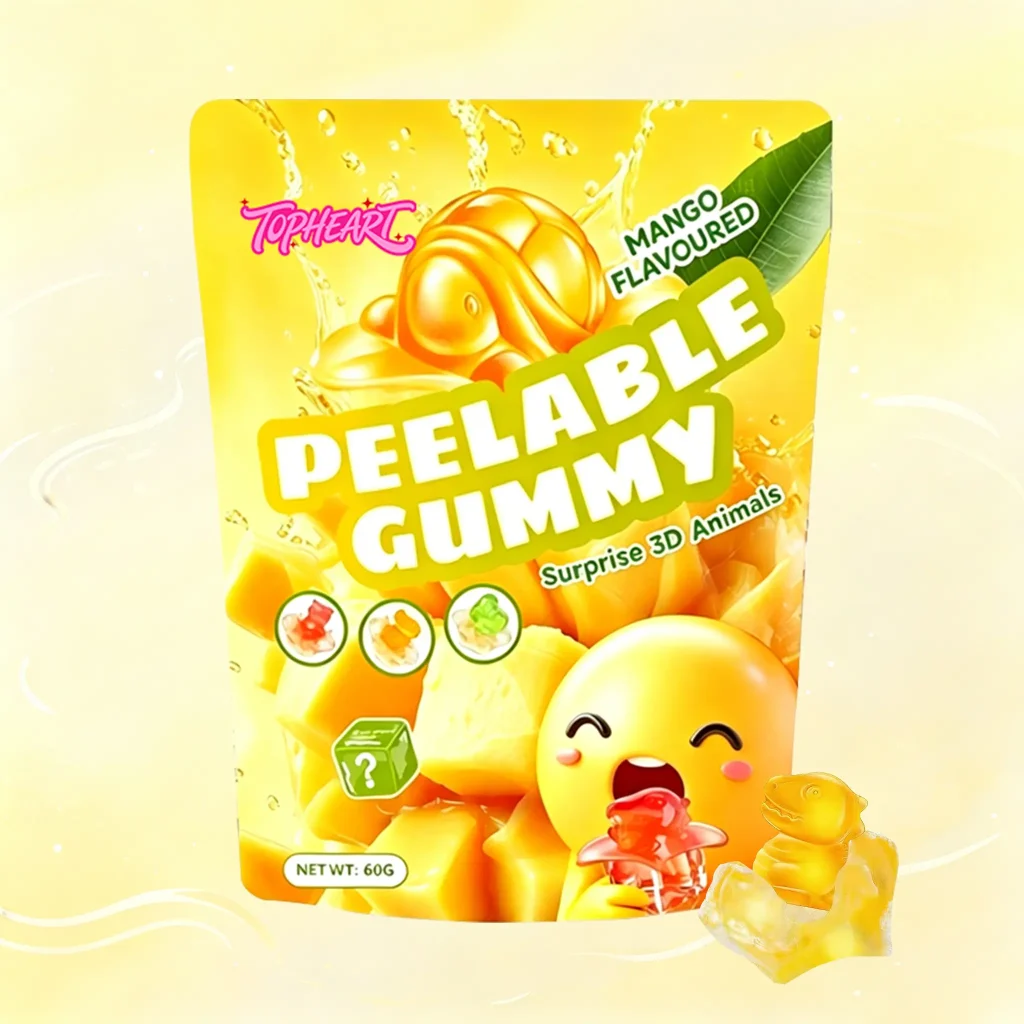
Marshmallows have maintained their popularity in the global confectionery market because of their soft texture, sweet flavor, and wide range of applications. From classic white cylindrical pieces to colorful animal-shaped, fruit-shaped, and seasonal designs, marshmallows can be developed in different forms to meet different consumer preferences and commercial requirements. Among these product variations, Shaped Marshmallows have attracted attention from confectionery brands, retailers, wholesalers, and food distributors looking for products with distinctive visual appeal and flexible market positioning.
Traditional marshmallows are commonly associated with familiar shapes, consistent portions, and versatile everyday applications. Shaped varieties introduce additional design possibilities through customized outlines, colors, sizes, and themed appearances. The difference is not simply about appearance. Shape selection can influence production methods, product presentation, packaging design, portion control, and the way a marshmallow fits into a particular retail or food-service category.
For confectionery buyers, understanding these differences makes product selection more practical. A standard marshmallow may be suitable for a business that prioritizes familiar formats and versatile applications, while a specially designed shape may better support themed assortments, seasonal promotions, gift collections, or private-label product development. This article explores the key differences between shaped and traditional marshmallows, including ingredients, manufacturing considerations, texture, applications, and wholesale opportunities.
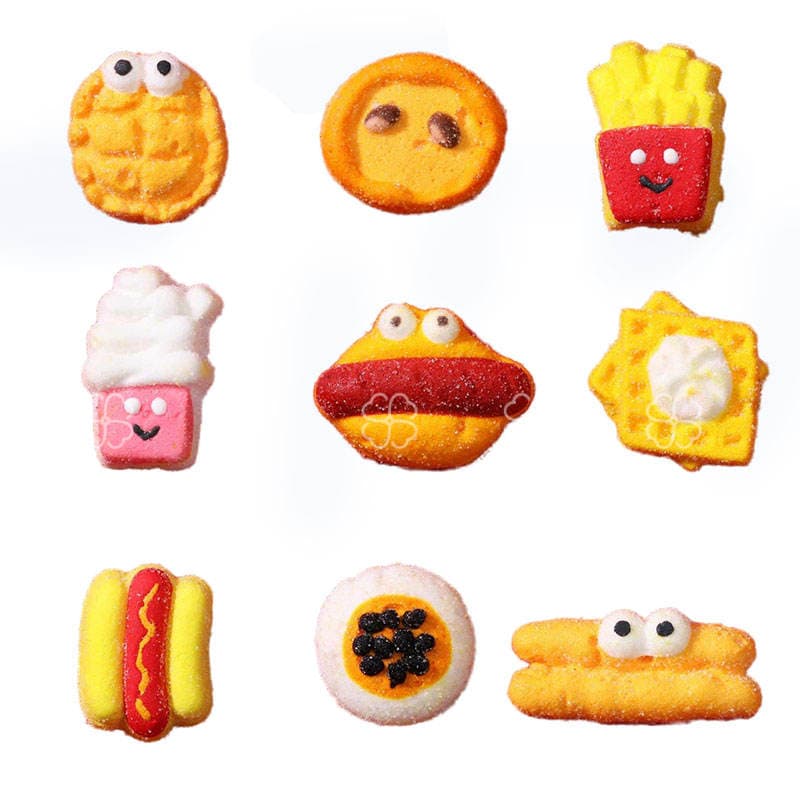
Shaped Marshmallows-6
1. Understanding Traditional Marshmallows and Shaped Marshmallows
1.1 What Are Traditional Marshmallows?
Traditional marshmallows are soft, aerated confectionery products generally made with sugar, glucose syrup or other sweeteners, water, and a whipping or gelling system. Depending on the formulation, gelatin may be used to help create the characteristic elastic structure, while other ingredients can contribute to sweetness, stability, and texture.
Their familiar formats often include cylindrical pieces, small rounded shapes, miniature marshmallows, and pillow-like forms. These designs are widely recognized and can be used in snack packs, hot chocolate toppings, baking applications, dessert decoration, and assorted confectionery products.
Traditional formats are often selected when buyers need a recognizable product that can be incorporated into different consumption occasions. Their relatively straightforward appearance also allows brands to focus on flavor, portion size, packaging, and price positioning.
1.2 What Defines Shaped Marshmallows?
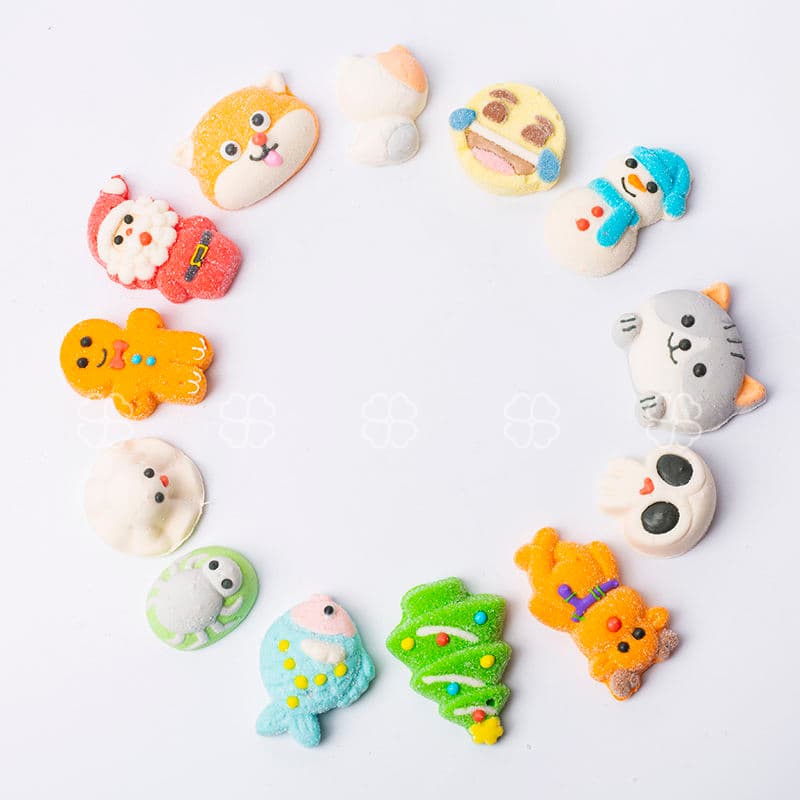
Shaped Marshmallows are marshmallow products developed with specific outlines, figures, or decorative forms beyond basic conventional formats. Their designs may include animals, fruits, flowers, stars, hearts, cartoon-inspired figures, holiday symbols, and other recognizable motifs.
Depending on the manufacturing process and product design, these shapes may be created through molding, depositing, extrusion, cutting, or other forming techniques. Color combinations and surface details can also be introduced to create a more distinctive appearance.
For brands, shaped designs provide another way to organize product collections. A fruit-themed assortment, for example, can combine several recognizable fruit-inspired forms, while a seasonal assortment can use shapes associated with holidays or special occasions. This flexibility makes shaped products relevant to retailers and distributors developing differentiated confectionery selections.
1.3 The Role of the Manufacturer in Product Development
Commercial marshmallow development involves more than selecting a shape. Manufacturers need to consider the relationship between formulation, aeration, setting behavior, dimensional consistency, and packaging requirements. A design that looks attractive in a concept image must also be practical to manufacture, handle, store, and transport.
Buyers evaluating suppliers can learn more about the company, its product focus, and its business background through the TOPHEART manufacturer profile. Understanding a supplier’s product-development approach can help importers and brand owners prepare more specific discussions about product formats, customization, and commercial requirements.
2. Key Differences in Appearance, Shape, and Product Presentation
2.1 Shape Variety and Visual Recognition
One of the most noticeable differences between traditional and shaped marshmallows is the level of visual customization. Traditional products generally use familiar geometric or simple forms. Shaped products can be developed around a theme, character, object, or visual concept.
For example, animal-shaped marshmallows may be suitable for children’s confectionery collections, while heart-shaped designs can support gift-oriented assortments. Fruit-inspired pieces can reinforce fruit flavor concepts, and stars or snowflakes can be used in seasonal collections.
These designs give buyers more options when planning a product range. Rather than relying entirely on flavor differences, brands can use shape as another way to organize assortments and communicate product identity.
2.2 Color and Decorative Possibilities
Color is another important part of marshmallow presentation. Traditional marshmallows are often white or use a limited color range, although colored versions are also available. Shaped products can combine color and form to create more recognizable designs.
A strawberry-inspired marshmallow, for instance, may use a red or pink color scheme, while a star-shaped product may be produced in several colors for a mixed assortment. The exact appearance depends on the formulation, permitted color ingredients, manufacturing process, and the buyer’s target-market requirements.
Color planning should also consider consistency between production batches. Differences in ingredient dispersion, processing conditions, or storage can influence the final appearance. Commercial buyers should therefore confirm visual standards during product sampling and approval.
2.3 Packaging and Shelf Presentation
Traditional marshmallows are often packaged in bags or larger-volume formats designed around familiar product portions. Shaped varieties may benefit from packaging that allows consumers to recognize the designs through a transparent window, product photography, or clear flavor-and-shape descriptions.
For retail buyers, packaging should protect the product while communicating its key characteristics. Individual pieces need enough space to reduce deformation and unwanted sticking. Product dimensions, bag size, net weight, and the number of pieces per pack should be considered together.
When a product range includes multiple shapes or colors, buyers may also consider mixed assortments, single-design packs, or themed collections. These decisions can influence packaging artwork, SKU planning, and inventory management.
3. Differences in Ingredients, Texture, and Product Structure
3.1 The Basic Ingredient System
Traditional and shaped marshmallows can share a similar basic ingredient structure. Common formulation components include sweeteners, water, a foaming or whipping system, and ingredients that help stabilize the aerated structure. Gelatin is frequently used in conventional marshmallow formulations, although alternative systems may be developed for specific dietary or market requirements.
The difference between the two product categories does not necessarily come from completely different ingredients. In many cases, the formulation is adjusted to support the intended shape, production method, setting characteristics, and handling requirements.
For example, a product with detailed outlines may require attention to how quickly the marshmallow structure sets and how well it retains its shape after forming. The manufacturer must balance workability during production with sufficient stability after the product has been formed.
3.2 How Aeration Influences Marshmallow Texture
Marshmallows are aerated confectionery products. During whipping or aeration, air is incorporated into the confectionery mixture, creating a structure that contributes to the familiar light and soft mouthfeel.
The amount and distribution of incorporated air influence product density, softness, and resilience. A well-controlled aeration process helps manufacturers maintain a consistent internal structure across production batches.
For shaped products, aeration must also be considered alongside the forming process. A mixture that is too fluid may not maintain a clearly defined outline, while a mixture that becomes too firm too early may be difficult to form into the intended design. The appropriate processing window depends on the recipe, equipment, product dimensions, and production conditions.
3.3 Shape Retention and Structural Stability
Shape retention is an important quality consideration for shaped marshmallows. A product may have an attractive design immediately after forming, but it must also maintain an acceptable appearance during cooling, handling, packaging, storage, and distribution.
Several factors can influence this performance, including formulation balance, setting conditions, moisture management, surface treatment, product dimensions, and storage temperature. The product must be sufficiently stable for its intended packaging and transportation conditions without losing the soft texture expected from marshmallows.
Traditional marshmallows also require texture and structural consistency. Their simpler shapes do not eliminate the need for quality control. However, shaped products may require additional visual inspection because deformation can affect recognizable design details.
3.4 Scientific and Technical Parameters Used in Marshmallow Quality Control
Manufacturers can use different analytical and process-control methods to evaluate marshmallow quality. The following table summarizes common technical parameters and their relevance. These are general food-science indicators and testing approaches, not measured specifications or laboratory results for a particular TOPHEART product.
| Quality Parameter |
Typical Evaluation Method |
Why It Matters |
| Moisture Content |
Validated moisture analysis or loss-on-drying method |
Helps assess product composition and moisture-related consistency. |
| Water Activity (aw) |
Water activity meter |
Helps evaluate available water and its relationship to product stability. |
| pH |
Calibrated pH meter using a suitable sample preparation method |
Supports formulation control and ingredient-system consistency. |
| Texture and Firmness |
Texture analyzer or standardized sensory evaluation |
Evaluates softness, compression response, and resilience. |
| Density |
Mass and volume measurement |
Helps assess aeration consistency and product structure. |
| Dimensional Consistency |
Caliper, weighing, and visual inspection |
Checks size, shape definition, and batch-to-batch uniformity. |
Moisture content and water activity should not be treated as interchangeable measurements. Moisture content indicates how much water is present in a product, while water activity reflects the availability of water for physical, chemical, and microbial processes. Both can be relevant to product stability, but their interpretation depends on the formulation and the complete food-safety assessment.
4. Manufacturing Processes and Design Flexibility
4.1 Forming Traditional Marshmallows
Traditional marshmallows can be produced through established forming approaches such as extrusion, depositing, or cutting, depending on the product format and manufacturing line. These methods are suited to producing familiar shapes and consistent portions at commercial scale.
Production planning typically considers mixture preparation, aeration, forming, setting, cutting where applicable, surface treatment, and packaging. Each stage contributes to the final product’s texture, appearance, and handling characteristics.
4.2 Forming Shaped Marshmallows
Producing shaped marshmallows may involve additional design and tooling considerations. Depending on the required shape, manufacturers may use molds, depositing systems, specialized forming equipment, or cutting techniques. More detailed designs can require closer attention to the product’s ability to fill the intended form and retain its outline.
Some designs are relatively simple, such as hearts, stars, and basic fruit silhouettes. Others may include multiple sections, contrasting colors, or more detailed contours. The level of complexity can influence tooling requirements, production speed, inspection procedures, and development time.
Before confirming a design, buyers should discuss the intended dimensions, shape details, color arrangement, texture expectations, and packaging format with the manufacturer. A practical design is one that balances visual appeal with repeatable production and commercial feasibility.
4.3 Customization Beyond Shape
Shape is only one part of product customization. Commercial buyers may also explore different flavors, colors, piece sizes, assortment combinations, and packaging formats. These elements can be coordinated to create a product range for a particular sales channel or target market.
For example, a retailer may want a small bag containing several animal-shaped marshmallows, while a gift business may prefer a coordinated collection of heart-shaped pieces in selected colors. A food-service buyer may prioritize dimensions and portion consistency over decorative details.
These requirements can be evaluated together with the supplier’s broader marshmallow candy product range, helping buyers compare available formats and identify a suitable direction for their product development plans.
5. Different Applications and Consumer Occasions
5.1 Everyday Snacks and Beverage Toppings
Traditional marshmallows are commonly used in everyday snack products and beverage-related applications. Miniature formats can be added to hot chocolate, while larger pieces may be used in dessert preparation, baking, or direct snacking.
Their familiar appearance makes them suitable for products where buyers want a straightforward marshmallow experience. Retailers can also offer different pack sizes to serve individual consumers, families, and food-service customers.
5.2 Themed Retail Collections
Shaped marshmallows can support themed product collections because their designs communicate a concept quickly. Animal figures, fruit outlines, flowers, and other recognizable forms can be organized into collections for different consumer occasions.
For example, a children’s confectionery range may use colorful animal designs, while a seasonal range may feature holiday-related shapes. These products can also be included in mixed candy assortments where visual variety is an important part of the presentation.
5.3 Parties, Gifts, and Seasonal Promotions
Special occasions create opportunities for marshmallow products with distinctive designs. Heart-shaped pieces may be used in Valentine’s Day assortments, while stars and snowflakes can be considered for winter-themed collections. Birthday and celebration products may use bright colors and playful shapes.
For these applications, buyers should consider whether the design remains recognizable after packing and transportation. Product arrangement, bag dimensions, and protective packaging all contribute to the final presentation.
5.4 Bakery, Dessert, and Food Decoration
Both traditional and shaped marshmallows can be used in bakery and dessert applications. Traditional formats offer familiar portions for toppings and ingredient mixes, while shaped products can provide a decorative element for cakes, cupcakes, dessert cups, and themed food presentations.
Suitability depends on the product’s formulation, size, texture, and the conditions in which it will be used. Buyers should confirm the intended application with the manufacturer, particularly when the product will be exposed to heat, moisture, or extended storage after opening.
6. How to Choose the Right Marshmallow Format for Your Business
6.1 Start with Your Target Market
The first step is to define the customers and sales channels the product is intended to serve. Supermarkets, convenience stores, specialty candy shops, online retailers, bakeries, and gift businesses may have different requirements.
Traditional marshmallows may be a practical choice when the goal is to supply a familiar product for regular consumption or ingredient use. Shaped varieties may be more appropriate when the product needs a specific theme, distinctive appearance, or coordinated assortment.
Neither format automatically suits every business. The right decision depends on the intended market, purchasing behavior, packaging expectations, and the product’s role within the buyer’s wider confectionery portfolio.
6.2 Consider Price Positioning and Product Complexity
Product design can affect development and manufacturing considerations. A simple shape may require less complex tooling than a detailed multi-section design. Multiple colors, different shapes in one pack, and special packaging may also add production or coordination requirements.
Buyers should therefore evaluate the complete product specification rather than comparing products based on appearance alone. Important details include piece size, net weight, number of pieces, flavor options, packaging material, order volume, and customization requirements.
6.3 Review Samples and Product Specifications
Samples are useful for assessing appearance, softness, flavor, size, and packaging suitability before a commercial order is confirmed. For shaped products, buyers should pay particular attention to the clarity of the design and whether individual pieces remain visually consistent.
It is also useful to establish a written specification covering the approved product appearance, dimensions, color expectations, ingredient information, packaging details, and any applicable market requirements. This creates a clearer reference for sampling, approval, and subsequent production discussions.
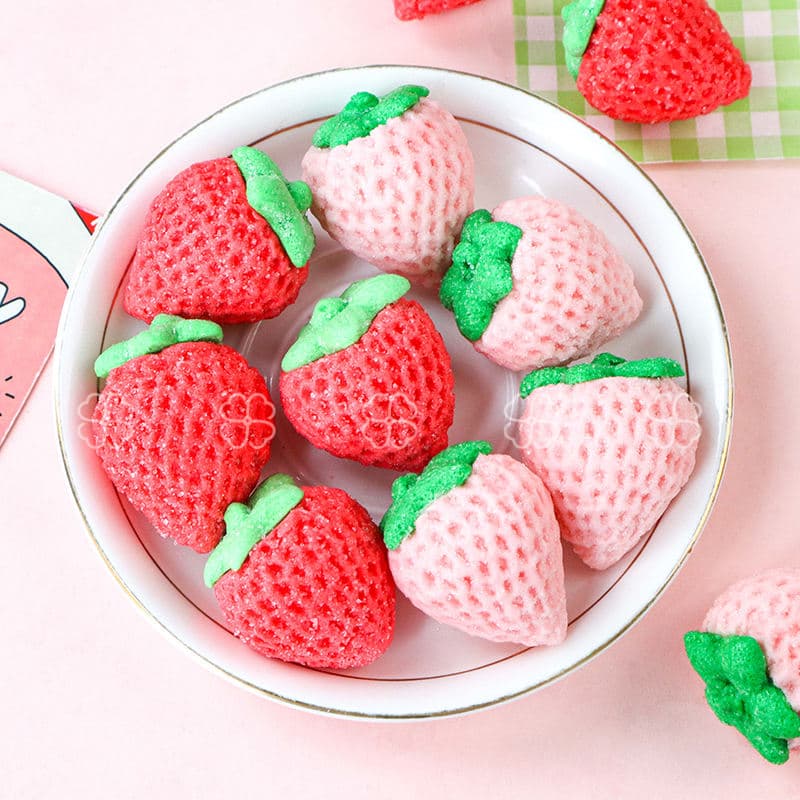
Strawberry Marshmallows
7. Wholesale and OEM/ODM Opportunities for Shaped Marshmallows
7.1 Product Differentiation for Retailers and Distributors
For wholesalers and distributors, shaped marshmallows can provide an additional product category within a broader confectionery portfolio. Their visual variety may support themed assortments, seasonal displays, promotional collections, and private-label product lines.
Retailers can consider combining several designs in one assortment or selecting a single shape for a focused product concept. The best arrangement depends on shelf space, packaging format, target customers, and the retailer’s merchandising strategy.
7.2 Private Label and OEM/ODM Development
Private-label projects may involve more than applying a buyer’s logo to an existing product. Depending on the supplier’s capabilities, a project may include discussions about shape selection, flavor direction, color, pack size, packaging artwork, and assortment structure.
OEM and ODM development can help buyers explore product concepts that fit their brand positioning. To make the process more efficient, buyers should prepare reference images, approximate dimensions, preferred colors, target packaging formats, and expected order quantities before requesting a development proposal.
7.3 Packaging, Storage, and Export Planning
Marshmallows are soft confectionery products, so packaging and storage conditions should be considered during export planning. Packaging needs to protect the product from contamination, physical damage, and unwanted moisture changes while helping maintain an acceptable appearance.
Buyers should discuss packaging material, sealing performance, carton configuration, shipping conditions, and storage recommendations with the supplier. The final arrangement should be assessed against the product formulation, destination climate, distribution period, and local regulatory requirements.
For product details, customization discussions, or commercial inquiries, buyers can use the TOPHEART contact page to communicate their requirements and discuss potential cooperation.
8. Understanding the Broader Appeal of Marshmallow Confectionery
Marshmallows have a distinctive position in confectionery because they combine sweetness, a soft texture, and a wide range of possible applications. Their familiar taste can be adapted to different formats, while variations in color, shape, and packaging allow brands to develop products for different retail environments.
Shaped designs build on these characteristics by adding a visual element to the product experience. This does not mean that every market needs a highly customized design. Some buyers may prefer familiar formats for everyday sales, while others may see value in shapes that support a specific theme or promotional concept.
For a broader introduction to marshmallow characteristics, consumer appeal, and confectionery applications, readers can explorethe magic and appeal of marshmallows. This wider product context can help buyers consider how different marshmallow formats fit into their overall candy assortment.
9. Why Shaped Marshmallows Offer Flexible Product Development Opportunities
The main distinction between shaped marshmallows and traditional marshmallows lies in product design and the commercial possibilities that design can create. Traditional formats provide familiar shapes and versatile uses, while shaped varieties introduce additional options for themed collections, distinctive retail presentation, and customized product concepts.
From a manufacturing perspective, both categories require careful attention to ingredients, aeration, texture, setting, product stability, and packaging. Shaped products may introduce extra requirements for tooling, dimensional control, and visual inspection, particularly when the design includes multiple colors or detailed contours.
For importers, wholesalers, retailers, and private-label brands, the selection process should begin with the intended market and product application. Consider the target customer, sales channel, desired appearance, flavor direction, pack size, and distribution conditions before confirming a specification.
Choose a Marshmallow Format That Fits Your Market Strategy
Traditional marshmallows and shaped marshmallows serve different product presentation and business needs, and both can play a useful role in the global confectionery market. Traditional formats are suited to familiar consumption occasions and versatile food applications. Shaped designs offer additional flexibility for themed products, gift assortments, seasonal collections, and customized retail concepts.
For businesses developing a new marshmallow range, the most effective approach is to evaluate the product as a complete commercial solution. Shape, flavor, texture, formulation, packaging, production feasibility, and target-market expectations should be considered together. With a clear specification and communication with an experienced confectionery supplier, buyers can identify a marshmallow format that aligns with their brand and sales objectives.
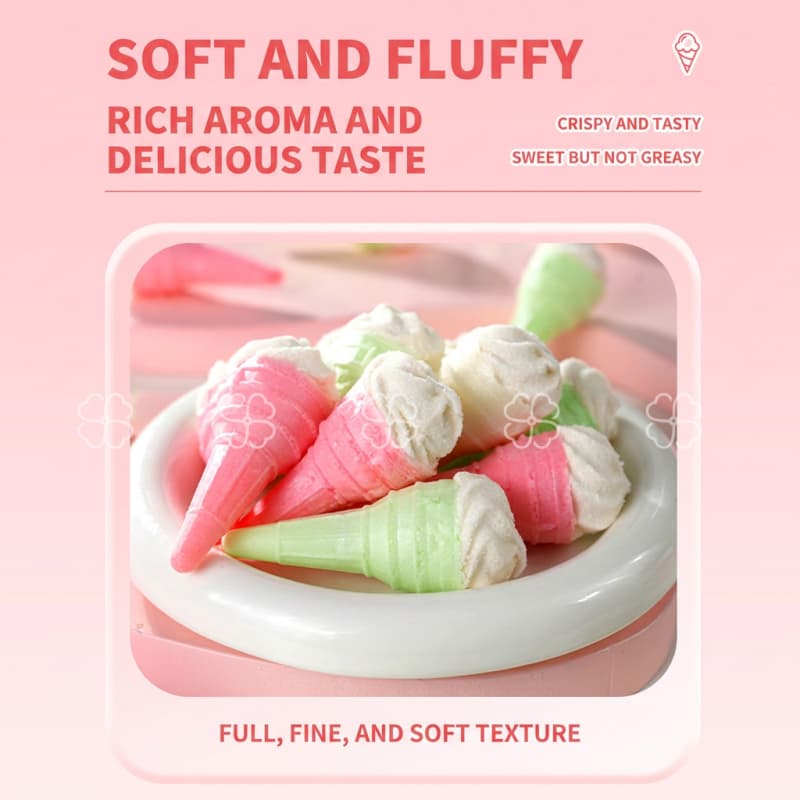
Shaped Marshmallows-10
Frequently Asked Questions About Shaped Marshmallows
1. What is the difference between shaped marshmallows and traditional marshmallows?
The main difference is their physical design and product presentation. Traditional marshmallows commonly use simple formats such as cylinders, miniature pieces, or rounded shapes. Shaped marshmallows are developed in more specific forms, including animals, fruits, hearts, stars, and seasonal designs. Both types can share similar basic ingredients and soft, aerated characteristics. The appropriate option depends on the intended application, target market, packaging concept, and product positioning.
2. Are shaped marshmallows made with different ingredients from regular marshmallows?
Not necessarily. Shaped and traditional marshmallows can use similar ingredient systems, including sweeteners, water, and a whipping or gelling system. However, the formulation may be adjusted to support the required forming process, setting behavior, texture, and shape retention. Ingredient choices also depend on the manufacturer’s formulation and the buyer’s requirements, including flavor, color, dietary preferences, and destination-market regulations. Buyers should review the ingredient declaration and product specification for each product.
3. What types of shapes are available for marshmallow products?
Common design possibilities include animals, fruits, flowers, hearts, stars, cartoon-inspired figures, and holiday-themed symbols. The available options depend on the manufacturer’s forming equipment, tooling, production process, and design feasibility. Buyers interested in custom shapes should provide reference images, approximate dimensions, preferred colors, and expected order quantities. A supplier can then assess whether the concept is suitable for commercial production and whether a custom mold or other forming solution may be required.
4. Can shaped marshmallows be customized for private-label or OEM projects?
Shaped marshmallows can be considered for private-label and OEM/ODM development, subject to the supplier’s capabilities and project requirements. Customization discussions may cover shape, size, color, flavor, assortment combinations, packaging artwork, and pack format. Before production, buyers should confirm the product specification, sample approval process, packaging requirements, order quantity, lead time, and destination-market compliance. Providing a clear product brief can help reduce misunderstandings during development and commercial planning.
5. What should wholesalers consider when buying shaped marshmallows in bulk?
Wholesale buyers should evaluate more than the product’s appearance. Important considerations include ingredient information, flavor consistency, texture, dimensional uniformity, packaging protection, shelf-life documentation, storage recommendations, carton configuration, and export requirements. For customized products, buyers should also confirm tooling arrangements, sample approval, minimum order quantity, production lead time, and packaging specifications. Testing representative samples and agreeing on a written specification before placing a bulk order can help establish clearer quality expectations.