


Toffee Candy remains a versatile confectionery category for international retailers, wholesalers, importers, distributors, and private-label brands. Its combination of a rich caramelized taste, creamy sweetness, and chewy or soft texture gives buyers a flexible foundation for developing products for different consumer groups and retail channels.
However, choosing the right flavor is not simply a matter of selecting the sweetest or most familiar option. International markets can have different preferences for sweetness, dairy notes, caramel intensity, fruit flavors, chocolate combinations, portion sizes, and overall product positioning.
For buyers sourcing Toffee Candy, flavor selection should therefore be considered together with texture, packaging, target consumers, retail channel, seasonal demand, and brand positioning.
This guide explores popular Toffee Candy flavor directions, how they can be adapted for different international markets, and what buyers should consider when developing wholesale, OEM, or private-label products.
Toffee Candy Suppliers
Why Flavor Matters in Toffee Candy
Flavor is one of the first characteristics consumers notice when trying a new confectionery product.
Toffee has a naturally recognizable flavor profile based around caramelized sweetness and a rich, cooked-sugar character. This creates a strong foundation, but manufacturers can build additional flavor identities around it.
For example, a classic milk toffee can communicate familiarity and comfort, while chocolate toffee can create a more indulgent positioning. Fruit-flavored toffee can introduce a lighter and more refreshing direction, while coffee or nut-inspired profiles can target consumers looking for a more mature taste.
For international buyers, this flexibility is particularly useful.
A distributor may want a traditional flavor for supermarkets, while a private-label brand may want a more distinctive combination for specialty stores. A seasonal retailer may also require limited-edition flavors for Christmas, Valentine’s Day, Easter, or other promotional periods.
The best flavor strategy is therefore not necessarily to offer the largest number of flavors.
Instead, buyers should develop a portfolio in which each flavor has a clear purpose.
Classic Milk Toffee Candy
Milk is one of the most natural flavor directions for Toffee Candy.
Milk toffee typically emphasizes creamy, smooth, and rich notes while maintaining the characteristic caramelized sweetness of toffee.
This profile can work well for brands that want to communicate:
- Familiarity
- Creaminess
- Traditional confectionery
- Family-friendly positioning
- Everyday snacking
- Premium simplicity
Classic milk toffee is also useful as a foundation flavor when developing a larger product range.
For example, a brand could begin with classic milk toffee and then extend the collection with chocolate, coffee, fruit, or nut-inspired variations.
For wholesalers and distributors, this type of flavor can provide a relatively straightforward starting point because the concept is easy to communicate through product names and packaging.
Chocolate Toffee Candy
Chocolate and caramel are a naturally compatible combination, making chocolate one of the strongest directions for Toffee Candy development.
Chocolate Toffee Candy can combine the rich caramel character of toffee with cocoa or chocolate notes to create a more indulgent experience.
Depending on the formulation and positioning, buyers can explore different directions such as:
- Milk chocolate toffee
- Dark chocolate toffee
- Chocolate caramel toffee
- Cocoa-flavored toffee
- Chocolate and cream toffee
Chocolate toffee can be particularly suitable for gift boxes, premium confectionery collections, supermarket ranges, and seasonal products.
Packaging can also reinforce the flavor story.
For example, darker visual elements may communicate cocoa intensity, while cream and caramel imagery can emphasize a softer and creamier profile.
For private-label projects, chocolate toffee can therefore provide opportunities for both flavor development and visual differentiation.
Coffee Toffee Candy
Coffee is another flavor direction that can give Toffee Candy a more mature and sophisticated identity.
Coffee and caramel naturally share roasted, rich, and warm flavor characteristics. Combining these profiles can create a product that feels different from traditional fruit or milk confectionery.
Coffee Toffee Candy may be suitable for:
- Adult-oriented confectionery
- Office snack products
- Premium candy collections
- Coffee-themed gift boxes
- Specialty retail
- Mixed-flavor assortments
The intensity of the coffee note is important.
A mild coffee profile can maintain broad appeal by allowing the caramel sweetness to remain dominant. A stronger coffee profile can create a more distinctive product for consumers who already enjoy coffee-flavored confectionery.
For international buyers, this makes coffee a useful flavor for creating a secondary or premium line rather than replacing classic flavors entirely.
Fruit-Flavored Toffee Candy
Fruit flavors can create a different direction from traditional creamy and caramel-focused Toffee Candy.
Popular fruit-inspired concepts may include:
- Strawberry
- Apple
- Orange
- Lemon
- Mango
- Peach
- Grape
- Cherry
- Mixed fruit
Fruit Toffee Candy can combine the familiar sweetness of toffee with a recognizable fruit identity.
This can be especially useful when developing colorful retail collections.
For example, strawberry can support a red or pink visual identity, lemon can use bright yellow packaging, while mango can create a tropical positioning.
The flavor itself should remain consistent with the visual story.
If the package communicates a strong fruit identity, the consumer will generally expect the flavor experience to support that expectation.
This is particularly important for private-label products, where packaging and flavor need to work together as one product concept.
Vanilla Toffee Candy
Vanilla provides another familiar flavor direction for Toffee Candy.
Unlike stronger fruit or coffee profiles, vanilla can enhance the creamy and sweet character of traditional toffee without changing its basic identity too dramatically.
Vanilla Toffee Candy can be positioned around:
- Creamy taste
- Smooth sweetness
- Traditional confectionery
- Premium simplicity
- Dessert-inspired indulgence
Vanilla can also work well as a supporting flavor in assorted boxes.
For example, a mixed Toffee Candy collection could include milk, vanilla, chocolate, coffee, and fruit flavors to create different sensory experiences within one package.
Toffee Candy
Nut-Inspired Toffee Candy
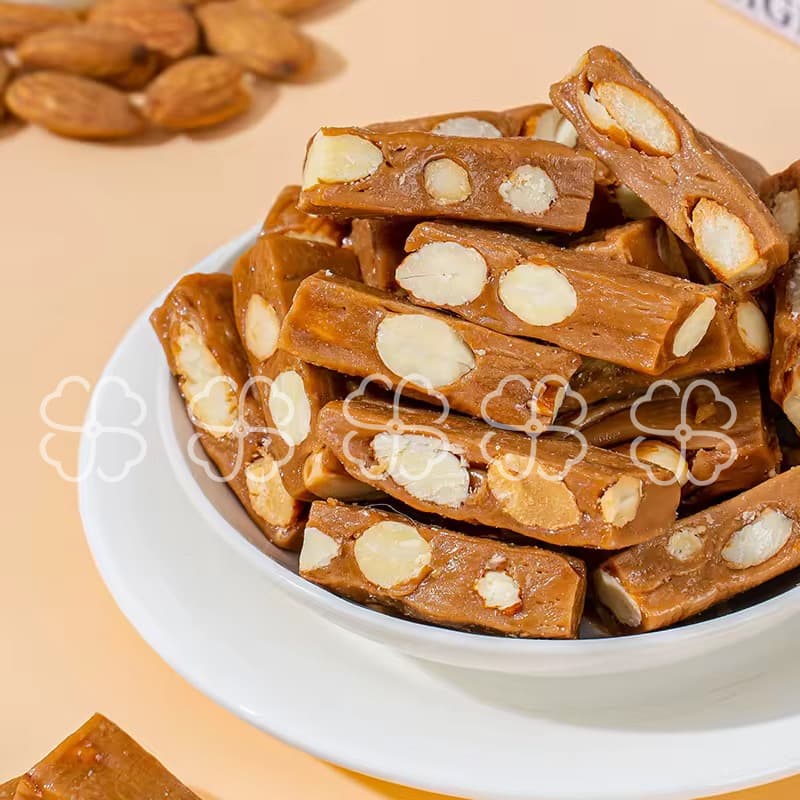
Nut-inspired flavors can add richness and a more complex sensory profile to Toffee Candy.
Potential directions include:
- Almond
- Hazelnut
- Peanut
- Pistachio
- Coconut
These flavors can be useful for premium positioning because nuts are often associated with richness and indulgence.
However, buyers should consider the target market and ingredient requirements carefully when developing nut-related products.
For international private-label projects, allergen management and labeling requirements should be considered during product development rather than after the formula has already been finalized.
The flavor concept, ingredient statement, packaging, and target market should therefore be evaluated together.
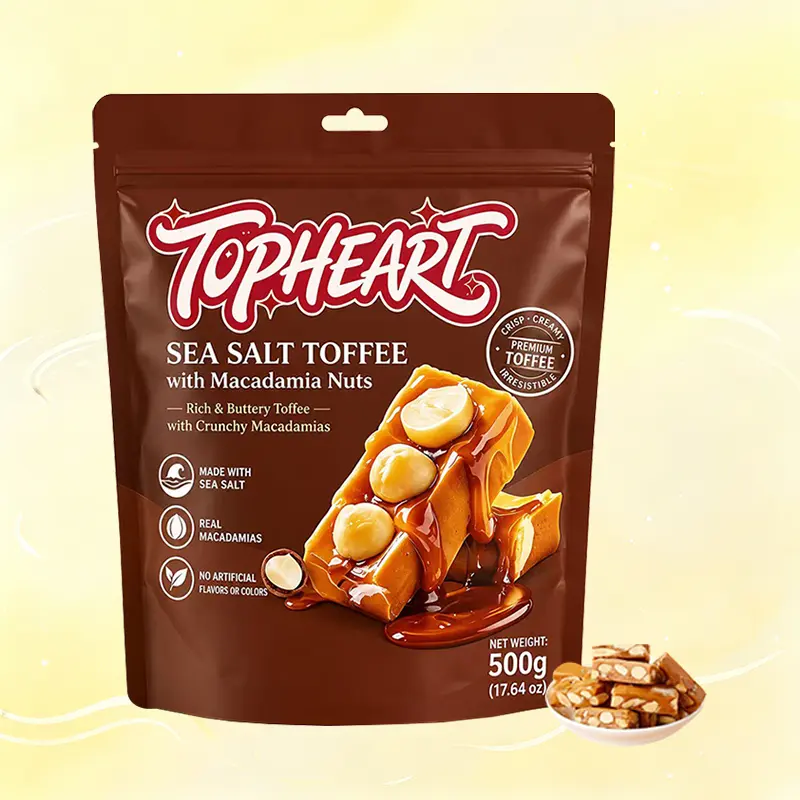
Salted Caramel Toffee Candy
Salted caramel is a modern interpretation of the classic caramel flavor.
The basic concept is simple: combine caramel sweetness with a controlled salty note to create greater flavor contrast.
For Toffee Candy, this can make the product feel more contemporary without moving too far away from the traditional toffee identity.
Salted caramel can be suitable for:
- Premium candy
- Gourmet confectionery
- Gift collections
- Modern private-label brands
- Specialty retail
- Seasonal products
The balance is important.
The product should still be recognizable as Toffee Candy rather than becoming primarily a salty confectionery product.
For buyers, the goal is usually to create contrast rather than simply increase saltiness.
Caramel and Cream Toffee Candy
Caramel and cream is another flavor direction that stays close to the traditional identity of toffee.
This type of product emphasizes smoothness, richness, and creamy sweetness.
It can be particularly suitable for brands looking for a classic European-style confectionery positioning or an everyday premium candy range.
The packaging can reinforce the concept through visual cues such as caramel pieces, cream textures, warm tones, and simple premium graphics.
For wholesale products, familiar flavor names such as caramel, cream, milk, and vanilla can also make product communication relatively straightforward across different markets.
Seasonal Toffee Candy Flavors
Seasonal products can provide an opportunity to introduce more distinctive Toffee Candy flavors without permanently changing the core product range.
Christmas, Easter, Valentine’s Day, Halloween, and other promotional periods can support limited-edition flavor concepts.
For example:
| Season | Possible Toffee Candy Direction |
|---|---|
| Christmas | Chocolate, vanilla, caramel cream, cinnamon-inspired |
| Valentine’s Day | Strawberry, chocolate, cream |
| Easter | Milk, vanilla, fruit flavors |
| Halloween | Chocolate, coffee, caramel |
| Summer | Lemon, orange, mango, mixed fruit |
| Gift Season | Assorted premium flavors |
Seasonal products can also combine flavor innovation with special shapes, colors, wrappers, boxes, and gift packaging.
For retailers, this creates a stronger reason for consumers to purchase the product during a specific period.
How to Choose Toffee Candy Flavors for Different Markets
There is no single flavor portfolio that works equally well everywhere.
When selecting Toffee Candy flavors for international markets, buyers should consider several factors.
Consider Local Taste Preferences
Some markets may favor creamy and traditional flavors, while others may respond better to fruit, chocolate, coffee, sour, or more adventurous combinations.
Rather than assuming that one flavor will work globally, buyers can start with a core range and then introduce market-specific variations.
Consider the Retail Channel
The same Toffee Candy flavor can be positioned differently depending on where it is sold.
Supermarkets may favor familiar flavors and family-size multipacks.
Convenience stores may require smaller formats designed for impulse purchases.
Specialty stores may have more room for premium or unusual flavor combinations.
Gift stores may benefit from assorted flavors and premium packaging.
E-commerce brands may have greater flexibility to communicate detailed flavor stories online.
Consider Product Positioning
Flavor should match the intended price and brand image.
A traditional milk toffee may be positioned as an everyday family product.
Chocolate and hazelnut may support a premium indulgence concept.
Coffee and dark chocolate may create a more mature profile.
Fruit flavors can support a colorful, playful, or refreshing positioning.
The flavor is therefore part of the brand strategy rather than an isolated product specification.
Building a Toffee Candy Flavor Portfolio
For international buyers, developing a balanced portfolio is often more practical than launching too many flavors at once.
A simple structure could include three levels.
Core Flavors
These are the flavors designed to provide broad appeal.
Examples include:
- Milk
- Caramel
- Vanilla
- Chocolate
Differentiated Flavors
These create additional variety and help a brand stand out.
Examples include:
- Coffee
- Strawberry
- Mango
- Hazelnut
- Salted caramel
Limited-Edition Flavors
These are designed to generate seasonal interest or test new consumer preferences.
Examples include:
- Christmas-inspired flavors
- Fruit combinations
- Dessert-inspired flavors
- Special chocolate combinations
- Regional flavor concepts
This three-level strategy allows brands to maintain a recognizable core range while still creating opportunities for innovation.
Flavor and Texture Should Be Developed Together
Flavor alone does not determine the quality of a Toffee Candy product.
Texture has a major influence on the consumer experience.
A soft toffee may provide a smooth, chewy experience, while a firmer format can create a different eating sensation.
The flavor intensity should therefore be considered alongside texture.
For example, a strong coffee flavor may work differently in a soft creamy toffee compared with a firmer product.
Likewise, fruit flavors may need a different balance depending on whether the product is designed to taste creamy, chewy, tangy, or strongly fruit-forward.
For OEM projects, buyers should evaluate flavor and texture together during sample development.
Toffee Candy Flavor Development for OEM and Private Label
OEM and private-label buyers have more opportunities to customize Toffee Candy than simply selecting an existing flavor.
A customized project can potentially cover:
- Flavor profile
- Flavor intensity
- Sweetness level
- Texture
- Shape
- Color
- Individual wrapping
- Multipack format
- Box design
- Pouch design
- Brand identity
- Seasonal artwork
- Product assortment
The development process should begin with the target consumer and market rather than the flavor alone.
For example, a retailer targeting young consumers may prioritize fruit and colorful packaging, while a premium gift brand may prefer chocolate, coffee, hazelnut, or salted caramel.
This approach makes the product concept more commercially coherent.
Packaging Should Communicate the Flavor Clearly
Flavor selection and packaging should be developed as a connected system.
Consumers should be able to understand the flavor direction quickly when they see the package.
For example:
Chocolate Toffee Candy can use cocoa imagery and chocolate-related visual cues.
Strawberry Toffee Candy can use strawberry imagery and a matching color direction.
Coffee Toffee Candy can feature coffee beans, roasted visual elements, or a more mature design.
Mango Toffee Candy can emphasize tropical fruit imagery and a bright visual identity.
Clear communication is especially important for international products because buyers may sell through different languages, retail environments, and consumer groups.

Toffee Candy
What International Buyers Should Ask a Toffee Candy Manufacturer
Before placing a wholesale or OEM order, buyers should ask the manufacturer several practical questions.
Flavor Development
Can the manufacturer develop customized flavors?
Can the flavor intensity be adjusted?
Can multiple flavors be combined into one product range?
Texture
What texture options are available?
Can the product be developed as soft, chewy, creamy, or firmer toffee?
Packaging
Can the manufacturer provide individual wrapping, pouches, boxes, or multipacks?
Can packaging artwork be customized for the buyer’s brand?
Product Development
Can samples be produced before mass production?
Can the manufacturer adjust flavor, color, texture, or shape after sample evaluation?
Market Requirements
Can the manufacturer support documentation and labeling requirements for the target market?
For buyers entering the European market, flavoring terminology and labeling should be reviewed carefully with the manufacturer and regulatory team. EU rules distinguish different types of flavourings and place requirements on how flavourings are described and labeled.
Why Toffee Candy Remains a Flexible Product Category
The strength of Toffee Candy lies in its ability to combine a familiar confectionery base with different flavor directions.
A single product category can therefore support multiple market positions.
Classic milk and caramel flavors can provide familiarity.
Chocolate can increase indulgence.
Coffee can create a more mature identity.
Fruit can introduce color and variety.
Vanilla and cream can reinforce smoothness.
Nuts can support premium positioning.
Salted caramel can provide a contemporary twist.
Seasonal flavors can create limited-edition opportunities.
For global buyers, this flexibility makes Toffee Candy suitable for different retail channels and consumer groups.
The most effective product strategy is usually not about selecting the largest number of flavors. It is about creating a balanced range where each flavor has a clear consumer proposition.
Practical Takeaway for Toffee Candy Buyers
When sourcing Toffee Candy for international markets, start with the target consumer, sales channel, and brand positioning.
Then select a core flavor range, develop differentiated options, and use seasonal or limited-edition flavors to test new opportunities.
A strong Toffee Candy portfolio may include familiar flavors such as milk, caramel, vanilla, and chocolate alongside differentiated profiles such as coffee, fruit, hazelnut, or salted caramel.
For OEM and private-label projects, flavor should be developed together with texture, packaging, color, product format, and market requirements.
This creates a more complete product concept and gives international buyers greater flexibility when building their confectionery portfolio.
Frequently Asked Questions
1. What are the most popular Toffee Candy flavors?
Popular Toffee Candy flavor directions include milk, caramel, chocolate, vanilla, coffee, fruit, cream, hazelnut, and salted caramel. The best choice depends on the target market, consumer preferences, retail channel, and product positioning.
2. Can Toffee Candy be customized for different international markets?
Yes. Toffee Candy can be developed with different flavor profiles, sweetness levels, textures, colors, shapes, packaging formats, and branding requirements. OEM and private-label development can be used to create products for specific markets.
3. Which Toffee Candy flavors are suitable for private-label brands?
Milk, caramel, chocolate, vanilla, coffee, fruit, hazelnut, and salted caramel can all be considered for private-label projects. Brands should select flavors according to their target consumers, retail positioning, packaging concept, and market strategy.
4. How should international buyers choose Toffee Candy flavors?
Buyers should consider local taste preferences, target consumers, retail channels, brand positioning, packaging, seasonal opportunities, and the desired product texture. A balanced portfolio of core, differentiated, and limited-edition flavors can reduce dependence on a single flavor.
5. Can a Toffee Candy manufacturer develop custom flavors and packaging?
Yes. For OEM and private-label projects, buyers can discuss customized flavor profiles, texture, color, product format, individual wrapping, multipacks, boxes, pouches, artwork, and brand-specific packaging with the manufacturer.
Feature Product
-
 Gummy Candy
What Is Gummy Candy? Gummy Candy is one of the ...
-
 Crispy Gummy Candy
What Is Crispy Gummy Candy Crispy Gummy Candy i...
-
 Peelable Gummy Candy
What Is Peelable Gummy Candy? Peelable Gummy Ca...