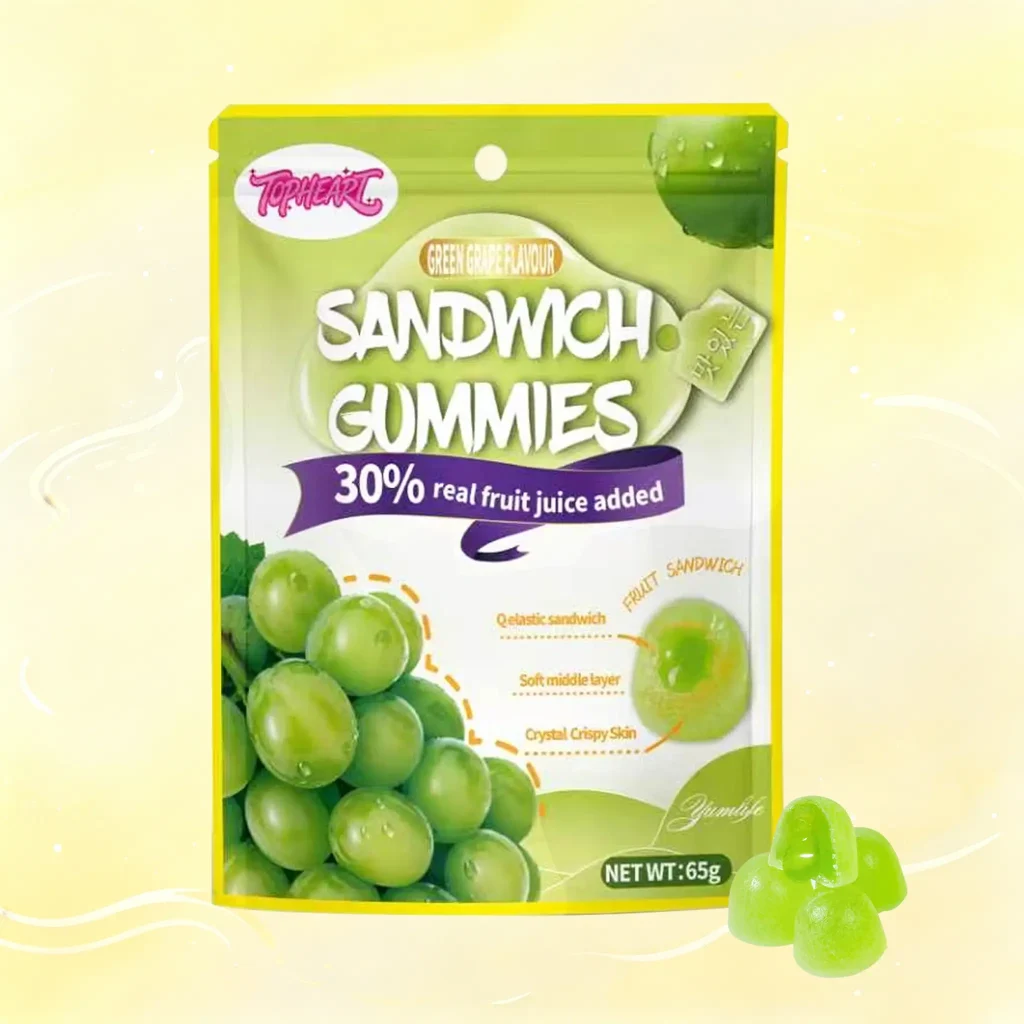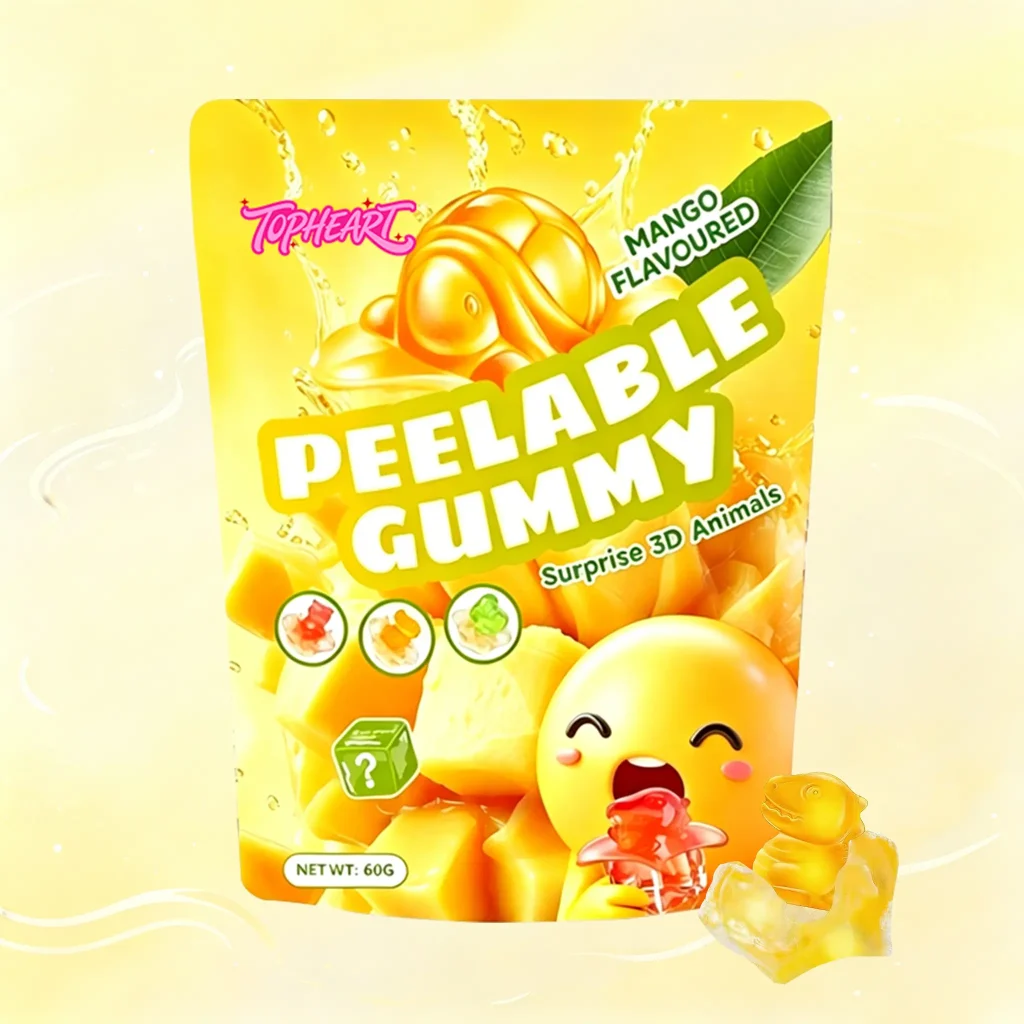



This difference is important because modern confectionery sourcing is no longer based only on flavor and unit price. Buyers increasingly compare product consistency, ingredient transparency, technical documentation, shelf life, packaging protection, destination-market compliance, OEM capabilities, and supply reliability.
What Is Toffee Candy?
Toffee Candy is a cooked sugar confectionery traditionally associated with sugar, fat, and dairy ingredients such as butter or milk solids. During controlled heating, water is progressively removed while sugars and other ingredients undergo complex thermal reactions that contribute to the characteristic brown color, roasted notes, buttery aroma, and distinctive bite.
Unlike a single fixed recipe, modern Toffee Candy covers a relatively broad range of products. Some varieties are soft and chewy, while others are firm or hard. A formulation can also be adjusted for different retail markets by changing the sugar system, fat source, milk solids, glucose syrup level, flavoring, cooking endpoint, moisture level, and packaging format.
For a buyer sourcing from a toffee candy manufacturer, the product specification should therefore be treated as a complete system rather than simply a flavor description.
The category also benefits from strong familiarity. A well-developed toffee product can bridge traditional confectionery expectations with modern flavor development and packaging.
For an overview of manufacturing background and confectionery production capabilities, buyers can review toffee candy manufacturer information when evaluating a potential production partner.
What Is Toffee Made Of?
The exact recipe varies by product, but typical toffee candy ingredients can include sugar, glucose syrup, butter or vegetable fat, milk solids, water, salt, and flavoring systems. Some formulations also use permitted colors or other functional ingredients according to the intended market.
| Ingredient | Typical Role in Toffee Candy | Effect on Final Product | Buyer Consideration |
|---|---|---|---|
| Sucrose | Primary sweetener and structural ingredient | Sweetness, body and firmness | Check sweetness level and crystallization control |
| Glucose Syrup | Texture and crystallization control | Improves chewiness and helps reduce unwanted crystallization | Confirm syrup specification and formulation ratio |
| Butter or Vegetable Fat | Fat phase and mouthfeel | Richness, smoothness and creamy texture | Confirm fat source and destination-market requirements |
| Milk Solids | Dairy flavor and solids | Creaminess, body and richer flavor | Important for allergen declaration |
| Water | Processing medium | Influences dissolution and cooking | Final moisture must match target texture |
| Salt | Flavor balancing | Helps moderate excessive sweetness | Useful for butter, caramel and premium flavor profiles |
| Flavoring | Flavor differentiation | Creates fruit, coffee, chocolate or other profiles | Must comply with destination-market requirements |
One common purchasing mistake is to evaluate a formulation only by ingredient names. The actual eating experience depends on the interaction among ingredient ratios, cooking conditions, final moisture, cooling, forming, and packaging.
How Is Toffee Candy Made?
The industrial toffee candy production process is essentially a controlled transformation of a liquid or semi-liquid sugar system into a stable confectionery mass that can be formed, cooled, wrapped, and distributed.
A general commercial process includes ingredient weighing, mixing, dissolution, controlled heating, concentration, formulation adjustment, cooling, forming, cutting or depositing, wrapping, inspection, and final packing.
- Ingredient weighing and preparation
- Mixing and dissolution
- Controlled heating and concentration
- Addition or adjustment of fat, dairy and flavor ingredients
- Cooking to the specified endpoint
- Cooling
- Forming, cutting, depositing or molding
- Individual wrapping or secondary packaging
- Inspection and quality control
- Cartoning and shipment preparation
Why Cooking Control Matters
Cooking is one of the most important stages because the thermal history of the product influences moisture, color, flavor development, viscosity, and final texture.
Sugar systems can undergo caramelization, while reactions involving reducing sugars and amino compounds can contribute to non-enzymatic browning and flavor development. The exact behavior depends on formulation, temperature, time, moisture and the composition of the sugar system.
| Manufacturing Parameter | Typical Industrial Consideration | Impact on Toffee Candy | Quality Risk if Uncontrolled |
|---|---|---|---|
| Cooking Temperature | Formulation-dependent; commonly within a high-temperature confectionery cooking range | Controls concentration, color and flavor development | Inconsistent texture or excessive browning |
| Final Moisture | Product-specific | Determines softness, chewiness and stability | Sticky, hard or unstable texture |
| Sugar Solids | High-solids confectionery system | Provides structure and sweetness | Poor setting or inconsistent bite |
| Fat Level | Formulation-specific | Controls richness and mouthfeel | Greasy or weak structure |
| Cooling Rate | Controlled after cooking | Influences texture and shape | Deformation or inconsistent hardness |
| Piece Weight | Defined product specification | Ensures pack consistency | Underweight or overweight pieces |
| Packaging Barrier | Selected according to product sensitivity | Protects against moisture transfer and oxidation | Softening, stickiness or quality deterioration |
How Toffee Candy Develops Its Flavor and Texture
The appeal of toffee comes from a combination of sweetness, fat, thermal flavor development, and texture.
A soft product may retain more moisture and use a formulation designed to provide a flexible, chewy bite. A firmer product generally requires a different balance of solids, fat, moisture, and processing conditions.
From a scientific perspective, moisture is especially important. Confectionery stability is influenced by moisture migration, sugar crystallization, fat-related changes, texture changes, storage temperature, humidity, and packaging performance.
| Quality Parameter | Why It Matters | Typical Direction of Control | Possible Product Effect |
|---|---|---|---|
| Moisture Content | Determines texture and storage behavior | Controlled according to formulation | Softness, hardness and stickiness |
| Water Activity | Indicates availability of water for chemical and microbial processes | Maintained within the product specification | Stability and shelf-life performance |
| Fat Content | Influences mouthfeel and structural properties | Adjusted to target formulation | Creaminess, lubrication and bite |
| Sugar Concentration | Determines confectionery structure | Increased during cooking | Firmness and solids development |
| Cooking Temperature | Drives concentration and thermal reactions | Controlled according to formulation | Color, aroma and texture |
| Storage Humidity | Influences moisture migration | Kept within recommended conditions | Stickiness, softening or crystallization |
| Packaging Barrier | Reduces environmental moisture transfer | Matched to product requirements | Shelf-life and texture retention |
This is why two products containing broadly similar ingredients can still have very different eating characteristics. For a commercial buyer, texture should be defined through a physical sample and written specification rather than through a single adjective such as “soft” or “chewy.”
What Are the Different Types of Toffee Candy?
| Toffee Candy Type | Typical Texture | Common Flavor Profiles | Recommended B2B Applications |
|---|---|---|---|
| Soft Toffee | Soft and chewy | Milk, butter, cream | Supermarkets and convenience retail |
| Hard Toffee | Firm to hard | Butter, coffee, caramel | Traditional candy retail |
| Milk Toffee | Creamy and chewy | Milk, vanilla, butter | Mainstream retail |
| Butter Toffee | Rich and firm-chewy | Butter, sea salt | Premium confectionery |
| Fruit Toffee | Soft to firm | Strawberry, orange, mango | Youth-oriented and mixed candy |
| Coffee Toffee | Firm or chewy | Coffee, mocha | Adult-oriented confectionery |
| Chocolate Toffee | Chewy or firm | Chocolate, cocoa | Premium and gift channels |
| Nut Toffee | Firm or crunchy | Peanut, almond, hazelnut | Premium and specialty retail |
Soft and Chewy Toffee Candy
Soft toffee candy is designed around a flexible bite rather than a brittle snap. It is commonly suitable for individual wrapping, multipacks, convenience retail, and everyday snack-oriented confectionery.
Hard Toffee Candy
Hard toffee candy generally offers a firmer bite and may provide a longer-lasting consumption experience. Buyers should still confirm whether a supplier’s description refers to fully hard candy, semi-hard toffee, or a firm-chewy formulation.
Milk and Butter Toffee
Milk, cream, and butter-style profiles are closely associated with the traditional image of toffee. Dairy ingredients can contribute richness, aroma, body, and a rounded mouthfeel.
Fruit, Coffee, Chocolate and Nut Toffee
Modern Toffee Candy can be developed beyond a traditional butter profile. Buyers can consider coffee, chocolate, strawberry, orange, mango, banana, peanut, almond, hazelnut, sea salt and other flavor directions depending on the target market.
Toffee Candy vs. Caramel: What Is the Difference?
Toffee and caramel are related confectionery concepts, but they should not simply be treated as identical products.
| Comparison Factor | Toffee Candy | Caramel |
|---|---|---|
| Basic Product Concept | Cooked sugar confectionery commonly containing fat and often dairy ingredients | Heated sugar confectionery with formulations ranging from soft candy to fillings |
| Typical Texture | Soft, chewy, firm or hard | Soft, chewy, flowing or firm |
| Flavor Profile | Buttery, roasted, rich and caramelized | Sweet, creamy and caramelized |
| Fat Contribution | Often an important structural component | Varies significantly by formulation |
| Moisture Level | Usually controlled toward a defined candy texture | Can vary widely according to application |
| Typical Applications | Wrapped candy, assortments, bars and retail confectionery | Fillings, centers, sauces, candies and toppings |
| B2B Customization | Flavor, texture, weight and packaging | Flavor, viscosity, filling properties and packaging |
For purchasing and labeling purposes, the actual formulation and intended product characteristics should determine how a confectionery is described rather than treating “toffee” and “caramel” as automatic synonyms.
Why Global Buyers Still Source Toffee Candy
For distributors, retailers and importers, wholesale toffee candy can offer a useful combination of familiar flavor, packaging flexibility and broad retail application.
A buyer may place a toffee product in supermarkets, convenience stores, candy shops, seasonal gift collections, vending environments, or mixed confectionery displays. Because the category is familiar, consumers generally need less product education than they would for a completely unfamiliar confectionery format.
Retail Convenience
Individually wrapped products are especially practical for supermarkets, convenience stores, candy distributors and wholesale channels. Wrapping also creates a clear unit structure that simplifies portioning and merchandising.
Flavor Flexibility
A toffee candy manufacturer can potentially develop different flavor systems for different regions. A premium retailer may emphasize butter, cream, coffee and chocolate, while another market may respond more strongly to fruit or mixed-flavor assortments.
The commercial value of toffee also comes from its combination of recognizable flavor, rich texture and broad age appeal. For additional category context, buyers can explore rich chewy toffee candy and how traditional confectionery characteristics can support modern retail positioning.
What Should Buyers Check Before Ordering Toffee Candy?
A professional sourcing process should begin with specifications rather than price.
Product Specifications
| Specification Area | What Buyers Should Confirm | Why It Matters |
|---|---|---|
| Product Name | Exact commercial product description | Prevents ambiguity between similar confectionery categories |
| Flavor | Exact flavor and intensity | Ensures consistent consumer positioning |
| Texture | Soft, chewy, firm or hard | Defines eating experience |
| Piece Weight | Target weight and tolerance | Supports pack count and net-weight control |
| Ingredients | Approved formulation | Supports compliance and consistency |
| Allergens | Milk, peanuts, nuts, soy or other applicable allergens | Food safety and labeling compliance |
| Shelf Life | Validated commercial shelf life | Supports distribution planning |
| Storage Conditions | Temperature, humidity and handling conditions | Reduces quality deterioration |
Packaging Specifications
| Packaging Format | Typical Retail Channel | Key Advantage | Main Buyer Consideration |
|---|---|---|---|
| Individual Wrapper | Convenience Stores / Candy Shops | Hygiene and portion control | Film and seal performance |
| Stand-Up Pouch | Supermarkets / Modern Retail | Strong shelf visibility | Barrier properties and artwork |
| Retail Box | Premium / Gift Retail | Premium presentation | Printing and structural design |
| Plastic Jar | Counter Sales / Wholesale | High product visibility | Closure and storage performance |
| Multipack | Grocery Retail | Convenient household purchase | Pack configuration |
| Bulk Carton | Wholesale / Distribution | Logistics efficiency | Carton quantity and palletization |
For buyers ready to discuss product specifications, samples, packaging or export requirements, the toffee candy sourcing contact page can be used as a starting point for supplier communication.
Food Safety and Regulatory Requirements for Toffee Candy
Regulatory requirements vary by destination, so an export specification should never be based on one country’s rules alone.
United States Requirements
For products entering the United States, food importers must ensure that imported foods meet applicable safety and labeling requirements. FDA requirements can cover facility registration, food import procedures, prior notice, ingredient compliance and labeling.
U.S. allergen labeling is especially important. The FDA recognizes nine major food allergens under federal law: milk, eggs, fish, crustacean shellfish, tree nuts, peanuts, wheat, soybeans and sesame.
European Union Requirements
The European Union’s Regulation (EU) No 1169/2011 establishes broad food-information requirements for consumers. For prepacked foods, applicable requirements include the name of the food, ingredient list, allergen information, net quantity, date marking, storage conditions where relevant, operator information and nutrition information.
EU legislation also requires specified allergens to be clearly indicated where they are present as ingredients. Additives must comply with the relevant EU authorization framework and conditions of use.
U.S. vs. EU Regulatory Focus
| Regulatory Area | United States | European Union |
|---|---|---|
| Food Import Controls | FDA import requirements apply | EU food import and border-control framework applies |
| Ingredient Declaration | Required for applicable packaged foods | Required for prepacked foods |
| Allergen Labeling | 9 major food allergens under U.S. federal law | 14 allergens requiring declaration under EU rules |
| Nutrition Information | Required where applicable | Nutrition declaration generally required for prepacked foods |
| Additives | Must comply with applicable U.S. requirements | Must comply with EU authorized additive rules |
| Label Review | Should be completed before mass production | Should be completed before artwork approval |
Why Destination-Market Compliance Should Be Discussed Before Artwork
One common sourcing mistake is to approve packaging artwork first and verify regulatory requirements later. This can create unnecessary reprinting, relabeling, or shipment delays.
A more effective sequence is:
Product specification → ingredient review → allergen review → destination-market compliance → nutrition review → artwork → final sample approval → mass production.
Toffee Candy Shelf Life and Storage
Shelf life is not determined by sugar content alone. Confectionery products can experience changes in moisture distribution, sugar crystallization, fat oxidation, texture, color, aroma, and packaging interaction.
| Storage Factor | Lower-Risk Condition | Higher-Risk Condition | Potential Effect |
|---|---|---|---|
| Humidity | Controlled | High or fluctuating | Moisture pickup and stickiness |
| Temperature | Stable and appropriate for the product | Elevated or rapidly changing | Texture changes and deformation |
| Packaging | Good moisture barrier | Poor or damaged barrier | Softening or quality deterioration |
| Oxygen Exposure | Controlled | Excessive | Possible flavor and fat-oxidation changes |
| Seal Integrity | Consistent and intact | Weak or damaged | Loss of packaging protection |
| Storage Duration | Within validated shelf life | Beyond validated period | Increased quality uncertainty |
Toffee stored without adequate protection can become harder, softer, stickier, grainier, or otherwise different from its original specification. Moisture transfer is therefore both a packaging issue and a product-quality issue.
Packaging Strategy for International Toffee Candy
For export markets, packaging serves three functions simultaneously: protection, communication, and merchandising.
A technically suitable packaging format should help protect the candy from moisture exchange and physical damage while providing enough information for regulatory compliance and enough visual impact for retail.
For premium lines, boxes or higher-end multipacks may communicate quality. For convenience retail, individual wrapping may be more important. For wholesale distribution, carton efficiency and inner-pack configuration can become major purchasing factors.
Brand storytelling can also strengthen the product proposition. Toffee may be positioned around tradition, indulgence, nostalgia, family sharing, rich flavor or modern flavor discovery. For another perspective on the category’s emotional positioning, buyers can review
nostalgic toffee candy for all ages.
Private Label and OEM Toffee Candy
For importers and brand owners, private label toffee candy provides a practical route to develop a proprietary retail proposition without building their own confectionery manufacturing line.
A typical OEM project may include:
- Product selection
- Flavor confirmation
- Texture specification
- Ingredient and allergen review
- Packaging format selection
- Artwork development
- Sample production
- Sample approval
- Mass production
- Quality inspection
- Export documentation
- Shipment
Strong OEM toffee candy projects begin with a detailed specification sheet. This prevents vague requirements such as “make it soft and buttery” from becoming a quality dispute later.
Buyers should instead define the target texture, piece weight, packaging format, flavor profile, label market, shelf-life requirement and assortment structure.
Toffee Candy for Different B2B Channels
Supermarkets and Hypermarkets
Supermarket buyers typically need products that are easy to merchandise, clearly labeled, consistently supplied, and visually competitive. Multipacks, bags, boxes and display cartons can all work depending on shelf strategy.
Wholesalers and Distributors
Distributors usually pay close attention to case quantity, product stability, carton efficiency, MOQ, mixed-flavor capability and shipment reliability. For this channel, bulk toffee candy is often evaluated from a logistics perspective as much as a consumer-product perspective.
Convenience Stores
Small packs, individual wrapping, familiar flavor profiles and strong shelf visibility can make sense for impulse-oriented channels.
Private-Label Retailers
Private-label programs place greater emphasis on formulation consistency, packaging customization, documentation, regulatory review and dependable production.
Global Toffee Candy Trends Buyers Should Watch
Premium Flavor Positioning
Traditional butter and milk profiles remain commercially useful, but premium concepts can introduce sea salt, coffee, chocolate, nuts, cream, fruit and layered flavor combinations.
Smaller Portion Formats
Individually wrapped pieces and multipacks allow consumers to control consumption while helping retailers create different price points.
Flavor Localization
International buyers increasingly need product concepts that fit individual markets rather than relying on one standardized global recipe.
Private Label Development
Retailers and distributors can use customized packaging, flavor combinations and pack sizes to differentiate their assortment.
Transparent Ingredient and Allergen Information
Regulatory compliance is also becoming an increasingly important commercial consideration because poor labeling can create both legal and consumer-trust problems.
How to Choose a Reliable Toffee Candy Manufacturer
The lowest quotation is not always the lowest total sourcing cost.
| Evaluation Factor | What Buyers Should Evaluate | Why It Matters |
|---|---|---|
| Product Consistency | Batch-to-batch flavor, texture and appearance | Protects retail consistency |
| Manufacturing Capability | Production equipment and process control | Supports stable commercial production |
| Food Safety | Documented food-safety systems and controls | Reduces food-safety and compliance risk |
| Traceability | Ingredient and batch records | Supports quality investigation and recalls if required |
| OEM Capability | Formula, flavor and packaging customization | Important for private-label development |
| Export Experience | International documentation and market familiarity | Reduces shipment and compliance issues |
| Production Capacity | Ability to meet required volume | Supports long-term supply planning |
| Communication | Speed and accuracy of technical responses | Reduces specification misunderstandings |
Factory vs. Trading Company
| Evaluation Factor | Direct Factory | Trading Company |
|---|---|---|
| Production Communication | Direct with production team | May involve an intermediary |
| Product Customization | Often more flexible | Depends on manufacturing partner |
| OEM Development | Usually direct | Supplier-dependent |
| Quality Traceability | Direct production records may be available | Depends on source factory |
| Packaging Development | Can often coordinate directly | Depends on supplier |
| Technical Support | Usually closer to manufacturing | May vary |
| Supply Chain Control | Higher direct control | Depends on upstream supplier |
| Product Variety | May focus on own production categories | Often offers a broader range |
A factory is not automatically better simply because it owns production equipment. The stronger supplier is the one that can consistently meet the required formulation, quality, compliance, packaging, documentation, and delivery conditions.
Toffee Candy Buyer Checklist
| Purchase Stage | Buyer Action | Risk Reduced |
|---|---|---|
| Product Definition | Confirm flavor, texture and piece weight | Product mismatch |
| Formula Review | Review ingredients and allergens | Compliance problems |
| Packaging Review | Confirm format, barrier and artwork requirements | Packaging failure or reprinting |
| Sample Approval | Approve physical sample before mass production | Texture and appearance disputes |
| Documentation | Confirm specifications and certificates | Import delays |
| Production Planning | Confirm MOQ, capacity and lead time | Supply disruption |
| Final Shipment | Check packing, labeling and export documents | Border or delivery issues |
How Should Buyers Compare Toffee Candy Suppliers?
| Buyer Priority | What to Evaluate | Recommended Decision |
|---|---|---|
| Lowest Landed Cost | Product, packaging, logistics and compliance | Do not compare unit price alone |
| Premium Retail | Flavor, ingredients, packaging and appearance | Prioritize product differentiation |
| Supermarket Distribution | Stability, labeling and shelf presentation | Prioritize consistency and packaging |
| Wholesale | MOQ, carton efficiency and shelf life | Prioritize logistics efficiency |
| Private Label | OEM capability, artwork and formulation | Prioritize customization capability |
| New Market Entry | Compliance, samples and documentation | Prioritize regulatory readiness |
| Long-Term Supply | Capacity, quality control and delivery performance | Prioritize manufacturing reliability |
Frequently Asked Questions About Toffee Candy
1. What is Toffee Candy made of?
Toffee Candy is commonly made from sugar, fat, and, depending on the recipe, dairy ingredients such as butter or milk solids. Glucose syrup, salt, flavorings, and other permitted ingredients may also be included. The final texture depends on the ingredient ratios, cooking endpoint, moisture level, cooling process, and packaging. For commercial products, buyers should always request the exact ingredient specification rather than assuming that every toffee recipe uses the same formulation.
2. Is Toffee Candy the same as caramel?
No. Toffee and caramel are related but are not necessarily the same product. Both can involve heated sugar systems, but formulation, cooking conditions, fat content, dairy content, moisture, and final texture can differ significantly. Toffee is commonly associated with buttery, roasted flavor and firmer or chewy textures, while caramel can range from soft and chewy to flowing or filling-type applications. For purchasing and labeling, the exact product specification should determine how the confectionery is described.
3. How is Toffee Candy manufactured?
Industrial Toffee Candy production typically involves weighing ingredients, mixing, controlled heating, concentration, formulation adjustment, cooling, forming, cutting or depositing, wrapping, inspection, and final packing. Temperature and moisture control are particularly important because they influence color, texture, shape stability, and shelf life. A professional manufacturer should be able to explain the product specification and quality-control checkpoints used to keep different production batches consistent.
4. What should buyers check when purchasing Toffee Candy wholesale?
Wholesale buyers should evaluate much more than unit price. Important purchasing criteria include formulation, flavor, texture, piece weight, ingredients, allergen information, shelf life, packaging barrier, MOQ, carton configuration, production capacity, quality-control procedures, certifications or technical documents, and destination-market labeling requirements. Buyers should also approve a physical sample before mass production, especially for private-label projects where texture and packaging must match a defined specification.
5. Can Toffee Candy be customized for private-label and OEM projects?
Yes. Many commercial Toffee Candy programs can be adapted for private-label and OEM requirements, including flavor, texture, piece weight, packaging format, artwork, mixed-flavor assortments, and case configuration. The most efficient approach is to establish a written product specification before artwork and mass production. Buyers should also confirm regulatory requirements for the destination market, particularly ingredient declarations, allergen labeling, nutrition information, and additive requirements before the final packaging is approved.
Final Takeaway: Why Toffee Candy Remains a Practical Global Sourcing Category
Toffee Candy combines a familiar consumer proposition with meaningful B2B customization potential. Its texture can range from soft and chewy to firm, its flavor can move from traditional butter and milk to coffee, chocolate, fruit, and nut profiles, and its packaging can be adapted for supermarkets, convenience stores, wholesalers, distributors, and private-label retailers.
For international buyers, the most important decision is not simply finding a toffee candy factory with an attractive quotation. The stronger sourcing decision comes from comparing formulation consistency, texture control, food-safety practices, packaging performance, regulatory readiness, OEM capability, technical documentation, and supply reliability.
In practical terms, a successful Toffee Candy sourcing project follows a clear logic:
Define the consumer → define the texture → define the recipe requirements → confirm compliance → choose packaging → approve samples → validate production → scale the order.
This approach reduces sourcing risk while creating more room for flavor innovation, private-label differentiation, and long-term retail growth.
For buyers evaluating a new supplier, the most practical next step is to request a technical specification and sample against a clearly defined target rather than comparing suppliers on price alone.