


Chocolate Ball
1. Understand Your Chocolate Ball Product Requirements First
Before contacting manufacturers, define exactly what type of Chocolate Ball you want to source. The term can describe different confectionery products, and suppliers may offer different structures, ingredients, flavors, and coatings.
Some products focus on a smooth chocolate experience, while others combine chocolate with crunchy ingredients or a coated outer layer. The product’s construction influences its taste, texture, packaging requirements, and suitability for different sales channels.
Start by identifying the following product characteristics:
- Chocolate type: Determine whether you are looking for milk chocolate, dark chocolate, white chocolate, or another chocolate-based formulation.
- Product structure: Clarify whether the product should have a solid chocolate center, a crunchy inclusion, a filled structure, or a coated exterior.
- Flavor direction: Consider classic chocolate, milk, cocoa, nut-inspired, fruit-inspired, or other market-relevant flavor concepts.
- Texture: Decide whether your customers prefer a smooth, creamy, crispy, crunchy, or multi-layered experience.
- Product size: Define the preferred ball diameter, individual piece weight, and net weight per retail package.
- Target customer: Consider whether the product is intended for everyday snacking, family sharing, gifting, or specialty confectionery retail.
A clear product brief makes communication with suppliers more efficient. It also helps manufacturers determine whether their existing products meet your requirements or whether further customization may be needed.
2. Evaluate the Supplier’s Manufacturing Background
A reliable supplier should be able to explain its business background, product categories, manufacturing capabilities, and experience serving international customers. Buyers should not rely only on attractive product photographs or general promotional statements.
Start by reviewing the company’s website and available business information. Look for a clear company introduction, product catalog, contact details, manufacturing information, and evidence of export-oriented business operations.
A supplier with a focused confectionery business may be better positioned to understand the technical and commercial requirements of chocolate products. However, buyers should verify the actual capabilities of each potential partner rather than assuming that every company offering chocolate products operates its own production facilities.
When reviewing a potential chocolate candy manufacturer, consider these questions:
- Does the company clearly explain its business activities and product categories?
- Can it provide product specifications and ingredient information?
- Does it have experience working with overseas buyers?
- Can it explain its quality-control procedures?
- Does it provide clear communication about samples, quotations, and order requirements?
- Can it support the documentation needed for your destination market?
It is also useful to distinguish between manufacturers, trading companies, and distributors. Each business model may offer different advantages. A direct manufacturer may provide closer communication about product development and production, while a trading company may offer access to products from several factories.
The right choice depends on your sourcing objectives, order size, customization requirements, and need for technical support.
3. Compare Chocolate Quality, Ingredients, and Product Specifications
Chocolate quality is one of the most important factors when selecting a Chocolate Ball supplier. Buyers should evaluate the actual product rather than relying on descriptions such as premium, rich, smooth, or delicious.
A professional supplier should be able to provide a product specification sheet that identifies the product’s composition and relevant characteristics. Depending on the product, this information may include ingredients, allergens, net weight, piece dimensions, nutritional information, storage instructions, shelf life, and packaging details.
Review the Chocolate Ingredients
Chocolate formulations can differ significantly. The type of fat used, cocoa ingredients, milk components, sweeteners, emulsifiers, and flavoring ingredients can influence the final product’s taste, texture, and melting behavior.
Buyers should pay attention to the declared ingredients and confirm whether the product meets the requirements of their target market. If the product contains milk, soy, nuts, wheat, or other regulated allergens, the relevant information should be reviewed carefully.
Do not assume that two products with similar appearances have the same composition. A chocolate-coated product, a compound-coated confectionery product, and a product made primarily from chocolate may have different ingredient structures and sensory characteristics.
Evaluate the Texture and Flavor
A Chocolate Ball should deliver a consistent experience from piece to piece. Depending on the product concept, buyers may evaluate:
- Chocolate flavor intensity and sweetness balance.
- Outer coating thickness and appearance.
- Crunchiness or smoothness of the center.
- Uniformity of product size and shape.
- Whether the product has an oily, waxy, grainy, or otherwise undesirable mouthfeel.
- Whether the product maintains its expected texture after storage and transportation.
The best way to evaluate these characteristics is to request representative samples and compare them under consistent conditions.
4. Understand the Science Behind Chocolate Quality
Chocolate quality is closely related to the physical properties of cocoa butter. Cocoa butter is the main fat in conventional chocolate and can crystallize into several different structures, known as polymorphic forms.
These crystal structures influence the chocolate’s appearance, firmness, melting behavior, and resistance to fat bloom. Properly controlled crystallization is important when manufacturing chocolate products because it helps create a stable structure and a more desirable eating experience.
Cocoa Butter Crystal Forms and Their Melting Points
Research has identified six principal cocoa butter polymorphic forms. Their melting points differ, and the more stable Form V is generally associated with properly tempered chocolate.
The following table presents commonly cited reference melting points reported in the scientific literature.
| Cocoa Butter Form | Crystal Type | Reference Melting Point | General Characteristics |
|---|---|---|---|
| Form I | Sub-alpha | 17.3°C | Unstable crystal structure that transforms relatively quickly. |
| Form II | Alpha | 23.3°C | A relatively unstable form with limited long-term suitability. |
| Form III | Beta-prime | 25.5°C | An intermediate crystal form. |
| Form IV | Beta-prime | 27.5°C | A metastable form that can transform into more stable structures. |
| Form V | Beta | 33.8°C | The desirable form associated with gloss, snap, and suitable melting behavior. |
| Form VI | Beta | 36.3°C | A more stable form associated with long-term crystal transformation and potential quality changes. |
Important scientific note: These are reference melting points for cocoa butter polymorphs, not finished-product melting specifications for every Chocolate Ball. Actual chocolate formulations may behave differently depending on fat composition, ingredients, processing, and storage conditions.
Why Tempering Matters
Tempering is a controlled heating, cooling, and mixing process used to encourage the formation of desirable cocoa butter crystals. Proper crystallization contributes to a glossy appearance, a clean snap, and suitable contraction during cooling.
For buyers, tempering quality can be assessed through product appearance, texture, and stability. A sample that looks glossy and has a clean break may indicate appropriate chocolate structure, although laboratory testing and supplier quality records are needed for a more complete assessment.
Understand Fat Bloom and Sugar Bloom
Fat bloom appears as a pale or whitish layer on the chocolate surface. It can occur when cocoa butter crystals change or migrate toward the surface. Temperature fluctuations and unsuitable storage conditions can contribute to this problem.
Sugar bloom is different. It can occur when moisture dissolves sugar on the surface and the sugar recrystallizes after the moisture evaporates. Both types of bloom can affect appearance and consumer acceptance.
This is why buyers should ask about storage recommendations, packaging protection, and transportation arrangements when sourcing chocolate products internationally.

Chocolate Coated Candy-10
5. Check Product Range and Chocolate Category Experience
A supplier with a broader confectionery portfolio may provide more opportunities for assortment planning and future product development. Buyers who already sell chocolate bars, chocolate-coated snacks, or other confectionery products may prefer a partner that understands several related product categories.
Review the supplier’s chocolate product range to understand whether its available products match your business direction. A broader selection may help buyers coordinate product sourcing, compare packaging formats, and develop complementary retail collections.
When reviewing the range, consider whether the supplier offers:
- Different chocolate flavors and product styles.
- Chocolate products suitable for individual retail packaging.
- Products with different textures and centers.
- Options for mixed confectionery assortments.
- Potential customization for brand-specific projects.
A wider product portfolio does not automatically guarantee better quality. Buyers should still evaluate each product individually and confirm that the supplier has the appropriate production and quality-control capabilities.
6. Evaluate Coating Quality and Product Structure
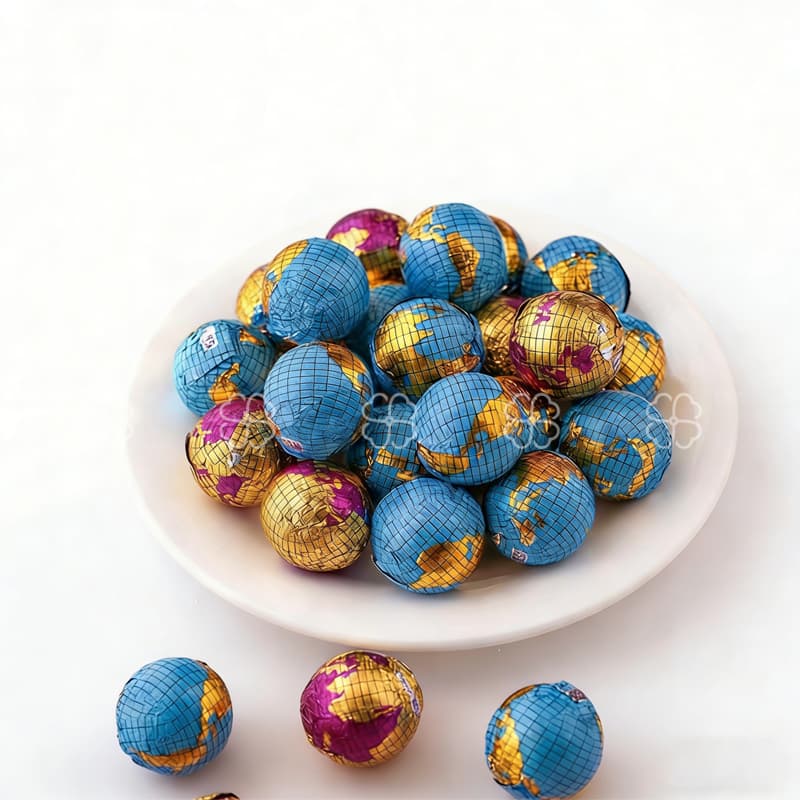
Some Chocolate Ball products use an outer chocolate or compound coating to create a specific appearance, texture, or flavor experience. The coating can influence the product’s overall taste, handling properties, and shelf presentation.
For coated confectionery, buyers should review the coating’s composition, thickness, adhesion, surface finish, and resistance to cracking or separation.
Questions to Ask About Chocolate Coated Products
- What type of coating is used?
- Does the coating contain cocoa butter or another vegetable fat system?
- Is the coating suitable for the intended storage and transportation conditions?
- Does the coating remain attached to the center during normal handling?
- Are there visible differences in coating thickness between pieces?
- Does the supplier provide relevant ingredient and allergen information?
Buyers can also explore related chocolate coated candy products when comparing different coating styles and confectionery formats.
A practical sample evaluation should include visual inspection, a taste test, and an assessment of how the product behaves after being handled and stored under the recommended conditions. If the product is intended for warm-climate markets, buyers should discuss additional heat-resistance and transportation considerations with the supplier.
7. Review Food Safety, Quality Control, and Export Documentation
Food safety and regulatory compliance are essential when sourcing confectionery products for international distribution. A reliable supplier should be able to explain its quality-management procedures and provide documentation relevant to the product and destination market.
The exact documents required will depend on the importing country’s regulations, the product’s ingredients, and the buyer’s distribution model.
Buyers should consider requesting or reviewing the following information where applicable:
- Product specification sheet: Product name, ingredients, net weight, dimensions, packaging, and storage information.
- Allergen declaration: Information about milk, soy, nuts, gluten-containing ingredients, and other relevant allergens.
- Nutrition information: Nutritional values prepared in accordance with applicable labeling requirements.
- Microbiological and chemical testing: Relevant test reports based on the product and regulatory requirements.
- Food safety documentation: Applicable certifications, audit records, or food safety management information.
- Traceability information: Batch identification and relevant production records.
- Export documentation: Commercial and regulatory documents required for the destination market.
Do not assume that a supplier’s general certification automatically covers every product or every importing market. Buyers should check the validity, scope, issuing organization, and applicability of the documentation.
8. Compare Packaging, Shelf Life, and Transportation Conditions
Packaging is not only a marketing tool. It also helps protect chocolate products from moisture, odors, physical damage, and unsuitable environmental conditions.
A Chocolate Ball may be sold in an individual pouch, a small retail bag, a larger sharing pack, a jar, or a customized gift package. The best format depends on the product size, sales channel, target price positioning, and customer preferences.
Packaging Details to Confirm
Before confirming an order, buyers should clarify:
- Net weight and number of pieces per package.
- Packaging material and barrier properties.
- Sealing method and package dimensions.
- Outer carton size and quantity per carton.
- Barcode, batch code, and production date requirements.
- Language and labeling requirements for the destination market.
- Availability of customized logo and artwork.
Shelf life should be supported by product-specific information rather than assumptions based on the general chocolate category. Ask the supplier for the confirmed shelf life, recommended storage temperature, and any special handling instructions.
Transportation conditions also matter. Chocolate products can be affected by high temperatures and temperature fluctuations. Long-distance shipments should therefore be planned with suitable packaging, seasonal considerations, and appropriate logistics arrangements.
9. Assess OEM, ODM, and Private-Label Capabilities
For brands that want to develop a distinctive product, customization can be an important factor in supplier selection. OEM and ODM cooperation may involve product specifications, flavor direction, packaging design, brand presentation, or other project requirements.
However, the available customization options depend on the supplier’s equipment, production processes, minimum order quantities, and technical capabilities.
Before starting a private-label project, buyers should prepare a clear brief covering:
- Preferred Chocolate Ball style and product structure.
- Target flavor and texture.
- Product size and package weight.
- Logo, artwork, and packaging preferences.
- Target market and applicable labeling requirements.
- Estimated order quantity and expected delivery schedule.
The supplier should explain which elements can be customized, which are based on existing products, and which may require additional development or tooling.
A useful reference for market planning is the discussion of chocolate market trends, including flavor innovation, packaging development, and changing consumer preferences. Buyers can use these themes to develop product concepts that are relevant to their own markets.
10. Request Samples and Compare Suppliers Systematically
Product samples are one of the most useful tools in supplier evaluation. They allow buyers to compare actual product quality instead of making decisions based only on product photographs, descriptions, or quotations.
Whenever possible, request samples from several potential suppliers and evaluate them using the same criteria.
Chocolate Ball Sample Evaluation Checklist
| Evaluation Area | What to Check |
|---|---|
| Appearance | Shape, size uniformity, color, surface finish, and visible defects. |
| Flavor | Chocolate intensity, sweetness, aftertaste, and flavor consistency. |
| Texture | Smoothness, crispness, crunchiness, coating thickness, and mouthfeel. |
| Packaging | Seal quality, package strength, presentation, and labeling information. |
| Documentation | Ingredients, allergens, nutrition data, shelf life, and relevant quality records. |
| Commercial Terms | MOQ, lead time, quotation validity, payment terms, and delivery arrangements. |
A structured comparison helps buyers identify differences between suppliers and avoid choosing based on price alone. The lowest quotation may not represent the best overall value if the product has inconsistent quality, unsuitable packaging, or limited export support.
11. Compare Quotations and Build a Long-Term Supplier Relationship
Once product samples and specifications have been reviewed, buyers can compare quotations and commercial terms.
A complete quotation should clearly identify the product, specifications, packaging format, order quantity, unit price, minimum order quantity, production lead time, and delivery terms. Buyers should also confirm whether the quotation includes customized packaging, artwork preparation, samples, or other additional costs.
When comparing prices, make sure the products are genuinely comparable. Differences in ingredients, coating, piece weight, packaging, carton quantity, and shipping arrangements can affect the final landed cost.
A long-term supplier relationship also depends on communication. Buyers should evaluate how quickly a supplier responds, whether answers are consistent, and whether potential problems are handled transparently.
For businesses planning repeat purchases, it is useful to establish clear expectations for product specifications, approved samples, quality requirements, packaging artwork, and delivery schedules.
12. Work with a Chocolate Supplier That Understands Your Business Goals
Selecting a reliable Chocolate Ball supplier is not simply about finding a company that can provide a product. It is about identifying a business partner that understands your target market, product requirements, quality expectations, and long-term sourcing plans.
TOPHEART focuses on confectionery products and business cooperation with international customers. Buyers interested in chocolate products can discuss product selection, packaging requirements, wholesale sourcing, and potential customized projects with the team.
Before beginning a sourcing discussion, prepare the product style, target market, preferred packaging, estimated order quantity, and any specific documentation requirements. This information helps make communication more efficient and allows the supplier to evaluate the project more accurately.
Businesses planning a new chocolate product collection or looking for a potential supply partner can contact TOPHEART to discuss their requirements and explore possible cooperation.
Chocolate Coated Candy-2
Make a Better Chocolate Ball Sourcing Decision for Your Business
A successful Chocolate Ball sourcing project starts with clear product requirements and a careful supplier evaluation process. Buyers should look beyond appearance and quotation prices to examine ingredients, flavor, texture, cocoa butter behavior, packaging, food safety documentation, and export capabilities.
Requesting samples, comparing specifications, and confirming commercial terms can help reduce sourcing risks. It also gives buyers a clearer understanding of whether a supplier can support their product plans and future orders.
For wholesalers, distributors, retailers, and private-label brands, the right supplier can make it easier to build a consistent chocolate assortment and respond to changing customer preferences.
Take the time to evaluate each potential partner carefully. A well-informed sourcing decision today can support more reliable product quality, smoother cooperation, and stronger business opportunities in the future.
Frequently Asked Questions
1. How do I find a reliable Chocolate Ball supplier?
Start by identifying suppliers with a clear confectionery business background, relevant chocolate product experience, and the ability to provide detailed product specifications. Review their ingredients, allergen information, packaging options, quality-control procedures, and export documentation. Request product samples and compare appearance, flavor, texture, and consistency. You should also confirm minimum order quantities, production lead times, commercial terms, and communication quality before selecting a supplier.
2. What should I check before buying Chocolate Balls wholesale?
Before placing a wholesale order, confirm the product structure, chocolate type, ingredients, allergens, piece size, net weight, packaging format, shelf life, and recommended storage conditions. Ask for representative samples and relevant product documentation. You should also review the quotation, minimum order quantity, carton specifications, production schedule, and shipping arrangements. These details help you compare suppliers fairly and estimate the total landed cost of your purchase.
3. How can I evaluate the quality of a Chocolate Ball product?
Evaluate a Chocolate Ball through its appearance, flavor, texture, coating quality, and consistency between individual pieces. Look for uniform shapes, a suitable surface finish, balanced sweetness, and the intended texture of the center and outer layer. If the product contains a chocolate coating, check whether it adheres properly and remains visually acceptable after normal handling. Product samples, specifications, and relevant quality records provide a stronger basis for evaluation than photographs alone.
4. Can I order customized Chocolate Balls with private-label packaging?
Private-label and customized projects may be available depending on the supplier’s production capabilities, product range, minimum order requirements, and packaging options. Buyers should prepare their preferred product style, flavor direction, piece size, package weight, logo, artwork, and target market information. Ask the supplier which features can be customized, whether existing product formats can be used, and whether additional development or tooling is required. Confirm the final specifications and artwork before approving production.
5. How should Chocolate Balls be stored during transportation and distribution?
Chocolate products should be stored according to the manufacturer’s product-specific instructions. Temperature fluctuations, excessive heat, moisture, and unsuitable packaging can affect chocolate appearance, texture, and flavor. Cocoa butter crystallization changes may contribute to fat bloom, while moisture-related sugar crystallization can cause sugar bloom. Buyers should confirm the recommended storage temperature, shelf life, packaging protection, and transportation requirements with the supplier, especially when shipping to warm climates or distributing products over long distances.