

When a retailer, wholesaler, importer, or private-label brand is deciding between hard candy and soft candy, the most important question is not which product is universally better. The better question is: which candy format is better for the intended consumer, sales channel, logistics environment, and product positioning?
Hard candy is typically associated with a firm, glass-like texture and gradual flavor release, while soft candy covers a much broader group of chewy, gummy, jelly, aerated, and tender confectionery products. From a manufacturing perspective, the difference is strongly influenced by moisture, sugar concentration, hydrocolloids, cooking conditions, cooling, and packaging. From a commercial perspective, the difference affects shelf presentation, transportation, product differentiation, and purchasing decisions.
For buyers researching hard candy vs soft candy, understanding these differences before placing a bulk or private-label order can reduce costly mistakes. A candy that performs well in a dry convenience-store environment may behave differently after weeks of transportation through a hot and humid supply chain.
What Is the Difference Between Hard Candy and Soft Candy?
The simplest distinction is texture, but texture is only the visible result of several formulation and processing variables.
Hard candy is generally produced by concentrating a sugar-based syrup through cooking until the final mass contains relatively little water. After cooling, the concentrated sugar system forms a rigid, glassy structure. Typical examples include fruit drops, mint candy, filled hard candy, lollipops, and other slowly dissolving products.
Soft candy is a broader category. It can include gummies, jelly candies, fruit chews, caramels, toffees, marshmallows, and other products designed to remain flexible, chewy, tender, or elastic. The texture may be created through gelatin, pectin, starch, fats, syrups, aeration, or combinations of these ingredients.
The international Codex classification also distinguishes hard and soft confectionery. Codex food category 05.2 includes confectionery, with 05.2.1 covering hard candy and 05.2.2 covering soft candy. The soft category includes products such as caramels, toffees, and jelly-based candies.
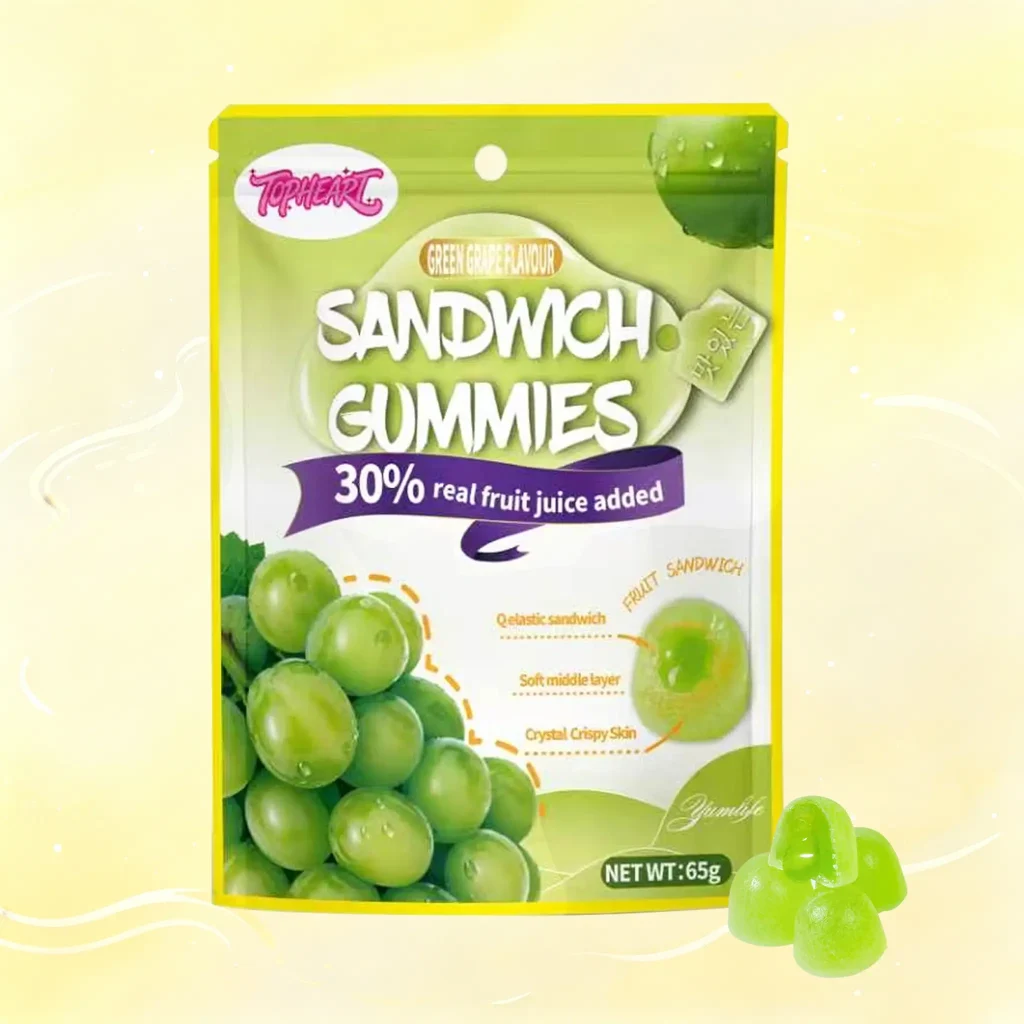
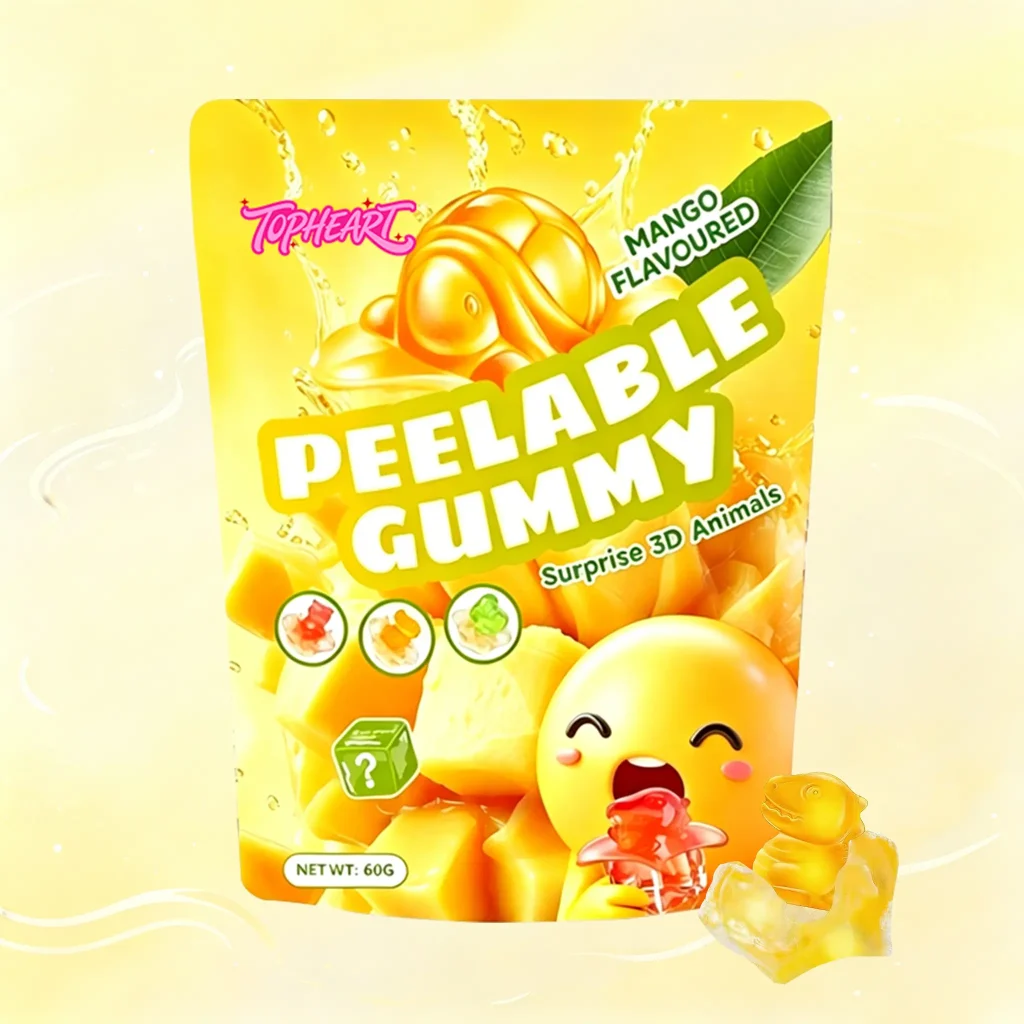
For buyers interested in a wider selection of chewy products, the category of soft candy and gummy candy demonstrates how modern soft confectionery can extend beyond traditional gummies into 3D gummies, peelable gummies, air gummies, polished gummies, and other novelty formats.
Hard Candy vs Soft Candy: A Practical Comparison
The following comparison is useful when a buyer needs to make an initial product-selection decision.
| Factor | Hard Candy | Soft Candy |
|---|---|---|
| Basic texture | Firm, brittle or glass-like | Chewy, elastic, tender or aerated |
| Typical moisture | Low | Generally higher |
| Flavor release | Gradual | Usually faster during chewing |
| Common formats | Drops, mints, lollipops, filled candy | Gummies, jellies, chews, marshmallows, toffees |
| Shape flexibility | High | Very high for molded products |
| Moisture sensitivity | High | High, depending on formulation |
| Packaging priority | Strong moisture barrier | Moisture and temperature management |
| Consumer experience | Slow-dissolving | Chewing, biting, stretching or melting |
| Novelty potential | Moderate to high | Very high |
| Private-label opportunities | Strong | Strong |
| Typical impulse application | Checkout, convenience, candy jars | Checkout, children’s candy, novelty and seasonal products |
| Logistics considerations | Humidity is critical | Humidity and heat can both be important |
This table should not be interpreted as a universal quality ranking. A well-formulated hard candy can be an excellent retail product, while a poorly formulated gummy can create stickiness, deformation, or texture instability. Manufacturing control is therefore more important than simply selecting one category.
Why Is Hard Candy Hard?
The physical structure of hard candy begins with the removal of water from a sugar-based mixture.
During cooking, water evaporates and the concentration of dissolved solids increases. Once the candy cools, the highly concentrated sugar system can form an amorphous glass-like matrix. This structure is responsible for the characteristic firmness and brittleness of many hard candies.
Moisture is particularly important. Scientific literature on sugar confectionery shows that water content strongly influences texture, while water activity is also important for shelf-life stability and moisture migration. Low-moisture confectionery can remain stable for long periods when its physical environment is properly controlled, but hygroscopic sugars may absorb moisture from surrounding air and lose their desirable texture.
This is why a hard candy that looks perfect when packed at the factory can become sticky during international transportation if the packaging barrier is insufficient or if storage conditions expose the product to high humidity.
For a deeper explanation of formulation, texture, ingredients, and production technology, buyers can also review this detailed guide to hard candy ingredients and production.
Why Does Soft Candy Stay Chewy?
Soft candy uses a different approach to texture.
Instead of creating a rigid sugar glass, manufacturers formulate the product to retain a more flexible structure. Depending on the product, gelatin, pectin, starch, syrups, fats, or other texturizing systems may be used.
Gelatin-based gummies can provide elasticity and a characteristic bounce. Pectin can produce a different bite and may be selected for particular vegetarian or plant-based positioning. Starch-based systems can create yet another texture. Marshmallows rely heavily on aeration, while toffee and caramel use combinations of sugar, syrups, moisture, and, in many cases, fats.
This means “soft candy” should not be treated as a single texture. Two products can both be classified as soft candy but feel completely different in the mouth.
For B2B buyers, this distinction matters because consumers often judge quality through texture within the first few seconds of eating. A gummy intended to be elastic should not become hard and dry, while a premium chew should not become excessively sticky during storage.
Hard Candy and Soft Candy: Ingredient Differences
Hard candy formulations commonly contain sugar, glucose syrup or other carbohydrate ingredients, water, flavorings, colors, and acids. Depending on the product, fillings, sweeteners, or functional ingredients may also be incorporated.
Soft candy can use many of the same base ingredients, but the texture system becomes more important. Gummies, for example, may use gelatin or pectin. Toffees and caramels may contain fats and milk-derived ingredients. Marshmallows require a controlled aerated structure.
Food additives are not simply “good” or “bad” ingredients. Their technical function can include maintaining texture, improving stability, controlling appearance, or delivering a consistent sensory profile. EFSA explains that food additives may be used to maintain or improve food safety, freshness, taste, texture, or appearance, and that additives permitted in the European Union undergo safety evaluation before authorization.
For international procurement, buyers should therefore request the complete ingredient specification rather than relying only on marketing terms such as “natural,” “premium,” or “fruit flavored.”
Moisture, Water Activity, and Shelf-Life Performance
One of the most important technical differences between candy categories is how moisture affects product stability.
A simple moisture percentage does not tell the whole story. Water activity measures how available water is within a food system and can help explain why two products with similar moisture content may behave differently during storage.
Research on sugar confectionery identifies water activity as a key factor in moisture migration and shelf-life stability. When the difference in water activity between a confection and its surrounding environment is large, moisture migration can accelerate. Packaging therefore becomes part of the product’s stability system rather than merely a way to make the product look attractive.
Representative Technical Comparison
| Parameter | Hard Candy | Soft/Gummy Candy |
|---|---|---|
| Moisture tendency | Low | Moderate to relatively high |
| Main texture mechanism | Concentrated sugar glass | Hydrocolloid, syrup, starch, fat or aerated structure |
| Moisture migration risk | High if exposed to humid air | Product-dependent |
| Texture failure | Stickiness, softening, crystallization | Hardening, drying, stickiness or deformation |
| Packaging sensitivity | High | High |
| Recommended quality checks | Moisture, water activity, appearance, texture | Moisture, water activity, texture, appearance, stability |
| Shelf-life validation | Essential | Essential |
These are general technical characteristics, not universal product specifications. Actual target values should be established for each recipe and validated through product-specific testing.
Which Candy Is Better for Retail Stores?
The answer depends on the retail environment.
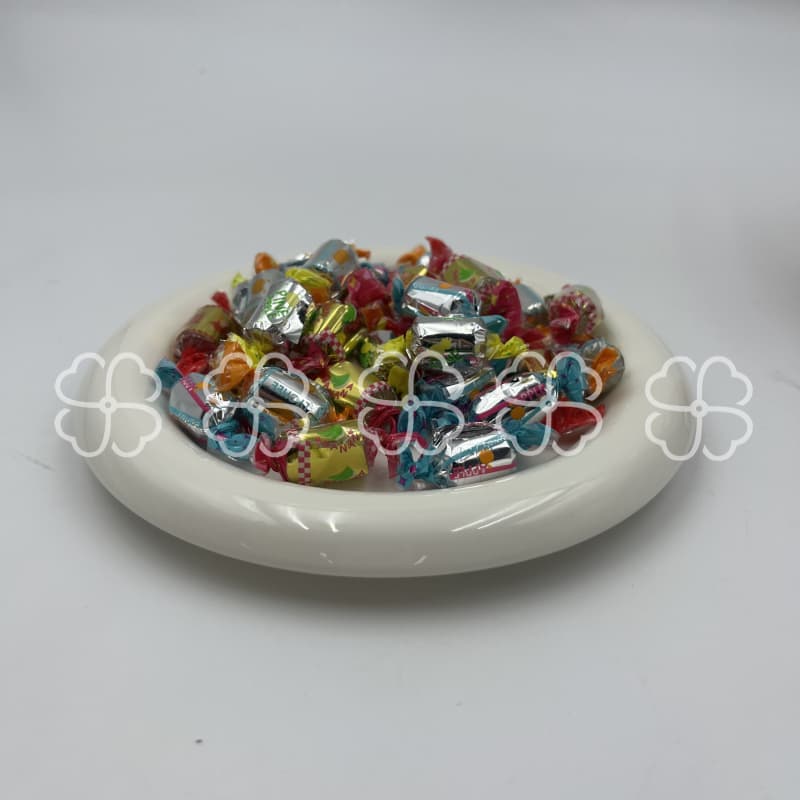
A convenience store may favor individually wrapped hard candy because it is compact, portable, easy to display, and familiar to consumers. Mints, fruit drops, lollipops, and filled hard candies can work well in impulse-purchase environments.
A supermarket targeting children, families, or younger consumers may have greater opportunities with colorful gummies, fruit shapes, novelty textures, and seasonal products.
The important point is that retailers are not buying “hard” or “soft” texture in isolation. They are buying a complete SKU consisting of flavor, shape, packaging, weight, price positioning, shelf life, visual appeal, and expected consumer demand.
For buyers looking specifically at a dedicated hard-candy range, the hard candy product category provides a useful starting point for evaluating traditional and customizable hard confectionery formats.
Hard Candy vs Soft Candy for Wholesale and Bulk Purchasing
For wholesale buyers, the decision should begin with the sales channel.
If Your Priority Is Long Eating Time and Individual Wrapping
Hard candy may be the better starting point.
It can work well for:
- individually wrapped candy
- mint products
- fruit drops
- lollipops
- convenience-store displays
- candy jars
- travel-oriented products
The key procurement concern is moisture protection. A low-moisture product can still become sticky if it absorbs humidity through packaging or during storage.
If Your Priority Is Novelty and Visual Differentiation
Soft candy may have an advantage.
Gummies can be molded into animals, fruits, seasonal characters, 3D shapes, rings, belts, bottles, and other recognizable designs. This gives private-label brands more opportunities to build a distinctive visual identity.
Soft candy is also well suited to flavor combinations and interactive formats. A buyer can explore fruit flavors, sour profiles, layered products, filled centers, peelable structures, or aerated textures.
If Your Priority Is Private Label
Both categories can work.
A private label candy manufacturer should ideally be able to support more than packaging changes. Buyers should ask whether the manufacturer can also handle flavor development, product specifications, molds, packaging formats, quality testing, and production consistency.
Packaging Can Decide Whether a Candy Succeeds
A common B2B mistake is to select the candy first and packaging second.
The correct process should be closer to:
Product formulation → target market → storage conditions → logistics → packaging barrier → shelf-life validation → final commercial format
For hard candy, humidity can be a major threat. For soft candy, heat and moisture migration may both affect texture.
Consider an importer shipping candy by sea from Asia to a warm market. The product may spend weeks in transportation before reaching a warehouse. If the buyer has only evaluated the candy under controlled factory conditions, the actual retail performance may be very different.
Packaging should therefore be evaluated against:
- expected temperature range
- humidity
- shipping duration
- warehouse conditions
- packaging material
- seal integrity
- headspace
- secondary carton protection
- product-to-package ratio
The best packaging is not necessarily the most expensive packaging. It is the packaging that protects the product sufficiently for the intended supply chain.
Regulatory Requirements for International Candy Buyers
Candy is a food product, so commercial success also depends on regulatory compliance.
For U.S. markets, packaged foods generally need appropriate labeling, including nutrition information and major allergen declarations where applicable. FDA identifies nine major food allergens in the United States: milk, eggs, fish, crustacean shellfish, tree nuts, peanuts, wheat, soybeans, and sesame.
The FDA also emphasizes that ingredient and allergen labeling must accurately identify applicable allergen sources. Sesame became part of the U.S. major-allergen framework under the FASTER Act effective January 1, 2023.
For international products, buyers should not assume that a label acceptable in one country will automatically be acceptable in another. Additives, nutrition declarations, allergen statements, claims, language requirements, and ingredient naming conventions can differ by market.
Codex provides an international reference framework for food additives, including food category 05.2 for confectionery and separate categories for hard and soft candy.
Therefore, a responsible procurement process should include:
- ingredient specification
- allergen statement
- nutrition information
- additive compliance
- packaging artwork review
- shelf-life documentation
- batch traceability
- destination-market regulatory review
Common Buyer Mistakes When Choosing Between Hard and Soft Candy
Mistake 1: Choosing Based Only on Price
A lower factory quotation does not necessarily mean a lower total procurement cost.
If a product has weak packaging, inconsistent texture, poor shelf stability, or excessive breakage, the buyer may face returns, complaints, relabeling, or lost shelf space.
Mistake 2: Assuming Hard Candy Automatically Has a Longer Shelf Life
Hard candy often has strong shelf-life potential because of its low moisture structure, but that does not mean every hard candy automatically has a long commercial shelf life.
Humidity, packaging, formulation, storage temperature, and water activity all matter.
Mistake 3: Assuming All Gummies Have the Same Texture
Gelatin gummies, pectin gummies, starch-based gummies, aerated gummies, and specialty products can have substantially different textures.
A buyer should define the desired bite rather than simply requesting “a gummy.”
Mistake 4: Selecting Packaging Before Understanding Logistics
A beautiful pouch is not necessarily a suitable moisture barrier.
Packaging decisions should follow the intended transportation and storage environment.
Mistake 5: Ignoring the Consumer’s Actual Buying Motivation
A supermarket customer may buy a gummy because of its shape, color, flavor, or novelty. A convenience-store customer may prioritize portability and familiar formats.
The product should solve the consumer’s reason for purchasing it.
What Is the Best Choice for Different B2B Scenarios?
| Buyer Situation | Recommended Starting Point | Why |
|---|---|---|
| Convenience-store impulse candy | Hard candy | Portable, familiar, individually wrapped formats |
| Mint or slowly dissolving candy | Hard candy | Texture naturally suits slow consumption |
| Children’s novelty range | Soft candy | Strong shape and color flexibility |
| 3D or seasonal shapes | Soft candy | Molded structures offer high visual differentiation |
| Premium fruit gummy line | Soft candy | Flexible flavor and texture positioning |
| Traditional candy assortment | Hard candy | Familiar product architecture |
| Private-label supermarket range | Either | Depends on target consumer and positioning |
| Humid logistics route | Either, with validated packaging | Packaging and stability are decisive |
| Vegan gummy concept | Soft candy | Pectin-based options may be considered |
| Customized lollipop program | Hard candy | Strong fit for molded and branded formats |
The decision logic is simple:
If your priority is slow dissolution, individual wrapping, and traditional impulse consumption → start with hard candy.
If your priority is chewy texture, novelty shapes, visual differentiation, and modern gummy concepts → start with soft candy.
If your priority is private-label flexibility → compare both categories based on formulation, packaging, MOQ, tooling, and target-market requirements.
How to Evaluate a Candy Manufacturer Before Placing an Order
The supplier-selection process should be more rigorous than simply requesting a catalog.
Ask a potential hard candy manufacturer or soft candy manufacturer for:
- Product specification sheets.
- Ingredient and allergen information.
- Shelf-life information and supporting validation.
- Packaging specifications.
- Available flavors and shapes.
- OEM and private-label capabilities.
- Minimum order quantities.
- Quality-control procedures.
- Food-safety management systems.
- Export documentation.
- Sample approval procedures.
- Production consistency between batches.
A credible supplier should be able to explain not only what the product is, but also why the product behaves the way it does.
For buyers evaluating a long-term supplier relationship, reviewing the manufacturer’s company background and production capabilities can provide useful context before moving into detailed product discussions.
For a new project, the next practical step is usually not immediately placing a large order. It is defining the product specification, requesting samples, testing packaging, confirming the target market requirements, and then discussing production quantities.
When the basic requirements are ready, buyers can contact the candy manufacturer to discuss product selection, customization, packaging, and procurement requirements.
Frequently Asked Questions About Hard Candy and Soft Candy
1. What is the difference between hard candy and soft candy?
Hard candy is generally a low-moisture confectionery with a firm or glass-like structure that is designed to dissolve gradually, while soft candy is formulated to provide a chewy, gummy, tender, or aerated texture. The difference is mainly created by the formulation, moisture level, processing method, and texture-control ingredients. For buyers, the practical difference also affects packaging, storage, logistics, product positioning, and consumer experience.
2. Is hard candy healthier than soft candy?
Hard candy is not automatically healthier than soft candy simply because it has a different texture. Nutritional value depends on the formulation, serving size, sugar or sweetener content, calories, and other ingredients. A buyer should avoid using texture as a substitute for nutritional analysis. If a product is marketed with claims such as sugar-free, reduced sugar, or functional benefits, those claims should be evaluated against the applicable regulations in the destination market.
3. Does hard candy have a longer shelf life than gummy candy?
Hard candy often has strong shelf-life potential because its low-moisture structure can be relatively stable under appropriate conditions. However, shelf life is not determined by moisture content alone. Water activity, packaging barrier performance, temperature, humidity, formulation, and storage conditions can all affect stability. Soft candy can also achieve commercially useful shelf lives when its formulation and packaging are properly designed and validated.
4. Which is better for wholesale, hard candy or soft candy?
Neither category is universally better for wholesale. Hard candy can be a strong option for individually wrapped products, mints, lollipops, traditional fruit drops, and convenience-store sales. Soft candy may be more suitable for gummies, novelty shapes, children’s products, seasonal collections, and visually differentiated private-label ranges. The best choice depends on the target market, retail channel, packaging, logistics, shelf-life requirement, and expected consumer demand.
5. What should I ask a candy manufacturer before placing a bulk order?
A buyer should request the product specification, ingredient list, allergen information, nutrition data where applicable, shelf-life information, packaging specification, MOQ, available customization, quality-control procedures, production capacity, export documentation, and sample-approval process. It is also important to explain the destination market and shipping conditions. A manufacturer that understands these requirements can help identify whether hard candy, soft candy, or another confectionery format is the better commercial choice.
Feature Product
-
 Gummy Candy
What Is Gummy Candy? Gummy Candy is one of the ...
-
 Crispy Gummy Candy
What Is Crispy Gummy Candy Crispy Gummy Candy i...
-
 Peelable Gummy Candy
What Is Peelable Gummy Candy? Peelable Gummy Ca...