

Why Hard Candy Remains a High-Value Confectionery Format for Global Buyers
Hard candy is one of the most established confectionery formats in the global market, but its manufacturing technology is far more sophisticated than its simple appearance suggests. A commercial hard candy is typically a concentrated sugar-based confectionery with a low final moisture level and a glassy structure that delivers a firm bite followed by gradual dissolution in the mouth. From fruit-flavored drops and mint candies to filled centers, lollipops, custom shapes, and private-label products, the category continues to provide flexible opportunities for retailers, wholesalers, distributors, and international food brands.
For B2B buyers, understanding hard candy ingredients, processing temperatures, moisture control, forming technology, packaging, and regulatory requirements is essential before selecting a supplier. A product that looks attractive in a sample box can still experience stickiness, cracking, flavor loss, deformation, or packaging failure during international transportation if the formulation and supply chain are not properly matched.
A reliable hard candy supplier should therefore be evaluated not only by product appearance or unit cost, but also by formulation capability, production equipment, quality management, packaging technology, documentation, and experience with export markets. For buyers beginning a new sourcing project, the manufacturer’s communication process is equally important because product specifications, flavor requirements, packaging formats, and target-market regulations need to be confirmed before mass production.
For manufacturers and importers that need to discuss product specifications, samples, packaging requirements, or private-label development, the hard candy supplier contact team can be a useful starting point for clarifying production requirements and export projects. hard candy supplier contact team
Hard Candy Supplier
What Is Hard Candy?
Hard candy is a low-moisture confectionery generally produced by cooking a sugar-and-syrup system to a high concentration, followed by controlled cooling, flavoring, coloring, forming, and packaging. During cooking, a substantial amount of water is removed. The resulting concentrated sugar matrix can form an amorphous glassy structure after cooling, which is responsible for the characteristic hardness, transparency, brittleness, and slow-dissolving behavior.
The basic concept is relatively simple: dissolve the ingredients, concentrate the syrup, control crystallization, cool the mass, form individual pieces, and protect the finished product from environmental moisture. However, industrial hard candy manufacturing requires precise control because small changes in temperature, moisture, sugar composition, acidity, or cooling conditions can substantially affect the finished texture.
This explains why two candies made with apparently similar ingredients can have very different eating experiences. One may be clear, hard, and slow-melting, while another may become cloudy, sticky, grainy, or excessively brittle.
For an international B2B buyer, the manufacturer’s overall production capability matters as much as the formula itself. A company with experience in confectionery production, research and development, customization, and export operations can generally provide a more structured process from sample development through commercial production. The manufacturer’s background, production philosophy, research capabilities, and export orientation should therefore be considered when evaluating a potential long-term partner. hard candy manufacturer background and capabilities
What Are the Main Hard Candy Ingredients?
The performance of a finished product begins with its formulation. Although recipes vary by candy type, the fundamental system usually combines sucrose, glucose syrup or another crystallization-control component, water, flavors, colors, acids, and sometimes functional or specialty ingredients.
Sucrose and Sugar Solids
Sucrose provides sweetness and contributes substantially to the structure of conventional products. During heating, sugar dissolves in water and forms a concentrated syrup. As water evaporates, the concentration of dissolved solids increases dramatically.
The final texture depends on how this concentrated syrup is cooled and stabilized. Excessive crystallization can create an opaque appearance and gritty texture, whereas properly controlled cooling can produce a smooth glass-like structure.
Sugar quality is therefore not simply a matter of sweetness. Purity, particle size, dissolution behavior, and interaction with other ingredients can influence production efficiency and final product quality.
Glucose Syrup and Crystallization Control
Glucose syrup is commonly used in sugar confectionery to modify the crystallization behavior of sucrose. Its presence can help prevent the formation of large sugar crystals and contribute to a smoother finished texture.
The appropriate ratio between sucrose and glucose syrup depends on the desired product. A clear fruit drop, a filled candy, and a molded novelty candy may require different formulations.
For commercial production, manufacturers may also monitor syrup characteristics such as dextrose equivalent, solids concentration, viscosity, and thermal behavior. These parameters help determine how the syrup behaves during cooking, depositing, forming, and cooling.
Water and Moisture Control
Water is essential during the initial cooking stage but becomes one of the most important variables to control before the product reaches the packaging line.
Too much residual moisture can make candy soft or sticky and can accelerate moisture absorption during storage. Excessive moisture migration can also cause individual pieces to adhere to wrappers or to each other.
A simplified commercial target for conventional products may be around 1–3% final moisture, although the actual specification should always be established according to the formulation, equipment, packaging system, and validated shelf-life study.
Acids, Flavors, and Colors
Fruit-flavored products often use food acids such as citric acid or malic acid to provide acidity and enhance flavor perception. Flavor systems can include natural flavors, nature-identical flavors, or other permitted flavoring substances depending on the destination market.
Color is another important commercial component because visual appearance helps consumers distinguish flavors and creates brand recognition.
For products sold in the United States, color additives used in food are regulated by the United States Food and Drug Administration, and applicable color additives must meet the relevant regulatory requirements before use.
This makes formulation compliance an important part of B2B sourcing. A color that is accepted in one market is not automatically suitable for every other market.
Hard Candy Technical Parameters: What Buyers Should Measure
Professional buyers should avoid evaluating products exclusively through visual inspection. Several measurable parameters can provide a more objective understanding of manufacturing consistency.
Technical Parameter Typical Commercial Range Why It Matters
Final moisture Approximately 1–3% Influences hardness, stickiness, and stability
Soluble solids Approximately 97–99% Supports a concentrated glassy structure
Cooking temperature Approximately 145–160°C Controls water evaporation and concentration
Water activity Generally low Supports product stability
Syrup DE Formulation dependent Influences crystallization and texture
pH Formula dependent Affects flavor and acid stability
Piece-weight tolerance Project specific Important for retail consistency
Hardness Product specific Determines bite and dissolution rate
These figures should be regarded as practical reference ranges rather than universal specifications. Actual factory specifications can differ according to sugar system, flavor composition, filling, equipment configuration, target market, and packaging.
The most useful approach is to establish a technical specification before production begins. This specification can include piece weight, dimensions, moisture, water activity, color, flavor, hardness, packaging format, allowable defects, and microbiological requirements.
How Is Hard Candy Made in a Factory?
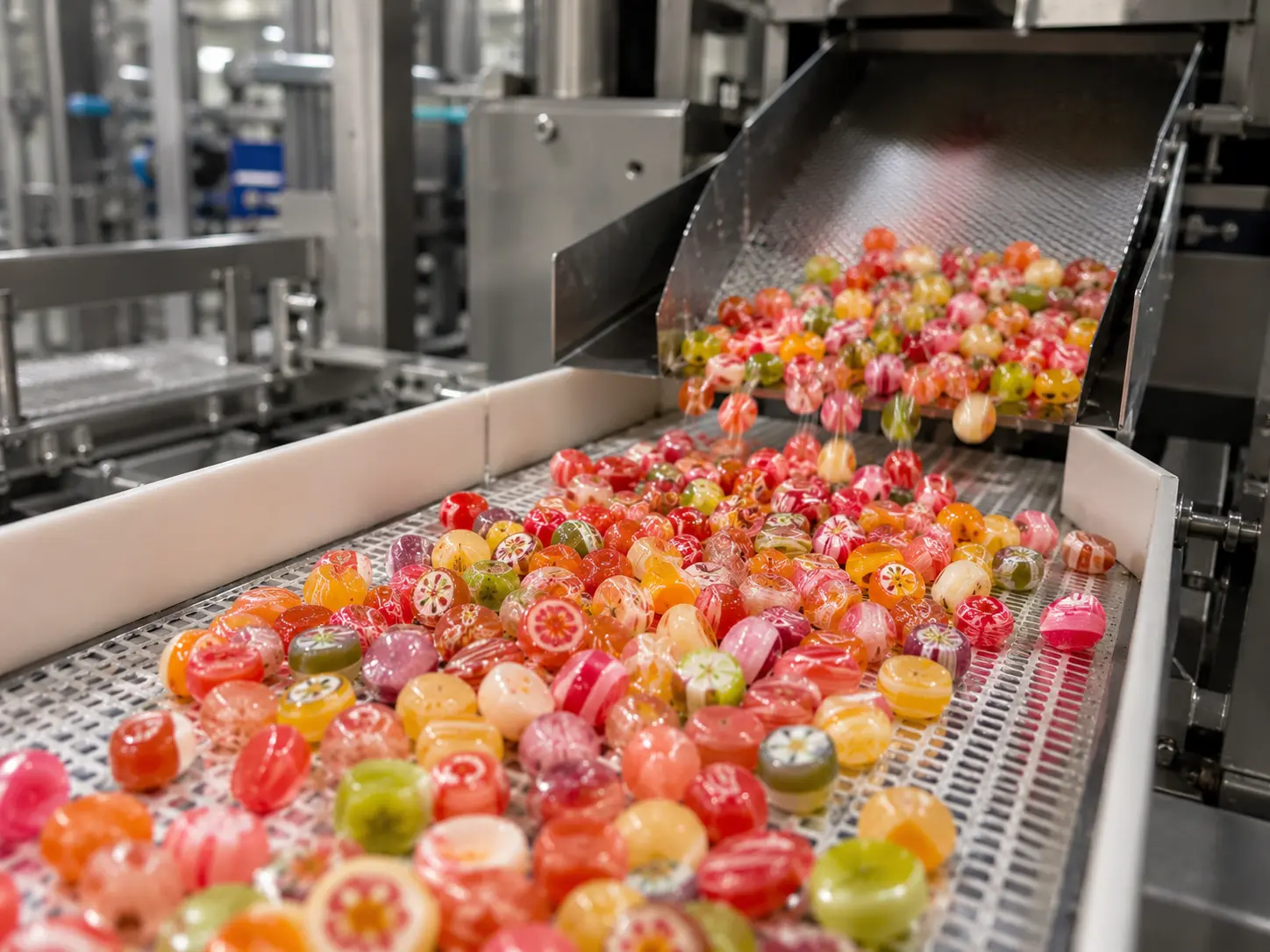
The hard candy manufacturing process can be divided into several controlled stages.
Ingredient Preparation and Weighing
Ingredients are first weighed according to the approved production formula. Accurate batching is essential because small variations in sugar, syrup, acid, or water can affect the final solids concentration and texture.
A well-controlled production system should also maintain batch traceability so that raw materials can be connected to specific finished-product lots.
Sugar Dissolution and Syrup Preparation
Sugar is dissolved in water and combined with glucose syrup or other ingredients. The objective is to create a uniform syrup before the main cooking stage.
Undissolved sugar crystals can later become nucleation points for unwanted crystallization, so the initial dissolution stage is important for products that require a clear, smooth appearance.
Cooking and Water Removal
The syrup is heated until sufficient water has evaporated. Industrial systems may use atmospheric cooking or vacuum cooking depending on the product and production line.
Cooking temperature alone does not determine quality. The relationship between temperature, solids concentration, residence time, and formulation must be controlled together.
A high-quality hard candy factory should therefore have appropriate temperature-monitoring and process-control systems rather than relying solely on operator experience.
Cooling and Addition of Sensitive Ingredients
After cooking, the concentrated candy mass is cooled under controlled conditions. Flavors, acids, and colors may be incorporated at appropriate stages to minimize unnecessary thermal exposure.
This is particularly important for volatile flavor components. Excessive heat can reduce flavor intensity and create inconsistency between laboratory samples and commercial batches.
Forming and Shaping
The candy mass can be formed using different technologies depending on the product.
Common methods include:
Die forming
Rope forming
Depositing
Stamping
Molding
Lollipop forming
Filled-candy depositing
Standard fruit drops may require high-speed forming equipment, while custom shapes or filled centers can require specialized depositing and molding systems.
Cooling, Inspection, and Packaging
After forming, pieces are cooled and stabilized before packaging. Automated systems may inspect weight, appearance, dimensions, and foreign-material risks.
Packaging follows immediately because hard candy is highly sensitive to environmental humidity. A well-designed packaging system is therefore part of the product rather than merely a marketing accessory.
For buyers evaluating a specific hard candy product category, the appropriate format should be selected according to flavor, shape, retail channel, target consumer, packaging requirements, and intended market. hard candy product category
Hard Candy Texture: Why Is It Hard, Clear, Brittle, or Sticky?
The distinctive texture comes from the concentrated sugar matrix.
When the cooked syrup contains very little residual water and is cooled correctly, it can form an amorphous glass-like structure. This structure is rigid at normal storage temperatures.
However, the structure is not completely immune to environmental changes.
Why Does Hard Candy Become Sticky?
Stickiness is one of the most common commercial problems. Several factors can contribute:
Excessive residual moisture.
High relative humidity during storage.
Insufficient packaging barrier protection.
Hygroscopic ingredients.
Temperature fluctuations.
Poor sealing.
Moisture migration from fillings or other components.
For export products, packaging selection should therefore be considered together with formulation.
A candy with excellent laboratory stability can still become sticky if it is placed in a low-barrier package and transported through a hot and humid climate.
Why Does Hard Candy Become Cloudy?
Cloudiness can occur when crystallization develops within a product intended to remain glassy and transparent. Temperature history, formulation, agitation, impurities, cooling conditions, and nucleation can all influence crystallization.
For transparent fruit drops, appearance can be commercially significant because clarity is often associated with freshness and manufacturing quality.
Hard Candy vs. Gummy Candy, Jelly Candy, and Toffee
For buyers building a broader confectionery portfolio, understanding the differences between categories helps determine which products are best suited to a particular retail channel.
Property Hard Candy Gummy Candy Jelly Candy Toffee
Primary texture Hard and glassy Elastic and chewy Soft and gelled Soft and rich
Moisture Low Moderate Moderate Moderate
Typical structural system Sugar glass Gel network Hydrocolloid gel Sugar-fat matrix
Main eating action Dissolution Chewing Chewing Chewing
Humidity sensitivity High Moderate–High Moderate–High Moderate
Typical packaging requirement Strong moisture barrier Moisture control Moisture control Temperature/moisture control
Common positioning Value, fruit, mint, impulse Fun, novelty, children Fruit and dessert Premium, indulgent
This comparison also demonstrates why selecting a supplier solely because it produces one confectionery category is not always enough. Different product technologies require different equipment, quality controls, packaging systems, and formulation expertise.
What Types of Hard Candy Can Be Developed for B2B Markets?
Modern hard candy manufacturing is not limited to traditional round sugar drops.
Fruit-Flavored Hard Candy
Fruit flavors such as strawberry, orange, grape, lemon, apple, mango, peach, and mixed fruit can be developed for mass-market retail applications.
Fruit candy can also be customized through combinations of sweetness, acidity, color intensity, shape, and packaging.
Mint and Breath-Freshening Candy
Mint products occupy a different consumer occasion and can be positioned around freshness and convenience.
Peppermint, spearmint, cooling blends, and stronger menthol-style profiles can be considered depending on local regulations and formulation requirements.
Filled Hard Candy
Filled products introduce an additional layer of manufacturing complexity. The outer shell must be sufficiently stable while the internal filling must remain compatible with the candy matrix.
Potential centers include:
Fruit flavors
Sour fillings
Powder fillings
Liquid centers
Soft centers
Filled products require additional control over depositing accuracy, shell thickness, filling viscosity, moisture migration, and packaging.
Lollipop and Novelty Formats
Lollipops and custom-shaped hard candy can provide additional opportunities for seasonal campaigns, children’s products, character concepts, promotional products, and private-label retail programs.
Sugar-Free Hard Candy
Sugar-free formulations may use alternative sweetening systems and require different crystallization, cooling, texture, and labeling considerations.
They should not be treated as a simple one-for-one substitution for conventional sugar formulations. The sweetener system can influence hardness, cooling sensation, digestive tolerance, hygroscopicity, and shelf stability.
How to Choose a Hard Candy Manufacturer
Selecting a hard candy manufacturer requires a structured evaluation process.
Evaluate Manufacturing Capability
Ask whether the supplier can produce the exact product format you need.
Important questions include:
Can the factory produce your desired shape?
Can it handle filled centers?
Can flavors and colors be customized?
Can the supplier manufacture your desired retail weight?
Can packaging be customized?
Can production scale with your expected sales growth?
A factory may be excellent at standard candy but unsuitable for complex filled or custom-shaped products.
Evaluate Quality Management
International buyers should request information about food safety systems, traceability, laboratory testing, allergen controls, foreign-material control, and batch management.
BRCGS Food Safety Issue 9, for example, provides a framework covering product safety, authenticity, legality, quality, and operational controls for food manufacturing, processing, and packing. BRCGS reports that the standard is used by more than 22,000 sites in more than 130 countries.
Certification should not be treated as a substitute for product-specific verification, but it can be an important part of supplier qualification.
Evaluate Customization and OEM Capability
A capable supplier should be able to discuss:
Flavor development
Color selection
Shape development
Formula adjustment
Retail packaging
Private-label artwork
Carton configuration
Export documentation
The buyer should request actual samples rather than relying exclusively on catalog images.
Hard Candy Packaging and Shelf-Life Stability
Packaging is one of the most underestimated elements of international confectionery sourcing.
Because hard candy is generally low in moisture, it can readily interact with humid environments. Moisture uptake can reduce the glass transition stability of the candy surface and create stickiness.
Common commercial packaging formats include:
Packaging Format Barrier Performance Typical Application
Individual film wrap Medium–High Single-piece retail candy
Metallized pouch High Premium and bulk retail
Plastic jar Medium–High Retail jar programs
Composite bag High Wholesale packaging
Inner bag + export carton High International shipment
The correct packaging depends on the product formulation, climate, transportation route, storage period, and retail environment.
For example, a candy intended for a dry warehouse in a temperate climate may not require the same packaging strategy as a product shipped by sea into a tropical market.
Shelf-life claims should always be supported by product-specific stability testing rather than assumed from a generic category standard.
Hard Candy Regulations and International Food Safety Requirements
A commercially successful product must satisfy both food safety requirements and labeling rules in its destination market.
Ingredient and Additive Compliance
The formulation should be reviewed for:
Sweeteners
Food colors
Flavoring substances
Acids
Glazing agents
Functional ingredients
Allergens
Processing aids where relevant
In the United States, FDA regulates food color additives and states that color additives and new uses of listed color additives must be approved before use in foods under the applicable statutory framework.
For European markets, importers should review the applicable European Union requirements for food additives, labeling, allergens, nutrition information, and food-contact materials.
Traceability and Documentation
A professional export order may require documents such as:
Commercial invoice
Packing list
Certificate of Analysis
Ingredient declaration
Product specification
Health or free-sale documentation where applicable
Origin documentation
Microbiological testing
Heavy-metal testing where required
Packaging specifications
The exact document set depends on the destination country, product formulation, importer requirements, and customs process.
Common Hard Candy Manufacturing Problems and Their Solutions
Sticky Surface
The first areas to investigate are moisture, humidity, packaging barrier performance, sealing integrity, and storage temperature.
Cloudy Appearance
Investigate crystallization, cooling conditions, syrup composition, agitation, and possible nucleation points.
Cracking or Excessive Brittleness
Check the relationship between final moisture, cooling rate, formulation, piece geometry, and packaging impact.
Weak Flavor
Investigate flavor dosage, flavor addition temperature, cooking exposure, storage conditions, and package permeability.
Deformation During Shipping
Temperature exposure is often the first variable to investigate. The product specification should be evaluated together with container conditions, carton loading, warehouse temperature, and transportation duration.
2026 Hard Candy Industry Trends Buyers Should Watch
The category is evolving from basic sugar confectionery toward greater formulation differentiation and stronger visual positioning.
Clean-Label Formulation
Consumers increasingly pay attention to ingredient lists, encouraging manufacturers to explore natural colors, natural flavors, simpler formulas, and recognizable ingredients.
However, clean-label development must balance consumer expectations with color stability, flavor stability, cost, and shelf life.
Reduced-Sugar and Sugar-Free Products
Sugar reduction remains technically challenging because sugar contributes not only sweetness but also bulk, texture, glass formation, viscosity, and stability.
Alternative sweetening systems can therefore require significant formulation development.
Functional Confectionery
Some brands are combining confectionery convenience with functional positioning through vitamins, minerals, botanical ingredients, and other permitted functional components.
Regulatory review becomes especially important in this segment because ingredient permissions and marketing claims differ between countries.
Novelty and Premium Presentation
Consumers are increasingly exposed to visually distinctive confectionery through social media. This encourages manufacturers to develop unusual shapes, layered products, filled centers, premium wrappers, and customized retail formats.
The result is a broader definition of what a hard candy product can be: not simply a sugar drop, but a platform for flavor, shape, branding, seasonal marketing, and consumer experience.
A Practical B2B Scenario: Launching a Private-Label Hard Candy Line
Consider a regional distributor planning to launch three private-label flavors in supermarkets.
The first decision should not be the packaging design. Instead, the buyer should define the technical product profile:
Step 1: Define the consumer and market.
Determine whether the product targets children, families, adults, premium shoppers, convenience stores, supermarkets, or specialty retailers.
Step 2: Select the formulation.
Decide between conventional sugar, sugar-reduced, sugar-free, filled, fruit, sour, mint, or specialty formulations.
Step 3: Request samples.
Evaluate taste, hardness, dissolution speed, color, clarity, piece weight, wrapper performance, and aftertaste.
Step 4: Validate packaging.
Test the product under realistic humidity and temperature conditions.
Step 5: Verify the supplier.
Review factory capabilities, certifications, production capacity, quality systems, and export documentation.
Step 6: Confirm commercial requirements.
Establish minimum order quantities, production lead times, packaging specifications, and shipping schedules.
Step 7: Conduct pre-shipment inspection.
Check quantity, appearance, packaging, cartons, batch information, and documentation before the goods leave the factory.
This decision sequence reduces the risk of choosing a supplier based on a low initial quotation while overlooking quality and logistics costs.
How to Source Wholesale Hard Candy Successfully
Successful sourcing starts with a complete product specification rather than a simple request for a price.
A professional sourcing document should contain:
Product type
Flavor
Color
Shape
Individual weight
Retail pack size
Outer carton configuration
Target market
Required certifications
Packaging requirements
Expected annual volume
Delivery destination
Buyers should also distinguish between a standard catalog item and a genuinely customized product.
A standard item may allow faster development and lower setup requirements. A custom product may provide stronger differentiation but usually requires more development work, packaging preparation, production planning, and quality validation.
For buyers seeking a broader wholesale hard candy solution, it is useful to review the supplier’s dedicated product offering alongside its customization and export capabilities. wholesale hard candy products
Hard Candy Buyer Checklist: What Should You Verify Before Placing an Order?
Buyer Question What to Verify
Can the supplier make my shape? Equipment, tooling, and samples
Can the flavor be customized? Research and development capability
Can the formula be adjusted? Technical formulation capability
Can the product use my packaging? Packaging and printing capability
What is the minimum order quantity? Formula, flavor, packaging, and production requirements
What certifications are available? Current certificates and scope
How is quality controlled? Testing, inspection, traceability
Can the product meet my market regulations? Ingredient and labeling review
What is the expected shelf life? Validated stability data
Can the supplier support larger orders? Production capacity and planning
The best supplier is not necessarily the company offering the lowest initial quotation. The stronger decision is usually the supplier that provides an acceptable combination of product quality, technical capability, communication, regulatory support, packaging protection, production reliability, and total landed cost.
Frequently Asked Questions About Hard Candy
1. What is hard candy made of?
Hard candy is generally made from a concentrated sugar system containing ingredients such as sucrose, glucose syrup, and water, with flavors, colors, acids, and other specialty ingredients added according to the product formulation. During manufacturing, the mixture is heated to remove much of the water and then cooled to form a firm, glass-like confectionery structure. The exact formula varies according to whether the product is a traditional fruit drop, mint candy, filled candy, lollipop, sugar-free formulation, or another specialty format.
2. How is hard candy made in a factory?
The commercial production process normally includes ingredient weighing, sugar dissolution, syrup preparation, high-temperature cooking, controlled cooling, flavor and color addition, forming, final cooling, inspection, and packaging. Manufacturers must carefully control temperature, solids concentration, moisture, crystallization, forming conditions, and cooling speed. For export production, packaging and storage conditions are equally important because excessive humidity can cause surface stickiness and reduce the expected shelf stability.
3. Why does hard candy become sticky?
Hard candy commonly becomes sticky when it absorbs moisture from the surrounding environment or when the final formulation contains excessive residual moisture. High warehouse humidity, poor packaging barriers, inadequate sealing, hygroscopic ingredients, and temperature fluctuations can all contribute. International buyers should evaluate the formulation and packaging together rather than treating stickiness as a packaging problem alone. Stability testing under realistic temperature and humidity conditions is the most reliable way to determine whether a product is suitable for a particular market.
4. How long does hard candy last?
Commercial hard candy can have a relatively long shelf life when its moisture level, packaging, formulation, and storage conditions are properly controlled. However, there is no universal shelf-life period that applies to every product. A filled candy, sugar-free candy, fruit-flavored candy, and traditional sugar drop can behave differently during storage. Manufacturers should establish the final shelf-life claim through product-specific stability testing and verify that the packaging protects the candy from moisture, heat, oxygen, and other relevant environmental factors.
5. How do I choose a reliable hard candy manufacturer?
Start by evaluating manufacturing capability, product samples, food safety systems, formulation expertise, packaging technology, minimum order quantities, production capacity, export documentation, and communication quality. Ask the supplier whether it can consistently reproduce the approved sample and whether it has experience serving your target market. It is also useful to review certifications, laboratory testing, traceability procedures, and packaging specifications. A reliable supplier should be able to explain not only what it can produce, but also how it controls quality from raw material intake through final shipment.
Feature Product
-
 Gummy Candy
What Is Gummy Candy? Gummy Candy is one of the ...
-
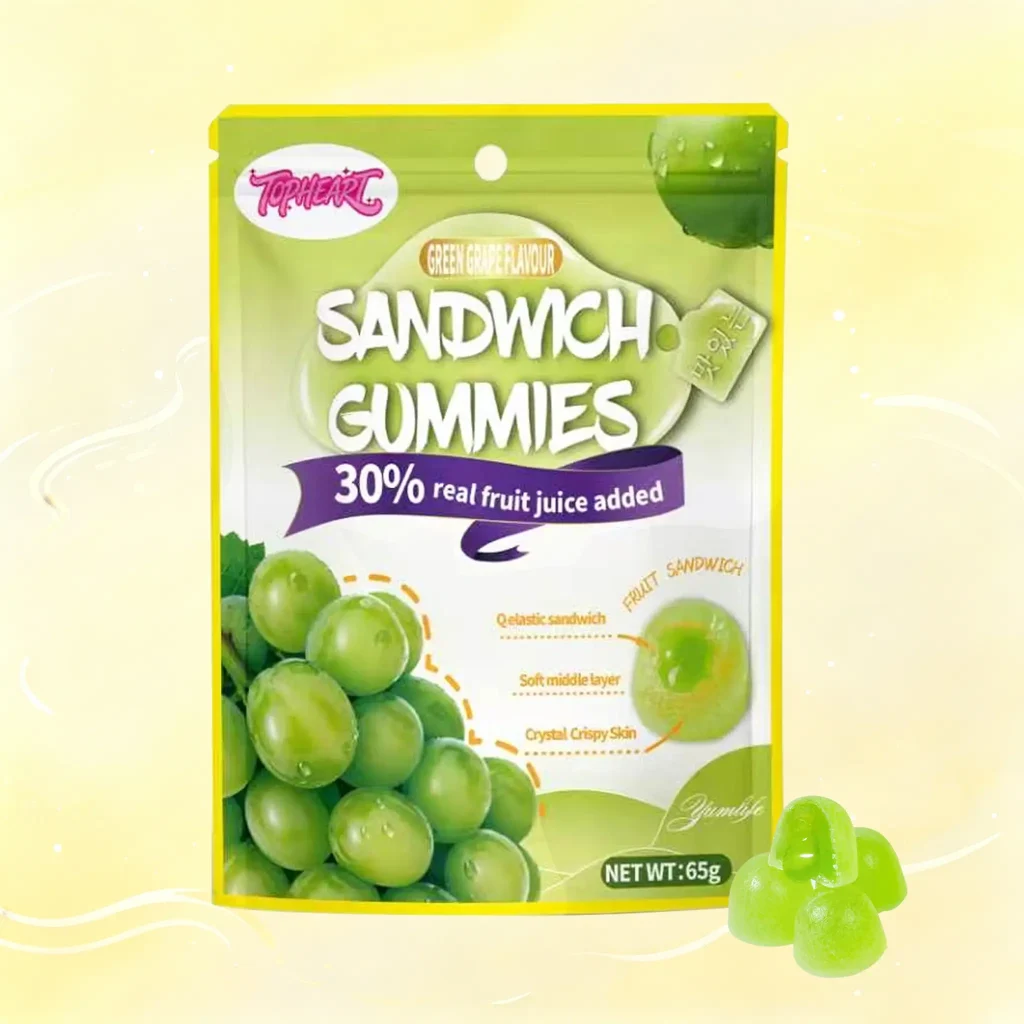 Crispy Gummy Candy
What Is Crispy Gummy Candy Crispy Gummy Candy i...
-
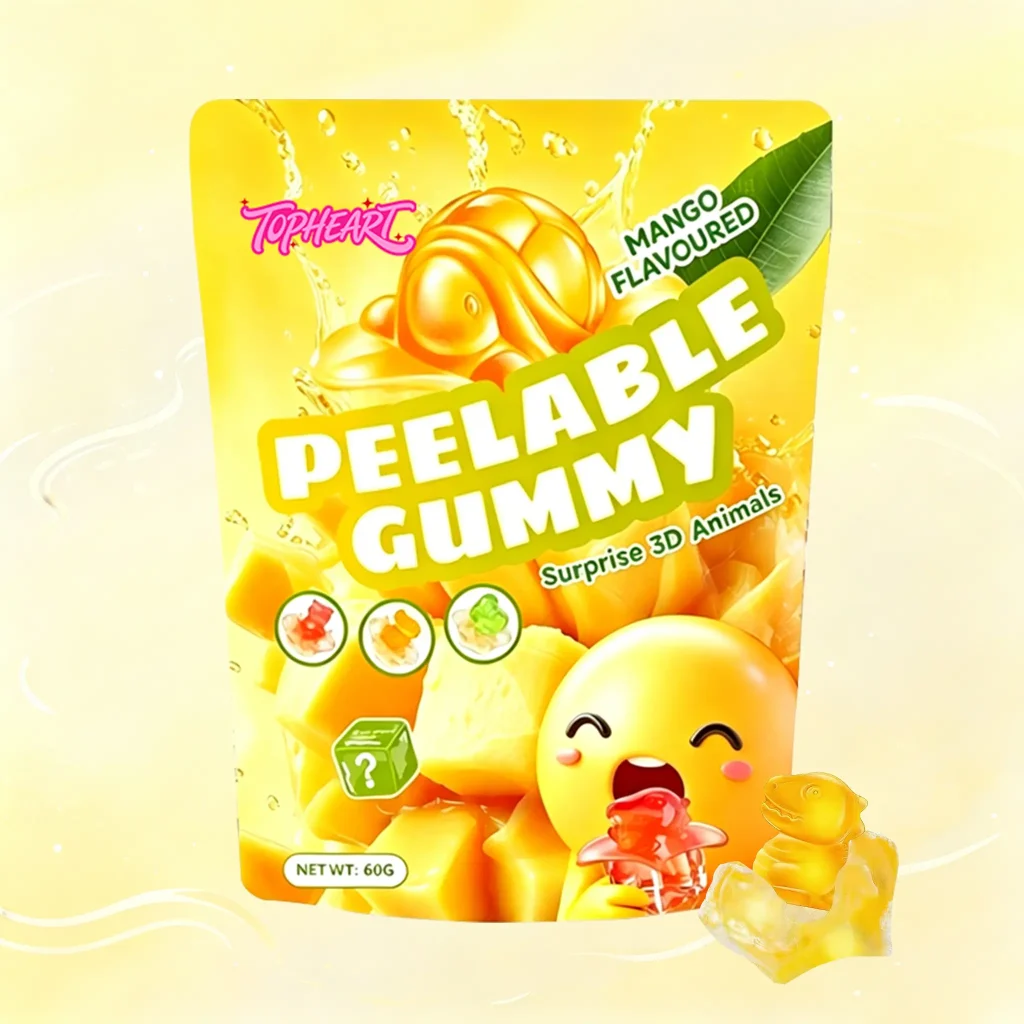 Peelable Gummy Candy
What Is Peelable Gummy Candy? Peelable Gummy Ca...