

Chestnut Peelable Gummy
1. What Is a Chestnut Peelable Gummy?
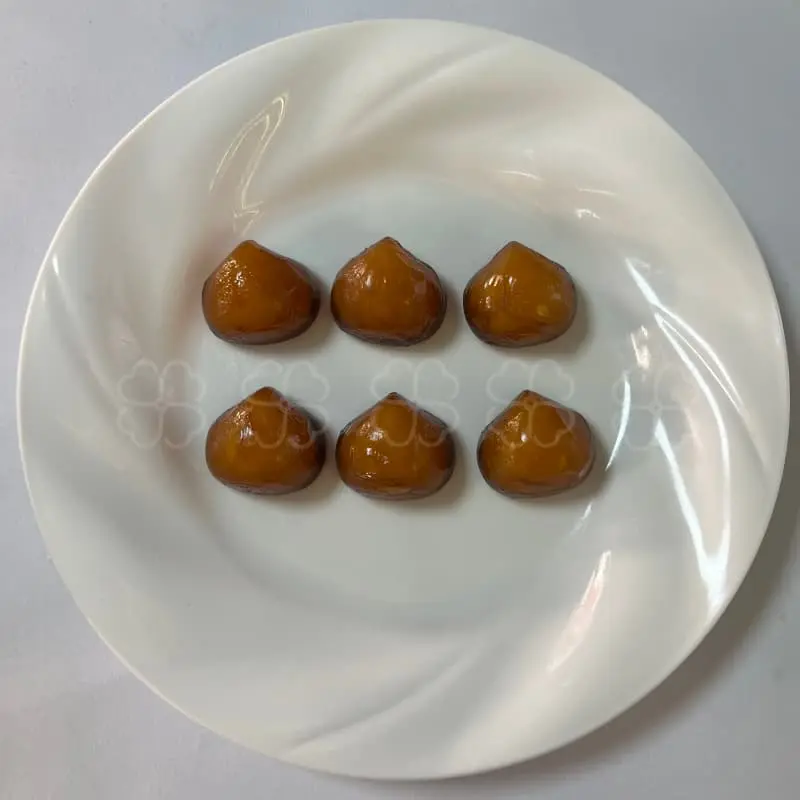
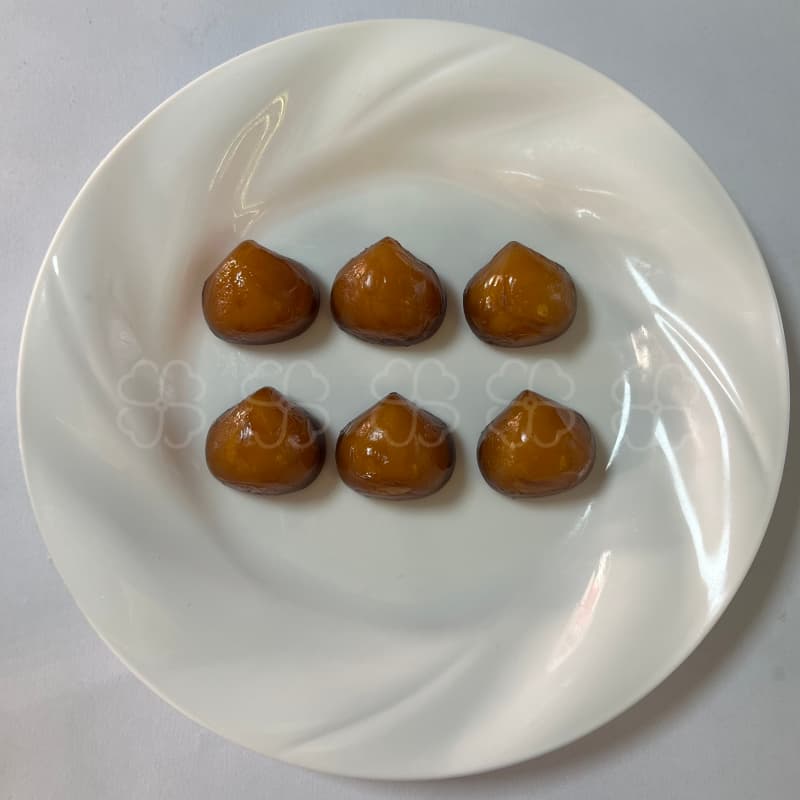
A Chestnut Peelable Gummy is a confectionery concept that combines chestnut-inspired flavor with a gummy designed to be peeled, separated, or enjoyed in layers. Unlike a conventional single-texture gummy, a peelable product introduces an additional interaction before or during eating. Depending on the manufacturing design, it may use an outer gummy layer and an inner core with different colors, flavors, firmness levels, or textures.
Chestnut flavor provides a different direction from the strawberry, grape, apple, and citrus profiles commonly found in gummy assortments. Properly developed, it can communicate warm roasted notes, mild sweetness, and a rounded, nut-like aroma. The intended profile should be defined carefully because chestnut flavor is not identical to hazelnut, almond, or generic roasted-nut flavor. A suitable flavor system should reflect the product brief and the sensory characteristics the brand wants to deliver.
Brands exploring this format can compare available peelable gummy candy formats to understand how different layer structures and product presentations may support their intended concept. The best format depends on the target consumer, manufacturing capability, packaging requirements, and expected retail price.
It is also important to distinguish a chestnut-flavored confection from one that contains actual chestnut ingredients. A flavoring-based recipe and a recipe containing chestnut puree, powder, or other chestnut-derived ingredients may have different labeling, allergen-assessment, formulation, and shelf-life considerations. Product descriptions should accurately reflect the ingredients used.
2. Why Chestnut Flavor Can Differentiate a Gummy Candy Range
2.1 A profile beyond familiar fruit flavors
Fruit flavors are essential to many gummy assortments, but a portfolio made entirely of familiar fruit varieties may offer limited differentiation. Chestnut creates an alternative sensory direction. Its flavor can be designed to feel creamy, gently roasted, sweet, or bakery-inspired, depending on the flavor system and the desired product positioning.
For brands seeking a distinctive seasonal assortment, chestnut can be considered alongside flavors associated with autumn, desserts, warm beverages, or roasted ingredients. However, seasonal relevance differs across countries and consumer groups. A brand should validate whether customers associate chestnut with a familiar treat, an unfamiliar novelty, or a premium flavor before committing to a large production volume.
2.2 A flavor that can support layered sensory design
The peelable format creates an opportunity to build a more complex experience than flavor alone. A manufacturer might develop a chestnut-flavored outer layer with a complementary sweet center, or use two related chestnut-inspired profiles to create contrast without confusing the product identity. Any combination should be evaluated for flavor balance, texture compatibility, and stability.
Layer contrast should serve a clear purpose. If the outer layer is too tough, it may be difficult to peel. If it is too weak, the product may break during handling. If the center is too soft or sticky, the layers may merge during storage. Successful product design therefore requires coordinated development of the flavor system, gel structure, and production process.
2.3 A concept suitable for differentiated brand storytelling
A chestnut-inspired gummy can support storytelling around flavor exploration, playful eating, and product innovation. Brands may position it as a novelty candy, a seasonal launch, part of a premium-inspired collection, or a new flavor within a broader peelable gummy range. These are positioning options rather than guaranteed indicators of consumer demand.
Packaging and product photography should make the peelable feature easy to understand. Clear images of the whole gummy and its separated layers can help buyers recognize the format quickly. Any claim about real chestnut, natural flavor, allergen status, or nutritional characteristics must be supported by the actual formulation and applicable labeling requirements.
3. How to Build the Right Chestnut Flavor Profile
3.1 Define the target flavor before selecting ingredients
The first step is to write a practical sensory brief. It should explain whether the desired Chestnut Peelable Gummy tastes lightly sweet and nutty, strongly roasted, creamy and dessert-like, or closer to a mild cooked chestnut. Without this definition, different development samples may be judged against inconsistent expectations.
Flavor intensity should be balanced against sweetness, acidity, and the aroma released during chewing. A chestnut profile that is too weak may disappear beneath the sugar and gelatin or pectin base. A flavor that is too strong may taste artificial or overwhelm the delicate character the brand wants to communicate. Small, controlled formulation trials are more reliable than making large adjustments to several ingredients simultaneously.
3.2 Balance sweetness and acidity
Many fruit gummies use acidity to create a bright, refreshing taste. A chestnut profile may require a different balance because excessive acidity can conflict with the intended warm, rounded flavor. This does not mean that all chestnut gummies should have low acidity; the correct level depends on the flavor system, gel ingredients, preservation strategy, and target sensory profile.
Acidity also influences product structure. Gelatin and pectin do not respond identically to pH, soluble solids, and processing conditions. Therefore, changing the acid system can alter both flavor perception and texture. The development team should test flavor and physical properties together rather than approving taste in isolation.
3.3 Evaluate flavor combinations carefully
Potential complementary notes include vanilla, caramel, mild cream, or restrained roasted-sugar character. These can help frame the chestnut flavor, but too many supporting notes may obscure the main identity. A useful initial trial might compare a chestnut-forward sample with a lightly vanilla-supported sample and a roasted-sweet sample. The team can then determine which direction best fits the intended audience.
Each flavor system should be checked for compatibility with the gummy base and storage conditions. Aroma perception can change during heating, drying, and packaging, so samples should be evaluated both shortly after production and after an appropriate storage interval.
4. Peelable Texture: The Technical Challenge Behind the Concept
For a Chestnut Peelable Gummy, texture is part of the product’s core value. A successful design should allow the consumer to separate the intended layer without excessive force, while keeping the gummy intact during packing, transportation, and retail handling. This requires a controlled relationship between the outer layer, inner core, moisture content, and gel structure.
4.1 Select a suitable gelling system
Gelatin, pectin, and other hydrocolloids can create different texture profiles. Gelatin-based systems are often associated with elastic, chewy textures, while pectin systems can produce a different bite depending on the pectin type, sugar concentration, pH, and available ions. Neither system automatically guarantees peelability. The formulation and processing method must be developed for the desired structure.
Research on gummy and gel confectionery shows that hydrocolloid concentration and formulation conditions can influence measurable mechanical properties. For example, DeMars and Ziegler’s work on gelatin- and pectin-based gummy confections examined changes in hydrocolloid formulation and related texture measurements. The findings are useful as evidence that gel composition matters, but they should not be treated as a ready-made formula for a chestnut peelable product.
4.2 Manage the interface between layers
The boundary between the outer layer and the inner core is critical. If the layers bond too strongly, peeling may be difficult. If they bond too weakly, the product may separate unintentionally during demolding, packing, or transit. The required degree of adhesion depends on the intended peeling behavior and the geometry of the gummy.
Development trials should assess the product at more than one temperature and after storage. Temperature changes can affect firmness, stickiness, and deformation. Packaging pressure and the time spent in distribution can also influence whether the layer interface remains stable.
4.3 Avoid excessive stickiness and premature separation
Moisture migration between layers can change texture over time. A layer that is initially easy to peel may become sticky, tough, or difficult to separate after storage. The product should therefore be evaluated in its intended packaging, not only on a laboratory tray immediately after production.
Manufacturers should record peeling behavior, breakage, surface tack, and visible layer separation. Standardized evaluation methods help compare prototypes objectively. The most useful specification is one that connects a measurable test to the actual consumer experience, rather than relying only on subjective descriptions such as “soft” or “easy to peel.”
5. Scientific Data and Practical Development Benchmarks
Published confectionery research can help explain why a gummy’s formulation affects its mechanical properties. However, there is no universal published specification that makes every Chestnut Peelable Gummy successful. The table below separates research-based observations from proposed internal development checks. The proposed checks are starting points for a manufacturer’s validation plan, not industry-wide legal standards.
| Parameter | Evidence or technical relevance | How a development team can use it |
|---|---|---|
| Hydrocolloid formulation | DeMars and Ziegler (2001) studied gummy confection formulations with gelatin concentrations of 3.0%, 4.5%, and 6.0%, as well as pectin levels of 0%, 0.5%, 1.0%, and 1.5% in their experimental formulations. | Use controlled concentration trials to understand how the selected gel system changes firmness and chew. These research levels are experimental conditions, not a universal production recipe. |
| Mechanical texture | In the formulations tested by DeMars and Ziegler, strain at fracture and log stress at fracture were strongly correlated with sensory texture measures, with reported correlations of r = 0.90 and r = 0.87, respectively. | Consider texture-analyzer measurements alongside trained sensory assessment. Validate which measurements best predict peeling and eating quality in the actual product. |
| Acidity and gel behavior | Hydrocolloid structure can be affected by acid conditions. Gelatin and pectin have different setting mechanisms and should not be assumed to respond identically to a change in pH. | Record pH and acid addition during formulation trials, and test the finished product for flavor balance, gel integrity, and storage stability. |
| Soluble solids | Soluble solids influence sweetness, water availability, and texture. Published gummy research has investigated formulations across different soluble-solids levels, but the appropriate target depends on the product system. | Measure soluble solids consistently during development and correlate the results with firmness, stickiness, water activity, and sensory acceptance. |
| Peelability | A universal peel-force specification for all peelable gummy products is not established by the cited research. | Develop an internal test method that records separation force, successful layer separation, breakage, and consumer handling. Establish acceptance limits from validated prototypes. |
| Water activity and shelf life | Water activity is an important food-stability parameter, but a single value does not independently establish safety or shelf life for every gummy formulation. | Measure water activity and moisture as appropriate, then confirm shelf life using the product’s formulation, packaging, microbiological assessment, and real-time or justified accelerated studies. |
The central lesson is that formulation variables should be evaluated together. A change that improves peelability may also affect chew, sweetness, drying time, or storage performance. A useful development program records the formula, process conditions, instrumental measurements, sensory observations, and packaging used for every prototype.
6. A Step-by-Step Product Development Workflow
Step 1: Prepare a product brief
Define the target market, consumer age group, flavor direction, gummy dimensions, color palette, desired layer structure, packaging format, and target cost. Clarify whether the product should contain chestnut-derived ingredients or use a chestnut-inspired flavor system. This distinction affects sourcing, labeling, allergen assessment, and the claims that can be made on the pack.
Step 2: Develop several controlled prototypes
Rather than changing flavor, gel concentration, acidity, and layer geometry at the same time, prepare a manageable series of prototypes in which selected variables are changed systematically. For example, one trial can focus on flavor intensity, another on layer firmness, and another on the interface between the outer layer and the center. This makes it easier to identify which factors are responsible for improvements or defects.
Step 3: Conduct sensory and physical testing
Use a consistent evaluation form covering chestnut aroma, sweetness, aftertaste, chewiness, layer separation, surface tack, and overall acceptance. Where possible, include both trained internal assessors and target consumers. Sensory preference results should be interpreted in the context of the sample size, participant profile, test design, and market being studied.
Step 4: Validate production repeatability
A successful bench sample does not automatically translate to large-scale production. The manufacturer should verify cooking conditions, depositing accuracy, layer alignment, cooling or setting time, demolding, drying, and packing. Pilot runs can reveal defects that are not obvious in small batches, including inconsistent layer thickness, breakage, sticking, and variation in piece weight.
Step 5: Confirm packaging and storage performance
Test the gummy in the proposed commercial packaging under appropriate storage conditions. Review seal integrity, moisture protection, product deformation, flavor retention, layer stability, and the condition of the candy after simulated distribution where justified. Shelf-life claims should be based on documented validation rather than an assumed period.
Step 6: Finalize specifications and release criteria
Document approved ingredient specifications, finished-product requirements, sensory criteria, packaging details, batch coding, traceability, and quality-control procedures. A clear specification helps the brand and manufacturer judge future production against the same requirements. It also reduces the risk of disagreements when product samples are compared with bulk shipments.
7. Packaging and Brand Positioning for Chestnut Peelable Gummy
Packaging should communicate the product’s flavor and interactive format without making unsupported claims. Chestnut-inspired colors such as warm brown, cream, and muted gold may help express the intended flavor, while brighter colors can support a playful novelty-candy identity. The final design should be tested for legibility, shelf visibility, and consistency with the brand’s existing product family.
Product imagery should show the gummy in its complete form and, where the format allows, demonstrate the peeling action. This helps wholesalers, retailers, and consumers understand what makes the product different. If the outer and inner layers have different flavors, the packaging should explain that clearly rather than relying on a visual cue alone.
Packaging decisions should also account for moisture protection, seal performance, transport durability, pack size, and the sales channel. Single-serve packs may suit convenience retail or impulse purchases, while multipacks may be more appropriate for family sharing or e-commerce assortments. These choices should be supported by buyer feedback and cost analysis.
Brands planning a wider product portfolio can review a manufacturer’s background, product capabilities, and business focus through its candy manufacturer and company profile. When assessing a supplier, buyers should also request relevant product specifications, quality documentation, and information about customization and production capabilities.
8. Quality, Food Safety, and International Market Considerations
Flavor novelty must never replace basic food-safety and quality requirements. Ingredient approval, supplier qualification, allergen assessment, sanitation, process controls, traceability, and packaging checks should be included in the product’s quality plan. The appropriate requirements depend on the destination market, the actual recipe, the production facility, and the intended consumer group.
Chestnut-derived ingredients require careful evaluation. Do not assume that a product is allergen-free simply because it is described as chestnut-flavored, and do not assume that every chestnut ingredient is subject to identical allergen-labeling rules in every jurisdiction. Review the full ingredient list, cross-contact risks, applicable local regulations, and any required precautionary statements with qualified regulatory personnel.
For products sold internationally, the responsible parties should confirm ingredient names, additive permissions, flavoring declarations, nutrition information, language requirements, net quantity, manufacturer or importer details, date marking, and other mandatory label elements. Claims such as “natural,” “real chestnut,” “vegan,” or “allergen-free” should only be used when the formulation, evidence, and applicable regulations support them.
Storage and shelf-life validation are equally important. Gummy products can change in firmness, stickiness, aroma, and appearance during storage. The manufacturer should choose suitable packaging and validate the product under relevant conditions. A shelf-life estimate based only on a similar product is not a substitute for evidence for the finished commercial formulation.
9. OEM and Private-Label Opportunities for Candy Buyers
For importers, distributors, retailers, and confectionery brands, a Chestnut Peelable Gummy can be developed as a standalone product or as part of a larger novelty-candy collection. Private-label projects may involve changes to flavor intensity, gummy shape, color, pack size, artwork, language, or assortment composition. Each change should be checked for its effect on production feasibility, quality, cost, and compliance.
Before requesting a quotation, buyers should prepare a brief that includes expected order quantity, destination country, target retail channel, packaging preference, required certifications, desired delivery schedule, and any specific ingredient or labeling requirements. Supplying reference images or approved samples can help clarify expectations, but the final product specification should describe measurable characteristics rather than rely on images alone.
Buyers should ask prospective suppliers about sample-development stages, minimum order quantities, lead times, artwork approval, ingredient traceability, quality checks, and the process for handling nonconforming goods. They should also clarify which requirements can be met by existing production equipment and which may require new tooling, additional trials, or revised packaging.
For a product-specific discussion, brands can review the Chestnut Peelable Gummy product page and use it as a starting point for confirming available formats and customization details with the supplier. Buyers should verify current specifications, sample availability, and commercial terms directly before placing an order.
A practical supplier evaluation should consider more than unit price. Consistent quality, communication, production reliability, documentation, packaging execution, and the ability to manage changes can influence the total cost of a project. A well-defined development process can help both parties identify technical problems earlier and reduce unnecessary revisions before mass production.
10. How to Evaluate Commercial Potential Before Launch
A distinctive flavor is a starting hypothesis, not proof of demand. Before launching a Chestnut Peelable Gummy, brands should evaluate whether target consumers understand the flavor concept, enjoy the taste, appreciate the peelable feature, and consider the proposed price reasonable. Research can begin with concept testing, followed by sample tasting and packaging evaluation.
Test the product against clear alternatives, such as a familiar fruit-flavored peelable gummy or a conventional chestnut-inspired candy. Ask respondents about flavor recognition, perceived novelty, texture preference, purchase interest, and the situations in which they would choose the product. Avoid relying only on questions that invite positive answers; include open-ended feedback and record negative reactions as well.
For B2B buyers, commercial assessment should include landed cost, production minimums, packaging cost, shipping conditions, expected retail margin, and the level of support required for launch. The product should fit the buyer’s portfolio and channel strategy. A concept that works for a seasonal novelty range may require a different pack format and sales plan from one intended for everyday convenience retail.
Where a brand operates in several countries, conduct market-specific checks rather than assuming that one flavor description, color scheme, or packaging message will work everywhere. Translation, ingredient declarations, local consumer expectations, and retail conventions can all affect how a product is received. A staged launch can provide useful evidence before a broader rollout.
11. Common Development Mistakes to Avoid
- Overpowering the chestnut flavor: Excessive flavor intensity or sweetness may obscure the intended character. Use controlled sensory trials to find a balanced profile.
- Designing for appearance alone: Attractive layers are not enough if the product is difficult to peel or breaks during handling. Evaluate usability and durability together.
- Ignoring moisture migration: A product that performs well immediately after production may change during storage. Test the final packaging and establish appropriate shelf-life evidence.
- Changing too many variables at once: Simultaneous changes make it difficult to identify the cause of an improvement or defect. Use a structured development plan.
- Making unsupported ingredient claims: Clearly distinguish chestnut flavor from actual chestnut ingredients, and verify all claims against the recipe and applicable rules.
- Ordering before specifications are agreed: Confirm flavor, dimensions, layer behavior, packaging, acceptance criteria, and documentation before commercial production.
12. Frequently Asked Questions About Chestnut Peelable Gummy
1. What is a Chestnut Peelable Gummy, and how is it different from a regular gummy?
A Chestnut Peelable Gummy is a chestnut-inspired gummy confection designed with a peelable or layered eating experience. Compared with a conventional gummy that has a relatively uniform texture, a peelable format is intended to let the consumer separate an outer layer from an inner portion or interact with the layers in a specific way. Its quality depends on the flavor balance, layer structure, chewiness, and ability to remain intact during storage and handling. The exact construction varies by product, so buyers should confirm the actual design and ingredients with the manufacturer.
2. Does Chestnut Peelable Gummy contain real chestnuts?
Not necessarily. A chestnut-inspired flavor can be created with an appropriate flavoring system, while another recipe may use chestnut-derived ingredients. The product name alone does not establish which ingredients are present. Buyers should check the ingredient list and technical documentation, particularly when they need to confirm allergen controls, flavor declarations, or claims such as “made with real chestnut.” The manufacturer should assess the actual recipe and cross-contact risks, and labeling should follow the regulations of the destination market.
3. How do manufacturers make a peelable gummy that separates without breaking?
Manufacturers develop the outer layer, inner core, gel system, moisture balance, and layer interface as a coordinated structure. They may adjust hydrocolloid composition, layer thickness, setting conditions, and process timing, then evaluate peeling behavior and product durability. A suitable texture-analyzer method and sensory assessment can help compare prototypes. The final product must also be tested after packaging and storage because moisture migration and temperature changes can affect separation. There is no single formulation that guarantees peelability for every recipe or production process.
4. Can candy brands customize Chestnut Peelable Gummy for private-label or OEM production?
Customization may include flavor intensity, colors, shape, layer design, pack size, artwork, and market-specific labeling, depending on the manufacturer’s equipment and capabilities. Before requesting a quotation, a buyer should provide the target market, expected order quantity, packaging requirements, target cost, and any ingredient or compliance restrictions. The supplier can then confirm feasibility, sampling steps, minimum order quantities, lead time, and quality requirements. Final specifications and acceptance criteria should be agreed before mass production so that both parties share the same expectations.
5. What should buyers check before importing Chestnut Peelable Gummy?
Buyers should review the ingredient list, allergen assessment, product specification, quality documentation, packaging performance, shelf-life evidence, batch traceability, and labeling compliance for the destination market. They should also confirm order quantities, lead times, transport conditions, storage instructions, and the procedure for handling quality issues. If the product uses chestnut-derived ingredients or makes claims about flavor origin, those details should be verified rather than inferred from the product name. Requesting representative samples and reviewing the final approved specification can help reduce uncertainty before a commercial order.
Turn a Distinctive Flavor into a Well-Designed Candy Product
A Chestnut Peelable Gummy offers candy brands a way to explore a less conventional flavor while adding an interactive texture to the eating experience. Its success depends on more than novelty: the chestnut profile must be balanced, the layers must perform consistently, and the product must meet the buyer’s requirements for safety, labeling, packaging, and shelf life.
For importers, distributors, retailers, and private-label brands, a structured development process can turn the concept into a product that is easier to evaluate and scale. Define the target consumer, test flavor and texture systematically, confirm specifications with the manufacturer, and validate performance in the intended packaging before launch. To discuss product details, samples, or customization requirements, contact the candy manufacturing team with your target market, expected quantity, and product brief.