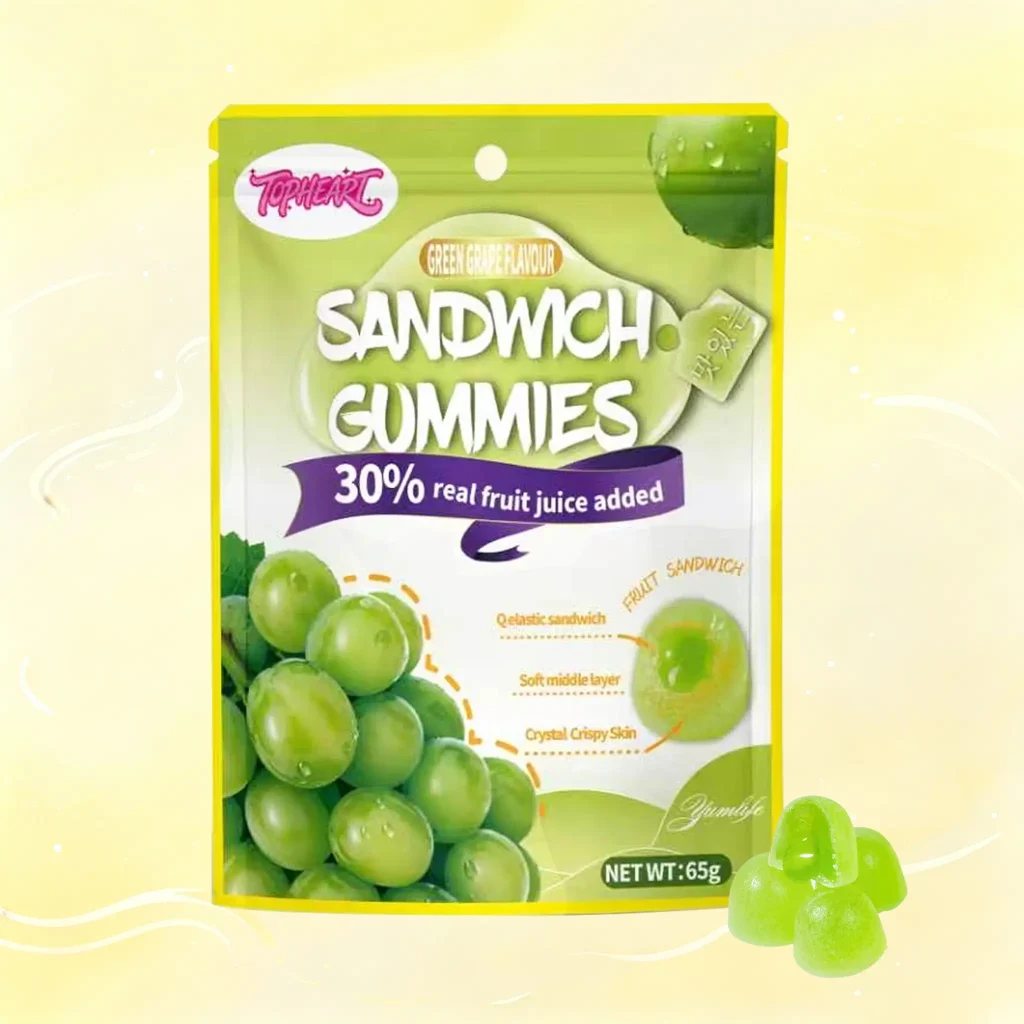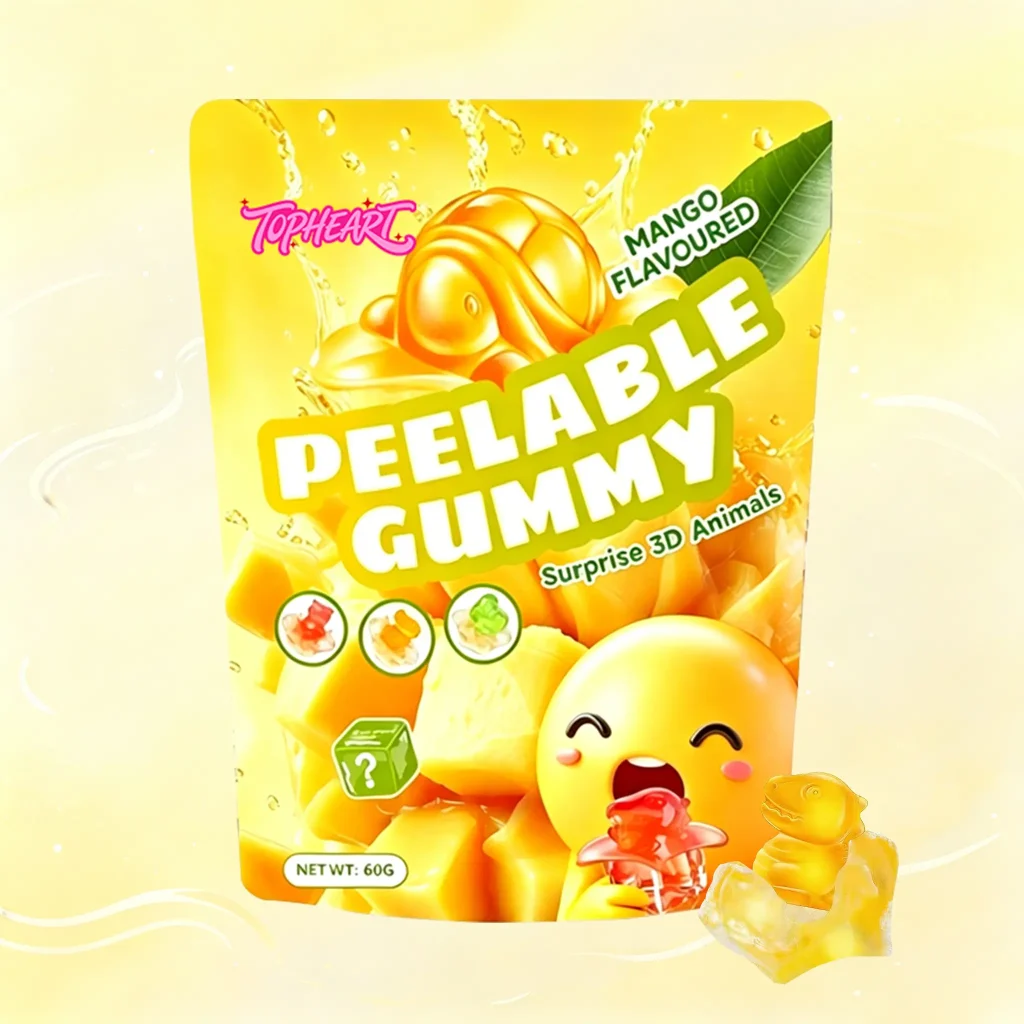


For international buyers, selecting the right 3D gummy product involves more than choosing an attractive shape. Flavor development, ingredient selection, texture consistency, packaging performance, and production capacity all influence the suitability of a product for a particular market. Buyers must also consider their target retail channels, expected price positioning, and local labeling requirements.
This guide explains what 3D Gummies are, examines six fruit-flavor options, explores the science behind gummy texture, and outlines practical considerations for sourcing, OEM development, and private-label production.
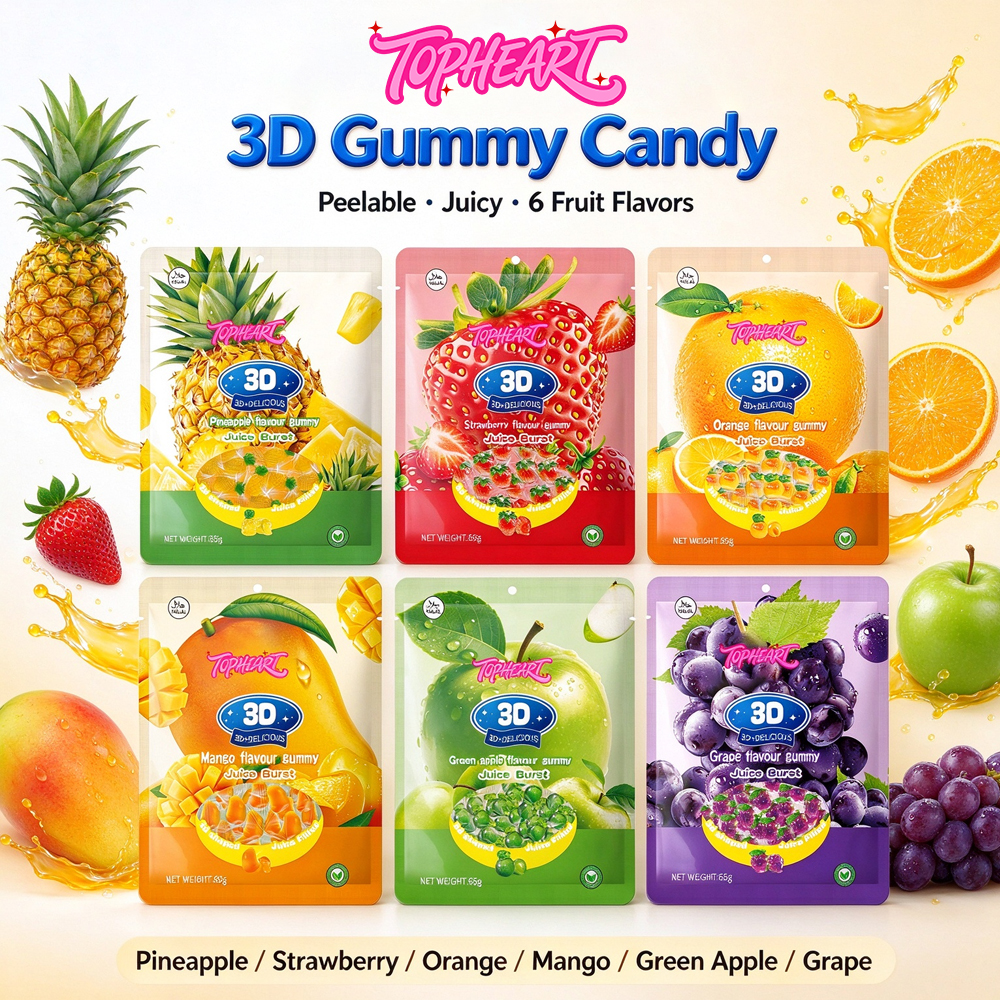
TOPHEART 3D GUMMY CANDY
What Are 3D Gummies?
3D Gummies are gummy candies formed into three-dimensional shapes rather than simple flat pieces. Depending on the product design, they may resemble fruits, animals, characters, or other recognizable objects. Their defining characteristic is the visual depth created by the shape, which can help distinguish them from conventional gummy bears, rings, and basic geometric forms.
The finished appearance depends on factors such as mold design, formulation, depositing conditions, cooling, and demolding. A well-developed product should maintain recognizable details while providing a pleasant chew and consistent appearance across production batches.
For candy buyers, 3D Gummies product options can serve as a starting point when evaluating three-dimensional gummy candy for retail assortments, novelty confectionery collections, and customized product programs.
Compared with simpler gummy formats, three-dimensional designs may provide more opportunities for themed products, seasonal assortments, and coordinated flavor collections. However, intricate shapes can require additional mold-development work and closer control of production conditions. Buyers should evaluate the final samples rather than assuming that every design will be equally easy to manufacture at commercial scale.
Why 3D Gummies Attract Global Candy Buyers
Distinctive Visual Presentation
Product appearance can influence how consumers notice and evaluate confectionery on crowded retail shelves. Three-dimensional gummy shapes provide visible details that may help a product stand out among conventional fruit sweets. For retailers, this can support themed displays, colorful assortments, and product presentations aimed at children, families, and novelty candy enthusiasts.
Flexible Product Development
3D Gummies can be developed around different fruit flavors, colors, shapes, and packaging formats. A buyer might select a single signature flavor for a focused product launch or combine several flavors into a mixed assortment. These options can help distributors serve different retail channels without relying on only one product presentation.
Opportunities for Branding and Private Label
Distinctive shapes can support a recognizable brand identity, especially when the candy design, flavor profile, and packaging work together. Retailers and confectionery brands can explore coordinated collections for everyday sales, seasonal promotions, gifts, and novelty candy ranges.
Manufacturers with established confectionery production experience may also help buyers assess whether a proposed shape, flavor, and packaging combination is technically feasible. Understanding the capabilities of a potential partner is an important part of product development. Buyers can learn more about Candy-Food and its company background before discussing a potential sourcing project.
Six Popular 3D Gummies Flavors for a Versatile Product Portfolio
Flavor selection is a central part of building a commercially relevant gummy assortment. Green apple, grape, mango, orange, strawberry, and pineapple each offer a recognizable fruit direction, allowing buyers to develop a varied portfolio for different retail preferences. Actual flavor intensity, sweetness, acidity, and color should be confirmed through product samples.
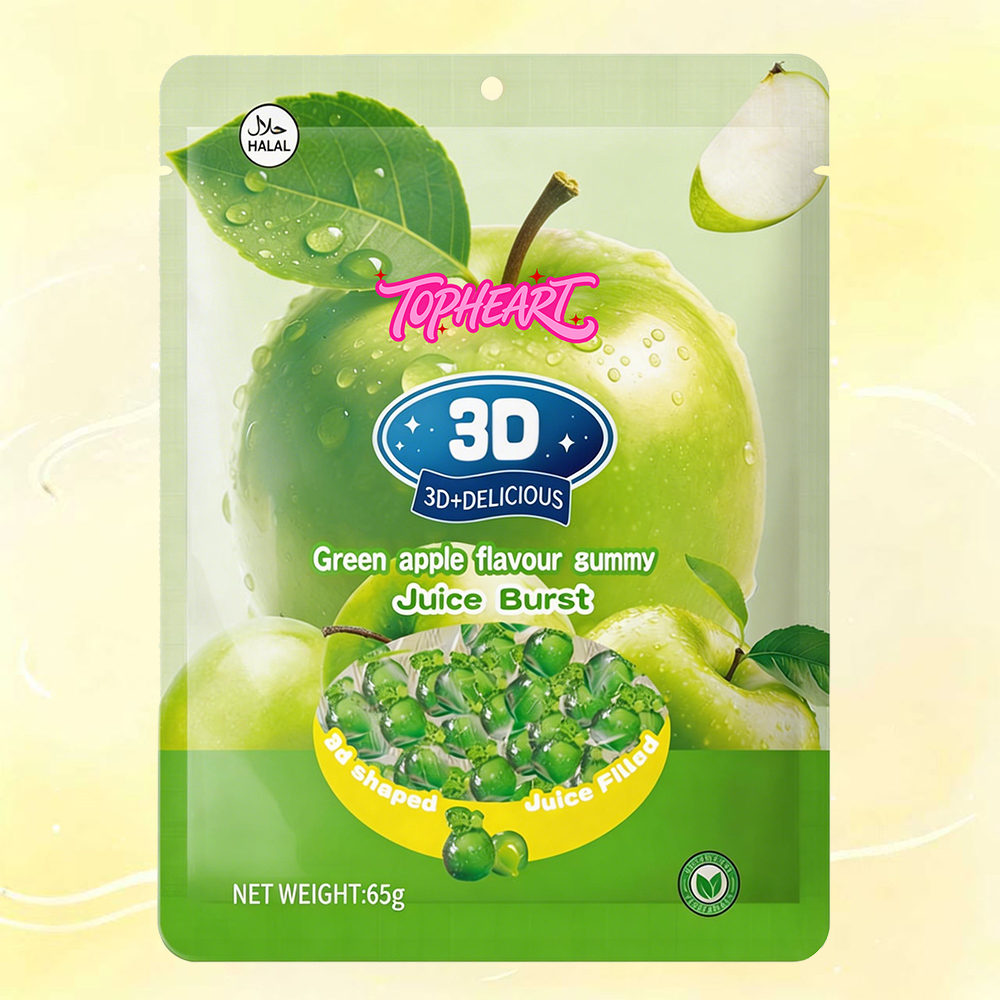
1. 3D Gummies – Green Apple Flavor
Green apple is a useful choice for buyers seeking a crisp, tangy fruit profile. Its characteristic sweet-and-sour impression can create contrast within a mixed gummy assortment, particularly when paired with sweeter fruit varieties.
Green apple 3D Gummies can be considered for convenience stores, novelty candy ranges, mixed fruit pouches, and youth-oriented confectionery collections. A balanced formulation should preserve a recognizable apple character without allowing acidity to overwhelm the overall flavor.
For private-label development, buyers can discuss the desired balance between sweetness and tartness, the preferred shade of green, and whether the product will be sold individually or as part of a multi-flavor pack.
2. 3D Gummies – Grape Flavor
Grape is a familiar confectionery flavor in many international markets. Depending on the formulation, grape gummies may deliver a sweet, juicy profile with a distinctive fruity aroma. A purple color can reinforce the flavor identity, although the final color should be selected according to the intended market and applicable regulations.
Grape 3D Gummies can complement green apple and orange in a mixed collection. Buyers should assess whether the flavor remains consistent after processing and throughout the intended shelf life. They should also confirm the ingredient declaration and the suitability of any colors and flavorings for the destination market.
3. 3D Gummies – Mango Flavor
Mango offers a tropical flavor direction that can broaden a conventional fruit gummy portfolio. Depending on the target audience, the profile may emphasize ripe sweetness, a juicy fruit impression, or a more tangy character.
Mango 3D Gummies may suit tropical-themed assortments, summer promotions, and mixed fruit collections. Buyers targeting markets with strong interest in tropical fruit flavors can evaluate mango alongside pineapple and orange to create a coordinated selection.
When developing a mango product, sensory evaluation should consider aroma, sweetness, acidity, and aftertaste. The objective is to achieve a recognizable mango profile that works well with the gummy’s texture and the intended retail positioning.
4. 3D Gummies – Orange Flavor
Orange is a familiar citrus flavor that can bring a bright, refreshing character to gummy candy. Its sweet-and-tangy profile makes it a practical option for mixed fruit assortments and products designed around recognizable everyday flavors.
Orange 3D Gummies can be combined with grape, strawberry, or green apple to create a colorful selection. Buyers should confirm that the flavor remains balanced and that the finished product delivers the intended citrus character without excessive artificial-tasting notes.
For packaging development, orange-colored graphics and clear flavor identification may help shoppers distinguish the product quickly. Color choices must remain consistent with the actual formulation and applicable food-labeling rules.
5. 3D Gummies – Strawberry Flavor
Strawberry is a widely recognized fruit flavor associated with sweet, fruity confectionery. It can serve as a familiar option in a mixed gummy range and may appeal to buyers seeking a flavor that works across several retail formats.
Strawberry 3D Gummies can be positioned in fruit assortments, novelty candy packs, and branded confectionery collections. Product developers should evaluate the relationship between strawberry aroma, sweetness, color, and chewiness rather than treating flavor as an isolated specification.
For private-label brands, strawberry can be included in a core range, while more distinctive flavors such as mango and green apple provide variety. This combination can help create a product portfolio with both familiar and contrasting fruit options.
6. 3D Gummies – Pineapple Flavor
Pineapple provides a tropical fruit profile with sweet and tangy notes. It can complement mango and orange, giving buyers another option for a tropical-themed gummy collection.
Pineapple 3D Gummies may be considered for mixed fruit pouches, seasonal assortments, and novelty confectionery lines. Buyers should assess the flavor’s intensity, aroma, and balance with sweetness to ensure that it remains recognizable in the finished candy.
When developing a six-flavor assortment, pineapple can help diversify the flavor experience while maintaining a consistent product format. Final flavor combinations should be validated through samples and, where practical, target-market feedback.
 3D Gummies – Green Apple Flavor |
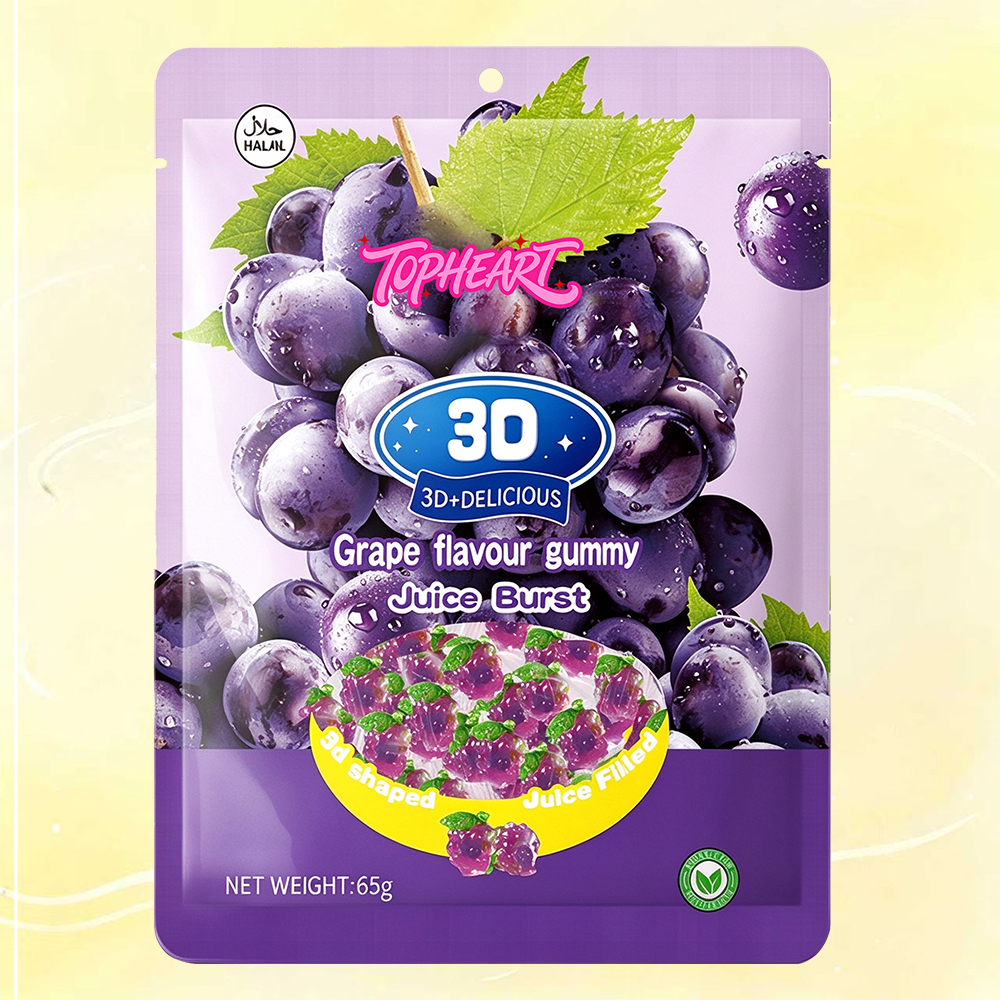 3D Gummies – Grape Flavor |
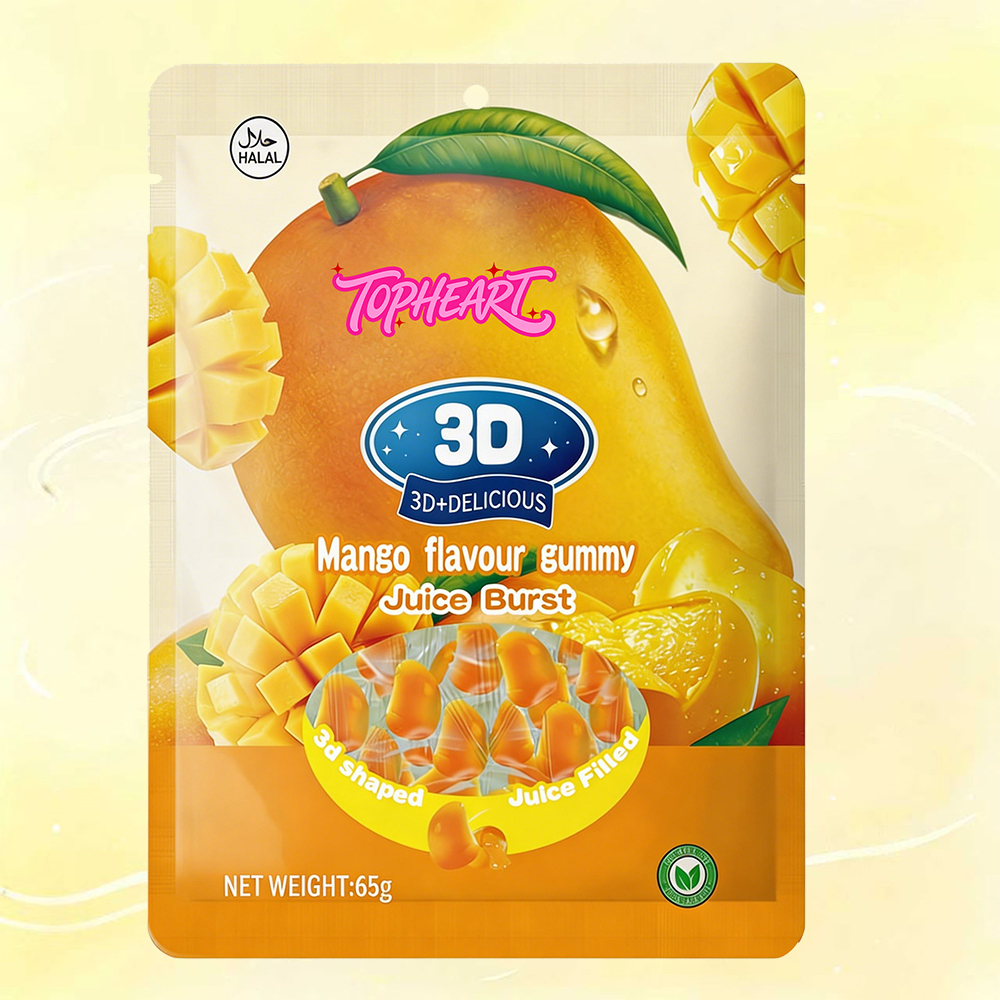 3D Gummies – Mango Flavor |
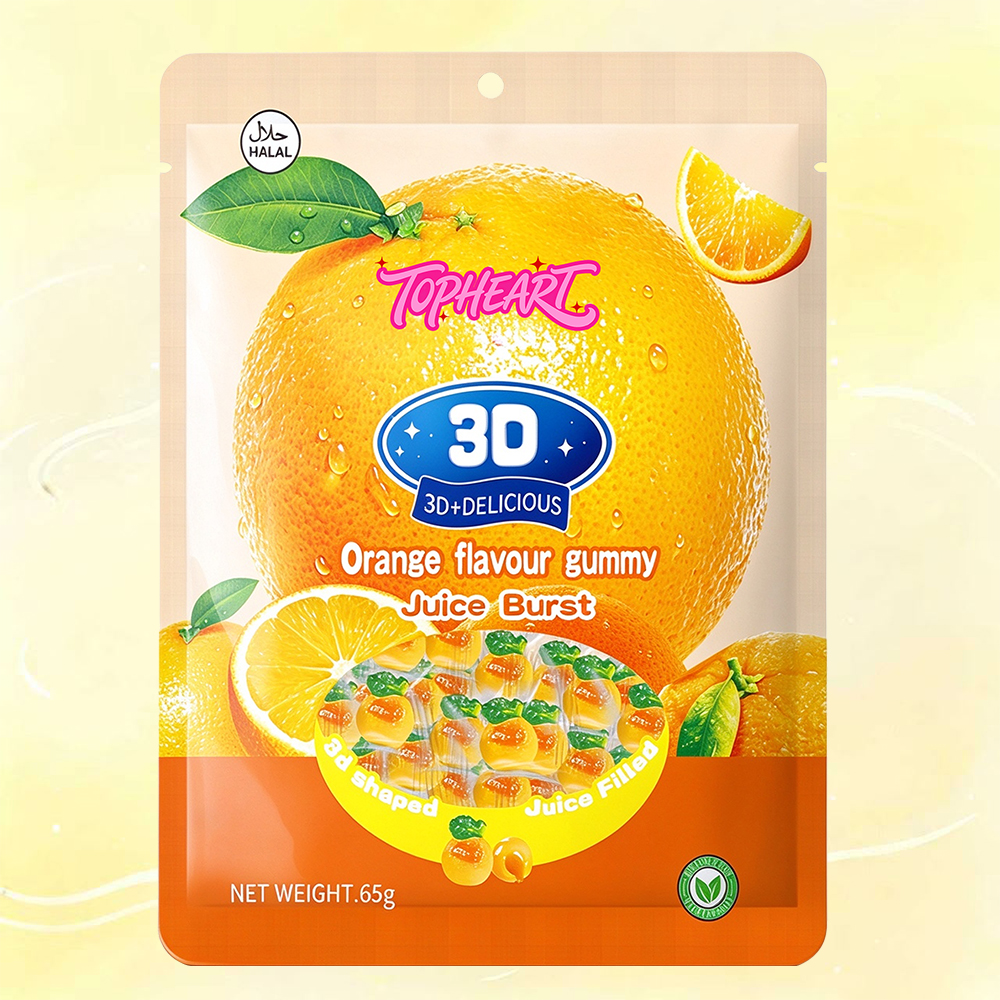 3D Gummies – Orange Flavor |
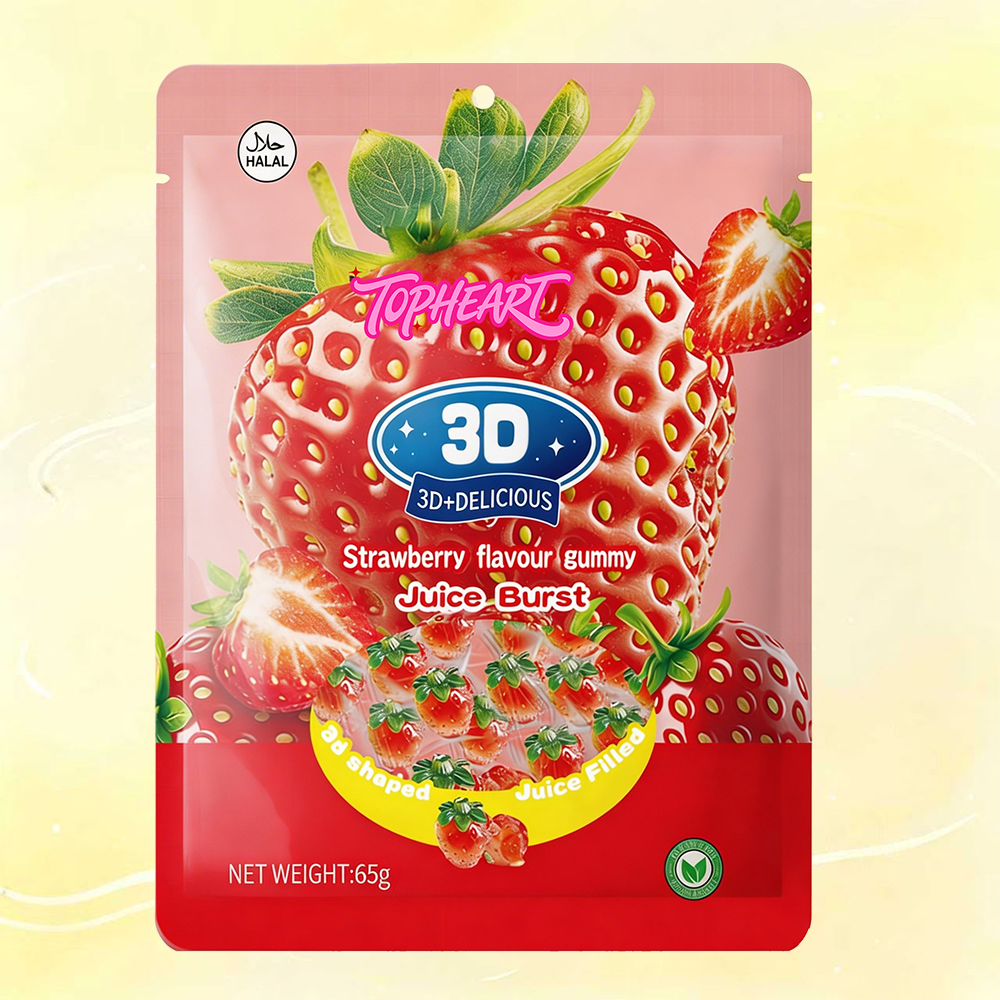 3D Gummies – Strawberry Flavor |
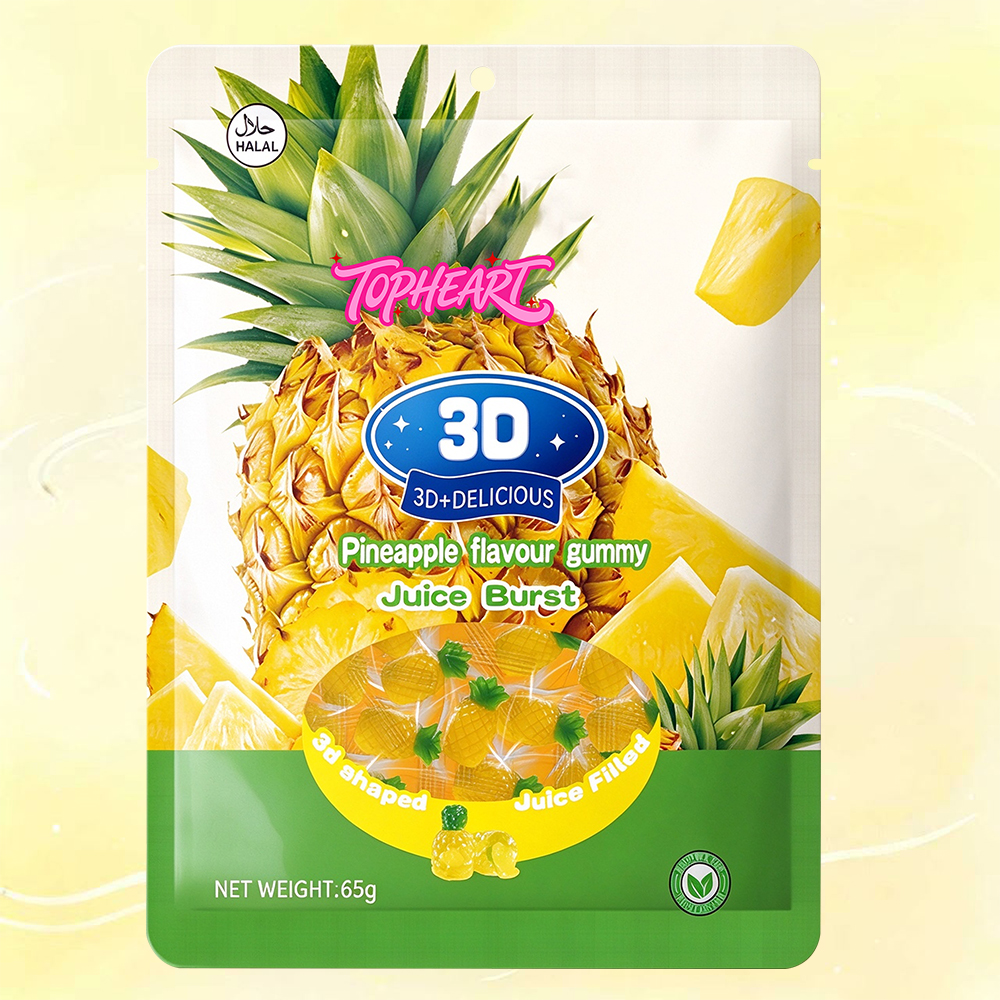 3D Gummies – Pineapple Flavor |
Comparing Six 3D Gummies Flavors
The following table provides a practical product-planning framework for buyers. The flavor descriptions are qualitative sensory directions, not laboratory measurements or claims about universal consumer preferences.
| Flavor | Typical Flavor Direction | Potential Portfolio Role | Development Consideration |
|---|---|---|---|
| Green Apple | Tangy, sweet, crisp | Contrasting fruit option | Balance acidity and sweetness |
| Grape | Sweet, juicy, fruity | Familiar fruit choice | Confirm flavor and color consistency |
| Mango | Tropical, sweet, aromatic | Tropical assortment | Maintain a recognizable mango profile |
| Orange | Citrus, sweet, tangy | Bright citrus option | Preserve a balanced citrus character |
| Strawberry | Sweet, fruity, familiar | Core fruit flavor | Coordinate aroma, sweetness, and color |
| Pineapple | Tropical, sweet, tangy | Tropical flavor extension | Balance acidity and fruit intensity |
The Science Behind 3D Gummies: Texture, Structure, and Shape
Gummy candy is a structured food system. Its texture depends on the interaction between ingredients, water content, gelling agents, processing conditions, and storage. In three-dimensional products, these factors also influence whether the finished candy retains the details of its mold.
Gelatin can contribute elasticity and chewiness, while pectin and other hydrocolloids can produce different gel structures. The best choice depends on the desired texture, recipe, processing equipment, and product requirements. Research published in Food Hydrocolloids by DeMars and Ziegler examined gelatin and high-methoxyl pectin confectionery gels and found that changes in formulation affected mechanical properties and sensory texture.
For buyers, this research illustrates why a gummy’s texture should be evaluated as a measurable product attribute rather than described only as “soft” or “chewy.” The actual results for any commercial 3D gummy will depend on its own formulation and manufacturing process.
Scientific Data Relevant to Gummy Development
| Research or Evaluation Area | Reported Data or Finding | Practical Relevance to 3D Gummies |
|---|---|---|
| Gelatin and pectin confectionery gels | The study evaluated gelatin levels of 3.0%, 4.5%, and 6.0%, with high-methoxyl pectin levels of 0%, 0.5%, 1.0%, and 1.5% in experimental formulations. | Demonstrates that gelling-agent combinations and concentrations can influence the structure and texture of gummy confections. |
| Sensory texture evaluation | The study used 10 experienced panelists to assess selected gel samples. | Shows the value of structured sensory evaluation when comparing chewiness, firmness, and other texture characteristics. |
| Instrumental texture measurement | Reported correlations included r = 0.90 between a texture principal component and strain at fracture, r = 0.87 with log stress at fracture, and r = 0.83 with a flavor principal component. | Illustrates that instrumental texture measurements can relate to sensory observations in controlled experimental systems. |
| Gummy formulation and three-dimensional printing | A 2022 study investigated the effects of polyols on the rheological and printing properties of experimental gummies. | Provides further evidence that formulation influences flow, gel formation, and shape-retention behavior in specialized gummy systems. |
Important interpretation: These figures come from specific published experiments, not from a universal commercial 3D Gummies specification. They should not be used as guaranteed production targets. Manufacturers should establish product-specific acceptance criteria through formulation trials, sensory assessment, and quality-control testing.
Manufacturing Considerations for Three-Dimensional Gummy Candy
Manufacturing 3D Gummies requires coordination between product design and process control. A shape that looks attractive in a digital drawing may be difficult to produce consistently if it contains very thin sections, deep recesses, or intricate details.
Mold Design and Shape Definition
Mold design affects the final candy’s dimensions, surface details, and release from the mold. Buyers considering custom shapes should review sample products and ask whether the proposed design is compatible with the manufacturer’s equipment and production method.
Formulation and Depositing
The gummy mixture must have suitable flow and setting characteristics for the selected process. Viscosity, temperature, ingredient ratios, and depositing conditions can affect filling accuracy and the consistency of the final shape. Adjustments may be necessary when moving from initial samples to larger production batches.
Cooling, Demolding, and Quality Checks
After depositing and setting, gummies need to be released from their molds without unacceptable deformation or surface damage. Manufacturers should monitor shape definition, dimensions, appearance, texture, and batch consistency. Buyers should approve a representative sample and establish clear acceptance criteria before mass production.
For a broader understanding of product positioning and market interest, read why 3D gummy candy is becoming popular worldwide. Market-interest articles can help generate product ideas, but buyers should still validate demand with their own customers and sales channels.
Packaging and Shelf-Life Considerations for 3D Gummies
Packaging is important because gummy candies can be sensitive to moisture changes, heat, and handling conditions. A suitable packaging format should protect the product during storage and transportation while presenting its shape, flavor, and brand identity clearly.
Potential formats include individual packs, small pouches, resealable bags, multipacks, and larger wholesale packs. The right option depends on target retail prices, serving size, distribution conditions, and the product’s physical characteristics.
Before selecting packaging, buyers should evaluate:
- Moisture protection: Confirm that the selected packaging helps maintain the product’s intended texture under specified storage conditions.
- Seal integrity: Assess whether the package remains properly sealed during transport and normal handling.
- Product visibility: Consider whether a transparent window or product photography communicates the three-dimensional shape effectively.
- Labeling space: Allow sufficient room for ingredients, allergens, net quantity, date marking, storage instructions, and other required information.
- Shipping efficiency: Review carton dimensions, pack counts, and protection against crushing or deformation.
Shelf life should be supported by product-specific stability evidence. Buyers should request the manufacturer’s declared shelf life, recommended storage conditions, and available supporting records rather than assuming that all gummy products have the same storage performance.
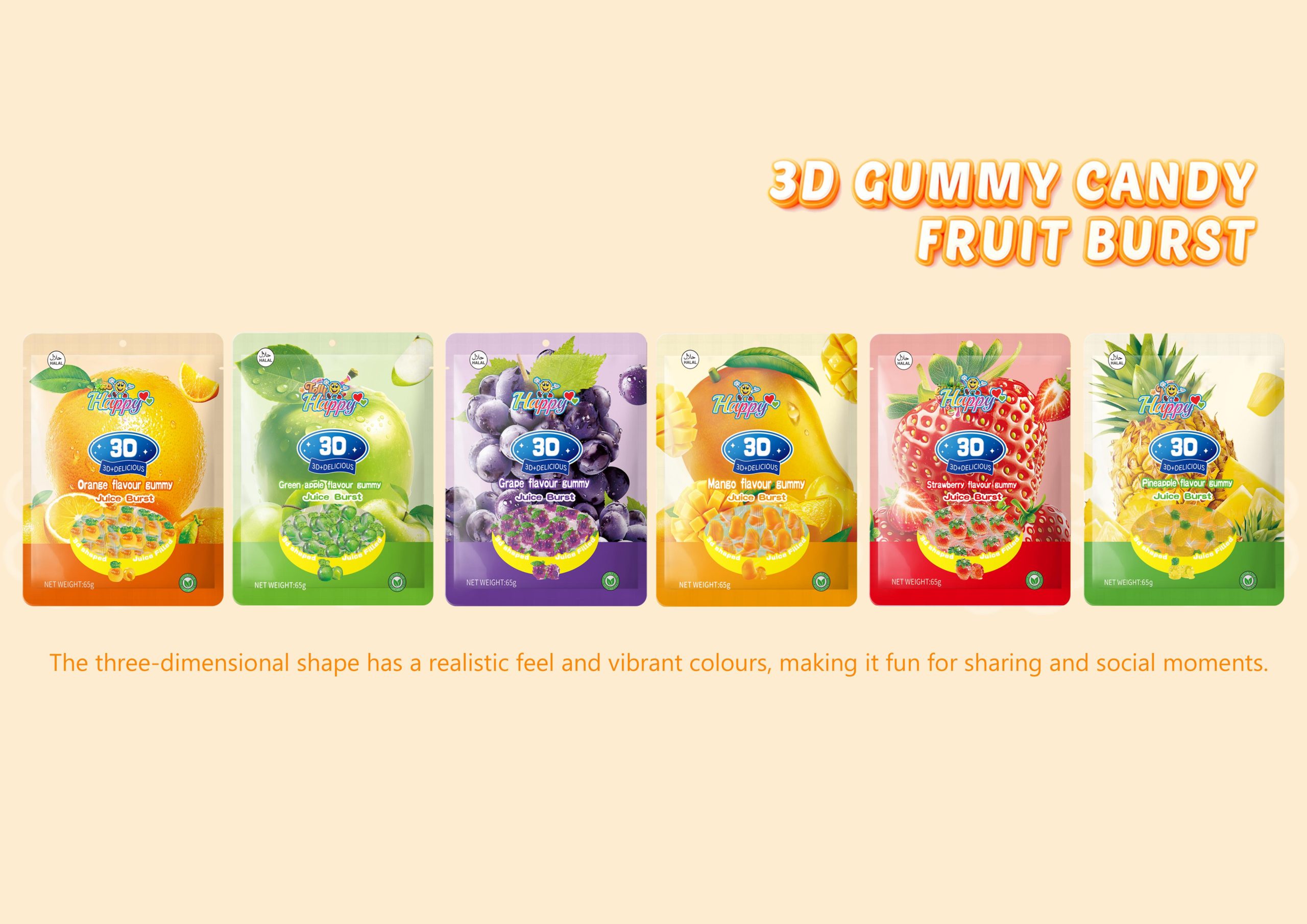
3D Gummies
Food Safety and Labeling for International Buyers
Exporting 3D Gummies requires attention to the destination market’s food regulations. Ingredients, additives, flavorings, colors, allergen declarations, nutrition information, and packaging claims may be subject to different requirements depending on the country or region.
In the European Union, food additives must be authorized for the relevant use under applicable legislation, including Regulation (EC) No 1333/2008. Flavorings are addressed by Regulation (EC) No 1334/2008, while Regulation (EU) No 1169/2011 establishes general food-information requirements for consumers.
In the United States, the Food and Drug Administration provides guidance on food labeling and major food allergens. Importers should verify the current requirements applicable to their product and confirm that the final label reflects the actual formulation.
Before placing a commercial order, buyers should request an ingredient specification, allergen information, relevant test reports, batch traceability details, and any documentation needed for their import process. Product claims such as “natural,” “sugar-free,” or “vegan” should only be used when supported by the formulation and compliant with applicable rules.
How to Source 3D Gummies from a Manufacturer
Choosing a supplier involves evaluating technical capabilities and commercial reliability. A manufacturer should be able to explain the available product formats, customization options, quality-control processes, and limitations of the proposed design.
Confirm the Product Brief
Specify the desired flavors, shape, dimensions, texture, color, target market, pack format, and expected order quantity. Clear requirements help the supplier determine whether the concept is feasible and what information is needed to develop samples.
Evaluate Samples and Specifications
Review samples for shape definition, flavor accuracy, chewiness, appearance, and consistency. Ask for written product specifications and confirm that the approved sample will be used as the reference for commercial production.
Discuss MOQ, Lead Time, and Customization
Minimum order quantities and lead times vary with formulation, mold requirements, packaging, and production scheduling. Buyers should confirm sampling costs, mold charges where applicable, production timelines, payment terms, and shipping arrangements in writing.
Review Communication and Export Readiness
Reliable communication is essential when developing a customized confectionery product. Buyers should confirm who will handle sample revisions, artwork approval, specification changes, quality questions, and shipping documentation. For product inquiries or project discussions, use the official Candy-Food contact page to communicate your requirements directly.
Building a Strong 3D Gummies Product Portfolio
A successful product portfolio should balance familiar flavors with variety. The six options discussed in this guide can be organized into a core range and complementary choices, depending on the buyer’s market research and channel requirements.
For example, a brand may use strawberry and grape as familiar fruit options, green apple and orange to add contrasting taste profiles, and mango and pineapple to build a tropical theme. This is a suggested assortment strategy rather than a claim that these flavors have the same demand in every market.
Retailers may prefer smaller packs with several flavors, while distributors serving different customers may require single-flavor cartons or multiple packaging formats. The final assortment should be guided by customer feedback, price positioning, and practical inventory considerations.
When evaluating a new 3D Gummies collection, buyers should review product differentiation, repeat-purchase potential, packaging clarity, production consistency, and the supplier’s ability to maintain specifications over time. A staged launch or sample evaluation can help test the concept before making a larger purchasing commitment.
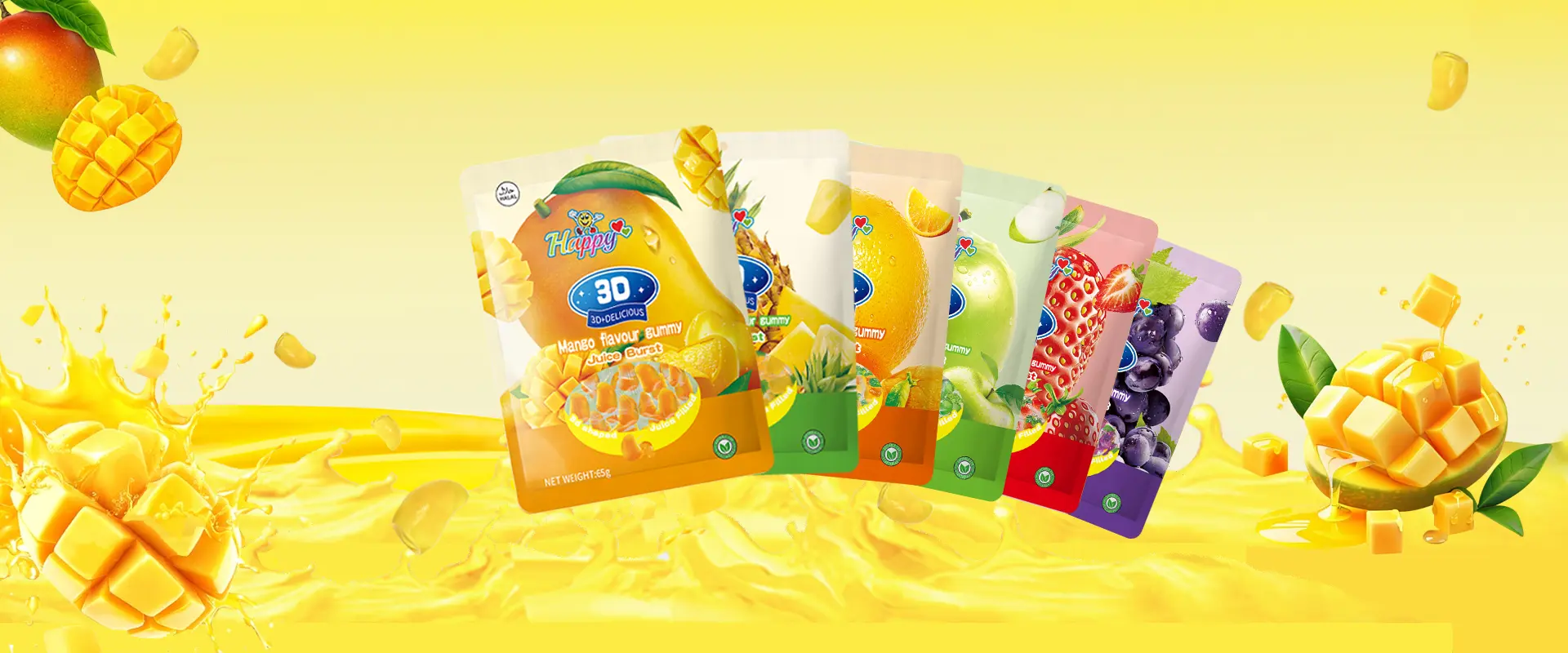
3D Gummy Candy
Frequently Asked Questions
1. What are 3D Gummies, and how are they different from regular gummy candy?
3D Gummies are three-dimensional gummy candies formed into sculpted shapes such as fruits, animals, or other recognizable designs. Compared with simple flat or basic-shaped gummies, they emphasize visual depth and shape definition. Their texture and flavor depend on the formulation and manufacturing process. For buyers, the main evaluation points include shape consistency, flavor quality, chewiness, packaging, and the suitability of the product for the intended retail market.
2. What are the most popular flavors available for 3D Gummies?
Fruit flavors are useful options for developing a varied 3D gummy assortment. Green apple offers a tangy profile, grape provides a sweet fruity direction, mango and pineapple introduce tropical notes, orange brings citrus character, and strawberry offers a familiar sweet-fruit profile. Actual popularity varies by market and customer group. Buyers should review local preferences, compare product samples, and use retailer or distributor feedback when deciding which flavors to launch.
3. Can 3D Gummies be customized for OEM and private-label brands?
OEM and private-label projects may include custom flavors, colors, shapes, packaging artwork, pack sizes, and product assortments, subject to the manufacturer’s capabilities and applicable regulations. Buyers should provide a clear product brief and confirm mold requirements, minimum order quantities, sampling arrangements, production lead times, and packaging specifications. A written specification and approved sample help both parties align on the intended product before commercial production begins.
4. What should international buyers check before purchasing 3D Gummies wholesale?
Wholesale buyers should assess product appearance, flavor consistency, texture, ingredient information, shelf-life evidence, packaging protection, and batch traceability. They should also confirm pricing, minimum order quantity, carton configuration, production lead time, payment terms, and shipping arrangements. For international distribution, buyers need to verify the destination market’s food-labeling and ingredient requirements and obtain the appropriate product documentation before confirming an order.
5. How can buyers choose a reliable 3D Gummies manufacturer?
Buyers should evaluate the manufacturer’s experience with gummy products, ability to produce the required shapes, customization options, quality-control procedures, and communication during sample development. Request representative samples and written specifications, then confirm whether the supplier can reproduce the approved product at commercial scale. It is also important to discuss mold costs, minimum order quantities, production schedules, packaging, export documentation, and the process for handling quality concerns before establishing a long-term supply relationship.