

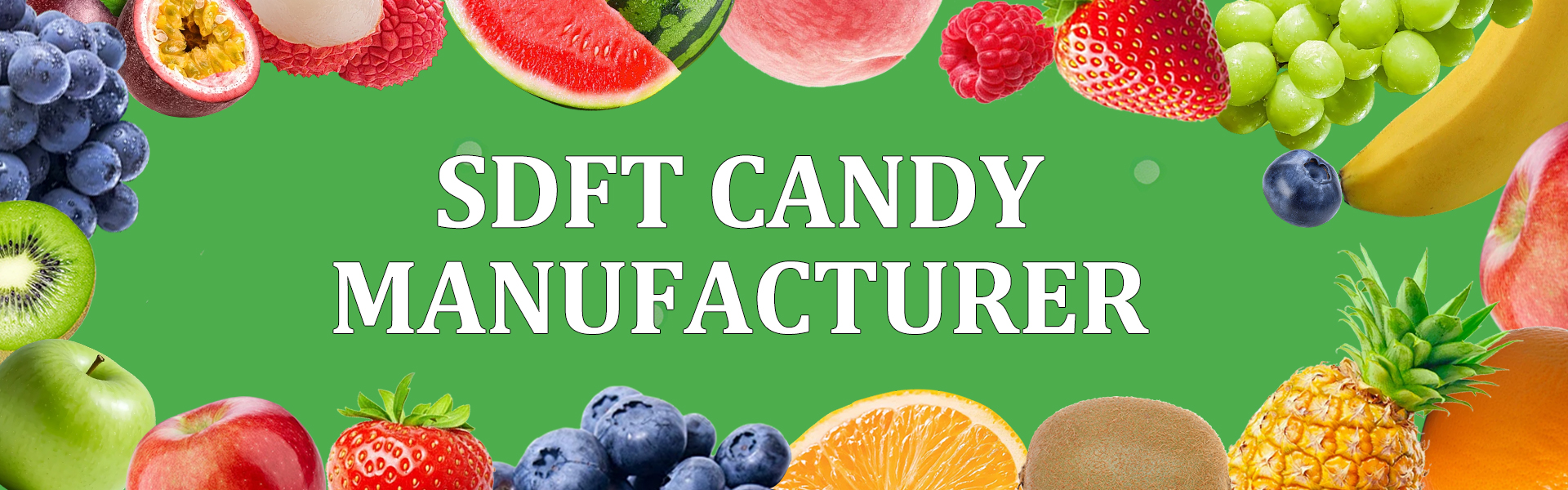
Walk through a modern confectionery aisle and it becomes increasingly difficult to make a gummy product look completely different through flavor alone. Strawberry, mango, grape, orange, peach, and mixed-fruit gummies are already familiar to consumers in many markets. The question for brands and retailers is therefore changing: how can a gummy candy become visually recognizable before a consumer even tastes it?
One answer is three-dimensional product design.
3D Gummy Candy combines confectionery formulation with sculpted shapes, surface details, colors, and textures that create a more recognizable product experience. Instead of presenting candy simply as a small piece of flavored gel, manufacturers can develop animals, fruits, characters, seasonal objects, and other forms that become part of the product’s identity.
This development is especially relevant for B2B buyers. A supermarket may want a seasonal product that stands out on a crowded shelf. A distributor may need a differentiated gummy range for several retailers. An e-commerce brand may need products that photograph well for online listings and social media. A private-label company may want a shape that competitors cannot easily duplicate.
The broader gummy candy manufacturer category now covers many formats, including traditional soft gummies, fruit-shaped products, novelty gummies, seasonal designs, and customized OEM products. This creates a much larger product-development space than the conventional “flavor plus package” approach.
For buyers considering a new product line, the growth of 3D gummies can therefore be understood through several connected factors: visual differentiation, consumer curiosity, texture, flavor, customization, packaging, social-media appeal, and increasingly sophisticated private-label development.
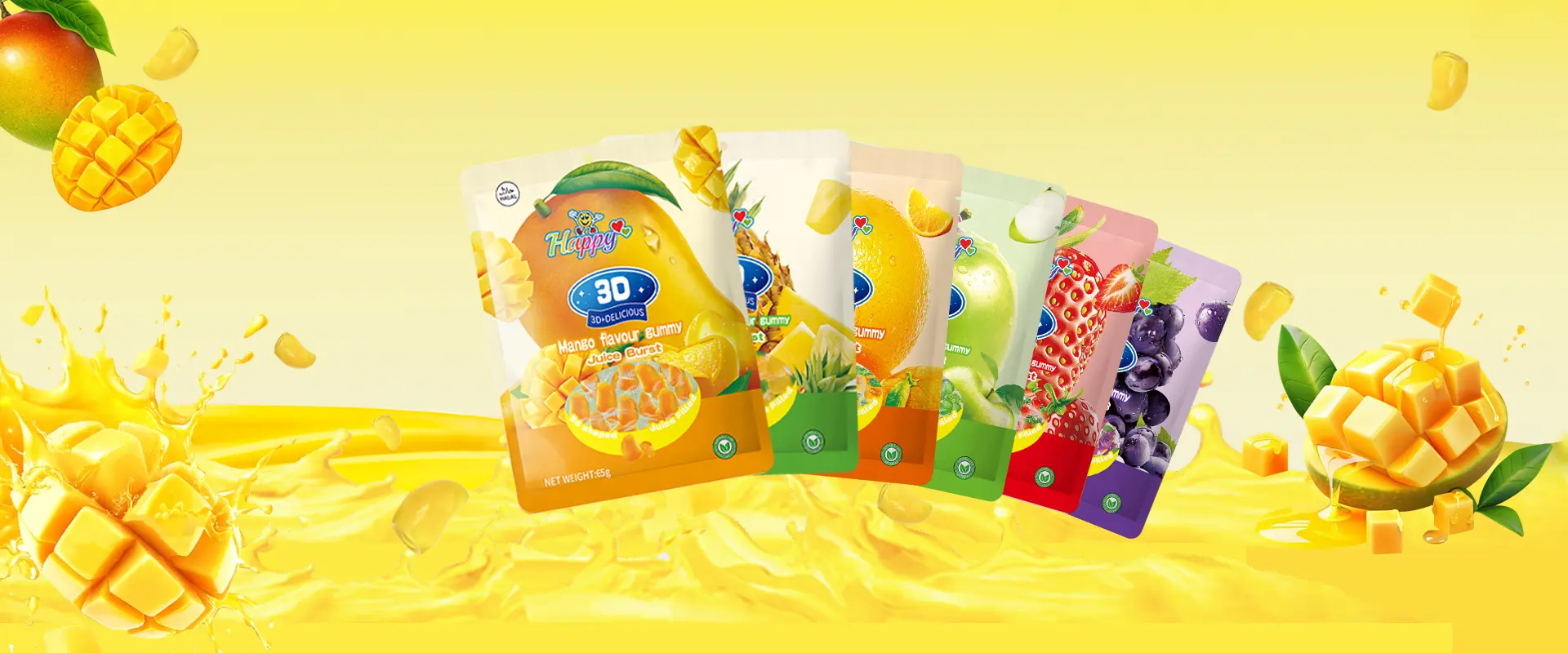
3D Gummy Candy
What Is 3D Gummy Candy?
3D Gummy Candy is a molded gummy confectionery product designed with three-dimensional geometry rather than a relatively flat or simple two-dimensional form. The shape can contain multiple angles, raised surfaces, recessed details, curves, facial features, fruit contours, animal characteristics, or other visual elements.
A conventional gummy may communicate mainly through color and flavor. A three-dimensional gummy can communicate through its physical shape as well.
Common concepts include:
- 3D animal gummies
- 3D fruit gummies
- 3D character gummies
- 3D seasonal gummies
- 3D filled gummies
- 3D sour gummies
- Multi-color 3D gummies
- Novelty-shaped gummies
The distinction is commercially important because shape itself can become a marketing asset. A rabbit can immediately communicate an Easter theme. A mango can reinforce a tropical fruit concept. A dinosaur can support a children’s novelty range. A realistic strawberry can connect visual appearance with flavor expectations.
For buyers researching the broader soft candy and gummy candy category, three-dimensional products represent one part of a much larger confectionery platform that can include different textures, flavors, shapes, sizes, coatings, and packaging structures.
Why Is 3D Gummy Candy Becoming Popular Worldwide?
Consumers Notice Shape Before They Evaluate Technical Specifications
Consumers rarely approach a candy package with a technical checklist. Their first reaction is usually visual. Color, shape, package design, and recognizable product characteristics create the initial impression.
This gives 3D gummies an important advantage in visual communication. A highly recognizable shape can tell part of the product story before the package is opened.
Consider three products placed next to each other:
- A standard red gummy
- A red strawberry-shaped gummy
- A three-dimensional strawberry gummy with visible surface details
All three may use a similar fruit flavor, but their visual communication is different. The three-dimensional version can create a stronger connection between the physical candy and the flavor story.
Novelty Creates a Reason to Try the Product
Novelty is particularly important in confectionery because candy is frequently associated with enjoyment, gifting, impulse purchases, seasonal occasions, and experimentation.
A consumer may already know what a strawberry gummy tastes like. But a three-dimensional strawberry, dinosaur, rabbit, mango, or character-shaped gummy creates another question: “What does this particular product look and feel like when I eat it?”
That curiosity can support trial purchasing.
3D Gummies Work Well in Modern Retail Environments
Retail competition is not limited to physical supermarkets. Products now need to communicate through e-commerce thumbnails, product videos, social media posts, influencer content, gift guides, and digital advertisements.
A distinctive three-dimensional product can provide more visual material for these channels. A product can be photographed from multiple angles, shown in close-up, placed beside real fruit, or integrated into seasonal displays.
This makes 3D gummy candy for retailers particularly interesting when the buyer’s objective is not simply to fill shelf space but to create a recognizable product identity.
How Shape Becomes a Marketing Tool
Traditional confectionery marketing often separates the product from the packaging. The package carries the brand, while the candy mainly delivers flavor and texture.
3D gummy development can partially reverse this relationship.
The candy itself can become:
- A visual brand element
- A merchandising feature
- A social-media content asset
- A seasonal symbol
- A product photography subject
- A children’s novelty element
- A premium gifting feature
This is one reason custom 3D gummy candy has become relevant to private-label development. Instead of competing only through packaging artwork, brands can develop a physical product characteristic that reinforces the packaging identity.
For example, a tropical fruit brand could use mango-shaped gummies with mango flavor. A spring collection could use rabbits and chicks. A children’s range could use dinosaurs or animals. A premium fruit collection could use detailed strawberry, orange, grape, and pineapple forms.
The Science Behind the Texture of 3D Gummy Candy
Visual appearance is only one part of the product experience. A three-dimensional gummy also has to deliver a consistent bite.
Gummy texture is influenced by the hydrocolloid system, sugar concentration, glucose syrup or other sweetener solids, water content, acidity, processing conditions, drying or conditioning, and storage environment.
Published research by DeMars and Ziegler examined gelatin and high-methoxyl pectin gummy systems using gelatin levels of 3.0%, 4.5%, and 6.0%, while high-methoxyl pectin was evaluated from 0% to 1.5% in the experimental formulations. The researchers also found strong relationships between instrumental fracture measurements and sensory texture. In their tested systems, the correlation between sensory texture and strain at fracture reached approximately r = 0.90, while the correlation with logarithmic fracture stress was approximately r = 0.87.
| Scientific Variable | Published Experimental Example | Why It Matters to 3D Gummies |
|---|---|---|
| Gelatin concentration | 3.0%, 4.5%, 6.0% | Influences gel structure and bite |
| High-methoxyl pectin | 0–1.5% | Changes fracture behavior and gel properties |
| Sucrose | 33.4% in the cited formulation | Contributes to sweetness and solids |
| Corn syrup solids | 29.8% in the cited formulation | Contributes to body and texture |
| Texture correlation | r = 0.90 | Links sensory perception with fracture strain |
| Stress correlation | r = 0.87 | Links sensory perception with fracture stress |
These numbers should not be interpreted as universal commercial formulas. They are published experimental values showing why gummy texture can be analyzed scientifically rather than described only with subjective terms such as “soft” or “chewy.”
Gelatin vs Pectin: Which Is Suitable for 3D Gummy Candy?
Both gelatin and pectin can be used to develop gummy products, but they create different formulation systems and texture possibilities.
| Factor | Gelatin-Based Gummy | Pectin-Based Gummy |
|---|---|---|
| Material type | Protein-based hydrocolloid | Plant-derived polysaccharide |
| Typical texture direction | Elastic and chewy | Can provide a shorter or cleaner bite |
| Dietary positioning | Depends on gelatin source | Can support suitable plant-based formulations |
| Processing sensitivity | Temperature and acid management are important | pH, soluble solids, calcium or other gelation conditions may matter |
| Shape development | Suitable for detailed molded gummies | Suitable when formulation is properly optimized |
| Buyer priority | Elastic chew and familiar gummy texture | Alternative formulation and texture positioning |
The better choice depends on the target market, texture objective, dietary positioning, formula design, processing method, and packaging conditions. It is therefore more useful for a buyer to define the desired sensory result first and then work with the manufacturer to select an appropriate formulation system.
Why 3D Gummy Candy Texture Must Be Developed With the Shape
Shape and texture cannot always be treated as independent variables.
A thin gummy with a large surface area can behave differently from a thick three-dimensional character. Deep details may create different cooling and drying behavior from a simple rounded shape. A large piece may also have a different bite from a small piece made from the same formula.
This becomes particularly important when buyers develop fruit-shaped products. A realistic mango shape, for example, should have enough structural strength to maintain its appearance while still providing the desired chew.
For buyers evaluating 3D mango gummy candy, the most useful development approach is to consider shape, flavor intensity, sweetness, acidity, firmness, elasticity, piece weight, surface treatment, and storage conditions together. A dedicated technical guide on choosing mango gummies can therefore be useful when evaluating texture as part of the overall purchasing decision.
What Shapes Are Most Popular for 3D Gummy Candy?
3D Animal Gummies
Animal shapes are among the most flexible options for children’s products, novelty ranges, seasonal products, and character-based packaging.
Common concepts include bears, rabbits, dinosaurs, chickens, lambs, pandas, fish, lions, and other recognizable animals.
3D Fruit Gummies
Fruit-shaped gummies create a natural connection between product appearance and flavor.
Examples include:
- Mango
- Strawberry
- Orange
- Grape
- Pineapple
- Watermelon
- Peach
- Apple
This can be especially effective for products positioned around fruit flavors because the shape reinforces the sensory message.
Seasonal 3D Gummies
Seasonality creates another major application. Easter rabbits and chicks, Halloween pumpkins and ghosts, Christmas trees and snowmen, Valentine’s hearts, and summer fruit shapes can all turn the candy itself into a seasonal communication tool.
This also gives a 3D gummy candy factory an opportunity to support recurring annual product development. A buyer may develop a consistent manufacturing platform while changing shapes, colors, flavors, or packaging for different seasonal campaigns.
How Is 3D Gummy Candy Made?
The manufacturing process normally starts long before the gummy reaches the production line.
Step 1: Product Concept
The buyer defines the target consumer, sales channel, flavor direction, shape, pack size, and market.
Step 2: 3D Shape Development
A two-dimensional concept can be converted into a three-dimensional model. Surface details, dimensions, weight, cavity structure, and demolding requirements are considered.
Step 3: Mold Development
The mold must reproduce the desired geometry while allowing practical filling, cooling, demolding, cleaning, and production.
Step 4: Formula Development
The manufacturer determines an appropriate gummy system based on the required texture, flavor, acidity, color, shape, and storage conditions.
Step 5: Cooking and Depositing
Ingredients are processed under controlled conditions before the gummy mass is deposited into the mold.
Step 6: Cooling and Setting
The product develops its structure before demolding.
Step 7: Drying or Conditioning
Depending on the formulation, controlled moisture adjustment can be used to achieve the desired texture and stability.
Step 8: Surface Treatment and Packaging
Products may receive oil, sugar, sour coating, or another surface treatment before final inspection and packaging.
This is why selecting a 3D gummy candy manufacturer should involve more than looking at finished product photographs. The manufacturer needs the technical ability to connect mold geometry, formulation, processing, quality control, and packaging.
What Can Buyers Customize in 3D Gummy Candy?
OEM development can cover many product variables.
| Customization Area | Possible Development Direction |
|---|---|
| Shape | Animal, fruit, character, seasonal, brand-specific |
| Flavor | Mango, strawberry, grape, peach, citrus, mixed fruit |
| Color | Single color, multi-color, seasonal palette |
| Texture | Soft, chewy, elastic, firm, sour-coated |
| Size | Mini, standard, large novelty format |
| Piece weight | Adjusted according to pack architecture |
| Filling | Fruit or other suitable filling systems |
| Coating | Oil, sugar, sour or other compatible finishes |
| Packaging | Pouches, bags, jars, boxes, individual wrappers |
This flexibility explains why private label 3D gummy candy can be attractive to retailers that want a distinctive seasonal or permanent product range.
How Packaging Changes the Commercial Value of 3D Gummies
Even a highly developed gummy shape can lose commercial impact if the package hides the product or fails to communicate its key visual feature.
For 3D products, packaging should therefore be designed around the candy.
Popular formats include:
- Resealable stand-up pouches
- Clear or partially transparent bags
- Display boxes
- Gift boxes
- Individual wrappers
- Multi-flavor assortment bags
- Retail hanging bags
For example, if a product’s strongest selling point is a highly detailed fruit shape, showing the product can be commercially valuable. If the product is designed as a premium gift, a closed gift box may create a stronger presentation.
The correct packaging therefore depends on the channel rather than on a universal packaging preference.
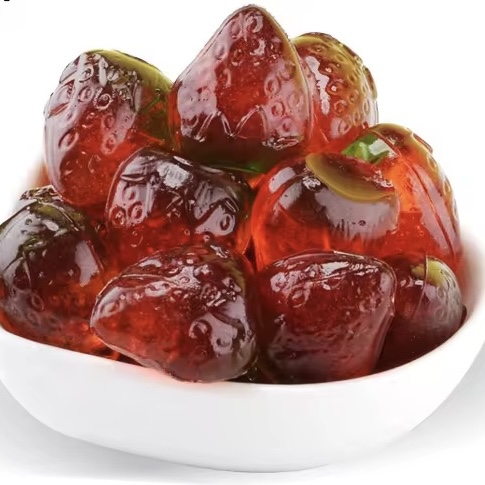
3D strawberry Gummy
3D Gummy Candy for Different Global Markets
North American Market
North American buyers can explore novelty shapes, larger sharing formats, seasonal products, private-label gummies, and e-commerce-friendly packaging. Product differentiation can be particularly important when many brands compete in the same gummy category.
European Market
European product development requires careful attention to ingredient transparency, allergen information, nutrition declarations, language requirements, and destination-country rules. Plant-based positioning can also be evaluated when appropriate for the complete formulation.
Middle Eastern Market
For markets where halal positioning is commercially important, buyers should verify gelatin source, ingredient documentation, production controls, and applicable certification requirements before approving the final product.
Southeast Asian Market
Fruit-forward flavors, colorful products, smaller retail formats, novelty shapes, and tropical concepts can provide useful development directions, although product decisions should always be based on the specific target country and sales channel rather than broad regional assumptions.
Food Safety and Regulatory Considerations
International gummy production requires more than attractive product development. Ingredient declarations, allergen controls, food safety procedures, and destination-market labeling must be considered before commercial production.
United States Requirements
The United States currently recognizes nine major food allergens: milk, eggs, fish, Crustacean shellfish, tree nuts, peanuts, wheat, soybeans, and sesame. FDA states that packaged foods regulated under its authority must identify major food allergens according to applicable labeling requirements. Sesame became the ninth major allergen effective January 1, 2023.
This is particularly relevant to gummy products because ingredients such as flavor systems, color preparations, processing aids, coatings, fillings, and shared manufacturing environments need to be assessed within the overall food safety and labeling program.
European Union Requirements
For prepacked foods in the European Union, Regulation (EU) No 1169/2011 establishes mandatory food information requirements. These include the food name, ingredients, allergen information, net quantity, date marking, applicable storage conditions, food business operator information, and nutrition declaration, among other requirements.
EU rules also address the presentation and accessibility of mandatory food information, including language and legibility requirements.
HACCP and Food Hygiene
Codex Alimentarius lists CXC 1-1969, General Principles of Food Hygiene, as a core food-hygiene code, and its framework includes guidance related to HACCP.
For a B2B buyer, this means supplier qualification should include questions about raw-material controls, production hygiene, allergen management, process monitoring, finished-product inspection, traceability, and corrective-action procedures.
Real-World B2B Applications of 3D Gummy Candy
Supermarket Private Label
A supermarket may develop a 150-gram mixed-fruit pouch containing several animal or fruit shapes. The objective could be strong shelf recognition, consistent product weight, efficient carton packing, and a clear seasonal identity.
Wholesale Distributor
A distributor may prioritize existing molds, several proven flavors, bulk cartons, and flexible packaging. In this scenario, the most efficient strategy may be to use an established product platform while customizing packaging and flavor combinations.
E-Commerce Brand
An online brand may prioritize visually distinctive shapes that can be photographed from multiple angles. Large or highly detailed gummies can become part of product photography, unboxing content, and short-form video campaigns.
Premium Gift Brand
A premium retailer can combine multiple 3D shapes and flavors in a gift box. Here, the product experience depends on the relationship between candy appearance, texture, packaging, assortment, and presentation.
3D Gummy Candy vs Traditional Gummy Candy
Neither format is universally better. The correct choice depends on the commercial objective.
| Decision Factor | Traditional Gummy | 3D Gummy |
|---|---|---|
| Shape complexity | Lower | Higher |
| Visual recognition | Moderate to high | High potential |
| Novelty | Moderate | High potential |
| Mold development | Generally simpler | More detailed |
| Product photography | Good | Strong potential |
| Seasonal applications | Flexible | Highly flexible |
| Customization | Flavor and packaging focused | Shape + flavor + texture + packaging |
For buyers seeking maximum speed, an established gummy format may provide a straightforward route to market. For brands seeking stronger physical differentiation, 3D development can offer additional opportunities.
Common Mistakes When Buying 3D Gummy Candy Wholesale
Choosing the Shape Before Defining the Market
A visually impressive shape is not automatically the right commercial product. The buyer should first identify the consumer, channel, pack size, target price architecture, and launch purpose.
Comparing Suppliers Only by Unit Price
A lower initial quotation does not show the complete procurement value. Mold quality, formula consistency, packaging support, quality control, communication, production scheduling, and repeat-order capability can all affect total commercial performance.
Approving Digital Artwork Without a Physical Sample
A rendering cannot fully demonstrate bite, flavor, surface detail, piece weight, color under real lighting, or packaging fit. Physical sampling should therefore be treated as a critical approval stage.
Creating Too Many SKUs
Adding flavors and colors can increase consumer choice, but every SKU can also add complexity to formulation, procurement, production planning, artwork, inventory, and quality control.
Ignoring Packaging-to-Product Compatibility
A detailed 3D shape may require more packaging space than a simple gummy. Product dimensions, piece count, net weight, sealing, headspace, and transportation should be considered together.
How to Choose a 3D Gummy Candy Manufacturer
A reliable supplier evaluation should cover at least ten areas:
- Custom mold development capability
- Gummy formulation expertise
- Gelatin and pectin processing knowledge
- Flavor customization
- Color development
- Packaging customization
- Quality-control procedures
- Food safety and traceability
- Export experience
- Production capacity and seasonal scheduling
A manufacturer’s physical scale also matters when the product is seasonal or expected to grow rapidly. Buyers should understand whether the supplier has sufficient production resources for repeat orders instead of evaluating only the first sample.
For a company evaluating manufacturing capability, product development, customization, and export experience together, the manufacturer’s corporate profile can provide useful background before moving into a detailed project discussion.
The most practical next step is to prepare a short product brief containing the desired shape, flavor, texture, piece weight, package size, target market, estimated volume, and launch timing. This gives the supplier enough information to evaluate feasibility and recommend an appropriate production route.
What Should Buyers Ask a 3D Gummy Candy Factory?
Before placing an OEM order, buyers can ask:
- Can the factory create a completely new three-dimensional mold?
- Can the same shape be produced in multiple flavors?
- Can the texture be adjusted according to a physical reference sample?
- Can gelatin and pectin-based formulations be developed?
- Can the product be individually wrapped?
- Can packaging be produced under a private label?
- What information is required for an OEM quotation?
- Can samples be approved before mass production?
- What quality-control checkpoints are used?
- Can the supplier support export documentation?
These questions shift the discussion from “How much is one kilogram?” to “Can this supplier reliably produce the product we need?” That is a much stronger B2B procurement question.
Industry Trends: Where Is 3D Gummy Candy Going?
The gummy category is increasingly moving beyond basic flavor innovation toward multi-dimensional product experiences.
Several trends are worth watching:
- Greater use of recognizable 3D shapes
- More fruit-realistic gummy designs
- More seasonal character products
- Greater interest in plant-based formulations
- Premium gift-oriented gummy products
- More private-label development
- More customized OEM programs
- Stronger integration between product shape and packaging design
The important shift is that candy shape is increasingly becoming part of brand identity.
In the past, a brand could differentiate a gummy mainly through flavor, color, and packaging. Today, it can potentially differentiate through the physical object itself.
Why 3D Gummy Candy Has Long-Term Global Potential
The popularity of 3D Gummy Candy is not based on one single factor. It comes from the interaction of several commercial advantages.
Shape improves recognition. Flavor creates sensory identity. Texture determines the eating experience. Color reinforces visual communication. Packaging communicates the brand. Manufacturing technology makes customized forms possible. Digital commerce makes visual differentiation increasingly valuable.
For B2B buyers, this creates a flexible product-development platform.
A supermarket can develop a seasonal range. A distributor can build a wholesale assortment. A private-label brand can create a distinctive signature product. An e-commerce company can develop visually compelling products. A premium retailer can combine detailed shapes with sophisticated packaging.
The most effective strategy is therefore not simply to ask which gummy shape is popular. It is to ask which shape, texture, flavor, size, and package combination makes the most commercial sense for the target market.
Final Takeaway: 3D Gummy Candy Is Turning Shape Into Product Identity
3D Gummy Candy represents a broader change in confectionery development. The product is no longer defined only by sweetness, flavor, or texture. Its physical form can become part of the consumer experience and part of the brand’s marketing strategy.
For buyers, the strongest development process starts with the market and works backward: define the consumer, choose the channel, establish the product concept, select the shape, develop the formulation, test the texture, finalize packaging, review compliance, approve samples, and then move into mass production.
This approach also reduces commercial risk. Instead of selecting a shape because it looks attractive in a catalog, buyers can evaluate whether the shape works with the intended flavor, texture, package size, production process, retail channel, and destination-market requirements.
For brands looking for a distinctive gummy product, 3D gummy candy wholesale and OEM development can provide a path from an existing product concept to a more differentiated private-label range. The strongest manufacturers are those that can connect product development with mold technology, formulation, packaging, quality control, and export requirements.
Frequently Asked Questions About 3D Gummy Candy
1. What is 3D Gummy Candy?
3D Gummy Candy is a molded gummy product designed with three-dimensional geometry rather than a relatively flat or simple shape. It can reproduce animals, fruits, characters, seasonal objects, or other recognizable forms. The three-dimensional structure allows the candy itself to become part of the product’s visual identity. For B2B buyers, 3D gummies can be customized through shape, flavor, color, texture, size, piece weight, filling, coating, and packaging. This makes them suitable for supermarkets, distributors, private-label brands, e-commerce companies, seasonal promotions, and premium confectionery programs.
2. Why is 3D Gummy Candy becoming popular worldwide?
3D Gummy Candy is becoming popular because it combines visual novelty with familiar gummy characteristics such as sweetness, fruit flavors, and chewy texture. A recognizable three-dimensional shape can attract attention on retail shelves and provide stronger visual content for e-commerce and social media. Fruit-shaped gummies can connect appearance with flavor, while animal and character gummies can support novelty and seasonal marketing. For B2B brands, three-dimensional shapes also create additional opportunities for private-label differentiation because the physical candy can reinforce the brand concept rather than relying entirely on packaging artwork.
3. Can I order custom 3D Gummy Candy from a manufacturer?
Yes. A qualified 3D gummy candy manufacturer can develop customized products according to requirements such as shape, flavor, color, texture, piece weight, packaging, and assortment. Depending on the project, the buyer may use an existing mold for faster development or create a new mold for a more distinctive product. OEM projects normally involve concept development, three-dimensional modeling, mold development, formula adjustment, sampling, physical approval, packaging design, compliance review, production, inspection, and shipment. Buyers should provide the target market, expected volume, product concept, desired texture, and packaging requirements when requesting an OEM proposal.
4. How do I choose a 3D Gummy Candy manufacturer?
When choosing a 3D Gummy Candy manufacturer, evaluate more than product appearance or unit price. Important criteria include custom mold capability, formulation expertise, gelatin and pectin processing knowledge, flavor development, packaging customization, quality-control procedures, food safety systems, export experience, production capacity, and seasonal scheduling. Buyers should also ask whether the factory can provide physical samples and maintain consistency between approved samples and mass production. A manufacturer that can coordinate mold development, formulation, packaging, inspection, and logistics may provide a more efficient B2B development process than a supplier that handles only one part of the project.
5. What should I consider when buying 3D Gummy Candy wholesale?
Wholesale buyers should consider product shape, flavor, texture, piece weight, packaging format, shelf life, destination-market regulations, MOQ, production capacity, lead time, carton configuration, and repeat-order capability. The product should be evaluated as a complete commercial system rather than by kilogram price alone. Buyers should also confirm ingredient and allergen information, especially when importing into regulated markets. A physical sample is useful for evaluating texture, flavor, appearance, shape detail, and packaging compatibility before mass production. The most suitable wholesale product is the one that fits the target consumer, retail channel, inventory plan, and overall brand strategy.
Feature Product
-
 Gummy Candy
What Is Gummy Candy? Gummy Candy is one of the ...
-
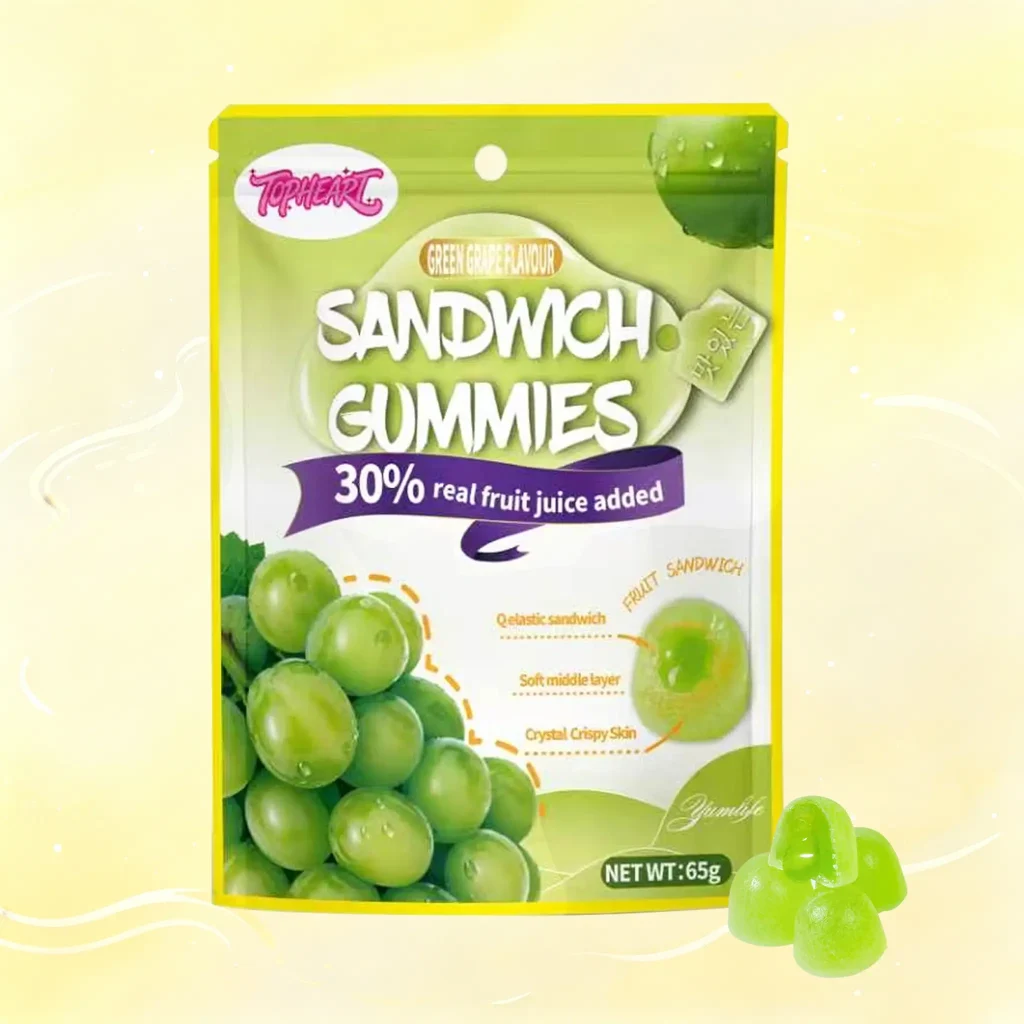 Crispy Gummy Candy
What Is Crispy Gummy Candy Crispy Gummy Candy i...
-
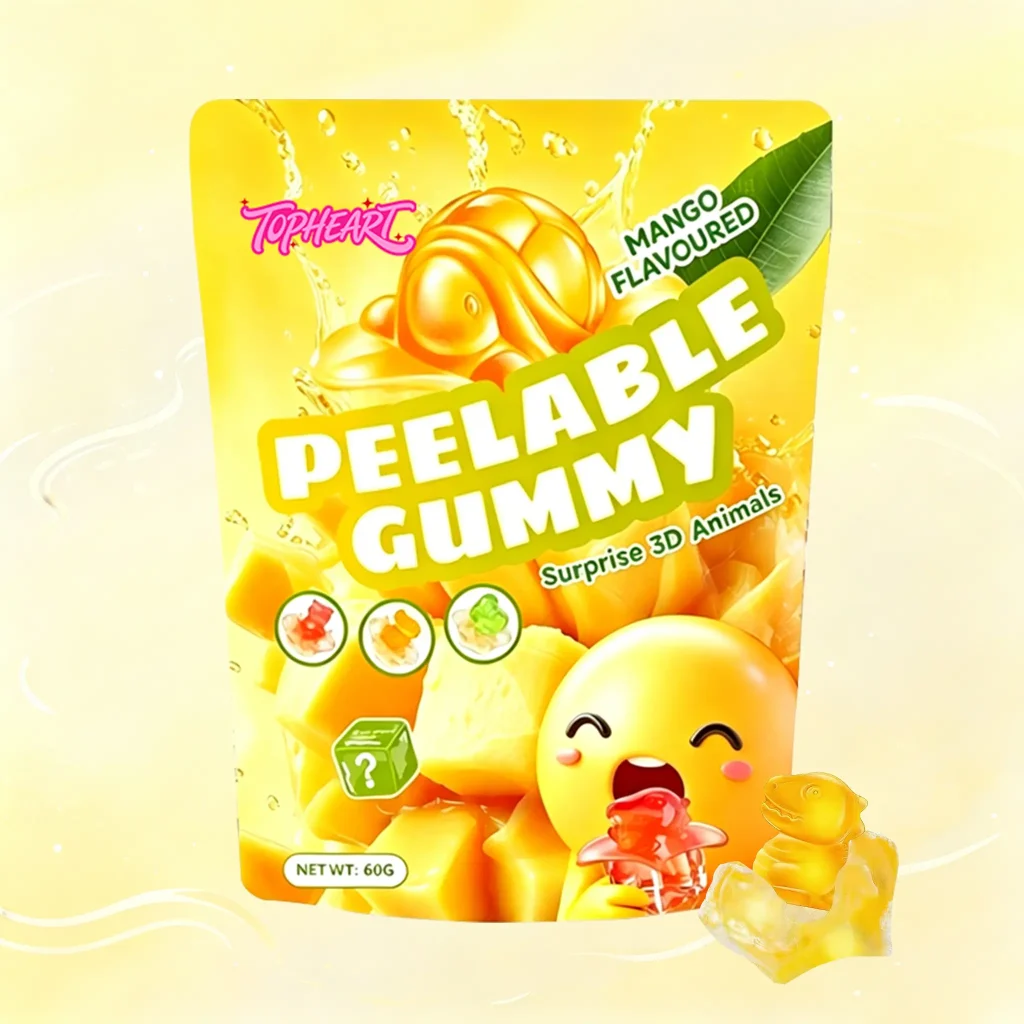 Peelable Gummy Candy
What Is Peelable Gummy Candy? Peelable Gummy Ca...