

Why Sour Candy Is Becoming a Major Confectionery Trend in 2026
Sour Candy has moved far beyond the traditional idea of a brightly colored treat for children. In 2026, sourness has become a product feature that can communicate intensity, novelty, fruit flavor, texture, and even entertainment. From sour gummies and fruit tapes to coated chewy candy and sour-spicy combinations, manufacturers are using acidity as part of a broader sensory experience rather than simply making a product taste “more sour.”
This shift matters to both consumers and the confectionery industry. A shopper looking for an exciting snack may respond to the immediate contrast between acidity and sweetness, while a supermarket buyer may see an opportunity for a visually distinctive product with multiple flavor and packaging possibilities. For B2B buyers, the category also creates opportunities to develop wholesale sour candy, private-label ranges, seasonal products, and customized formats.
The trend is also supported by the science of taste. Sourness is associated with organic acids such as citric and malic acid, but perceived sour intensity is not determined by acid concentration alone. Research has shown that different organic acids can produce substantially different sensory profiles, while pH also influences perceived sourness. One sensory study, for example, calculated relative sourness indices of 1.00 for citric acid, 0.74 for malic acid, 0.77 for fumaric acid, 1.31 for lactic acid, and 1.21 for tartaric acid under its experimental conditions. These values should not be treated as universal manufacturing specifications, but they demonstrate why acid selection matters when developing a consistent confectionery profile.
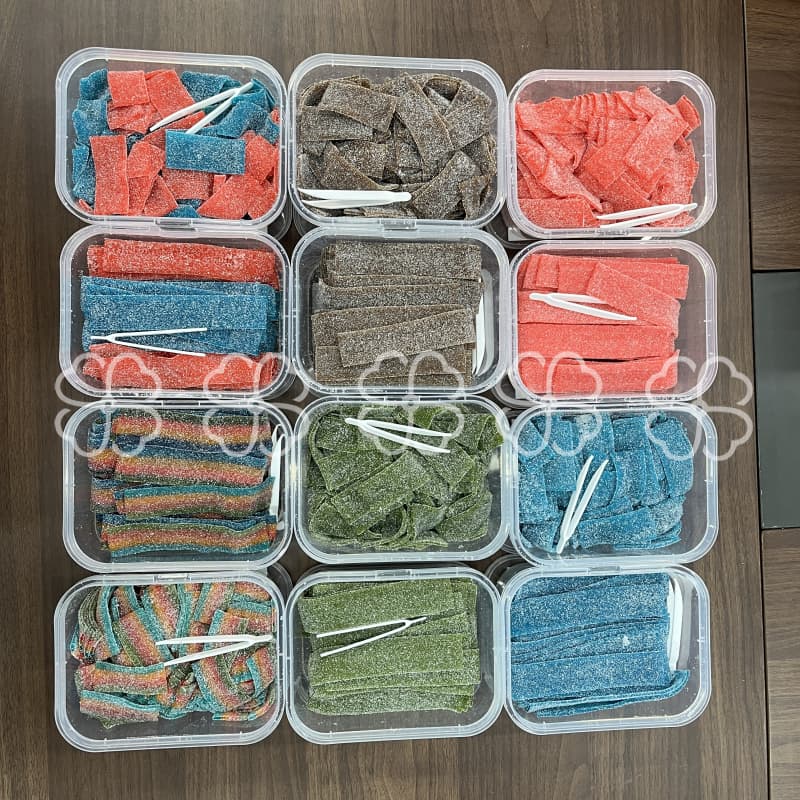
Sour bars
What Makes Sour Candy Different From Regular Candy?
Traditional sweet candy is primarily designed around sweetness, aroma, color, and texture. Sour Candy adds another sensory dimension: acidity. This creates contrast. Instead of experiencing one dominant taste from the first bite to the last, consumers may experience an initial sour coating, a fruit flavor, a chewy texture, and finally a sweeter finish.
This multi-stage experience is particularly useful for product developers. A sour candy can be engineered around the timing of flavor release. A surface coating may deliver an immediate sour sensation, while the underlying gummy provides sweetness and fruit flavor. A filled product can add another layer by releasing a different flavor after the outer shell is broken.
| Feature | Sour Candy | Conventional Sweet Candy |
|---|---|---|
| Primary sensory contrast | Sweetness combined with acidity | Primarily sweetness |
| Flavor intensity | Can create a strong initial impact | Usually smoother and more predictable |
| Texture opportunities | Gummy, chewy, coated, filled, crunchy and layered formats | Wide range, but often less focused on sour coating |
| Flavor innovation | Strong opportunity for fruit, citrus and sour-spicy combinations | Often centered on familiar sweet profiles |
| Social-media potential | High because reactions and challenges are easy to demonstrate | More dependent on novelty, appearance or brand story |
For a manufacturer, the important lesson is that sourness should not be treated as a single specification. Acid type, acid level, pH, sugar balance, moisture, coating distribution, flavor system, and storage conditions can all influence the final sensory result. Research on organic acids has found that increasing pH can significantly decrease sour taste intensity for several acids, illustrating why formulation and finished-product conditions need to be evaluated together.
5 Reasons Sour Candy Is Trending in 2026
1. Consumers Are Looking for Stronger Sensory Experiences
One of the clearest reasons behind the popularity of Sour Candy is its ability to create an immediate sensory reaction. A conventional fruit gummy may communicate sweetness and aroma. A sour gummy can add a sharp opening sensation before the fruit flavor develops.
This makes sourness particularly useful in a crowded confectionery market. When dozens of products compete for attention on the same shelf, a strong sensory promise can help a product establish a clearer identity. The experience is easy to understand: sour first, fruit next, sweetness afterward.
For brands, this also creates opportunities for different intensity levels. Instead of offering one generic sour product, a product line can include mild sour fruit gummies, medium sour chewy candy, and more intense formats for consumers who actively seek stronger sensations.
Manufacturers can therefore develop a portfolio around different sourness profiles rather than relying on one formula. This approach can be especially useful for retailers that want to create several products under the same brand identity.
For companies evaluating manufacturing partners, understanding formulation capability is more important than simply asking whether a supplier produces sour products. A capable sour candy manufacturer should be able to discuss acid systems, texture, coating, flavor balance, packaging, and market-specific requirements.
Brands looking for an established confectionery producer can also review the manufacturer’s background, production capabilities, product categories, and export experience before beginning a customized project. A useful starting point is the manufacturer’s company and manufacturing background page, which can help buyers evaluate whether the supplier is suitable for long-term B2B cooperation.
2. Sour Candy Works Extremely Well With Short-Form Content
Sourness is visually and emotionally easy to demonstrate. A person tastes a product, reacts to the intensity, describes the flavor, and compares different levels of sourness. This creates a simple story that can work well in short-form video, product reviews, tasting challenges, and social content.
The category therefore has an advantage over products whose primary difference is difficult to communicate visually. A sour candy tasting can demonstrate intensity within seconds.
For B2B brands, this has implications for packaging and product development. A product designed for social discovery may benefit from bright colors, recognizable fruit imagery, unusual shapes, transparent flavor communication, and convenient single-serve packaging.
However, social-media appeal should not replace product quality. A product can generate attention once, but repeat sales depend on taste consistency, texture, packaging stability, shelf life, and reliable manufacturing. Buyers should therefore treat viral potential as one part of the commercial equation rather than the entire strategy.
3. Adults Are Becoming an Important Sour Candy Audience
Sour Candy is increasingly relevant to adults because it combines nostalgia with novelty. Many adults remember sour sweets from childhood, but today’s products can use more sophisticated fruit profiles, unusual textures, premium packaging, and combinations such as mango and chili.
This creates an interesting positioning opportunity. A sour product does not necessarily have to look like a children’s confectionery item. A brand can use refined fruit imagery, minimalist packaging, premium pouch formats, or specialty flavors to target older consumers.
Adult-oriented sour products can also connect with broader snack trends around experimentation. Consumers may not simply want another strawberry candy; they may want a sour strawberry straw, a tropical fruit tape, a sour mango gummy, or a layered product with multiple flavor sensations.
For buyers searching for specific formats, sour belts and liquorice products provide another way to build a broader sour range. A dedicated sour belts and liquorice category can help retailers compare different shapes, textures, and flavor concepts within one product family.
4. Fruit and Sour Flavor Combinations Are Becoming More Diverse
Fruit remains one of the strongest foundations for sour confectionery because acidity naturally complements many fruit profiles. Citrus can create brightness, berries can provide familiar sweetness, and tropical fruits can give the product a more adventurous identity.
Common development directions include strawberry, watermelon, green apple, lemon, cherry, peach, lychee, mango, passion fruit, and mixed tropical fruit. The opportunity is not simply to select a fruit flavor and add acid. The more important question is how the acidity interacts with the fruit profile.
| Flavor Direction | Typical Consumer Perception | B2B Product Opportunity |
|---|---|---|
| Sour Strawberry | Familiar, fruity and accessible | Mass-market gummies and candy straws |
| Sour Watermelon | Refreshing and playful | Summer and impulse products |
| Sour Mango | Tropical and intense | Premium and adventurous ranges |
| Sour Citrus | Bright and sharp | Refreshing hard candy and gummies |
| Sour Berry | Sweet, fruity and familiar | Mixed bags and everyday snacking |
| Sour + Chili | Hot, sour and adventurous | Adult-oriented and trend-focused products |
Straw-shaped products are particularly useful for this trend because they combine recognizable fruit flavor with a distinctive format. For example, a sweet-and-sour strawberry product can communicate both the flavor and the intended sensory experience directly through its product name and shape. Buyers evaluating sweet and sour strawberry candy straws can therefore consider the format as well as the flavor when developing a retail range.
5. Manufacturers Are Creating More Innovative Sour Candy Formats
The modern Sour Candy category is no longer limited to sugar crystals on the outside of a gummy. Manufacturers can work with different shapes, textures, centers, coatings, and production processes.
Examples include sour gummies, sour belts, sour straws, sour jelly, sour hard candy, powder-coated candy, filled gummies, liquid-center candy, peelable gummies, three-dimensional gummies, and freeze-dried formats.
Texture is particularly important because it determines how long the sour sensation remains active. A thin coating may create a rapid burst, while a thicker chewy product can extend the flavor experience. A crunchy or freeze-dried format can introduce an entirely different sensory response.
This is one reason the category is attractive to sour candy factory buyers. A supplier with multiple production capabilities can help a brand test several formats before committing to a large-scale launch.
The Science Behind Sourness in Candy
Sour taste is closely associated with acids. Citric acid is familiar from citrus fruits, while malic acid contributes significantly to the tart character of many fruits. Other acids can produce different sensory effects.
Importantly, the sensory experience cannot be predicted simply by comparing the weight of one acid with another. A 2021 study developed an organic-acid sensory analysis approach and reported different relative sourness indices for several acids under controlled test conditions. Citric acid was assigned an index of 1.00 in that study, while malic acid was 0.74 and tartaric acid was 1.21. These values illustrate the importance of acid selection but should not be transferred directly into commercial candy formulas because the final product matrix, sugar level, pH, concentration, and texture all influence perception.
| Acid | Relative Sourness Index in One Sensory Study* | General Sensory Role |
|---|---|---|
| Citric Acid | 1.00 | Bright, familiar sour profile |
| Malic Acid | 0.74 | Fruit-like, lingering tartness |
| Fumaric Acid | 0.77 | Persistent sour character |
| Lactic Acid | 1.31 | Distinctive acidic character |
| Tartaric Acid | 1.21 | Strong, distinctive sour profile |
*Relative index values are from a specific experimental sensory method and are not universal manufacturing specifications.
Another important variable is pH. Research has found that sour taste intensity can decrease as pH increases for several organic acids, even when other experimental conditions are controlled. This is why professional product development should evaluate finished candy rather than selecting an acid solely from a theoretical specification.
How Sour Candy Manufacturers Control Product Quality
For importers and distributors, the most important question is not simply whether a supplier can make a sour candy sample. The real question is whether the supplier can reproduce the same flavor, texture, appearance, weight, and packaging performance across commercial production.
A modern sour candy manufacturer should therefore evaluate several interconnected parameters.
| Quality Parameter | Why It Matters to Buyers |
|---|---|
| Sourness consistency | Creates a predictable consumer experience |
| Acid distribution | Helps prevent uneven sourness between pieces |
| Moisture | Influences chewiness, stability and texture |
| Coating uniformity | Controls the initial sour sensation |
| Color consistency | Supports brand and retail presentation |
| Piece weight | Supports pack-weight and cost control |
| Packaging integrity | Protects quality during transportation and storage |
| Shelf-life stability | Important for international distribution |
A common B2B mistake is to compare suppliers only by unit price. A lower quotation does not necessarily represent lower total procurement cost if inconsistent texture, damaged packaging, flavor variation, high rejection rates, or delayed production create downstream expenses.
Buyers should instead evaluate the full commercial equation: product quality, minimum order quantity, customization capability, packaging, lead time, documentation, quality control, shipping protection, and communication.
For products intended for multiple markets, it is also useful to discuss specifications before finalizing the formula. This allows the manufacturer and buyer to identify potential differences in ingredient requirements, packaging information, claims, and labeling before production begins.
What B2B Buyers Should Know About Sour Candy Regulations
Regulatory compliance is another important consideration when sourcing Sour Candy internationally. Requirements depend on the destination market, product formulation, ingredients, packaging format, and claims made on the label.
In the United States, FDA requirements include ingredient declaration and specific requirements for major food allergens. The current FDA framework recognizes nine major food allergens, including sesame, and requires the food source of major allergens to be identified on applicable packaged-food labels.
In the European Union, Regulation (EU) No 1169/2011 establishes general food-information requirements for prepacked foods. These include items such as the name of the food, ingredients, allergen information, net quantity, durability information, storage conditions where applicable, food business operator information, and nutrition declaration.
The European Commission also states that mandatory nutrition information for most prepacked foods includes energy, fat, saturates, carbohydrate, sugars, protein, and salt, generally expressed per 100 grams or 100 milliliters.
For B2B buyers, the practical lesson is straightforward: do not finalize packaging artwork based on assumptions. Confirm the destination-market requirements with the responsible importer, regulatory professional, and manufacturer before commercial production.
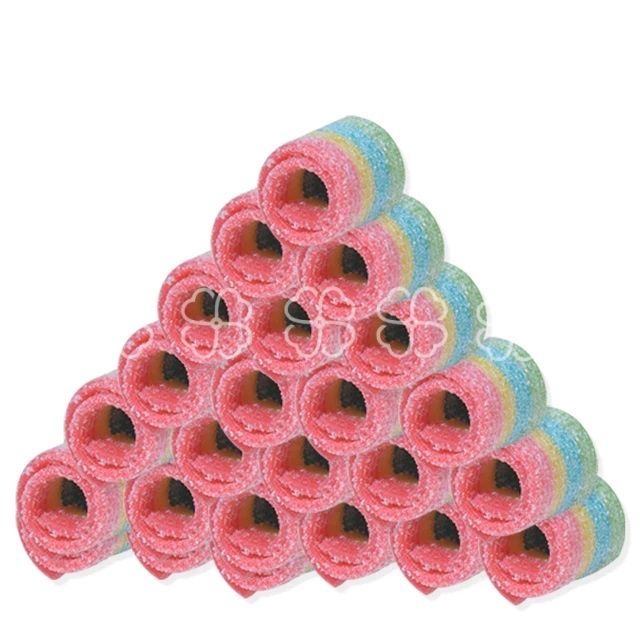
Rainbow Sour Tape Gummies
How Sour Candy Fits Different Retail Channels
Supermarkets and Grocery Stores
Supermarkets can use Sour Candy as part of a broader confectionery assortment. Mixed flavor bags, recognizable fruit profiles, and strong packaging can help shoppers understand the product quickly. Retailers can also create different price and size tiers using small impulse bags, standard family packs, and larger sharing formats.
Convenience Stores
Convenience stores benefit from products that communicate their value proposition immediately. Sour straws, belts, gummies, and compact pouches can work well because the format is easy to understand and suitable for impulse purchases.
E-Commerce
Online retail provides additional opportunities for mixed packs, variety boxes, novelty products, and limited-edition flavors. Because sourness is difficult to experience through a screen, product descriptions should clearly explain the flavor intensity, texture, fruit profile, and package contents.
Private-Label Retail
Private-label programs can use Sour Candy as a relatively flexible category because the same basic concept can be adapted through flavor, shape, coating, packaging, and positioning. A retailer can create its own identity without necessarily inventing an entirely new confectionery category.
One example of a visually distinctive format is a rainbow fruit tape. The combination of elongated shape, multiple colors, fruit flavor, and sour positioning gives buyers several merchandising angles. A product such as tangy rainbow fruit tape candy can therefore be evaluated not only as a candy but also as a format designed for visual differentiation.
Common Mistakes When Buying Sour Candy Wholesale
Mistake 1: Choosing the Lowest Unit Price
The lowest price may look attractive during quotation comparison, but B2B buyers should calculate the total landed cost. Product consistency, packaging quality, shipping damage, production delays, and rejection rates can materially change the real cost of a product.
Mistake 2: Treating Sourness as a Single Specification
“Very sour” is not a sufficiently precise product specification. Buyers should communicate whether they want a sharp initial sourness, a lingering acidic profile, a balanced sweet-and-sour taste, or a more extreme sensory experience.
Mistake 3: Testing Only One Sample
A single sample can demonstrate product potential, but it cannot establish commercial consistency. Buyers should consider production samples, specification sheets, packaging tests, shelf-life information, and quality-control procedures.
Mistake 4: Ignoring Packaging and Storage
Sour coatings and gummy textures can be affected by moisture and storage conditions. Packaging should therefore be considered as part of the product specification rather than as an afterthought.
Mistake 5: Finalizing Packaging Before Regulatory Review
Artwork may require changes after ingredient or regulatory review. This is particularly important when selling the same Sour Candy product across different countries because labeling requirements can differ by market.
How to Choose a Sour Candy Manufacturer for a New Product
The right supplier should be evaluated as a product-development partner rather than simply as a source of finished candy. A useful purchasing process begins with a clear product brief.
Define the target market, preferred format, flavor, sourness level, texture, pack size, packaging style, estimated order volume, target shelf life, and required certifications or documentation. Then ask potential suppliers how they would translate those requirements into a commercial product.
A reliable supplier should also be able to communicate what is fixed and what can be customized. For example, a standard formula may be available for faster development, while a private-label program may allow changes to flavor, shape, color, coating, packaging, and product positioning.
Before placing a commercial order, buyers should request samples and evaluate them under realistic conditions. Compare sourness, texture, aroma, color, package quality, serving size, and consumer appeal. For international orders, also evaluate carton strength and transportation protection.
When a project is ready for detailed discussion, buyers can move from general product research to a direct specification conversation with the supplier’s sales team. This is particularly useful when discussing customized flavor development, private-label packaging, bulk requirements, or market-specific documentation.
What the Future of Sour Candy May Look Like Beyond 2026
The next phase of Sour Candy innovation is unlikely to be defined only by making products more acidic. The stronger opportunity is to create a complete sensory experience.
That may include more sophisticated fruit combinations, sour-and-spicy profiles, layered textures, filled centers, visually distinctive shapes, premium packaging, and products designed specifically for social discovery.
Another important direction is localization. A flavor that performs strongly in one market may not have the same appeal in another. Tropical fruit, berry, citrus, chili, and mixed-fruit profiles can be adapted to local preferences while maintaining the central sour proposition.
For manufacturers and B2B buyers, this means flexibility may become as important as production scale. The ability to develop multiple textures, formats, flavors, and packaging configurations can help brands respond more quickly to changing consumer preferences.
Frequently Asked Questions About Sour Candy
1. Why Is Sour Candy Trending in 2026?
Sour Candy is trending in 2026 because it combines several consumer-friendly characteristics: strong sensory impact, fruit-forward flavors, novelty, colorful visual presentation, and opportunities for social-media content. Unlike a conventional sweet candy, sour candy can create a noticeable taste transition from acidic to fruity and sweet. The category is also expanding into new formats such as gummies, belts, straws, filled products, and sour-spicy combinations. For retailers and B2B buyers, this variety makes the category easier to extend into multiple products and price points. The trend should therefore be viewed as more than a preference for stronger acidity; it reflects a broader demand for memorable flavor and texture experiences.
2. What Makes Sour Candy So Sour?
Sourness in candy is primarily associated with food acids such as citric acid, malic acid, tartaric acid, fumaric acid, and other permitted acids depending on the formulation and market. However, the perceived sourness of a finished candy depends on more than the amount of acid used. Acid type, concentration, pH, sugar level, flavor composition, coating distribution, and product texture can all affect the final sensory experience. Scientific sensory research has demonstrated that different organic acids produce different sourness responses, which is why professional product development should evaluate the finished formulation rather than relying on acid weight alone.
3. Is Sour Candy Popular With Adults?
Yes, sour candy has meaningful appeal among adults, particularly when manufacturers move beyond simple children’s flavors and introduce more sophisticated fruit combinations, premium packaging, unusual textures, and sour-spicy profiles. Adult consumers may also respond to nostalgia because sour candy can recreate familiar childhood experiences while offering new flavors and formats. For brands, this creates an opportunity to position sour products around discovery and sensory intensity rather than limiting them to children’s confectionery. Adult-oriented sour candy can therefore include tropical fruits, chili combinations, premium berry flavors, specialty gummies, and visually distinctive products.
4. What Should I Look for When Choosing a Sour Candy Manufacturer?
B2B buyers should evaluate more than the quoted unit price. Important factors include formulation consistency, sourness control, texture stability, ingredient documentation, quality-control procedures, packaging capability, shelf-life information, production capacity, customization options, minimum order quantity, export experience, and communication. Buyers should also ask whether the manufacturer can support private-label packaging, custom shapes, custom flavors, and market-specific requirements. Samples should be evaluated before commercial production, and specifications should be documented clearly so that the approved product can be reproduced consistently at scale.
5. Can Sour Candy Be Made for Private Label and Wholesale?
Yes. Sour candy is particularly suitable for private-label and wholesale development because many elements can be customized, including flavor, sourness level, shape, texture, color, coating, pack size, and packaging artwork. A retailer or distributor can therefore create a differentiated product line while using established confectionery production processes. Before placing a bulk order, buyers should confirm the minimum order quantity, sample approval process, production timeline, packaging specifications, shelf life, quality-control procedures, and regulatory requirements for the destination market. A structured product-development process can reduce risk and make a private-label sour candy project easier to scale.
Sour Candy Is Becoming a Product Experience, Not Just a Flavor
Sour Candy is trending in 2026 because it answers several important consumer and industry needs at the same time. It creates immediate sensory contrast, works naturally with fruit flavors, supports distinctive textures, performs well in visual and social content, and provides manufacturers with numerous opportunities for product customization.
For B2B buyers, the opportunity is even broader. Sour gummies, belts, straws, fruit tapes, coated candy, filled formats, and sour-spicy products can be developed for supermarkets, convenience stores, e-commerce, specialty retailers, and private-label programs.
The most successful approach is not simply to ask for the “sourest” candy. Instead, buyers should define the complete experience they want consumers to have: how quickly the sourness appears, how it interacts with fruit flavor, how long it lasts, what texture follows it, how the product looks on the shelf, and how reliably the manufacturer can reproduce it.
For brands considering a new sour product in 2026, the best decision framework is therefore simple: define the consumer, define the sensory experience, validate the formula, verify compliance, test the packaging, evaluate the manufacturer, and then scale the product with clear specifications.
That approach turns a temporary flavor trend into a commercially useful product strategy—and gives buyers a stronger foundation for building the next generation of sour confectionery.
Feature Product
-
 Gummy Candy
What Is Gummy Candy? Gummy Candy is one of the ...
-
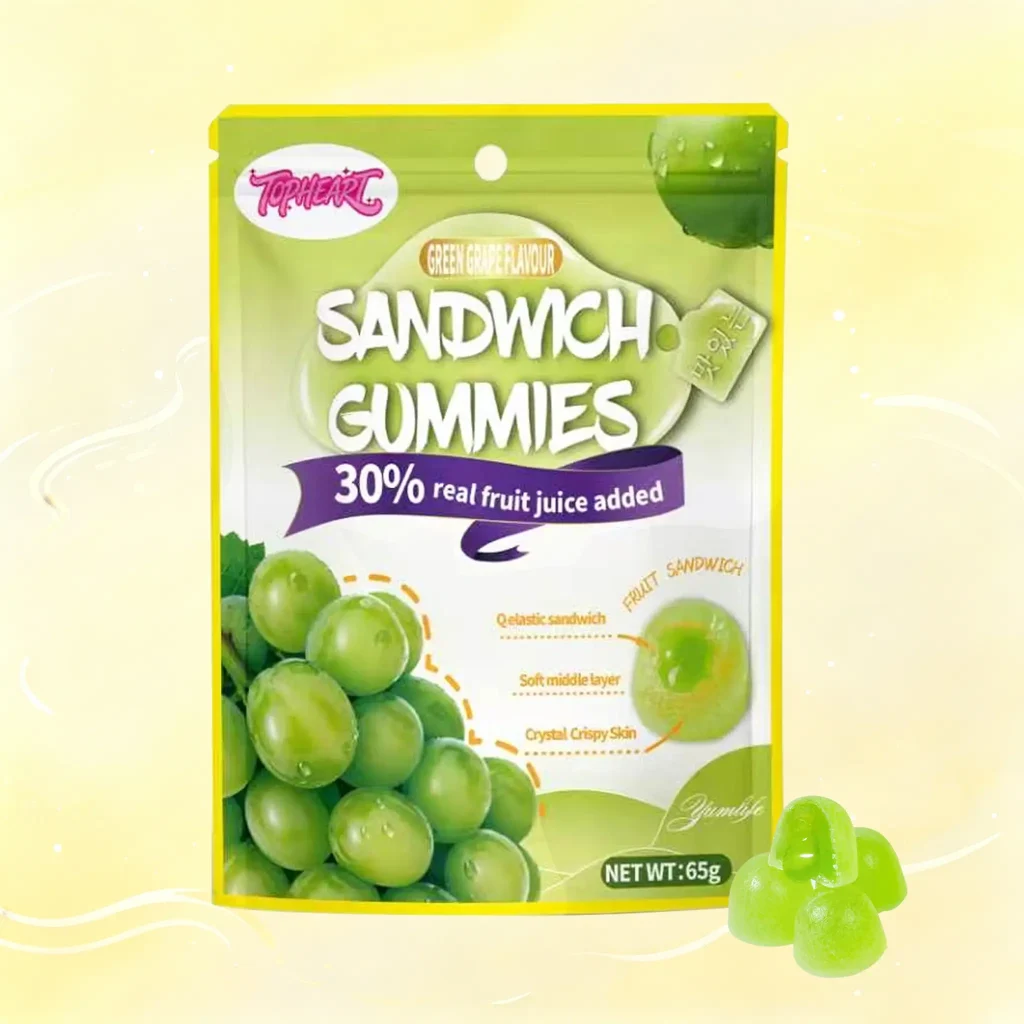 Crispy Gummy Candy
What Is Crispy Gummy Candy Crispy Gummy Candy i...
-
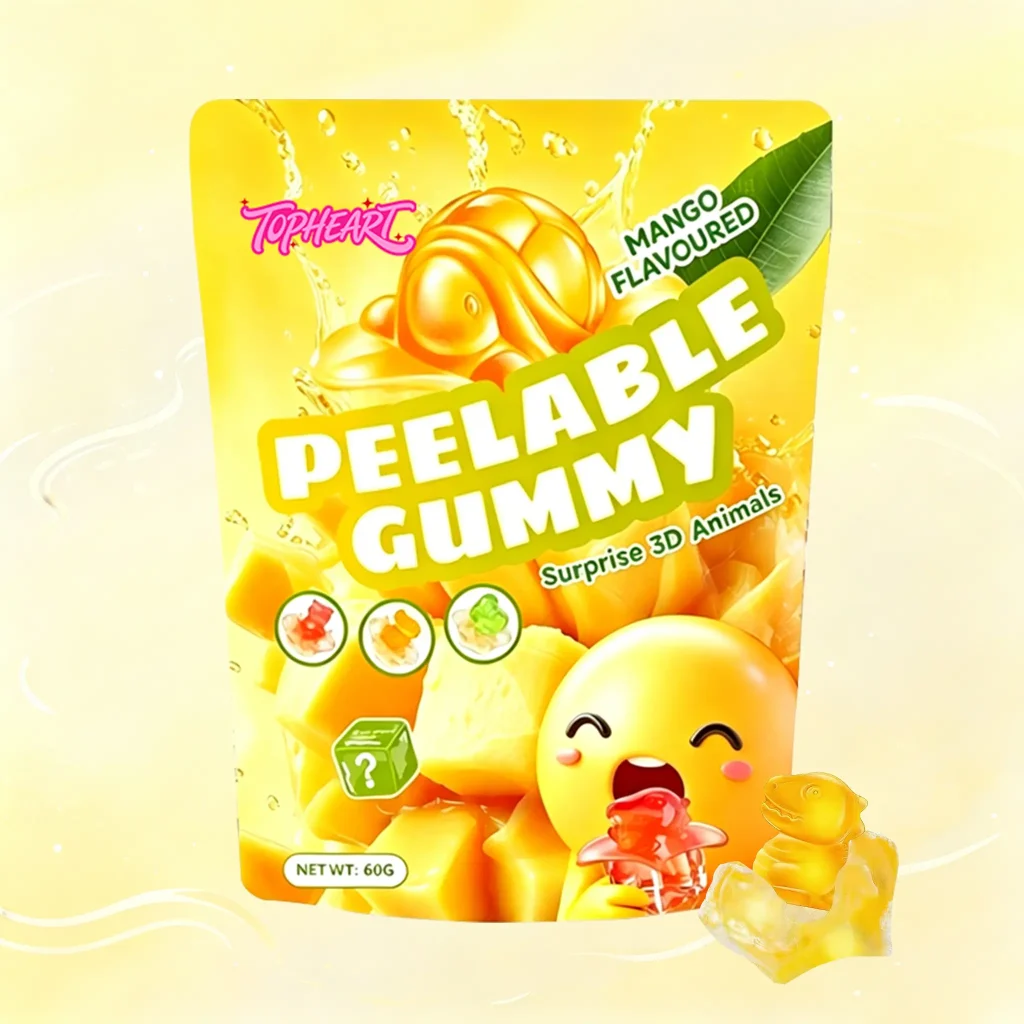 Peelable Gummy Candy
What Is Peelable Gummy Candy? Peelable Gummy Ca...