

A New Generation of Gummy Candy Starts With the Experience
Imagine opening a colorful candy package during a movie night. Instead of immediately putting a gummy into your mouth, you pick up a piece, gently peel its outer layer, reveal the soft center, and then experience a fruity sour flavor followed by a satisfying chew. That small sequence changes the way a familiar candy feels.
This is where Sour Peelable Gummy stands apart.
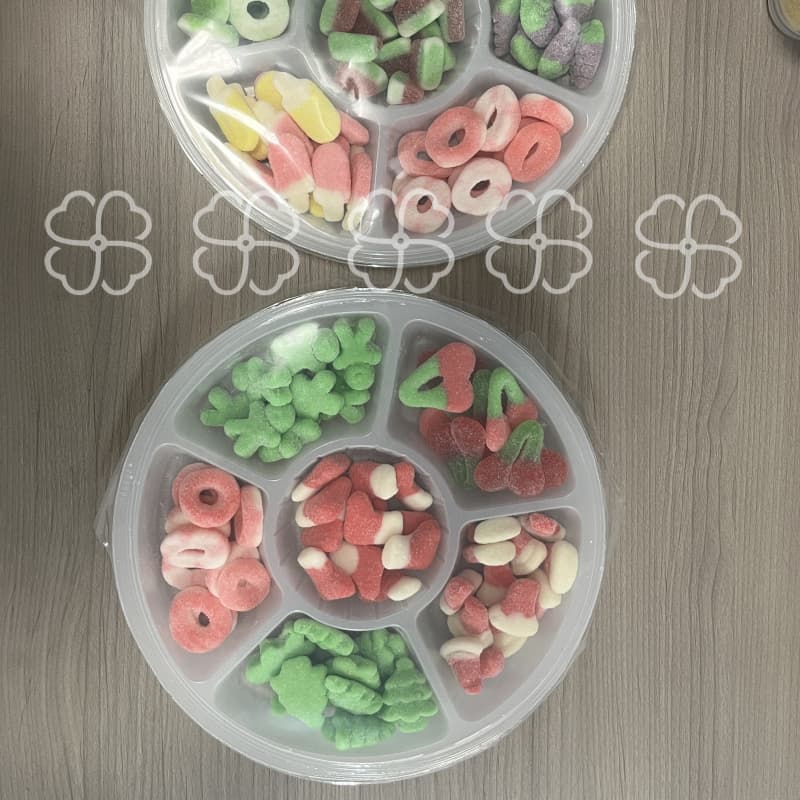
A Sour Peelable Gummy combines a soft gummy center with a peelable outer structure and a sweet-and-sour flavor profile. The format adds interaction to conventional gummy candy, while fruit-forward and beverage-inspired flavors make the product easier for consumers to understand and explore.
For retailers, confectionery brands, and importers, the opportunity is not simply another gummy SKU. It is a product format that combines flavor innovation, texture, visual appeal, and consumer interaction in one proposition.
The wider category of soft gummy candy demonstrates how flexible modern soft confectionery can be, from classic fruit gummies to more specialized formats designed around different textures and consumption experiences.
The commercial question is therefore not whether consumers already know gummy candy. They do. The more important question is whether a new format can give them a reason to choose one gummy product over another.
Sour peelable formats answer that question through a simple concept: peel first, then enjoy.
What Is a Sour Peelable Gummy?
A Sour Peelable Gummy is a soft confectionery product designed with a peelable outer layer and a chewy gummy component. Its defining characteristic is that consumption involves more than simply biting into the candy.
The consumer can interact with the outer layer, remove it, reveal the gummy center, and then enjoy the flavor and texture.
This creates a three-stage sensory journey:
Peel → Reveal → Chew
Traditional gummy candy generally concentrates the experience around flavor, aroma, appearance, and chewiness. A peelable product adds a physical interaction before the tasting stage.
That difference is commercially important because product differentiation in confectionery does not always require an entirely new ingredient. Sometimes, changing the way consumers interact with an established category creates the stronger point of difference.
How Does the Peelable Format Work?
The exact formulation and production technology depend on the manufacturer and product specification, but the general concept requires the outer and inner components to maintain enough structural integrity to separate during consumption.
The product therefore has to balance several factors:
- Outer-layer flexibility
- Gummy elasticity
- Moisture management
- Flavor stability
- Sourness perception
- Piece consistency
- Peelability
- Packaging protection
If the outer layer adheres too strongly to the center, the consumer may struggle to peel it. If the structure is too weak, the product may lose its intended shape during handling or transportation.
This is why peelable sour gummy candy should be evaluated as a complete product system rather than simply as a flavor variation.
Why Does Sour Flavor Work So Well With Peelable Gummies?
Sourness changes the sensory rhythm of gummy candy.
A conventional sweet gummy may deliver a relatively straightforward flavor journey: fruity aroma, sweetness, and chew. Sour confectionery introduces acidity into that sequence, creating stronger contrast between sweetness and tartness.
Common food acids used in confectionery formulations can include citric acid and malic acid, depending on the intended product profile and regulatory requirements. The exact acid system, concentration, and processing conditions should be established through formulation and sensory testing rather than assumed from the flavor name alone.
This distinction matters because “sour” is not a single standardized sensory intensity.
A product designed for a mainstream fruit-candy market may require a more approachable sour profile, while a novelty sour candy may be formulated toward a stronger tangy sensation.
The combination of sourness and a peelable format also creates two separate sources of novelty. The consumer first experiences the physical action of peeling and then experiences the flavor contrast.
That makes soft sour gummy candy particularly suitable for brands that want to build a product around experience rather than flavor alone.
Popular Flavor Directions for Sour Peelable Gummy Candy
Fruit flavors are particularly compatible with sour confectionery because consumers already associate many berries and fruits with natural tartness.
| Flavor Direction | Typical Sensory Position | Commercial Appeal |
|---|---|---|
| Sour Strawberry | Sweet, fruity, tangy | Broad consumer familiarity |
| Sour Blueberry | Berry-rich, tart | Modern fruit profile |
| Sour Raspberry | Bright, aromatic, tangy | Premium and novelty positioning |
| Sour Watermelon | Juicy, refreshing, sour | Strong seasonal appeal |
| Sour Grape | Fruity, bold, sweet-sour | Familiar confectionery profile |
| Sour Cola | Sweet, aromatic, sharp | Beverage-inspired novelty |
For example, a Sour Watermelon Peelable Gummy can use the familiar association between watermelon and refreshing summer flavors while introducing a sour finish.
The same principle works with berries. Sour Blueberry Peelable Gummy can position blueberry as a more vibrant sweet-and-sour experience, while raspberry provides a naturally tart flavor direction that can support a stronger sour-candy identity.
For manufacturers, this creates an opportunity to build a complete flavor family instead of depending on a single SKU.
Sour Peelable Gummy vs. Traditional Gummy Candy
The most useful way to understand the commercial value of this format is to compare it with conventional gummy products.
| Characteristic | Sour Peelable Gummy | Traditional Gummy |
|---|---|---|
| Main sensory focus | Flavor + interaction + texture | Flavor + texture |
| Outer structure | Peelable | Usually integrated |
| Consumption process | Peel and chew | Chew |
| Novelty potential | High | Moderate |
| Sour flavor compatibility | High | High |
| Social sharing potential | High | Moderate |
| Product demonstration | Easy | Limited |
| Packaging storytelling | Strong | Standard |
Neither format is automatically better.
Traditional gummies benefit from familiarity, operational simplicity, and broad consumer acceptance. Peelable gummies have an additional advantage: they give brands another story to tell.
That story can be expressed visually on packaging, in retail displays, in product demonstrations, or in short-form social content.
For a buyer evaluating a new confectionery category, the relevant question is therefore not “Is peelable better than traditional?” but rather “Does the additional experience justify the product positioning?”
Sour Peelable Gummy vs. Other Sour Candy Formats
A similar comparison can be made with sour hard candy, jelly candy, and fruit chews.
| Candy Format | Texture | Sour Experience | Interaction | Typical Consumption |
|---|---|---|---|---|
| Sour Peelable Gummy | Soft and chewy | Medium to strong | High | Peel + chew |
| Traditional Gummy | Soft and chewy | Mild to strong | Low | Chew |
| Sour Hard Candy | Firm | Medium to strong | Low | Dissolve |
| Jelly Candy | Soft | Mild to medium | Low | Chew |
| Fruit Chew | Firm and chewy | Mild to medium | Low | Chew |
This comparison reveals why interactive gummy candy is an increasingly useful product concept for differentiated confectionery portfolios.
The physical interaction does not replace flavor. It amplifies the product story around flavor.
A sour raspberry candy can taste interesting. A sour raspberry candy that also peels can become a product experience.
How Are Sour Peelable Gummies Made?
Manufacturing a peelable gummy requires more than mixing ingredients and placing the finished mass into a mold. The product needs controlled processing at several stages to achieve a consistent structure.
Ingredient Preparation
Depending on the formulation, gummy candy may contain ingredients such as:
- Sugar
- Glucose syrup
- Water
- Gelling agents
- Food acids
- Flavoring substances
- Permitted colors
- Other formulation-specific ingredients
The exact ingredient list depends on the target market, desired texture, flavor profile, regulatory requirements, and product specification.
Gummy Base Processing
The gummy base is prepared under controlled processing conditions to achieve the desired solids, texture, and structural characteristics.
Temperature control is important because processing conditions can influence viscosity, moisture distribution, color, flavor retention, and final texture.
Flavor and Sourness Development
Flavoring and acid systems need to be balanced rather than simply increased.
Too little acidity may fail to communicate a sour positioning. Too much may overpower the fruit profile and create an unpleasant sensory experience.
This is why product development normally relies on controlled formulation trials and sensory evaluation.
Forming and Setting
The gummy material is shaped according to the required product design. Cooling or setting then helps establish the final texture.
At this stage, manufacturers need to monitor consistency across production batches.
Peelable Structure Formation
The peelable component is one of the most important differentiators.
The structure needs enough strength to remain intact through handling and packaging, while also allowing consumers to separate the outer component without excessive force.
That creates a manufacturing balance between durability and consumer usability.
Quality Inspection and Packaging
Finished pieces may be evaluated for appearance, weight, texture, flavor, dimensions, packaging integrity, and other agreed specifications.
Packaging then becomes part of product protection rather than simply branding.
What Ingredients Matter Most in Gummy Candy?
Different ingredients perform different technical functions.
| Ingredient Category | Primary Function | Why It Matters |
|---|---|---|
| Sugar | Sweetness and solids | Influences flavor and body |
| Glucose Syrup | Texture and structure | Helps shape chew characteristics |
| Water | Processing medium | Affects final moisture balance |
| Gelling Agent | Structure | Determines firmness and elasticity |
| Food Acid | Sourness and pH | Shapes tartness and stability |
| Flavor | Aroma and taste | Defines product identity |
| Food Color | Appearance | Supports flavor recognition |
The important point for buyers is that ingredient selection should not be evaluated independently.
A change in acid level can affect perceived sourness. A change in moisture can affect texture. A change in packaging can affect product stability.
Therefore, a professional Sour Gummy Candy Manufacturer should be able to discuss the relationship between formulation, processing, packaging, and final product performance rather than treating each element as an isolated specification.
Scientific Quality Parameters Buyers Should Understand
Gummy candy is a moisture-sensitive confectionery category. One of the most useful technical concepts is water activity, commonly represented as aw.
The United States Food and Drug Administration explains that water activity represents the vapor pressure relationship between a food and pure water under comparable conditions. It is different from simply measuring total moisture.
This distinction matters because two products with similar moisture percentages can behave differently if their water is not equally available for microbial growth or physical changes.
| Quality Parameter | Why It Matters | Buyer Consideration |
|---|---|---|
| Moisture | Influences texture and stability | Should match product specification |
| Water Activity (aw) | Indicates water availability | Important for stability assessment |
| pH | Influences acidity and product environment | Should be controlled according to formulation |
| Texture | Determines chewing experience | Should remain consistent between batches |
| Piece Weight | Supports packaging consistency | Define acceptable tolerance |
| Sourness | Determines sensory positioning | Confirm target-market preference |
| Seal Integrity | Protects against environmental exposure | Critical for transport |
There is no universal single “ideal” value for every gummy because formulations differ. A manufacturer should establish appropriate specifications through product development, validation, and stability work.
The FDA notes that water activity generally increases with temperature and that high-aw foods can support microbial growth, reinforcing why environmental and packaging control matters.
Why Packaging Matters More Than Many Buyers Expect
A product can have an excellent formulation and still perform poorly if the packaging does not protect it.
Gummy candy can be affected by temperature, humidity, oxygen exposure, light, handling, and package sealing. A peelable structure introduces another consideration: the product needs to maintain its physical characteristics during transportation while remaining easy enough for the consumer to peel.
For wholesale buyers, packaging evaluation should therefore include:
- Film or container suitability
- Moisture barrier performance
- Heat-seal integrity
- Package strength
- Carton protection
- Storage conditions
- Transportation environment
- Shelf-life validation
A Sour Gummy Candy Manufacturer should ideally be able to explain not only what package is being used, but why it is suitable for the product.
Sour Gummy Candy and Food Safety Requirements
Food safety and labeling requirements vary by destination market, so buyers should not assume that a product compliant in one country is automatically compliant everywhere.
For the United States, the FDA’s food-labeling guidance covers areas such as required statements, nutrition labeling, ingredient declarations, and other labeling obligations. The FDA also emphasizes that manufacturers and importers need to remain current with applicable legal requirements because regulations can change.
Allergen labeling is another important consideration. The FDA identifies nine major food allergens in the United States: milk, egg, fish, crustacean shellfish, tree nuts, wheat, peanuts, soybeans, and sesame. Where applicable, food labels must identify the relevant allergen source.
For international distribution, buyers should also consider:
- Ingredient compliance
- Permitted additives and colors
- Flavoring requirements
- Nutrition labeling
- Allergen declarations
- Packaging regulations
- Traceability
- Import documentation
- Local language requirements
The correct approach is market-specific compliance, not a one-size-fits-all certificate.
What About Sugar Content?
Sour gummy candy remains confectionery, so it should not be positioned as a health food simply because it contains fruit-inspired flavors.
The World Health Organization recommends that adults and children reduce free sugar intake to less than 10 percent of total energy intake, with a further reduction toward 5 percent potentially providing additional health benefits.
This information is important for responsible product positioning.
For manufacturers and brands, the practical lesson is to provide accurate nutrition information and avoid unsupported health claims.
For consumers, the appropriate approach is moderation and attention to the overall diet rather than treating sour gummy candy as a nutritional substitute for fruit.
How to Choose a Sour Peelable Gummy Manufacturer
Selecting a supplier should involve more than comparing a product photo and quotation.
A reliable Peelable Gummy Candy Manufacturer should be evaluated across product development, production control, quality management, documentation, packaging, and export capability.
1. Product Development Capability
Ask whether the manufacturer can develop different sourness levels, flavors, textures, shapes, and packaging configurations.
2. Manufacturing Consistency
A sample may look excellent, but commercial production requires repeatability.
Ask how the manufacturer controls:
- Piece weight
- Texture
- Flavor
- Appearance
- Peelability
- Packaging
- Batch consistency
3. Food Safety Management
Check applicable food safety systems, manufacturing controls, testing procedures, and documentation.
4. Export Experience
International shipments introduce additional considerations, including labeling, documentation, transportation conditions, and destination-market requirements.
5. Customization
If the goal is private label, confirm whether the factory can support both packaging development and product customization.
Sour Peelable Gummy Wholesale: What Should Buyers Confirm?
When purchasing sour gummy candy wholesale, buyers should define the specification before discussing volume.
Important questions include:
- What is the piece weight?
- What is the package weight?
- How many packages are packed per carton?
- What flavor is required?
- What sourness level is preferred?
- What packaging material is used?
- What is the expected shelf life?
- What are the storage requirements?
- What documentation is available?
- Can the package be customized?
- What is the production lead time?
- Can the factory support repeat orders?
For peelable gummy candy wholesale, peelability itself should be treated as a quality specification.
It is not enough to say that the candy is “peelable.” Buyers should evaluate whether the peeling experience remains consistent after production, packaging, shipping, and storage.
Private Label and Custom Sour Peelable Gummies
Private-label confectionery is increasingly dependent on differentiation.
A brand can customize the logo, but a stronger product strategy combines:
Flavor + Texture + Format + Packaging + Positioning
For example, a sour raspberry gummy can be positioned as a bold berry experience, while sour watermelon can support a more refreshing seasonal concept.
A broader peelable gummy candy collection can then provide several flavors under one recognizable product architecture.
This is useful for retailers because consumers can recognize the format while still having multiple flavors to choose from.
A private-label program may include customized:
- Flavor profiles
- Sourness intensity
- Shapes
- Package artwork
- Brand identity
- Package size
- Mixed-flavor combinations
- Seasonal editions
The exact options depend on the manufacturer’s capabilities and production requirements.
Industry Trends: Where Is Sour Peelable Gummy Candy Going?
The confectionery market continues to reward products that combine recognizable flavors with new sensory experiences.
One important trend is the movement from simple flavor innovation toward experience innovation.
A new strawberry flavor may attract attention temporarily. A product that offers a different physical experience can create a stronger product story.
Interactive Confectionery
Consumers increasingly encounter foods through visual content, demonstrations, and social sharing. A peelable candy naturally creates a visible action that can be demonstrated.
Sour Flavor Innovation
Sourness remains useful for creating contrast and differentiation. Fruit, berry, beverage, and hybrid profiles can all be developed around sweet-and-sour positioning.
More Diverse Fruit Profiles
Instead of limiting product development to strawberry and grape, brands can explore blueberry, raspberry, watermelon, tropical fruits, and other flavor combinations.
Portfolio-Based Product Development
A single innovative product can become a family of products.
That is commercially valuable because brands can build recognition around one format while expanding flavor choices.
For example, a collection may include:
- Sour Watermelon
- Sour Blueberry
- Sour Raspberry
- Sour Strawberry
- Sour Grape
- Sour Cola
The consumer learns the format once and then explores the flavors.
Common Buyer Mistakes When Purchasing Peelable Gummy Candy
A good product decision also requires understanding what can go wrong.
Mistake 1: Choosing Based Only on Price
A lower purchase price does not necessarily mean lower total cost.
Poor texture consistency, damaged packaging, unstable shelf life, or high rejection rates can create additional expenses.
Mistake 2: Testing Only One Sample
One sample does not prove commercial consistency.
Buyers should consider production-batch samples, packaging performance, and agreed specifications.
Mistake 3: Ignoring Packaging
The product may perform well in the factory but deteriorate during transportation if packaging is not suitable.
Mistake 4: Treating Sourness as Universal
Sourness preference varies by market and consumer group.
A formulation that performs well in one market may need adjustment elsewhere.
Mistake 5: Confirming Compliance Too Late
Labeling, ingredients, allergens, colors, and import requirements should be considered before mass production, not after packaging has already been printed.
Mistake 6: Assuming “Peelable” Is Enough
The peelable experience needs to be evaluated for consistency, usability, appearance, and durability.
A Practical Buyer Decision Framework
For a buyer comparing different suppliers, a simple scoring model can reduce subjective decision-making.
| Evaluation Area | Suggested Priority |
|---|---|
| Product Quality | 25% |
| Food Safety & Compliance | 20% |
| Peelability & Texture | 15% |
| Flavor Performance | 15% |
| Packaging | 10% |
| Production Capability | 10% |
| Communication & Documentation | 5% |
These percentages are a practical evaluation framework rather than an industry regulation.
The most important principle is to define what matters before comparing quotations.
If product quality and compliance are critical, they should receive more weight than a small difference in unit cost.
Why Sour Peelable Gummy Can Strengthen a Modern Candy Portfolio
A successful confectionery product usually answers three questions:
Why will consumers notice it?
The peelable format creates visual and physical differentiation.
Why will consumers enjoy it?
The soft chewy texture and sweet-and-sour flavor provide a familiar foundation.
Why will retailers want it?
It can expand an existing gummy range while creating a distinctive product story.
This combination explains why Sour Peelable Gummy can work across several commercial positions, from everyday snacking to novelty candy, seasonal collections, private-label ranges, and bulk sour gummy candy programs.
The product does not need to replace conventional gummies. It can complement them.
Frequently Asked Questions About Sour Peelable Gummy
1. What is a Sour Peelable Gummy?
A Sour Peelable Gummy is a soft and chewy confectionery product featuring a peelable outer layer and a sweet-and-sour flavor profile. The consumer can peel the outer structure before eating the gummy center, creating a more interactive experience than a conventional gummy. The exact texture, ingredients, sourness level, and peelability depend on the product formulation and manufacturing process.
2. How is Sour Peelable Gummy different from regular gummy candy?
The main difference is the consumption format. Traditional gummy candy is generally designed to be eaten directly, while a peelable gummy introduces an additional interaction before chewing. This creates a multi-stage experience involving peeling, revealing, tasting, and chewing. For brands, the format can also provide additional opportunities for packaging storytelling and product differentiation.
3. How are Sour Peelable Gummies manufactured?
Manufacturing normally involves ingredient preparation, controlled processing of the gummy base, flavor and acid incorporation, forming, setting, development of the peelable structure, quality inspection, and packaging. Exact manufacturing methods vary according to the formulation and equipment used. Commercial buyers should evaluate texture, peelability, piece consistency, packaging performance, and stability rather than relying only on the product description.
4. Can I buy Sour Peelable Gummy wholesale or develop a private-label product?
Yes, sour peelable gummy products can be developed for wholesale and private-label applications when the manufacturer supports customization. Buyers should confirm flavor options, package formats, branding requirements, production specifications, documentation, minimum order requirements, lead times, and destination-market compliance before placing a commercial order.
5. How should Sour Peelable Gummy Candy be stored?
Sour peelable gummy candy should generally be stored according to the manufacturer’s validated product specification, with attention to temperature, humidity, direct sunlight, and package integrity. Because gummy texture can be affected by environmental conditions, buyers should follow the approved storage conditions supplied with the commercial product rather than relying on a generic storage assumption.
From Flavor Innovation to a More Complete Candy Experience
Sour Peelable Gummy represents a useful shift in how gummy candy can be developed: the product is not defined by flavor alone.
Its value comes from the combination of flavor, texture, structure, interaction, packaging, and positioning.
What makes the format different?
The peelable structure gives consumers an action before tasting, transforming an ordinary snack into a small discovery experience.
Why does sourness matter?
Sourness creates contrast with sweetness and can make fruit and beverage-inspired flavors feel more dynamic. The correct level, however, should be determined through formulation and sensory testing for the target market.
Which options can brands consider?
Brands can explore sour strawberry, blueberry, raspberry, watermelon, grape, cola, and other flavor directions while maintaining a consistent peelable product architecture.
What should buyers consider?
Product quality, peelability, texture, flavor, packaging, water activity, shelf stability, food safety documentation, labeling, manufacturing consistency, and destination-market regulations all matter.
What are the biggest risks?
The most common commercial risks are inconsistent texture, poor peelability, inadequate packaging, unsuitable sourness, incomplete compliance preparation, and selecting a supplier based only on price.
Why consider the format?
For a modern candy portfolio, Sour Peelable Gummy can provide something that conventional gummy candy does not always deliver: a recognizable flavor combined with a visible and physical consumer experience.
For manufacturers, importers, retailers, and brands evaluating a new product concept, the strongest approach is to treat the candy as a complete product system—from formulation and processing to packaging, compliance, transportation, and consumer experience.
When those elements are aligned, a sour peelable gummy becomes more than a novelty. It becomes a flexible platform for flavor innovation, private-label development, retail differentiation, and future product expansion.
For businesses ready to evaluate product specifications, customization possibilities, or cooperation requirements, contact the Candy-Food team to discuss the appropriate development direction.
Feature Product
-
 Gummy Candy
What Is Gummy Candy? Gummy Candy is one of the ...
-
 Crispy Gummy Candy
What Is Crispy Gummy Candy Crispy Gummy Candy i...
-
 Peelable Gummy Candy
What Is Peelable Gummy Candy? Peelable Gummy Ca...