

Sour Strip Gummy Juice Candy-1
1. What Are Sour Filled Gummy Strips?
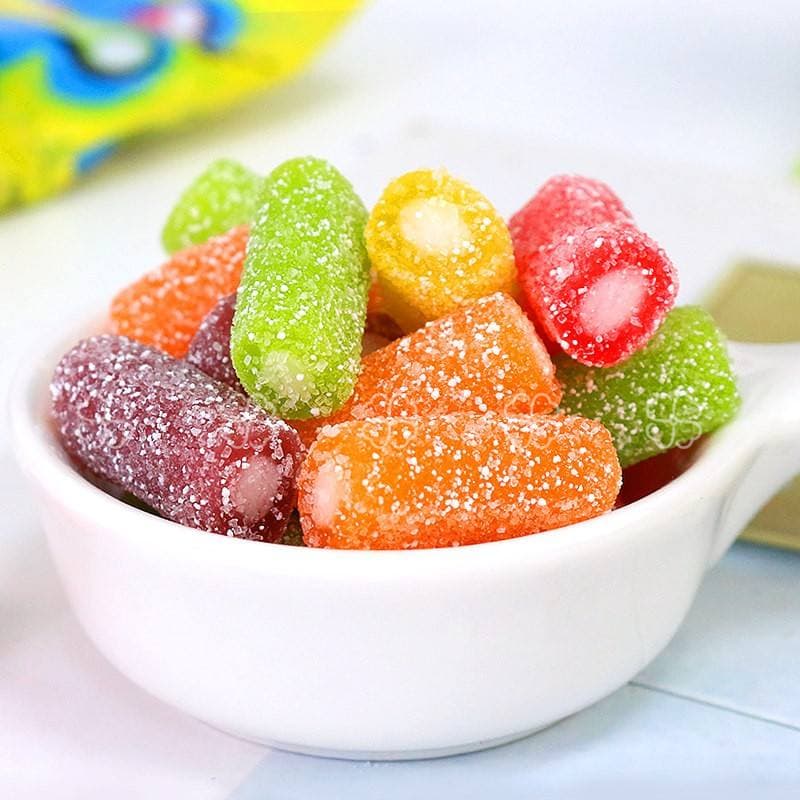
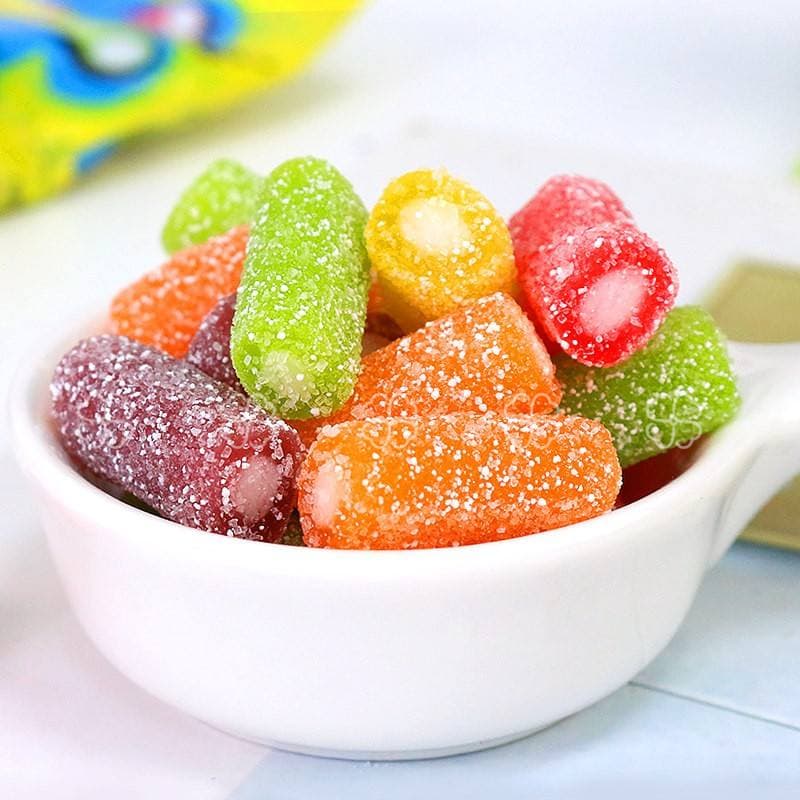
Sour Filled Gummy Strips are elongated gummy candies designed with a sour outer layer and an internal filling. Their defining feature is the combination of two or more components within one candy piece. The exterior provides the initial chewy bite and tangy sensation, while the filling introduces a different flavor or texture as consumers continue chewing.
The product structure can vary according to the manufacturer’s formulation and production method. Some varieties use a relatively soft center surrounded by a chewy gummy shell. Others emphasize a stronger contrast between a sour outer coating and a sweet fruit-flavored filling.
Common flavor directions include:
- Strawberry filling: A familiar fruit profile that can balance a tangy exterior.
- Blueberry filling: A berry-inspired option with a distinctive fruity character.
- Mango filling: A tropical direction that pairs well with sweet-and-sour flavor combinations.
- Watermelon filling: A refreshing fruit profile suitable for colorful confectionery collections.
- Apple filling: A crisp, fruity direction that can complement an acidic outer layer.
- Mixed fruit filling: A combination of several fruit-inspired flavors for a more varied product experience.
The strip shape also creates opportunities for different product presentations. Depending on the formulation, strips may be long, narrow, flat, twisted, or designed with a visible filling section. Their elongated format can support distinctive packaging and product photography.
For buyers who want to understand the product’s available specifications and appearance, the Sour Filled Gummy Strips product range provides a relevant starting point for reviewing this candy category.
2. What Are Regular Sour Gummies?
Regular sour gummies are chewy confectionery products characterized by an acidic or tangy taste. They may be produced in many shapes, including gummy bears, rings, fruit shapes, strips, bottles, stars, and other novelty designs.
The sour sensation can come from acids incorporated into the gummy formulation, an acidic surface coating, or a combination of both. Citric acid and malic acid are commonly used food acids in sour confectionery because they contribute different acidity characteristics.
Regular sour gummies generally have a more straightforward product structure than filled varieties. A typical piece may consist of one gummy matrix with a uniform or relatively consistent texture throughout. Some products receive a sugar-and-acid coating after molding, while others achieve their sour profile through the gummy formulation itself.
Common regular sour gummy formats include:
- Sour gummy bears: Small bear-shaped candies with a chewy texture and tangy taste.
- Sour gummy rings: Ring-shaped products that can combine fruit flavors and colorful coatings.
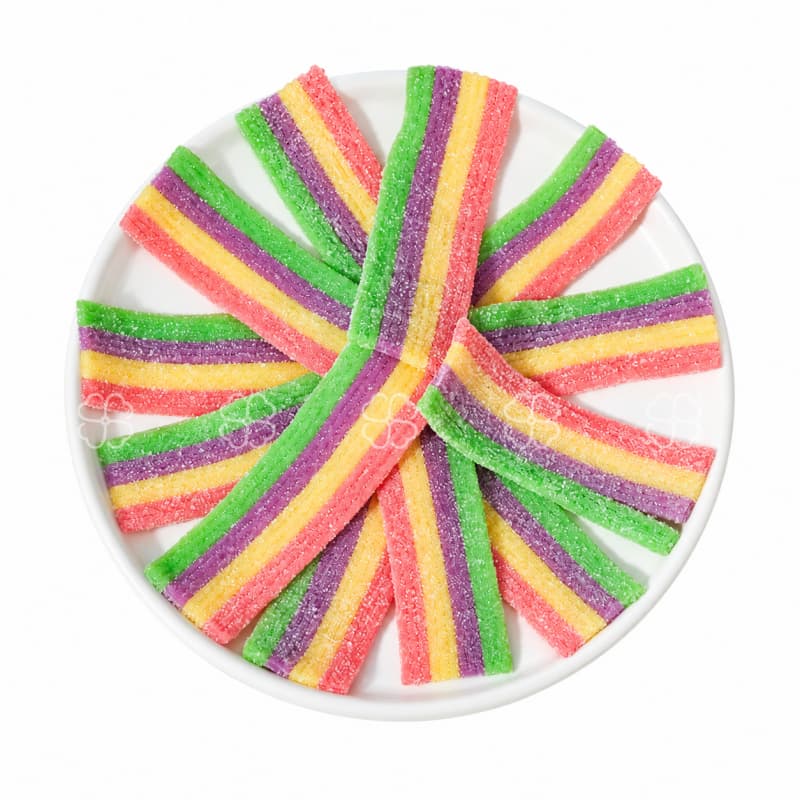
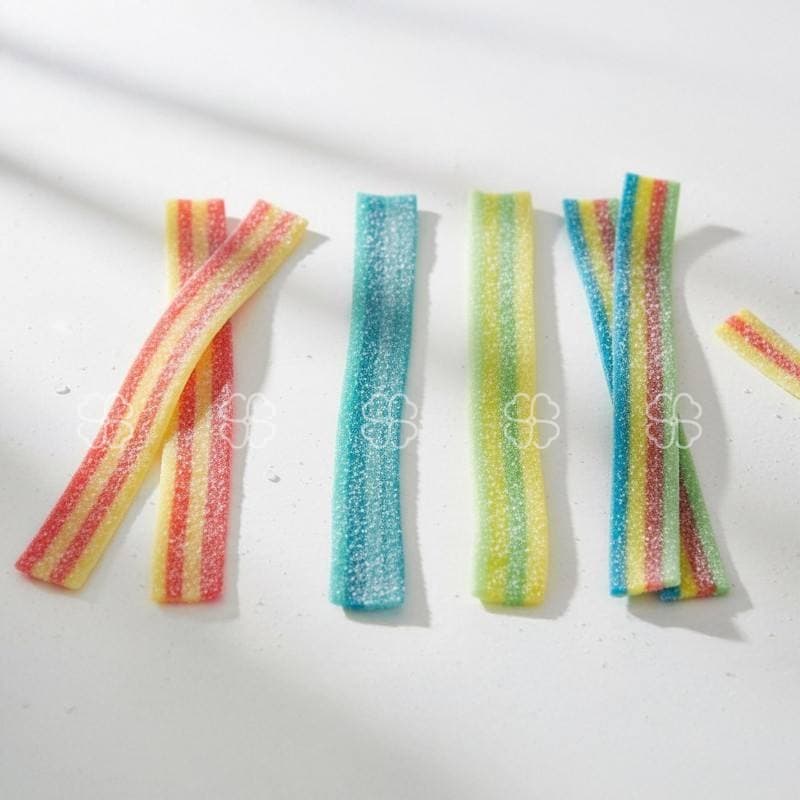
- Sour gummy strips: Flat or elongated gummies that are often coated with sour sugar.
- Sour fruit gummies: Gummies shaped and flavored to represent different fruits.
- Sour bottle gummies: Novelty-shaped products with a recognizable appearance.
- Mixed sour gummies: Assortments containing multiple shapes, colors, and fruit flavors.
Because regular sour gummies can be developed in many shapes and textures, they offer flexibility for different confectionery collections. Manufacturers can adjust the sourness, sweetness, shape, size, and coating according to the intended product concept.
3. Sour Filled Gummy Strips vs Regular Sour Gummies: Main Differences
The main distinction between these two products is their internal structure. Filled gummy strips introduce a center component, while regular sour gummies typically use a more uniform gummy structure. This difference affects the way flavors develop during chewing, the formulation process, and certain packaging considerations.
| Comparison Factor | Sour Filled Gummy Strips | Regular Sour Gummies |
|---|---|---|
| Product Structure | Outer gummy layer with an internal filling | Generally a uniform gummy matrix |
| Flavor Development | Can provide an outer-to-inner flavor transition | Usually delivers a more consistent flavor profile |
| Texture | Can combine a chewy exterior with a softer center | Often has a more consistent bite throughout |
| Shape | Usually elongated or strip-shaped | Available in many shapes and sizes |
| Sourness | Can contrast a sour exterior with a sweeter center | Depends on the gummy formulation and coating |
| Manufacturing | Requires filling integration and structure control | Typically focuses on gummy forming and optional coating |
| Product Positioning | Suitable for layered flavor and texture concepts | Suitable for classic sour candy collections |
3.1 Different Internal Structures
The structure of a filled gummy strip is designed around two functional components: the outer gummy material and the center filling. Each component contributes to the final product’s texture, flavor, and physical stability.
The outer layer needs to maintain sufficient integrity to hold the filling during production, packaging, transportation, and consumption. The filling must have suitable flow, viscosity, and consistency for the chosen manufacturing method.
Regular sour gummies generally use a simpler structure. The gummy matrix provides the main texture and flavor, while an optional sour coating adds an additional surface sensation. This makes the product structure different from a filled candy even when both products have a similar sour taste.
3.2 Different Flavor Experiences
Regular sour gummies often deliver a relatively continuous flavor experience. Consumers taste the sour coating or acidic gummy surface and then continue chewing the same basic candy structure.
Filled gummy strips can create a more noticeable sequence. The first sensation may come from the sour exterior, followed by the flavor of the center filling. For example, a sour apple exterior combined with a sweet strawberry center creates a different flavor direction from a single-flavor sour apple gummy.
This layered approach gives product developers more ways to create distinctive flavor combinations. It also allows brands to build product concepts around flavor contrast rather than relying only on a stronger sour coating.
3.3 Different Texture Combinations
Texture is another important difference. A filled strip may combine a chewy outer layer with a softer, smoother, or more concentrated center. The difference between these components can create a more varied chewing experience.
Regular sour gummies are commonly designed around a relatively consistent chew. Depending on the recipe, they may be soft, elastic, firm, or highly chewy. The sour coating can also create a slight difference between the surface and the gummy interior, but it does not necessarily produce the same structural contrast as a filling.
4. Flavor and Sourness: How the Two Formats Create Different Taste Experiences
Flavor development depends on the interaction between sweetness, acidity, aroma, texture, and the order in which different components are perceived. A sour candy does not rely on acidity alone. The balance between sweet and sour elements is important for creating a recognizable fruit flavor.
4.1 The Role of Citric Acid and Malic Acid
Citric acid is widely used in fruit-flavored confectionery. It provides a familiar tart sensation and can support flavors such as lemon, orange, strawberry, and mixed fruit.
Malic acid is another common food acid. It is often associated with a lingering tart sensation and can be used in apple, berry, and other fruit-inspired sour candies. Manufacturers may use one acid or combine different food acids to develop a specific sensory profile.
The actual sourness experienced by consumers depends on several factors, including acid concentration, sugar content, product pH, titratable acidity, flavor composition, and the physical location of the acid within the candy.
4.2 Creating Sweet-and-Sour Contrast in Filled Strips
One product-development opportunity for filled gummy strips is to create a contrast between the exterior and the center. The outer layer may have a sour fruit profile, while the filling offers a sweeter or different fruit flavor.
Possible combinations include:
- Sour strawberry exterior with a sweet apple center.
- Sour watermelon exterior with a mango filling.
- Sour blue raspberry exterior with a strawberry filling.
- Sour green apple exterior with a mixed fruit center.
- Sour grape exterior with a blueberry filling.
These combinations are examples of product-development directions rather than fixed commercial recipes. The final taste depends on the selected flavoring system, food acids, sweeteners, filling composition, and processing conditions.
4.3 Developing Consistent Sour Gummies
For regular sour gummies, product developers can adjust the acid system and sugar balance to create different levels of tanginess. Some products focus on a mild fruit tartness, while others use a more pronounced sour coating.
Consistency is important when products are sold in large retail or wholesale quantities. A clearly defined formulation and quality specification can help manufacturers maintain the intended taste profile across production batches.
Multicolor Sour Strip Gummy Candy-7
5. Manufacturing Differences Between Filled and Regular Sour Gummies
Although both products belong to the sour confectionery category, their production requirements can differ significantly. Filled products require the integration of an additional component, while regular sour gummies generally focus on forming the gummy matrix and applying any optional surface treatment.
5.1 Production Considerations for Sour Filled Gummy Strips
Manufacturing filled strips involves coordinating the outer gummy material with the filling. The filling needs to be suitable for the selected depositing, extrusion, or other forming process. Its viscosity and temperature behavior can influence how accurately it is placed within the outer structure.
Important considerations include:
- Filling consistency: The center should maintain a suitable texture and flow behavior during processing.
- Shell integrity: The outer layer needs sufficient strength to contain the filling.
- Filling distribution: The center should be positioned consistently along the strip.
- Sealing and forming: The product structure should reduce the risk of filling leakage.
- Cooling and setting: The outer material and center should remain compatible during stabilization.
- Cutting and sizing: Strip dimensions should be controlled to maintain a consistent appearance and piece weight.
These factors are relevant because a filled product contains multiple components with potentially different physical properties. The formulation and processing conditions must be evaluated together rather than independently.
5.2 Production Considerations for Regular Sour Gummies
Regular sour gummies typically involve preparing the gummy mixture, depositing it into molds or forming equipment, allowing the structure to set, and applying additional finishing treatments where required.
For coated products, a sour sugar mixture may be applied after the gummies reach an appropriate surface condition. The coating process needs to be controlled so that the candy receives a consistent finish without excessive clumping or unwanted surface changes.
Regular sour gummies can also be produced in multiple shapes and sizes. Their production specifications should define dimensions, piece weight, texture, color, and the required sourness profile.
5.3 Quality Control for Both Product Types
Quality control should reflect the specific structure of each product. For filled strips, buyers may need to pay particular attention to filling distribution, shell integrity, leakage, and the texture relationship between the center and exterior.
For regular sour gummies, important evaluation points may include coating uniformity, gummy shape, surface condition, sourness consistency, and chewiness.
Both formats require appropriate checks for net weight, packaging integrity, ingredient compliance, and storage stability. A product specification should define the acceptance criteria for each relevant characteristic before bulk production.
6. Scientific Factors That Influence Sour Gummy Quality
Several measurable food science parameters can help explain why sour gummies and filled gummy products behave differently during production and storage. These include pH, water activity, moisture content, soluble solids, and texture properties.
6.1 pH and Titratable Acidity
pH measures the hydrogen ion activity of a product and is commonly used to evaluate acidity. However, pH alone does not describe the complete sourness of a candy.
Titratable acidity measures the amount of acid that can be neutralized under a defined analytical procedure. It can provide additional information about the acid content and buffering characteristics of a formulation.
For filled gummy strips, the outer gummy material and filling may have different acidity levels. Testing only the exterior may therefore fail to describe the complete product. Depending on the purpose of the evaluation, each component may need to be tested separately or the entire product may need to be analyzed using a defined sampling method.
6.2 Water Activity and Moisture Migration
Moisture content and water activity are related but different measurements. Moisture content describes the amount of water in a product, while water activity indicates how available that water is for physical, chemical, and microbiological processes.
This distinction is particularly important for filled candies. If the outer gummy and center filling have different water activities, moisture may migrate between them during storage. Depending on the formulation, this can influence firmness, stickiness, filling consistency, and the condition of the outer layer.
Regular sour gummies also require moisture control. Excessive moisture exchange may affect surface coatings, texture, and storage performance. Packaging material selection and sealing conditions should therefore be evaluated together with the product formulation.
6.3 Texture Profile Analysis
Texture profile analysis can measure properties such as hardness, springiness, cohesiveness, gumminess, and resilience. These measurements help researchers and manufacturers compare gummy formulations under defined testing conditions.
For a filled gummy strip, testing may need to consider both the outer layer and the complete product. A single hardness measurement may not fully describe how the product behaves when the outer shell and center are compressed together.
6.4 General Scientific Reference Data
The following table presents published research findings from gummy candy studies. The values provide examples of measurable properties in experimental gummy formulations. They are not universal specifications for sour candies, filled gummy strips, or any particular manufacturer’s products.
| Scientific Parameter | Published Research Data | Relevance to Sour Gummy Products | Common Test Method |
|---|---|---|---|
| pH | 2.22–3.08 in one 2024 experimental gummy study | Helps evaluate formulation acidity and acid balance | Calibrated pH meter |
| Water Activity (aw) | 0.46–0.52 in the same experimental study | Relevant to moisture availability and storage stability | Water activity meter |
| Density | 1.10–1.53 g/mL in the same experimental study | Can help evaluate product structure and formulation differences | Mass and volume measurement |
| Hardness | 146.1–938.8 N in the reported experimental formulations | Provides a measure of resistance to compression | Texture analyzer |
| Springiness | 0.63–0.99 in the reported experimental formulations | Indicates the ability of a sample to recover after deformation | Texture profile analysis |
| Cohesiveness | 0.75–1.19 in the reported experimental formulations | Helps describe internal structural integrity during compression | Texture profile analysis |
Scientific data note: The pH, water activity, density, hardness, springiness, and cohesiveness ranges above were reported in a 2024 study examining gummy candies formulated with different fruit juice concentrates. They represent experimental samples under the study’s specific conditions, not recommended commercial targets or measured specifications for Sour Filled Gummy Strips. Hardness values are particularly dependent on sample dimensions, probe geometry, test speed, and compression settings, so results should only be compared when testing methods are consistent.
The study demonstrates that ingredient composition can influence the physicochemical and textural properties of gummy candy. For product developers, this supports the importance of evaluating acidity, water activity, and texture together when developing new sour gummy formulations.
7. Which Product Format Fits Different Market Needs?
The choice between filled gummy strips and regular sour gummies should be based on the intended consumer experience and commercial positioning. Both formats can serve different segments of the confectionery market.
7.1 When Sour Filled Gummy Strips May Be Suitable
Filled strips may be appropriate when a brand wants to introduce a more layered flavor experience. The internal filling creates an opportunity to combine different fruit profiles and textures within one piece.
This format can be considered for:
- Novelty confectionery collections.
- Products emphasizing sweet-and-sour flavor contrast.
- Retail ranges featuring filled or layered candy concepts.
- Brands looking for distinctive gummy product structures.
- Custom flavor combinations and differentiated private-label projects.
The elongated shape may also provide additional opportunities for distinctive product photography and packaging presentation.
7.2 When Regular Sour Gummies May Be Suitable
Regular sour gummies may be suitable when the main product objective is a familiar chewy candy with a straightforward sour taste. Their wide range of shapes and sizes also makes them flexible for different product collections.
This format can be considered for:
- Classic sour candy ranges.
- Multi-shape gummy assortments.
- Products focused on a consistent sour flavor profile.
- Retail collections with multiple fruit flavors.
- Bulk confectionery programs requiring different gummy shapes.
Both formats can be developed for different retail environments. The final decision should consider the target customer, product specification, packaging design, and expected distribution conditions.
8. Packaging Considerations for Filled and Regular Sour Gummies
Packaging plays an important role in protecting the candy and presenting its product features. However, filled gummy strips and regular sour gummies may have different packaging priorities because their structures and surface characteristics can differ.
8.1 Packaging for Sour Filled Gummy Strips
Filled strips should be packaged in a way that protects their elongated shape and reduces unnecessary compression. If the filling and outer layer have different moisture characteristics, the package should also support appropriate moisture protection.
Potential packaging formats include:
- Individual flow-wrap packaging: Suitable for portioned products and convenient distribution.
- Stand-up pouches: Useful for retail presentation and flexible pack sizes.
- Printed pillow bags: Suitable for individual retail packs and multipack arrangements.
- Carton boxes with inner bags: Useful for branded collections and gift-oriented presentations.
Buyers should evaluate the internal dimensions of the package, sealing performance, material suitability, and the ability to protect the filling structure during transportation.
8.2 Packaging for Regular Sour Gummies
Regular sour gummies can be packed in pouches, jars, cartons, or individually wrapped formats depending on their shape, coating, and intended sales channel.
For sugar-coated sour gummies, packaging should help reduce unwanted moisture exposure and coating deterioration. The material should also be suitable for the product’s surface characteristics to limit excessive sticking or clumping.
8.3 Labeling and Market Requirements
For international distribution, packaging artwork should be reviewed according to the destination market’s food labeling requirements. Buyers may need to confirm ingredient declarations, allergen statements, nutrition information, net weight, product identification, date coding, and language requirements.
Custom packaging should be approved only after the product formulation and required label information have been confirmed. This helps reduce artwork revisions and prevents inconsistencies between the physical product and its packaging claims.
9. Wholesale and Private-Label Buying Considerations
For importers, distributors, and confectionery brands, selecting a suitable product involves more than comparing the appearance of two candy formats. A structured purchasing process helps ensure that the selected product matches the intended market and commercial requirements.
9.1 Define the Target Consumer and Product Positioning
Start by deciding whether the product should focus on a layered filling experience, a classic sour taste, a novelty shape, or a colorful assortment. This decision will influence flavor selection, product dimensions, packaging format, and promotional messaging.
9.2 Confirm Product Specifications
Before requesting a quotation, prepare a product specification that includes the following information:
- Product type: filled gummy strips or regular sour gummies.
- Flavor combinations and desired sourness level.
- Outer gummy texture and filling characteristics, where applicable.
- Shape, dimensions, and target piece weight.
- Surface coating requirements.
- Net weight and packaging format.
- Ingredient, allergen, and labeling requirements.
- Target market and expected order quantity.
9.3 Request Samples and Evaluate the Complete Product
Samples allow buyers to compare flavor, texture, appearance, and packaging before moving forward. For filled strips, the evaluation should include the outer layer and center filling together. Buyers should check whether the filling is evenly distributed, whether the strip maintains its structure, and whether the flavor contrast matches the intended product concept.
For regular sour gummies, the evaluation may focus on sourness consistency, coating condition, chewiness, shape accuracy, and overall flavor balance.
9.4 Review the Manufacturer’s Product Capabilities
Buyers should review the supplier’s product range and confirm whether its available manufacturing processes match the required candy structure. Filled products may involve different production and quality-control considerations from conventional gummies, so it is important to discuss the actual product requirements rather than assuming that every gummy manufacturer offers the same capabilities.
Reviewing a supplier’s candy manufacturer company profile and background can help buyers understand its business focus, product categories, and suitability for a potential sourcing project.
9.5 Discuss Customization and Export Requirements
Private-label projects may require customized flavors, colors, strip dimensions, filling combinations, packaging artwork, and retail pack sizes. Buyers should confirm which options are available, whether custom development requires additional sampling, and how final specifications will be approved.
Export buyers should also clarify destination-market labeling requirements, required documentation, shipping conditions, and commercial terms before confirming an order. These details help both parties establish a clear understanding of the project.
For product inquiries, sampling discussions, and customized sourcing requirements, buyers can use the TOPHEART manufacturer contact page to begin a direct discussion about the intended product and packaging specifications.
Multicolor Sour Strip Gummy Candy-1
10. How to Make the Final Product Selection
There is no single format that suits every confectionery brand or retail channel. The most practical choice depends on the product experience a business wants to offer.
Choose filled gummy strips when the concept depends on a combination of outer and inner flavors, a distinctive filling structure, or a layered chewing experience. Choose regular sour gummies when the product direction emphasizes a familiar sour taste, a consistent gummy texture, or a broader range of conventional shapes.
For buyers who are still evaluating both options, comparing samples side by side is a useful approach. Test the products under consistent conditions and review taste, texture, appearance, packaging, and storage behavior. This provides a clearer basis for product selection than relying on descriptions or photographs alone.
11. Frequently Asked Questions About Sour Filled Gummy Strips and Regular Sour Gummies
1. What is the main difference between Sour Filled Gummy Strips and regular sour gummies?
The main difference is the product structure. Sour Filled Gummy Strips contain an outer gummy layer and an internal filling, which can create a contrast between the exterior and center. Regular sour gummies generally have a more uniform gummy structure, with their sour taste coming from the gummy formulation, an acidic coating, or both. The two formats can therefore provide different flavor sequences and texture experiences. The suitable option depends on the product concept and the preferences of the intended consumers.
2. What fillings and flavors are commonly used in Sour Filled Gummy Strips?
Filled gummy strips can be developed with a variety of fruit-inspired flavor combinations. Common directions include strawberry, apple, mango, watermelon, blueberry, grape, and mixed fruit. A product may combine a sour outer layer with a sweeter center, such as sour watermelon with mango filling or sour apple with strawberry filling. The final flavor profile depends on the formulation, flavoring ingredients, acidity system, and filling characteristics. Buyers should evaluate samples to confirm that the outer and inner flavors work well together.
3. Are Sour Filled Gummy Strips more sour than regular sour gummies?
Not necessarily. Sourness depends on the type and concentration of food acids, sugar balance, product pH, titratable acidity, coating formulation, and sensory perception. A filled gummy strip may have a strongly sour exterior combined with a sweeter center, while a regular sour gummy can also be formulated with a pronounced acidic taste. The filling does not automatically make a product more or less sour. Buyers should specify the desired sourness level and evaluate the complete product through sensory testing.
4. How are Sour Filled Gummy Strips manufactured?
Sour filled gummy strips require the outer gummy material and internal filling to be integrated into a stable product structure. Depending on the production method, the process may involve preparing the gummy mixture, preparing the filling, forming or depositing the components together, controlling the strip dimensions, allowing the structure to set, and applying a suitable sour finish. Important quality considerations include filling distribution, shell integrity, texture compatibility, leakage prevention, and packaging protection. The exact process depends on the manufacturer’s equipment and the product formulation.
5. What should wholesale buyers consider when sourcing Sour Filled Gummy Strips?
Wholesale buyers should evaluate the flavor combination, sourness level, filling texture, outer gummy consistency, strip dimensions, piece weight, packaging format, and target net weight. It is also important to request representative samples and confirm that the approved sample matches the proposed bulk-production specifications. For private-label projects, buyers should discuss available customization options, artwork requirements, ingredient declarations, allergen information, and destination-market labeling rules. Clear specifications and communication help make quotation, sampling, and production approval more efficient.
Choose the Sour Gummy Format That Matches Your Product Strategy
Sour Filled Gummy Strips and regular sour gummies offer different ways to deliver fruity acidity and chewy confectionery enjoyment. Filled strips introduce an internal component that can create layered flavors and contrasting textures, while regular sour gummies provide a more straightforward format with flexibility in shapes, coatings, and flavor profiles.
For manufacturers, importers, wholesalers, and private-label brands, the decision should be based on the intended consumer experience, formulation requirements, production capabilities, packaging design, and target-market preferences. Neither format needs to replace the other. Instead, they can serve different roles within a broader sour candy portfolio.
By comparing samples, defining measurable product specifications, and discussing customization requirements with a suitable manufacturing partner, buyers can develop a sour gummy product that fits their market strategy. The most effective product is the one whose flavor, structure, packaging, and commercial positioning work together to meet the needs of its intended customers.