

The Evolution of Functional Confectionery
The global confectionery industry is rapidly shifting from sugar-based indulgence to science-driven nutrition delivery systems. Consumers are no longer satisfied with empty calories and are actively seeking products that provide additional physiological benefits such as immunity support, gut health improvement, and metabolic balance.
This transformation is accelerating the demand for Nutritional and Functional Candy, a hybrid category that combines taste with clinically relevant nutrients. According to recent food innovation reports, over 60% of global snack consumers now prefer functional or reduced-sugar alternatives, particularly in gummy-based formats.
Manufacturers are responding by developing advanced formulations that include vitamins, minerals, and plant-based actives while maintaining candy-like taste and texture.
👉 Learn more about product structure and applications of Nutritional and Functional Candy
What Makes Functional Candy Different from Traditional Candy?
Unlike conventional confectionery that focuses only on sweetness and flavor, functional candy is designed as a nutrient delivery system. It integrates active ingredients such as Vitamin C, probiotics, collagen peptides, and dietary fiber into chewable formats.
The key innovation lies in bioavailability enhancement. Studies show that gummy-based delivery systems can increase nutrient absorption efficiency by up to 85% for certain water-soluble vitamins compared to tablets.
This makes functional candy types increasingly popular in both retail and supplement industries.
Main Categories Include:
- Vitamin gummies for immune support
- Probiotic candy for gut microbiome balance
- Collagen gummies for skin health
- Fiber-based functional snacks for digestion
- Electrolyte gummies for hydration
👉 Explore advanced formulations in functional gummy candy solutions

Nutritional and Functional Candy Supplier
Ingredient Science Behind Functional Candy
The effectiveness of nutritional candy depends on ingredient stability, encapsulation technology, and formulation precision.
Vitamins such as Vitamin C and B-complex are highly sensitive to heat and oxidation. To solve this, manufacturers use microencapsulation systems that protect active compounds during production and storage.
Meanwhile, sugar reduction systems such as erythritol and stevia are widely used to support sugar-free nutritional candy alternatives, reducing calorie load by up to 60% compared to traditional sugar formulations.
Table: Functional Ingredient Mechanism
| Ingredient | Function | Scientific Outcome |
|---|---|---|
| Vitamin C | Immune support | Antioxidant activity increase |
| Collagen | Skin structure | Elasticity improvement |
| Probiotics | Gut balance | Microbiome diversity |
| Fiber | Metabolic control | Glycemic regulation |
These advancements are driving strong demand for vitamin fortified gummy candy in global health markets.
Market Expansion and Global Demand Trends
The functional confectionery industry is experiencing double-digit growth driven by health awareness, e-commerce expansion, and private label manufacturing.
| Year | Market Size (USD Billion) | Growth Rate |
|---|---|---|
| 2020 | 18.2 | — |
| 2023 | 24.7 | 10.5% |
| 2026 | 33.5 | 11.2% |
Key growth drivers include:
- Rising demand for healthy gummy supplements
- Expansion of OEM/private label production
- Increasing preference for functional candy manufacturer partnerships
- Strong retail demand for clean-label snacks
Manufacturing Systems and Industrial Standards
Modern production of functional candy requires highly controlled systems to ensure nutrient stability and product consistency.
Advanced factories use vacuum cooking systems, low-temperature drying, and encapsulation technology to protect sensitive ingredients. Plant-based pectin systems are also replacing gelatin to meet vegan and clean-label demands.
Global manufacturers must comply with:
- HACCP food safety standards
- ISO 22000 certification
- GMP production systems
Company profile and manufacturing capability details:
These standards are essential for scaling nutritional candy factory production for international markets.
Regulatory Requirements in Global Markets
Regulatory compliance is one of the most critical barriers in the functional candy industry.
In the United States, FDA regulations require strict labeling accuracy, GRAS ingredient validation, and controlled nutrient dosage limits. In Europe, EFSA regulations impose stricter health claim validation and additive control.
Failure to comply can lead to product recalls, import bans, or brand reputation damage.
This makes compliance strategy essential for any company operating in gummy supplement FDA compliance environments.
Consumer Applications in Real Life
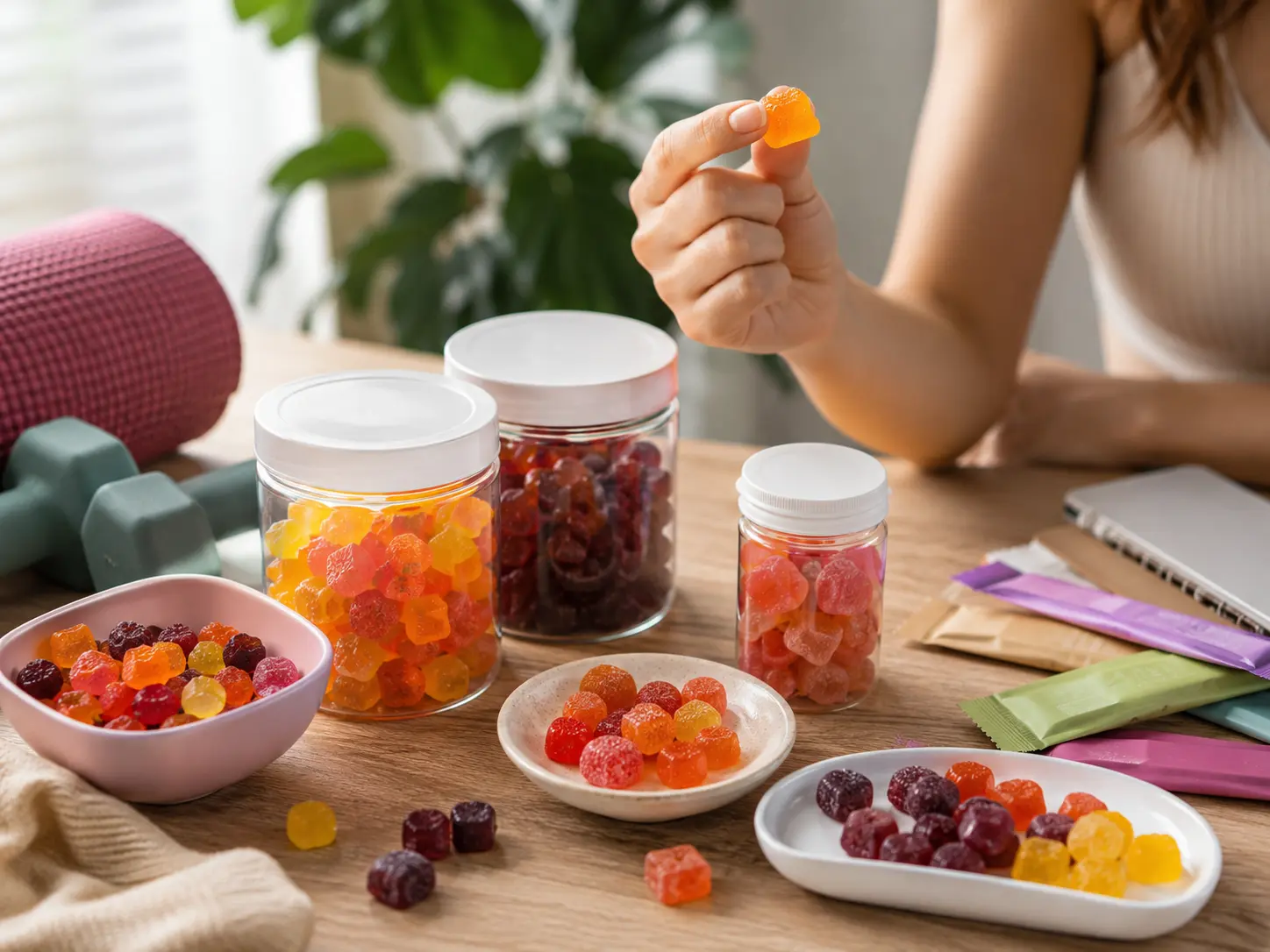
Functional candy is now widely used across multiple demographic groups:
- Office workers use vitamin gummies for energy and immunity support
- Parents choose functional candy for kids’ daily nutrition supplementation
- Athletes rely on electrolyte gummies for hydration recovery
- Travelers use portable nutrition candy for convenience
This explains the rising demand for vitamin gummy for adults and functional candy for kids nutrition across global retail channels.
Business Contact and OEM Opportunities
For brands, wholesalers, and distributors, OEM cooperation is a key strategy for entering the functional candy market quickly.
Manufacturers offer customization in flavor, nutrient profile, packaging, and dosage format to meet different market needs.
👉 Contact for OEM, wholesale, and private label solutions
Final Strategic Insight: Industry Outlook
Functional candy is no longer a niche product—it is a structural evolution of the global confectionery industry. It merges taste, nutrition, and convenience into a scalable commercial model.
Brands that succeed in this industry typically focus on:
- Clean-label ingredient positioning
- Regulatory compliance expertise
- Strong OEM manufacturing partnerships
- Science-backed functional claims
The category continues to grow at over 10% CAGR and is expected to become a core segment in global functional food systems.
Nutritional and functional candy
Frequently Asked Questions
1. What is Nutritional and Functional Candy and how does it work?
Nutritional and Functional Candy refers to confectionery products that are enriched with vitamins, minerals, probiotics, or bioactive compounds designed to provide health benefits beyond basic nutrition. Unlike traditional candy, which only delivers sugar-based energy, functional candy acts as a dual-purpose product combining taste and supplementation. The nutrients are typically delivered through gummy or chewable systems that improve compliance and absorption rates, making them more appealing than capsules or tablets for daily use.
2. Are functional candy products really healthy or just marketing claims?
Functional candy can be genuinely beneficial when properly formulated with clinically relevant dosages of vitamins and active ingredients. Studies show that gummy-based delivery systems can improve nutrient absorption efficiency by up to 85% for certain vitamins. However, effectiveness depends on formulation quality, ingredient stability, and dosage accuracy. Poorly manufactured products may only provide minimal benefits, so sourcing from certified functional candy manufacturer or nutritional candy factory is critical for real health impact.
3. What are the main benefits of sugar-free nutritional candy alternatives?
Sugar-free nutritional candy alternatives help reduce daily sugar intake while still satisfying sweet cravings. They typically use sweeteners such as stevia, erythritol, or maltitol, which can reduce caloric load by 40–70% compared to traditional candy. Benefits include better blood sugar control, lower risk of metabolic disorders, improved dental health, and suitability for diabetic or health-conscious consumers. These products are especially popular in healthy gummy supplements and wellness-focused snack markets.
4. How is vitamin fortified gummy candy manufactured safely?
Vitamin fortified gummy candy is manufactured using controlled low-temperature processing to preserve nutrient stability. Sensitive vitamins like Vitamin C and B-complex are protected using microencapsulation technology to prevent degradation from heat, light, or oxidation. Production must comply with HACCP, ISO 22000, and GMP standards to ensure safety and consistency. Modern factories also use automated dosing systems to guarantee accurate nutrient distribution per serving.
5. What is the future trend of nutritional and functional candy industry?
The future of the functional candy industry is moving toward personalization, AI-driven nutrition, and plant-based clean-label formulations. Consumers increasingly demand customized vitamin solutions based on lifestyle, age, and health conditions. Smart nutrition integration with wearable devices and biometric tracking is also emerging. The market is expected to continue growing at over 10% CAGR, driven by demand for vitamin gummy for adults, kids’ nutrition solutions, and preventive health products.
Feature Product
-
 Gummy Candy
What Is Gummy Candy? Gummy Candy is one of the ...
-
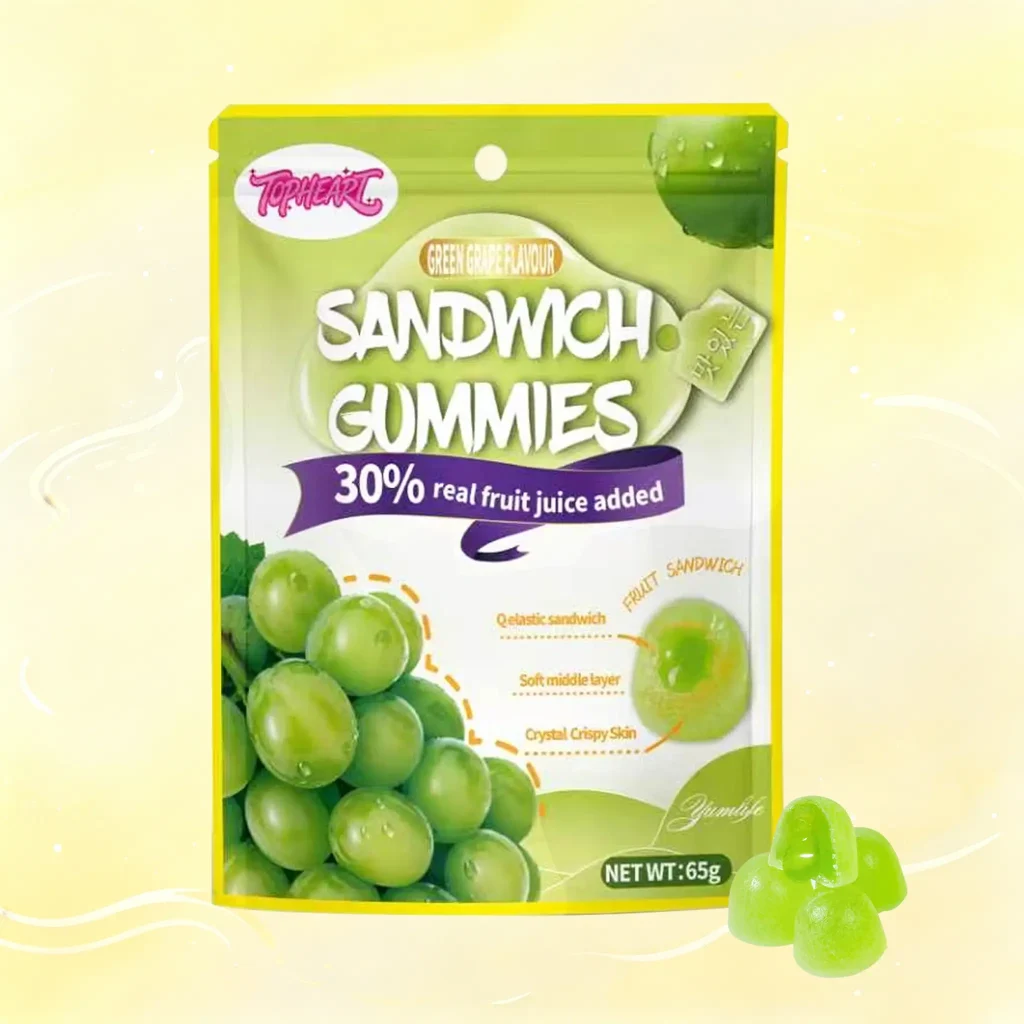 Crispy Gummy Candy
What Is Crispy Gummy Candy Crispy Gummy Candy i...
-
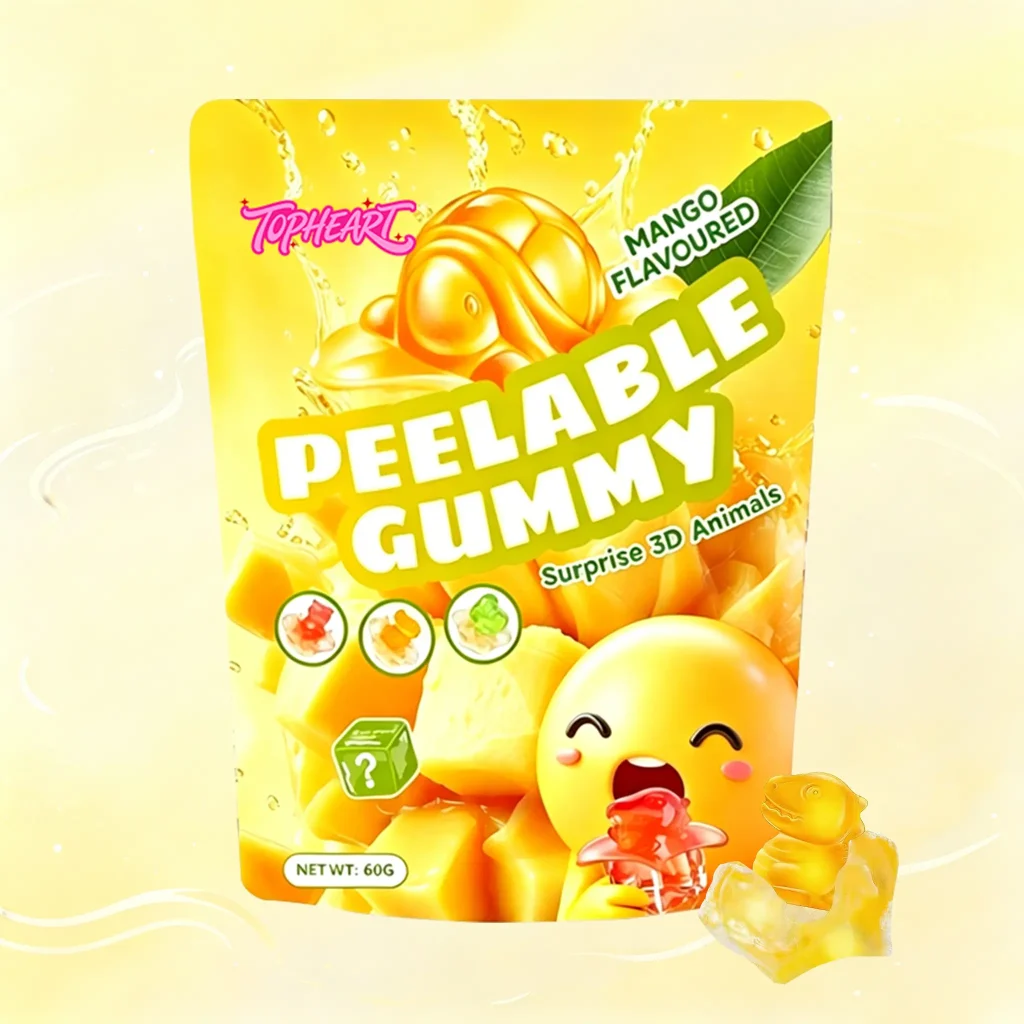 Peelable Gummy Candy
What Is Peelable Gummy Candy? Peelable Gummy Ca...