

Multicolor Sour Strip Gummy Candy-10
1. What Makes Multicolor Sour Strip Gummy Candy Visually and Flavorfully Appealing?
1.1 The Importance of Color in Gummy Candy Design
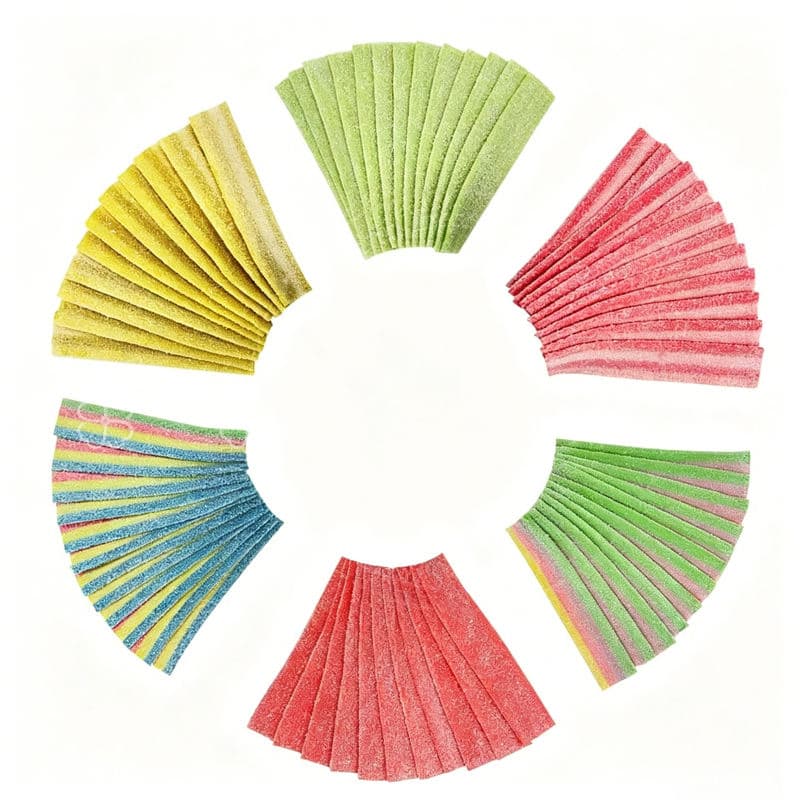
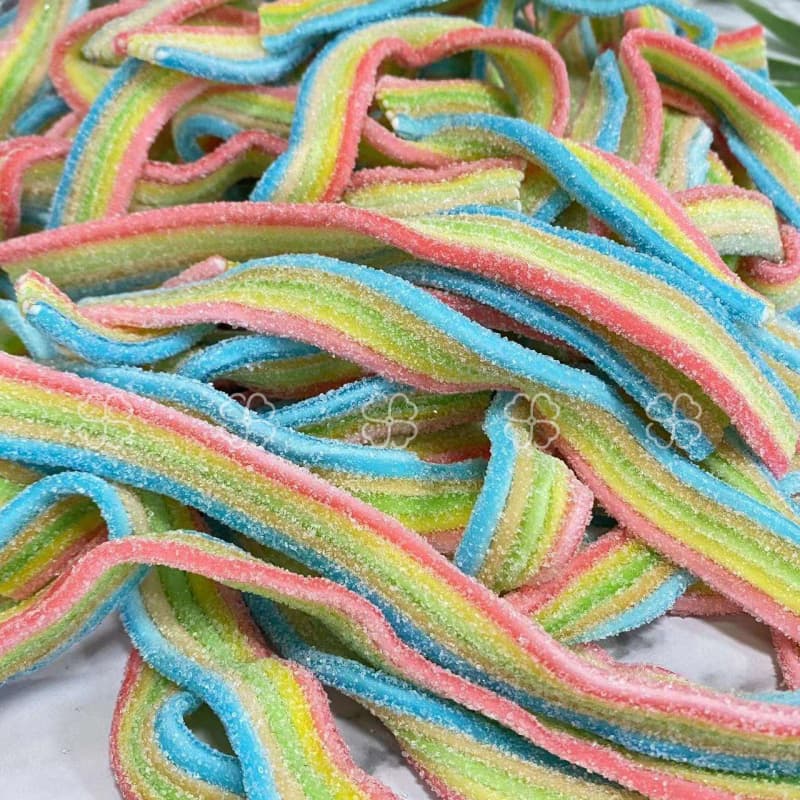
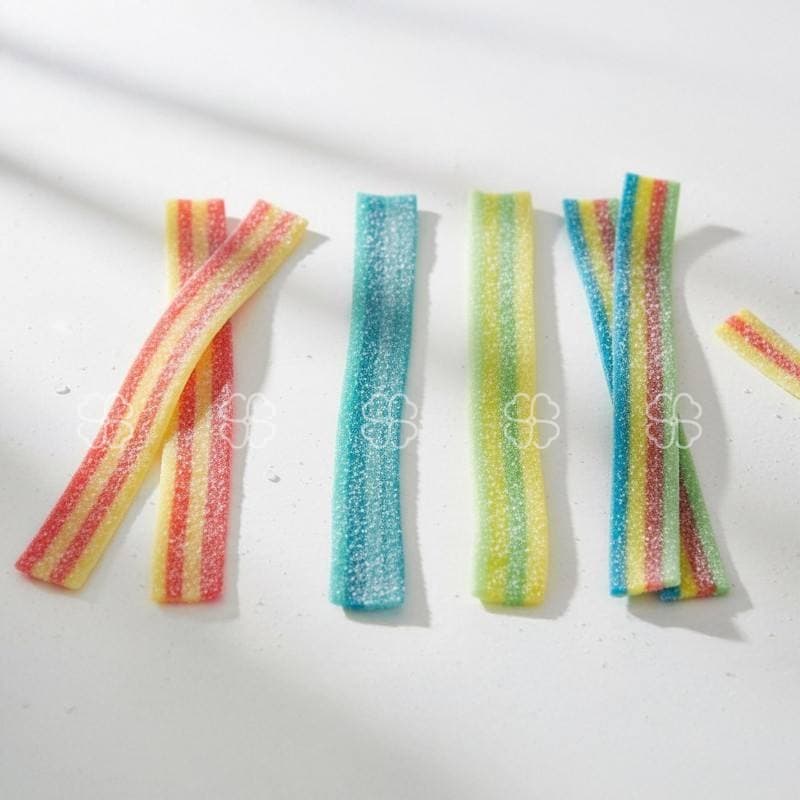
Color is one of the first characteristics consumers notice when choosing confectionery. Before tasting a candy, shoppers often use its appearance to form expectations about flavor, sweetness, and product variety. Bright red, yellow, green, purple, and orange colors can make gummy strips appear more playful and visually distinctive.
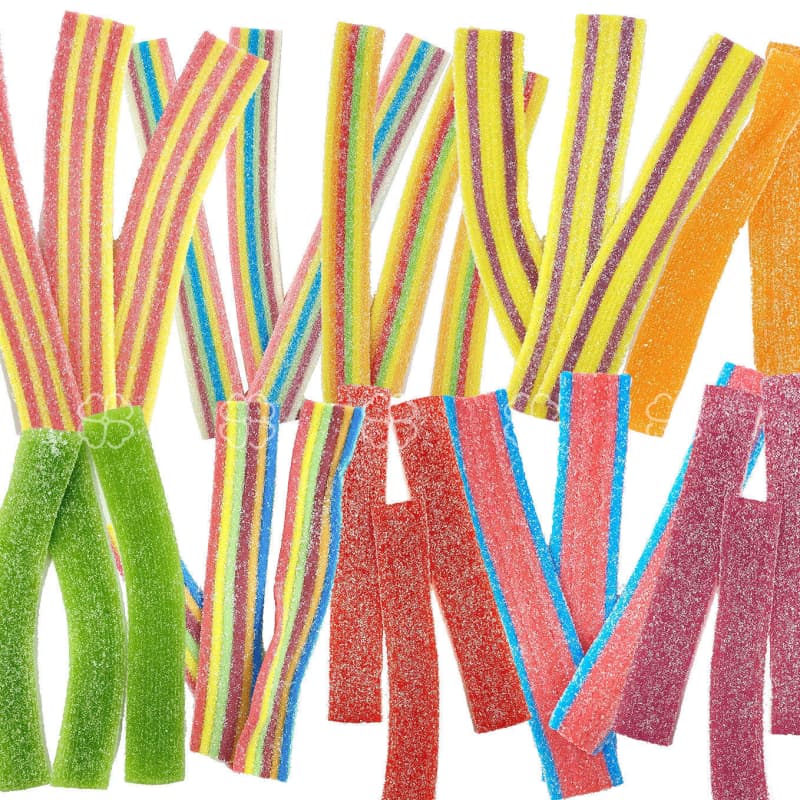
For manufacturers, multiple colors create opportunities to develop different product concepts. A strip may feature alternating color sections, rainbow-inspired arrangements, or several colors associated with different fruit flavors. Red can suggest strawberry or raspberry, yellow may represent lemon or mango, green can communicate apple or lime, and purple may suggest grape or mixed berries.
These color associations are useful for product positioning, but the actual flavor should support the visual message. If a product uses several fruit-inspired colors, the flavor profile and packaging description should clearly explain what consumers can expect.
1.2 Connecting Color Design with Flavor Expectations
Color and flavor should be developed as connected elements of the product concept. A red-and-purple gummy strip, for example, could be designed around strawberry and grape flavors. A yellow-and-green combination may suggest lemon and green apple, while a rainbow design can communicate a mixed-fruit experience.
For brands, this coordination can make product selection easier and help create a recognizable visual identity. Different color combinations can also distinguish individual products within one candy collection, allowing retailers to display several variations without making the range look repetitive.
During development, manufacturers should evaluate whether colors remain consistent after processing, coating, packaging, and storage. Factors such as pH, temperature, light exposure, and ingredient interactions may influence color stability. Testing is therefore important before a final color system is approved for commercial production.
1.3 Creating a Recognizable Product Identity
A strong product identity combines color arrangement, strip shape, surface appearance, flavor naming, and packaging graphics. Consistency across these elements can help a product become recognizable to repeat buyers. For private-label projects, the product’s appearance should also align with the brand’s overall positioning and target market.
When evaluating a manufacturing partner, overseas buyers may want to understand its business background, product categories, and manufacturing capabilities. Reviewing the TOPHEART candy manufacturer profile can provide an introduction to the company before discussing product development, sampling, or potential cooperation.
2. How Sour Coatings and Chewy Gummy Textures Create a Unique Candy Experience
2.1 Understanding the Sour Coating
The sour sensation is a defining feature of sour strip gummy candy. It is commonly created through food-grade acidulants incorporated into the gummy formulation, applied to the surface, or used in both areas. Citric acid and malic acid are examples of acidulants commonly used in confectionery to create different sour taste profiles.
Citric acid is associated with a familiar, sharp citrus-like sensation. Malic acid can provide a different tart profile and is often selected when developers want a more persistent sour impression. The choice and balance of acidulants influence the intensity and character of the finished product.
A surface coating can provide an immediate tangy sensation when consumers first taste the candy. As the coating dissolves, the fruity gummy center becomes more noticeable. This contrast between the sour exterior and chewy interior is an important part of the product experience.
For buyers comparing different gummy formats, the wider soft candy and gummy candy product range can help illustrate how different gummy styles may fit into a broader confectionery assortment.
2.2 Balancing Sourness and Sweetness
A successful sour gummy formulation requires a deliberate balance between acidity and sweetness. If the sour coating is too intense, it may overwhelm the fruit flavor. If the sourness is too mild, the candy may not deliver the distinctive tangy experience expected from a sour product.
The appropriate balance depends on the target market, intended consumer group, flavor combination, and product positioning. Manufacturers can compare different acid systems and coating levels through controlled formulation trials and sensory evaluations.
It is also important to consider coating stability. Moisture migration between the gummy center, surface coating, and surrounding package environment may affect the appearance and texture of the finished product. Excessive moisture absorption can cause a coating to dissolve, become sticky, or lose its intended surface characteristics.
2.3 Why Chewy Texture Matters
Texture is another important element of the gummy eating experience. Sour strip gummy candy is generally expected to provide a flexible and chewy structure that is comfortable to bite. The final texture depends on the gelling system, sugar composition, moisture level, processing conditions, and dimensions of the finished strip.
Gelatin-based systems can provide elastic and resilient chew characteristics. Pectin-based systems may produce a different bite and can be selected for particular formulation or product-positioning requirements. Other hydrocolloid systems may also be used depending on the desired characteristics and manufacturing process.
Strip thickness and width influence how consumers perceive firmness and chew time. A thinner strip may feel easier to bite, while a thicker product may provide a more substantial chewing experience. Manufacturers should therefore evaluate dimensions together with the formulation rather than treating texture as an ingredient-only consideration.
2.4 How the Coating and Gummy Center Work Together
The sour coating and gummy center should create a coordinated sensory experience. The surface delivers the first tangy impression, while the interior provides fruit flavor and chewiness. Uneven coating application may result in inconsistent sourness, while an unsuitable gummy texture can weaken the contrast between the surface and center.
Manufacturers can evaluate coating coverage, strip-to-strip variation, texture consistency, and appearance after storage. These checks are particularly relevant for wholesale orders, where buyers expect a consistent experience across multiple cartons and production batches.
Multicolor Sour Strip Gummy Candy-2
3. Flavor Combinations and Color Designs for Different Candy Markets
3.1 Popular Fruit Flavor Directions
Fruit flavors provide a flexible foundation for multicolor sour gummy strips. Familiar profiles can make products easier to understand, while distinctive combinations can help brands develop a more recognizable range.
Common flavor development directions include:
- Strawberry: A recognizable berry profile that works well with red or pink color designs.
- Green Apple: A crisp fruit-inspired direction often associated with green colors.
- Lemon: A citrus profile that can complement a tangy sour coating.
- Orange: A familiar fruit direction suitable for orange-colored strips.
- Grape: A popular option for purple color designs.
- Watermelon: A refreshing fruit-inspired flavor concept for colorful candy collections.
- Mango: A tropical direction that can be combined with yellow or orange colors.
- Mixed Fruit: A flexible option for rainbow-inspired products.
Buyers should consider how a flavor range fits their distribution channel and target consumers. Mainstream retail products may benefit from recognizable fruit combinations, while specialty candy retailers may be interested in unusual pairings or stronger sour profiles.
3.2 Developing Mixed-Fruit and Layered Flavor Concepts
Mixed-fruit concepts are useful when a brand wants to communicate variety in one package. Different color sections can represent separate flavors, or the entire strip can be formulated around a combined fruit profile.
Another development direction is to create a contrast between the sour surface and fruity interior. A citrus-inspired coating combined with a berry-flavored center, for example, may produce a more complex taste profile than a single fruit note. Such combinations should be evaluated through sensory trials to ensure that the acid profile does not overpower the underlying flavor.
Brands should also consider the relationship between flavor names, color choices, ingredient declarations, and destination-market labeling requirements. A clear product specification can reduce confusion during sampling, artwork approval, and mass production.
3.3 Adapting Sourness and Flavor to Regional Preferences
Consumer preferences can vary across countries and retail channels. Some buyers may prefer a pronounced sour sensation, while others may focus on a more balanced sweet-and-sour profile. Familiar fruit flavors can be suitable for mainstream confectionery, whereas more unusual combinations may appeal to novelty candy collections.
These differences should be treated as product development opportunities rather than fixed assumptions about entire countries. Importers can provide useful information about local retail feedback, competitor products, consumer groups, and preferred package sizes. Manufacturers can then use this information to develop samples that are more relevant to the intended market.
A buyer targeting convenience stores may prioritize compact packaging and recognizable flavors. A distributor supplying specialty candy shops may be more interested in a broader assortment with several colors and flavor combinations. Product specifications should reflect the commercial purpose of the order.
3.4 A Practical Product Development Comparison
The following table illustrates possible development directions. These are conceptual examples rather than confirmed specifications of a particular finished product.
| Design Direction | Possible Color Combination | Flavor Concept | Potential Market Position |
|---|---|---|---|
| Classic Fruit | Red, yellow, green | Strawberry, lemon, apple | Mainstream confectionery |
| Berry Mix | Red, purple, pink | Strawberry, raspberry, grape | Fruit and sour candy assortments |
| Tropical Mix | Yellow, orange, green | Mango, orange, tropical fruit | Novelty and seasonal ranges |
| Rainbow Style | Multiple bright colors | Mixed fruit | Color-led retail and impulse purchases |
4. Packaging, Quality Control, and Wholesale Opportunities for Sour Gummy Strips
4.1 Packaging That Protects Product Quality
Packaging is not simply a visual sales tool. It also protects gummy candy against moisture exchange, contamination, physical damage, and environmental factors that may affect quality during storage and transportation. Sour strip gummy candy requires particular attention to packaging performance because its surface coating may be sensitive to moisture.
Flexible pouches are one possible format for confectionery products. Depending on target-market requirements, brands may consider pillow bags, stand-up pouches, multipacks, or other suitable formats. The choice should take into account product dimensions, portion size, distribution conditions, shelf presentation, and packaging machinery compatibility.
Packaging materials should be selected according to the product’s moisture sensitivity and intended storage environment. Seal integrity is equally important because even a suitable packaging film cannot provide effective protection if the package is poorly sealed.
4.2 Key Quality Control Points
Consistent quality is essential for manufacturers supplying wholesalers, importers, and private-label brands. A quality control process may include incoming ingredient checks, formulation control, production monitoring, finished-product inspection, packaging verification, and retained-sample evaluation.
For multicolor sour gummy strips, important inspection points may include color uniformity, strip dimensions, coating distribution, texture, flavor consistency, package sealing, and visible defects. Manufacturers should establish acceptance criteria according to the product specification and applicable food safety requirements.
Quality control should also consider the relationship between formulation and storage stability. A candy that looks and tastes satisfactory immediately after production may change during transportation or extended storage. Stability evaluation can help identify issues such as stickiness, coating changes, color fading, texture variation, or moisture-related deterioration.
4.3 Scientific and Technical Indicators for Gummy Candy Development
Several food science indicators can help manufacturers and buyers understand gummy confectionery behavior. Water activity, moisture content, pH, and instrumental texture measurements are useful examples. However, these indicators should not be interpreted in isolation. Appropriate targets depend on the recipe, ingredient system, processing method, packaging, and intended shelf life.
| Technical Indicator | What It Measures | Why It Matters | Evaluation Method |
|---|---|---|---|
| Water Activity (aw) | Availability of water for chemical and microbial processes | Supports assessment of stability and moisture-related risks | Calibrated water activity meter |
| Moisture Content | Total water present in the product | Influences chewiness, stickiness, and storage behavior | Validated moisture analysis method |
| pH | Acidity or alkalinity of the tested sample | Helps evaluate acid balance and formulation consistency | Calibrated pH meter with suitable sample preparation |
| Texture | Resistance to compression, penetration, or deformation | Supports comparison of firmness and chew characteristics | Texture analyzer using a defined test protocol |
| Color Stability | Changes in color during processing and storage | Helps maintain a consistent multicolor appearance | Visual inspection or instrumental color measurement |
The table identifies measurement indicators and suitable testing methods rather than universal numerical acceptance limits. There is no single water activity, moisture, pH, or texture value that applies to every gummy candy formulation. Buyers should request product-specific specifications and relevant test reports when these values are important to their purchasing decision.
4.4 Understanding Water Activity and Moisture Management
Water activity is different from total moisture content. Moisture content describes how much water is present in a product, while water activity indicates how available that water is for certain chemical and microbial processes. Two gummy products with similar moisture contents may therefore behave differently during storage.
In confectionery production, water activity is one factor used to evaluate product stability. It can influence microbial growth potential, ingredient interactions, and moisture migration. Nevertheless, a water activity result alone does not establish product safety or determine a complete shelf-life period. A suitable assessment should also consider pH, formulation, hygiene controls, packaging, storage conditions, and applicable regulations.
Moisture management is particularly relevant to sour-coated candy. If moisture moves from the gummy center toward the coating or enters from the external environment, the surface may become tacky and the coating may lose its original appearance. Appropriate formulation, drying conditions, packaging selection, and storage recommendations can help reduce these risks.
4.5 Wholesale Purchasing and Supplier Evaluation
For importers and wholesalers, choosing a gummy candy supplier involves more than comparing product appearance. Buyers should evaluate manufacturing capability, product consistency, communication efficiency, packaging options, documentation, and the supplier’s ability to support repeat orders.
Before placing a bulk order, it is useful to confirm the product’s flavor profile, color design, strip dimensions, net weight, packaging format, carton configuration, labeling requirements, and available quality documentation. Buyers should also clarify the sampling process and how approved samples will be used as a reference during mass production.
A clear product specification can reduce misunderstandings between the buyer and manufacturer. It should identify agreed product characteristics and distinguish mandatory requirements from optional preferences. For private-label projects, artwork approval, ingredient declarations, language requirements, barcode information, and destination-market compliance should be discussed early in the process.
4.6 Private Label and OEM/ODM Development
Private-label development gives brands more control over product presentation and market positioning. Depending on manufacturing capabilities, a buyer may request adjustments to flavor combinations, color arrangements, strip dimensions, coating characteristics, packaging artwork, or pack formats.
For a multicolor sour strip project, buyers should provide a clear brief that explains the target market, preferred flavors, desired sourness, visual direction, packaging concept, and expected order requirements. Reference images and benchmark samples can make the discussion more efficient, but the final specification should be confirmed through approved samples and documented production requirements.
Sample evaluation should cover more than taste. Buyers should also examine color consistency, coating distribution, chewiness, package appearance, and the condition of the product after a reasonable storage period. If a product is intended for export, the buyer and manufacturer should confirm the relevant labeling and documentation requirements for the destination market.
4.7 Building a Product Range for Different Sales Channels
Multicolor sour strip gummy candy can be considered for several confectionery sales channels, including supermarkets, convenience stores, candy shops, online retailers, and wholesale distributors. Each channel may require a different balance of product size, package design, price positioning, and assortment variety.
For convenience retail, a compact package may be appropriate when the objective is to support impulse purchases. For candy specialty stores, a more colorful presentation or broader flavor assortment may help create a distinctive shelf display. Online sellers may prioritize clear product images, readable flavor descriptions, and packaging that protects the candy during fulfillment and delivery.
Distributors supplying multiple customer types may prefer a product range with several flavor and packaging options. This can provide flexibility when serving different retailers without requiring every customer to carry an identical assortment. The final product strategy should be based on market research, customer feedback, and the supplier’s actual production capabilities.
Multicolor Sour Strip Gummy Candy-1
5. How Buyers Can Assess Samples Before Confirming a Bulk Order
5.1 Establishing a Clear Sample Evaluation Checklist
Samples allow buyers to assess whether a product matches their commercial expectations before moving to larger orders. A structured evaluation process is more reliable than making a decision based only on a quick taste test. Buyers can prepare a checklist that covers appearance, aroma, flavor, texture, coating, packaging, and overall consistency.
- Appearance: Check whether the colors are clear, visually consistent, and aligned with the approved design.
- Flavor: Evaluate whether the fruit flavor is recognizable and whether sourness is balanced with sweetness.
- Texture: Assess chewiness, elasticity, firmness, and whether the strip is comfortable to bite.
- Coating: Examine the surface for even coverage, excessive stickiness, or visible coating loss.
- Packaging: Review the package material, sealing, product presentation, and labeling information.
- Consistency: Compare multiple pieces and, where possible, samples from different production batches.
5.2 Confirming Specifications Before Production
Once a sample is approved, buyers should confirm the agreed specifications in writing. These may include the product name, flavor, color arrangement, ingredient and allergen information, dimensions, net weight, packaging format, carton details, and destination-market requirements.
The approved sample should be clearly identified so that both parties understand which version is being used as the production reference. Changes made after sample approval should be documented. For example, changing the acid level, color system, strip thickness, or packaging material may affect the product’s sensory characteristics or stability.
5.3 Communicating with a Manufacturer
Clear communication helps buyers obtain more useful quotations and more relevant samples. Instead of requesting only a general price, importers can provide their intended market, preferred flavor direction, packaging expectations, estimated order quantity, and mandatory compliance requirements. This gives the manufacturer a more practical basis for evaluating the project.
For product inquiries, sample arrangements, OEM/ODM discussions, or wholesale cooperation, buyers can use the TOPHEART candy supplier contact page to share their project requirements and discuss potential cooperation.
6. Market Appeal: Why Multicolor Sour Gummy Strips Offer Product Development Potential
6.1 Combining Visual Variety with a Distinctive Taste Experience
The appeal of multicolor sour strips comes from the combination of several sensory features. Bright colors attract attention, fruit flavors provide familiarity, sour coatings create a recognizable taste contrast, and chewy textures contribute to the overall eating experience. These elements give brands several ways to differentiate a product without relying on only one feature.
For buyers interested in this specific product format, Multicolor Sour Strip Gummy Candy is a relevant product category to consider when planning a colorful sour confectionery assortment.
The format also offers flexibility in product storytelling. A brand can emphasize rainbow colors, mixed-fruit flavors, a tangy coating, or a playful strip shape, depending on its target audience. Clear product positioning helps buyers communicate the product’s main characteristics to retailers and consumers.
6.2 Opportunities for Assortments and Seasonal Collections
Multicolor gummy strips may also be included in mixed candy assortments, seasonal confectionery collections, gift-oriented products, or novelty snack ranges. Their visual variety can complement other gummy formats and help retailers build a more diverse candy display.
For wholesalers, assortment planning should consider the relationship between product variety and inventory management. A larger flavor range can improve selection, but too many variations may complicate forecasting and stock rotation. Starting with a focused range and expanding according to sales feedback can be a practical approach.
6.3 Supporting Brand Differentiation Through Customization
Customization can help a brand develop a recognizable identity in a competitive confectionery category. Color arrangements, flavor combinations, sourness levels, strip shapes, and packaging artwork can all contribute to product differentiation. However, every customization request should be reviewed for technical feasibility, production consistency, ingredient availability, and compliance with the target market’s requirements.
For manufacturers and buyers, the most effective development process combines market insight with practical production planning. A product concept should be visually attractive and commercially relevant, but it must also be capable of consistent manufacture, suitable packaging, and reliable distribution.
Turning Colorful Sour Strips into a Market-Ready Confectionery Product
Multicolor Sour Strip Gummy Candy combines vibrant visual design, fruity flavor possibilities, tangy surface coatings, and chewy texture in a flexible confectionery format. Its appeal comes from the way these characteristics work together: color creates the first impression, flavor builds recognition, sourness adds contrast, and texture completes the eating experience.
For wholesalers, importers, retailers, and private-label brands, successful sourcing requires attention to more than appearance. Product specifications, coating consistency, moisture management, packaging performance, quality control, and destination-market requirements all contribute to a reliable supply program. Evaluating samples against clear criteria and confirming specifications before production can help reduce uncertainty and support repeat orders.
With coordinated product development and suitable manufacturing support, multicolor sour gummy strips can become part of a broader fruit candy assortment or a distinctive standalone product. Buyers who align flavor, color, texture, packaging, and market positioning from the beginning will be better prepared to develop a product that meets both consumer expectations and commercial requirements.
Multicolor Sour Strip Gummy Candy-9
Frequently Asked Questions About Multicolor Sour Strip Gummy Candy
1. What is Multicolor Sour Strip Gummy Candy made of?
Multicolor sour strip gummy candy is generally made from a gummy confectionery base containing ingredients such as sugars or syrups, water, flavorings, colors, and a suitable gelling system. Depending on the formulation, manufacturers may use gelatin, pectin, or other hydrocolloids to create the desired chewy texture. A sour coating may contain food-grade acidulants such as citric acid or malic acid. The exact ingredients vary by product, supplier, and market requirements, so buyers should review the product specification and ingredient declaration for the specific item they intend to purchase.
2. How do manufacturers create the sour taste in gummy strips?
The sour taste is commonly developed by using food-grade acidulants in the gummy formulation, the surface coating, or both. Citric acid can contribute a sharp citrus-like sourness, while malic acid is often selected for a different tart profile and a longer-lasting sensory impression. Manufacturers adjust the acid system together with sweetness, fruit flavor, and coating distribution to achieve the intended taste. The final result should be evaluated through formulation trials and sensory testing rather than relying on acid concentration alone.
3. What factors affect the texture and shelf stability of sour gummy strips?
Texture and shelf stability are influenced by the gelling system, sugar composition, moisture content, water activity, pH, processing conditions, coating formulation, and packaging performance. The dimensions of the strip can also affect perceived firmness and chewiness. Moisture migration may cause a sour coating to become sticky or change its appearance, while unsuitable storage conditions can affect color and texture. Manufacturers should assess the complete formulation and packaging system through appropriate quality checks and stability studies before confirming a commercial shelf-life period.
4. Can Multicolor Sour Strip Gummy Candy be customized for private-label or wholesale orders?
Customization may be available depending on the manufacturer’s equipment, formulation capabilities, ingredient availability, and order requirements. Possible development areas include fruit flavor combinations, color arrangements, sourness levels, strip dimensions, packaging artwork, and pack formats. Buyers interested in OEM or ODM cooperation should provide a clear project brief and confirm the required specifications with the manufacturer. Product samples should be evaluated and approved before mass production, with any later changes documented to help maintain consistency.
5. What should importers check before purchasing sour strip gummy candy in bulk?
Importers should review the product’s flavor, color consistency, texture, coating quality, ingredient and allergen information, net weight, packaging format, carton configuration, and relevant quality documentation. They should also confirm the minimum order requirements, sampling process, production lead time, labeling language, destination-market regulations, and shipping arrangements directly with the supplier. For larger orders, an approved reference sample and a written product specification can help both parties maintain clear expectations and reduce the risk of differences between sample approval and delivered goods.