


The global retail landscape for seasonal confectionery is undergoing a massive shift. Consumers are no longer satisfied with passive indulgence; they demand engagement, sensory feedback, and products that create highly shareable social media moments. As we analyze the purchasing behaviors leading into the 2026 holiday season, interactive treats have proven to be the most lucrative category for big-box retailers and distributors. During family gatherings around the fireplace, the act of unwrapping and physically interacting with food creates a shared, nostalgic experience. To meet this explosive consumer demand, sourcing premium Christmas Peeling Gummies has become the primary objective for global distributors preparing for their Q4 inventory rush. These unique treats bridge the gap between a traditional sweet and an interactive toy, offering unprecedented retail velocity.
What Are Christmas Peeling Gummies? A Technical Overview
Understanding the commercial appeal of these products requires a deep dive into their structural engineering. Unlike standard deposited gelatin blocks, a peeling gummy is a sophisticated, dual-layered marvel of modern food science. It is designed to mimic the physical act of peeling real fruit, providing a slight mechanical resistance that yields to reveal a softer, juicier interior.
The Dual-Layer Architecture: Outer Shell vs. Inner Core
The magic lies in the precise manipulation of hydrocolloids. The outer “peel” is typically formulated using a high-methoxyl (HM) pectin or a specialized cellulose blend, engineered to have a higher tensile strength and a slightly lower moisture content. This resilient shell protects the delicate inner core—a soft, high-juice-content blend of gelatin and soft pectin. The internal water activity ($a_w$) of the core is carefully maintained between 0.55 and 0.65 to ensure a burst of flavor without compromising the structural integrity of the outer layer. Formulating this exact texture, where the two layers adhere enough to stay intact during shipping but separate cleanly when pulled by the consumer, requires the advanced technical expertise of a dedicated custom peelable gummy factory equipped with state-of-the-art co-extrusion machinery.
Why Consumers Are Obsessed: A Psychological and Sensory Analysis
The universal appeal of these interactive candies spans all demographics, rooted deeply in human psychology and sensory satisfaction.
The Gamification of Candy for Kids
For children, food is an extension of play. The ability to deconstruct their treat—peeling away a green “rind” to reveal a red, strawberry-flavored center, or unwrapping a miniature Santa figure—adds a layer of gamification to snacking. This interactive element keeps children engaged longer, making the candy a highly requested item during the festive season. The visual reveal, coupled with vibrant colors, stimulates cognitive engagement and fine motor skills.
Stress Relief and Nostalgia for Adults
Surprisingly, a massive portion of the market is driven by adult consumers. The tactile feedback of peeling the gummy triggers an ASMR-like (Autonomous Sensory Meridian Response) physical satisfaction. It serves as a micro-moment of stress relief during the chaotic holiday season. Furthermore, the flavor profiles have evolved to cater to sophisticated adult palates. Beyond basic cherry or apple, modern iterations feature complex, authentic flavor notes like rich concord grape, tart wild strawberry, and even trending earthy matcha centers. Because they appeal so strongly to multiple generations, retailers stocking these items see significantly faster turnover compared to static, traditional options, making them the ultimate wholesale interactive holiday candy choice for maximizing shelf-space profitability.
Comparative Analysis: Christmas Peeling Gummies vs. Traditional Holiday Sweets
To justify the transition from traditional inventory to interactive lines, B2B procurement managers must analyze the data. Interactive manufacturing requires higher initial capital and strict curing times, but the return on investment (ROI) drastically outweighs the costs. Below is a scientific and commercial performance matrix comparing traditional hard candies with modern peeling gummies.
| Metric / Parameter | Traditional Hard Candy | Standard Gelatin Gummy | Christmas Peeling Gummies |
|---|---|---|---|
| Base Matrix Component | Sucrose / Glucose Syrup | Standard 250 Bloom Gelatin | Pectin Shell / Gelatin-Juice Core |
| Water Activity ($a_w$) | 0.20 – 0.30 | 0.45 – 0.55 | 0.55 – 0.65 (Precisely Balanced) |
| Production Complexity | Low (High-Speed Stamping) | Moderate (Starch Mogul) | Very High (Co-Extrusion Tech) |
| Consumer Engagement Rate | Low (Passive Consumption) | Moderate | Extremely High (Interactive/Social) |
| Target Retail Margin | 25% – 35% | 40% – 50% | 65% – 75%+ |
As the data illustrates, while the production complexity for peeling sweets is “Very High,” the resulting consumer engagement and target retail margins are exponentially greater. This is why securing a reliable Christmas candy wholesale contract for these specific items is the top priority for high-volume importers in 2026.
Manufacturing Excellence: How a Top Peelable Candy Factory Ensures Quality
The structural complexity of dual-layer gummies means that poor manufacturing processes will lead to catastrophic product failures. If the moisture migrates between the layers, the candy will fuse into a single sticky lump, completely destroying the “peeling” selling point.
Temperature and Humidity Control in Mass Production
At leading facilities operating under the rigorous TOPHEART standard, environmental control is paramount. Following the co-extrusion process, the gummies must undergo a meticulous, dehumidified curing phase lasting a minimum of 48 to 72 hours. This strict curing locks the outer pectin shell, reducing its surface moisture while preserving the soft juice core inside. Understanding the industrial infrastructure required to stabilize these sweets is crucial for any procurement director. Buyers are highly encouraged to learn more about us and discover how a certified holiday candy manufacturer utilizes pharmaceutical-grade HVAC systems and positive-pressure cleanrooms to absolutely prevent moisture migration and cross-contamination during peak production sprints.
Global Regulatory Requirements for Interactive Gummy Manufacturing
Navigating the complex web of international food law is a necessary component of interactive gummy manufacturing. The vibrant reds, greens, and whites essential for holiday shapes must comply with local destination laws. For the United States market, the FDA permits the use of specific certified synthetic color additives (such as Red 40 and Yellow 5) to achieve highly stable, bright colors. However, for B2B buyers distributing within the European Union, EFSA regulations mandate the use of natural, plant-derived colorants. Formulating a bright Christmas tree or a Santa suit using beetroot extract, spirulina, and turmeric—without altering the delicate grape or strawberry flavors of the candy—requires an elite R&D team. A premium factory seamlessly adjusts these formulations based on the importer’s geographical requirements, ensuring customs clearance and immediate retail readiness.
Custom Packaging and Shelf Presentation for Retailers
The final pillar of success for interactive treats lies in the packaging science. In 2026, standard transparent polybags are entirely insufficient. The product requires premium, high-definition color-printed bags (彩印袋) that serve a dual purpose. First, the vivid graphics and clear visual instructions (e.g., “Peel Me!”) immediately communicate the interactive nature of the product to the consumer, drastically improving shelf conversion rates. Second, and more importantly for the supply chain, these multi-layer laminated bags provide a critically low Moisture Vapor Transmission Rate (MVTR). By creating an impermeable barrier against ambient oxygen and maritime humidity, the packaging acts as a shield, ensuring the sweets survive long ocean transits and arrive at the retail shelf with their dual-texture integrity perfectly intact.
FAQ
1. What makes Christmas peeling gummies structurally different from regular gummy candies?
Unlike standard solid gelatin gummies, peeling gummies feature a highly technical dual-layer architecture created via co-extrusion. They consist of a resilient, lower-moisture outer shell (usually formulated with high-methoxyl pectin) that protects a soft, high-moisture inner core (a gelatin and fruit juice blend). This specific disparity in texture and water activity allows the outer layer to be physically peeled away from the center without tearing.
2. How does the factory prevent the two layers of a peeling gummy from sticking together during shipping?
Preventing layer fusion relies on strict post-extrusion environmental control. The candies must undergo a mandatory 48 to 72-hour curing phase inside specialized, dehumidified cleanrooms. This process lowers the surface moisture of the outer shell and stabilizes the internal water activity ($a_w$) between 0.55 and 0.65. When combined with multi-layer barrier packaging, this ensures the product survives ocean freight without sweating or sticking.
3. Are the colorants used in holiday peeling gummies compliant with international food safety laws?
Compliance depends on the target market, and a premium manufacturer will adjust the formula accordingly. For the US market, FDA-certified synthetic color additives (like Red 40) are frequently used for vibrant stability. For the EU market, EFSA regulations require natural, plant-based colorants (such as beetroot extract for red or spirulina for green). Buyers must specify their distribution region during the formulation phase.
4. Why are interactive candies like peeling gummies generating higher retail margins?
Interactive candies command higher margins because they offer a “food gamification” experience rather than just sugar consumption. The tactile act of peeling the candy appeals to children’s sense of play and provides adults with a satisfying, stress-relieving ASMR experience. Because they are highly shareable on social media, consumer demand is explosive, allowing retailers to price them at a premium (often yielding 65%-75% margins).
5. When is the best time for wholesalers to place bulk orders for Christmas peeling sweets?
Due to the complex co-extrusion technology and extended curing times required, production capacity is highly limited. Wholesalers must place their bulk purchase orders by early Q2 (April/May). This allows 30-45 days for custom packaging printing, 45-60 days for mass production, and 30-40 days for international maritime shipping, ensuring the inventory arrives at distribution centers well before the Q4 holiday rush.
Sourcing Strategy: Securing Your Bulk 3D Christmas Sweets Inventory
The demand for interactive seasonal confectionery currently outpaces global manufacturing capacity. Because the co-extrusion and extended curing processes take significantly longer than standard candy stamping, production slots for the Q4 holiday season fill up rapidly. Wholesalers and brand owners must finalize their flavor profiles, approve their custom packaging designs, and execute their master contracts by early Q2 to ensure September delivery. To begin your procurement journey, lock in your production capacity, and request master samples for your next major shipment of bulk sweets, we invite you to contact our global sales and logistics department today. Securing your supply chain early is the single most effective strategy to dominate the festive retail market.
Feature Product
-
 Gummy Candy
What Is Gummy Candy? Gummy Candy is one of the ...
-
 Crispy Gummy Candy
What Is Crispy Gummy Candy Crispy Gummy Candy i...
-
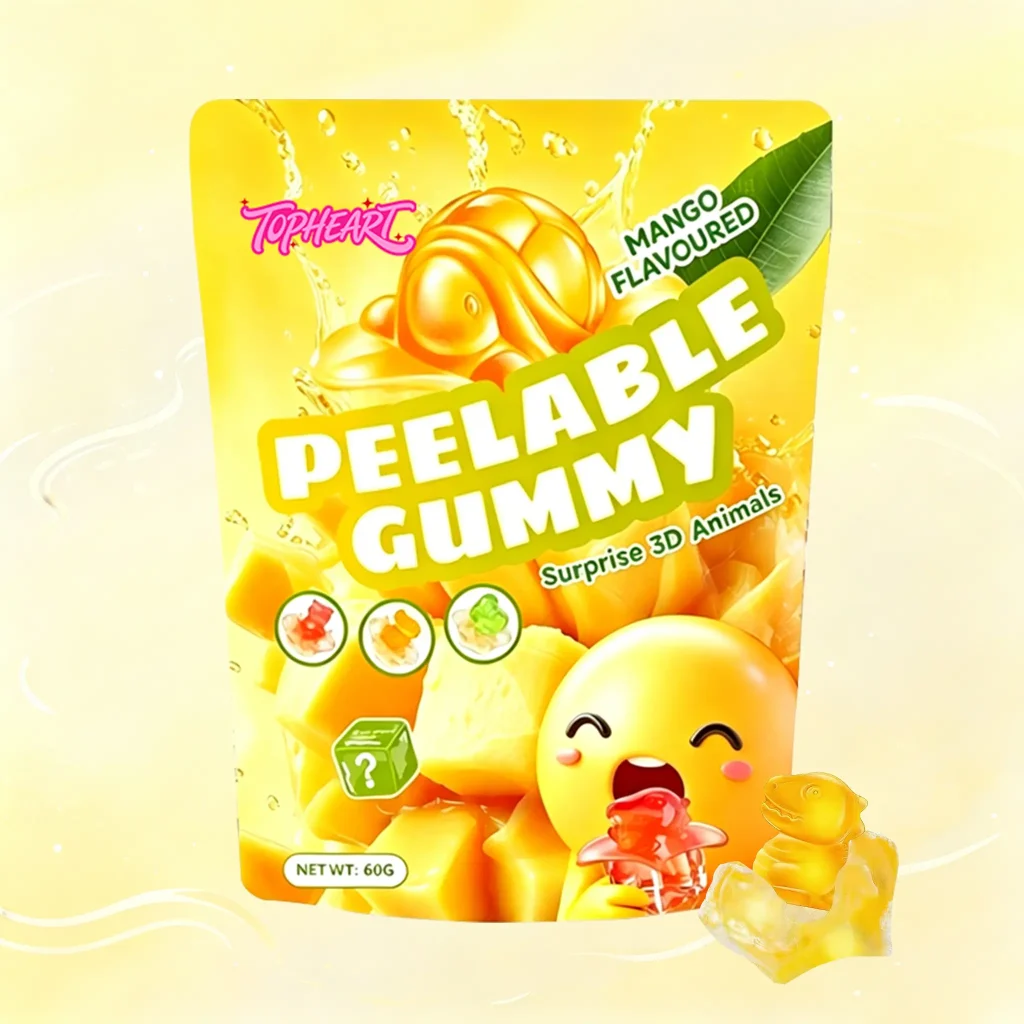 Peelable Gummy Candy
What Is Peelable Gummy Candy? Peelable Gummy Ca...