
Halloween creates one of the most concentrated seasonal opportunities in the confectionery market. For retailers, importers, distributors, wholesalers, party suppliers, and private-label brands, the challenge is not simply finding attractive candy. The real challenge is choosing the right products, packaging formats, order quantities, production schedule, and supplier capability before the seasonal sales window becomes too narrow.
A successful Halloween Candy wholesale strategy connects consumer demand with manufacturing capability. A supermarket may need colorful multipacks with strong shelf visibility, while a convenience store may prioritize individually wrapped pieces. An event supplier may care more about piece count and bulk efficiency, while an e-commerce brand may prioritize distinctive shapes, giftable packaging, and private-label presentation.
This guide explains how professional buyers can evaluate Halloween Candy from product selection through manufacturing, packaging, compliance, inventory planning, and supplier qualification. The goal is not to identify one universally superior candy, but to help buyers match the right product configuration with the right market and sales channel.
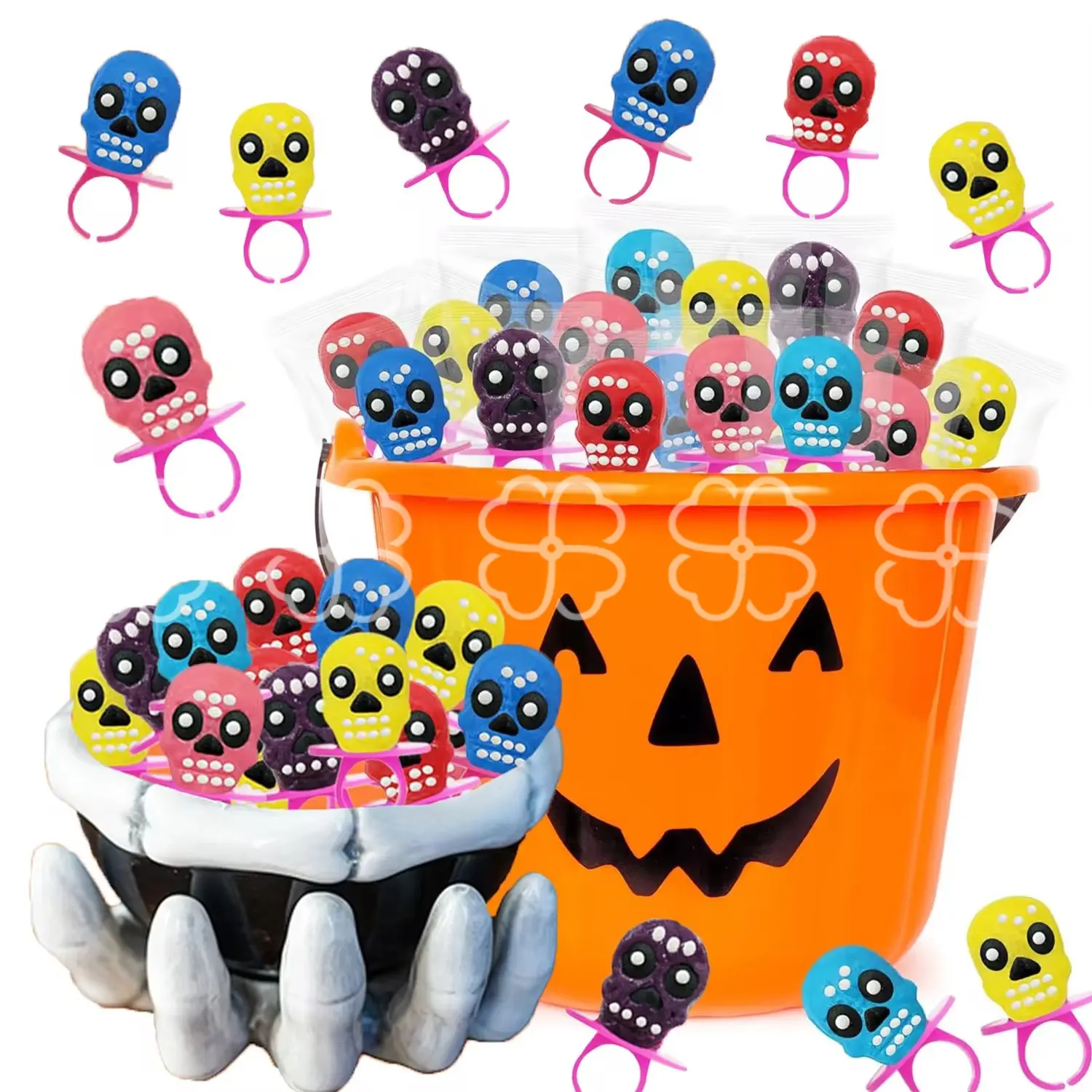
Wholesale Halloween Ring Hard Candy
What Is Halloween Candy Wholesale?
Halloween Candy wholesale refers to purchasing confectionery products in commercial quantities for resale, distribution, events, seasonal promotions, private-label programs, or other business applications. Unlike ordinary year-round candy procurement, Halloween sourcing is highly influenced by a fixed seasonal calendar.
That timing changes the purchasing equation. A buyer may have only several weeks to sell seasonal inventory, meaning production delays, packaging approval problems, customs clearance, or inaccurate demand forecasting can have a much greater commercial impact than they would for an everyday confectionery SKU.
Wholesale Halloween products can include gummies, hard candies, lollipops, marshmallows, chocolate products, sour candies, mixed candy bags, individually wrapped pieces, jars, gift packs, and customized seasonal shapes. The right category depends heavily on the target consumer and retail environment.
How Halloween Candy Differs From Regular Candy Purchasing
Regular confectionery purchasing can often be replenished throughout the year. Halloween purchasing is more deadline-driven. Retailers usually need inventory available before the seasonal shopping period begins, while distributors need sufficient time for warehousing and downstream delivery.
Seasonal products also rely heavily on visual recognition. Pumpkin, ghost, skull, fang, eyeball, bat, spider, and other themed shapes can communicate the Halloween occasion immediately without requiring extensive explanation from the retailer.
For this reason, professional buyers should evaluate at least six dimensions before placing an order:
- Product format and consumer appeal
- Flavor and texture
- Packaging and piece count
- Shelf life and storage conditions
- Regulatory and labeling requirements
- Production capacity and delivery reliability
Which Halloween Candy Categories Work Best for Wholesale Buyers?
There is no single best Halloween Candy category for every market. A successful assortment usually combines product appearance, consumption occasion, price positioning, packaging convenience, and operational requirements.
| Candy Category | Typical Wholesale Format | Main Commercial Advantage | Suitable Channels |
|---|---|---|---|
| Gummy Candy | Bags, jars, multipacks | Shapes, colors, flavors, texture | Retail, supermarkets, parties |
| Sour Candy | Bags, individual pieces | Strong flavor positioning | Convenience, youth-oriented retail |
| Hard Candy | Wrapped pieces, bags | Convenient handling and long-lasting consumption | Retail, events, promotional use |
| Marshmallow Candy | Bags, seasonal packs | Soft texture and visual variety | Family retail, gift occasions |
| Lollipops | Individual wrapped pieces | Interactive consumption format | Parties, events, convenience retail |
| Chocolate Candy | Pieces, bars, gift packs | Premium positioning | Supermarkets, gift channels |
| Mixed Candy | Assorted bags or boxes | Variety and perceived value | Parties, retail, seasonal displays |
For buyers looking for a broader seasonal assortment rather than one Halloween SKU, a dedicated festive candy collection can provide useful inspiration for combining Halloween products with other calendar-driven confectionery categories.
How to Choose Halloween Candy for Different Target Markets
The most common procurement mistake is choosing candy before defining the sales channel. Product selection should begin with the buyer’s commercial environment.
Supermarket and Hypermarket Buyers
Supermarkets usually need products that can compete visually on crowded seasonal shelves. Multipacks, larger bags, jars, and clearly recognizable Halloween designs can work well because consumers can understand the occasion immediately.
A supermarket buyer should evaluate shelf dimensions, package visibility, barcode placement, net weight, piece count, carton configuration, and replenishment requirements. Too many similar SKUs can also fragment inventory and make forecasting more difficult.
Convenience Store Buyers
Convenience stores often benefit from smaller packages and impulse-friendly products. Individually wrapped candy can be especially practical when consumers purchase small quantities or when stores want products that are easy to distribute during Halloween activities.
Party and Event Suppliers
Event buyers have a different priority. They may need hundreds or thousands of pieces rather than premium shelf-ready packaging. In this case, piece count, packaging efficiency, consistent flavor distribution, and reliable delivery can matter more than elaborate retail presentation.
E-Commerce Halloween Candy Sellers
Online sellers need products that photograph well and communicate their seasonal value through a product page. Unusual shapes, mixed flavors, resealable bags, jars, gift boxes, and private-label designs can help create differentiation.
Halloween Candy Product Formats: What Should Wholesale Buyers Order?
Individually Wrapped Halloween Candy
Individually wrapped candy is useful for trick-or-treating, school activities, office events, party favors, and promotional distribution. Each unit can be handled separately, which simplifies distribution when a large number of consumers receive one or several pieces.
For example, a Halloween pumpkin gummy product listed by TOPHEART Food uses individually wrapped gummies in a 200-gram jar and specifies a 12-month shelf life under cool, dry storage conditions. Such product-level specifications demonstrate why buyers should evaluate the actual SKU rather than relying only on general assumptions about a candy category.
For buyers specifically sourcing themed products, a dedicated Halloween Candy collection can also help identify formats such as pumpkin-shaped gummies and other seasonal confectionery concepts.
Bulk Halloween Candy
Bulk Halloween candy can be useful for repacking, events, party suppliers, promotional campaigns, and institutional buyers. However, bulk purchasing does not eliminate the need for specification control.
Buyers should confirm net weight, piece-count tolerance, ingredient declaration, batch identification, packaging configuration, storage requirements, and minimum remaining shelf life at shipment.
Retail-Ready Halloween Candy Bags
Retail-ready bags are often the most straightforward format for supermarkets and distributors because the product can move directly from warehouse inventory to store shelves.
Packaging should be evaluated as part of the product rather than as an afterthought. A visually attractive candy with poor seal integrity, weak material performance, insufficient barrier protection, or an inefficient carton configuration can create unnecessary supply-chain problems.
Mixed and Assorted Halloween Candy
Mixed packs can provide variety without requiring consumers to purchase multiple individual products. They may combine different shapes, flavors, textures, or colors.
However, buyers should confirm the assortment ratio. A product described as “mixed” can still have significant differences in the actual quantity of each flavor or shape unless a controlled specification is established.
Halloween Candy Packaging: What Buyers Should Check
Net Weight, Piece Count, and Pack Configuration
Packaging specifications directly affect both consumer perception and logistics. Two products with the same net weight can have very different consumer experiences if one contains substantially more pieces.
| Packaging Parameter | Why Buyers Should Check It | Typical Procurement Question |
|---|---|---|
| Net Weight | Defines product quantity and labeling | What is the declared net weight? |
| Piece Count | Influences perceived value | What is the average pieces per pack? |
| Individual Piece Weight | Supports portion consistency | What is the expected weight range? |
| Carton Quantity | Affects warehouse and freight planning | How many retail packs per carton? |
| Carton Dimensions | Influences container and warehouse utilization | What are the outer-carton dimensions? |
| Packaging Material | Protects product during distribution | What barrier and sealing properties apply? |
Seasonal Packaging Versus Flexible Packaging
Buyers can choose fully themed Halloween packaging, Halloween-inspired packaging, or more generic packaging that can be reused across several seasonal campaigns.
Fully seasonal packaging usually creates stronger visual communication but increases the risk of obsolete packaging if inventory remains after Halloween. Generic or semi-seasonal packaging can offer greater flexibility but may require stronger secondary merchandising to communicate the seasonal occasion.
The correct choice depends on forecast confidence, sales volume, product life cycle, and whether the buyer expects to repeat the same design in future years.
Ingredients, Texture, and Technical Parameters in Halloween Gummies
Gummy candy is particularly relevant to Halloween because manufacturers can create recognizable shapes while combining fruity flavors, colors, coatings, fillings, and different textures.
Common Gummy Candy Formulation Components
Depending on the formulation, gummy products may use gelatin, pectin, sugar, glucose syrup, acids, flavors, colors, water, and other functional ingredients.
The choice of gelling system affects texture. Gelatin and pectin are not simply interchangeable ingredients. They create different structure-forming mechanisms and therefore influence chewiness, fracture behavior, firmness, and sensory perception.
| Technical Variable | Example Scientific Range or Test Condition | Why It Matters |
|---|---|---|
| Gelatin concentration in research systems | 3.0%, 4.5%, 6.0% | Influences gel structure and texture |
| High-methoxyl pectin in research systems | 0%, 0.5%, 1.0%, 1.5% | Changes fracture and sensory properties |
| Sucrose in one research formulation | 33.4% | Contributes to solids and confectionery structure |
| 42 DE corn syrup solids in one research formulation | 29.8% | Influences formulation structure |
| Reported correlation of sensory texture with strain at fracture | r = 0.90 | Demonstrates measurable links between instrumental and sensory texture |
These figures come from a specific scientific gummy formulation and should not be interpreted as universal commercial recipe specifications. DeMars and Ziegler studied gelatin/high-methoxyl pectin gummy systems and found that changing gelatin and pectin concentrations could produce textures ranging from soft to firm and brittle to rubbery. Their sensory work also found measurable relationships between instrumental fracture properties and perceived texture.
Why Texture Matters in Halloween Candy
Halloween products are often consumed by children, families, and event participants in short, high-volume occasions. A gummy therefore needs a texture appropriate for the intended consumer and product format.
Research has shown that acids can influence gelatin gummy networks. One Food Hydrocolloids study reported that citric and malic acids weakened the gelatin network under the tested conditions, while hydrocolloid combinations could produce synergistic effects. The same research also found differences in gel behavior at high soluble-solids levels.
For buyers, the practical lesson is simple: do not approve a Halloween gummy based only on flavor and appearance. Request physical samples and assess firmness, chewiness, fracture, stickiness, flavor release, color consistency, and stability after realistic storage conditions.
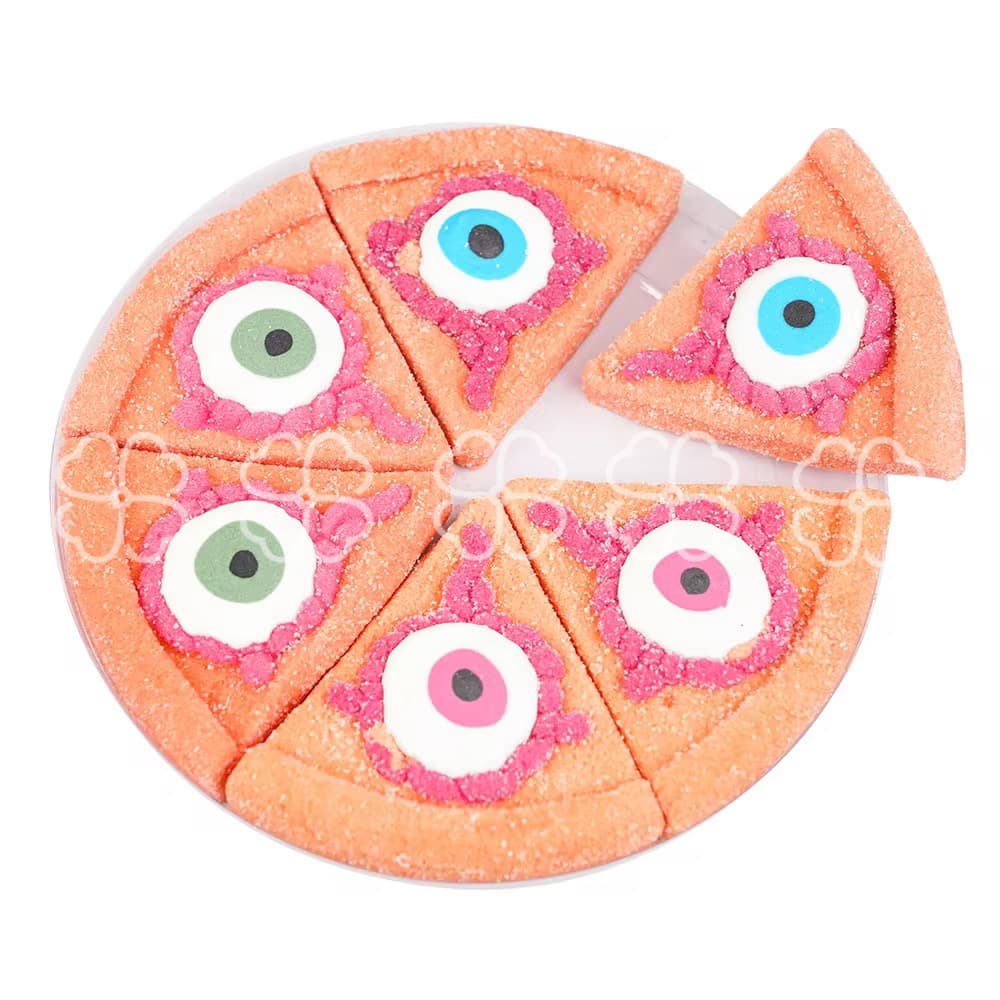
Halloween Eyeball Pizza Marshmallows
How Much Halloween Candy Should a Wholesale Buyer Order?
Seasonal forecasting is one of the most important parts of Halloween Candy wholesale procurement. Ordering too little can cause stockouts during the most profitable period. Ordering too much can leave a retailer with seasonal packaging that becomes difficult to sell after October.
A Simple Seasonal Forecasting Model
A practical starting point is:
Expected order quantity = forecasted sales × selling period × safety factor
Consider a retailer operating 100 stores. If each store is expected to sell 8 packs per week over a five-week Halloween period, estimated demand would be:
100 stores × 8 packs × 5 weeks = 4,000 packs.
If the buyer adds a 15% safety stock:
4,000 × 1.15 = 4,600 packs.
This is only a planning example. Real purchasing decisions should also consider historical sales, promotional activity, store traffic, previous Halloween performance, replenishment speed, production lead time, and the remaining shelf life after the season.
Why Over-Ordering and Under-Ordering Create Different Risks
Under-ordering creates lost sales, emergency production pressure, expedited transportation costs, and disappointed retailers. Over-ordering creates warehouse costs, markdown pressure, obsolete seasonal packaging, and cash-flow pressure.
The best approach is therefore not “order as much as possible” but “build an evidence-based forecast with a controlled safety margin.”
Halloween Candy Shelf Life and Seasonal Inventory Planning
Shelf life is particularly important for seasonal confectionery because inventory may spend significant time moving through manufacturing, export, customs clearance, distribution, and retail warehouses before reaching the consumer.
What Influences Candy Shelf Life?
- Moisture migration
- Water activity
- Sugar and soluble-solids concentration
- Fat oxidation where applicable
- Packaging barrier performance
- Oxygen exposure
- Storage temperature
- Relative humidity
- Light exposure
A buyer should never assume that every gummy, hard candy, marshmallow, or chocolate product has the same storage stability. Shelf-life claims should be verified against the actual SKU, packaging format, formulation, and storage conditions.
Questions to Ask a Supplier About Shelf Life
- What is the declared shelf life?
- What storage conditions are required?
- What is the minimum remaining shelf life at shipment?
- How is shelf life validated?
- How are production batches identified?
- Can the supplier provide production and quality records when required?
For a seasonal product, a longer nominal shelf life is useful only when the product actually maintains acceptable quality through transportation and storage. Packaging performance and environmental control remain important.
Halloween Candy Manufacturing: What Happens Before Bulk Delivery?
Professional buyers should understand the production process because many quality problems originate before packaging.
Typical Manufacturing Workflow
- Raw-material receiving and inspection
- Ingredient preparation
- Mixing and cooking
- Gelling or molding
- Cooling and setting
- Demolding and finishing
- Coating or surface treatment where applicable
- In-process quality inspection
- Packaging
- Finished-product inspection
- Carton packing
- Shipment preparation
For international buyers, the manufacturer’s ability to coordinate production, quality control, packaging, and export documentation can be as important as the candy recipe itself.
A supplier with an established manufacturing and export structure can provide greater operational visibility when seasonal demand increases. TOPHEART Food states that its confectionery business combines production, research and development, customization, and export services, with six production factories covering approximately 258,000 square meters and products exported to more than 92 countries and regions.
How to Evaluate a Halloween Candy Manufacturer or Factory
Production Capacity
Capacity should be evaluated against the buyer’s required delivery window rather than viewed as a marketing number alone.
Ask whether the factory can accommodate seasonal peak orders, how many production lines are available, how production slots are allocated, and whether packaging capacity can keep pace with candy production.
A factory may have sufficient annual capacity but still have limited availability during the weeks when many international buyers place Halloween orders.
Quality Control and Food Safety
A strong Halloween Candy manufacturer should be able to explain its raw-material inspection, production controls, finished-product testing, packaging inspection, traceability, and corrective-action procedures.
HACCP is particularly relevant because the Codex General Principles of Food Hygiene describe HACCP as a science-based and systematic approach for identifying hazards and establishing controls across the food chain. Codex also emphasizes controlling significant hazards rather than relying mainly on end-product testing.
Certifications and Market-Specific Documentation
Depending on the target market and product, buyers may need to review HACCP systems, food-safety management certifications, Halal documentation, product specifications, ingredient statements, allergen declarations, laboratory testing, and other documents.
Certifications should not be treated as a substitute for product-specific compliance. A factory certification does not automatically mean that every label, formulation, claim, or product configuration meets every requirement in every destination market.
Halloween Candy Regulations: What International Buyers Need to Know
United States Food Labeling Considerations
For packaged foods marketed in the United States, buyers need to review ingredient declarations, allergen labeling, net quantity, nutrition information where applicable, and other labeling requirements relevant to the product.
The FDA’s current allergen guidance recognizes nine major food allergens in the United States: milk, egg, fish, Crustacean shellfish, tree nuts, peanuts, wheat, soybeans, and sesame. Sesame has been the ninth major allergen since January 1, 2023.
This matters for Halloween Candy because a seemingly simple product can contain ingredients or processing aids that require careful review. Private-label buyers should approve the ingredient list and allergen declaration before final packaging artwork is released.
European Union Food Labeling Considerations
For prepacked foods in the European Union, Regulation (EU) No 1169/2011 establishes mandatory food-information requirements including the name of the food, ingredients, allergens, net quantity, date marking, storage conditions where applicable, food business operator information, and nutrition declaration.
The European Commission also states that mandatory nutrition information for most prepacked foods includes energy, fat, saturates, carbohydrate, sugars, protein, and salt, generally expressed per 100 grams or 100 milliliters.
For this reason, buyers selling the same seasonal product in the United States and European Union should not assume that one packaging design can automatically satisfy both markets.
Halloween Candy Private Label and OEM Options
Private label Halloween candy can allow retailers and brands to create a seasonal product line without building their own confectionery manufacturing infrastructure.
Product Customization
Depending on factory capabilities, buyers may request customization of:
- Shape
- Flavor
- Color
- Texture
- Piece size
- Mixed-flavor combinations
- Filling or coating
- Selected formulation characteristics
Packaging Customization
Potential packaging formats include pouches, jars, boxes, individual wrappers, display cartons, resealable bags, and multipacks.
The more customized the project becomes, the earlier the buyer should begin the process. Custom molds, artwork, printed packaging, sample approval, compliance review, production scheduling, and final inspection all consume time.
A practical OEM workflow is:
Product concept → specification → sample development → sample approval → artwork → compliance review → packaging production → candy production → quality inspection → shipment.
Halloween Candy Wholesale Cost Drivers
Buyers often make procurement decisions based on unit price alone. That approach can be misleading for international seasonal purchasing.
Product-Level Cost Drivers
- Ingredient composition
- Product weight
- Shape complexity
- Flavor count
- Coating or filling
- Formula customization
- Custom mold requirements
Packaging-Level Cost Drivers
- Packaging material
- Printing method
- Number of colors
- Individual wrapping
- Special structures
- Display cartons
- Custom artwork
Logistics-Level Cost Drivers
- Carton dimensions
- Gross weight
- Shipping method
- Destination
- Seasonal freight conditions
- Customs procedures
- Warehouse handling
The better purchasing metric is total landed cost rather than factory unit price alone. Total landed cost can include product, packaging, freight, customs-related expenses, warehousing, relabeling, and potential inventory losses.
Common Halloween Candy Wholesale Buying Mistakes
Ordering Too Late
Seasonal production capacity can become constrained because multiple buyers are working toward similar retail deadlines. Waiting until the last minute can reduce product and packaging options.
Choosing Only by Unit Price
A low factory price may become less attractive if the product requires expensive freight, has inefficient carton dimensions, needs relabeling, or arrives too close to the selling window.
Ignoring Packaging Lead Time
Custom packaging can require separate artwork approval, printing, inspection, and delivery before candy production can be completed. Buyers should treat packaging as part of the critical path.
Ordering Too Many SKUs
Multiple flavors and shapes can create variety, but excessive SKU fragmentation increases forecasting complexity, packaging requirements, MOQ pressure, and inventory risk.
Not Checking Remaining Shelf Life
A product may have a long declared shelf life while still arriving with less remaining shelf life than the buyer expects. The purchase order should clearly define relevant shipment and shelf-life expectations.
Confusing Factory Certification With Product Compliance
A certification can demonstrate that a management or food-safety system exists, but buyers still need to review the actual formulation, ingredients, packaging, labeling, claims, and destination-market requirements.
Halloween Candy Wholesale Buyer Checklist
Product Checklist
- Product category confirmed
- Flavor profile approved
- Shape and appearance approved
- Texture evaluated
- Ingredients reviewed
- Allergen information confirmed
- Shelf life confirmed
Packaging Checklist
- Net weight confirmed
- Piece count confirmed
- Packaging format approved
- Artwork reviewed
- Barcode confirmed
- Market-specific label requirements reviewed
- Master-carton configuration confirmed
Factory Checklist
- Production capacity evaluated
- MOQ confirmed
- Sample approval process established
- Quality-control process reviewed
- Food-safety documentation reviewed
- Batch traceability confirmed
- Production schedule confirmed
Logistics Checklist
- Production lead time confirmed
- Packaging lead time confirmed
- Shipping method selected
- Delivery deadline confirmed
- Carton dimensions received
- Remaining shelf-life requirements documented
- Safety stock calculated
Halloween Candy Wholesale Decision Matrix
| Buyer Priority | Recommended Focus |
|---|---|
| High Volume | Standardized SKUs with efficient production and packaging |
| Premium Retail | Distinctive shapes, attractive packaging, and stronger presentation |
| Plant-Based Positioning | Formulations designed around appropriate plant-based gelling systems |
| Trick-or-Treat | Individually wrapped, easy-to-distribute pieces |
| E-Commerce | Visually distinctive, giftable, and photograph-friendly formats |
| Supermarkets | Multipacks, strong shelf visibility, and efficient carton configuration |
| Convenience Stores | Smaller impulse-oriented formats |
| Private Label | OEM flexibility, packaging customization, and compliance support |
| Events | Bulk or assorted formats with efficient piece distribution |
For buyers comparing multiple candy categories, a broader soft-candy portfolio can also help create a seasonal assortment rather than relying on one product type. TOPHEART Food’s soft candy and gummy category includes gummy, peelable gummy, 3D gummy, 4D gummy, and other confectionery formats, supported by stated production and inspection capabilities.
How to Select a Reliable Halloween Candy Wholesale Supplier
Seven Questions to Ask Before Placing an Order
- What is your production capacity during the Halloween peak season?
- What is the MOQ for standard and private-label products?
- What is the expected production lead time?
- Can samples be provided and approved before bulk production?
- What quality-control and food-safety systems are used?
- Can packaging and labeling be customized for the target market?
- How are batch consistency and shipment deadlines controlled?
A professional supplier should be able to provide clear specifications rather than only a product photograph and a unit price.
When a project involves custom shapes, private-label packaging, seasonal quantities, or export documentation, early technical communication is particularly valuable. Buyers can use the supplier’s contact channel to clarify product specifications, MOQ, packaging, sampling, and delivery requirements before committing to a seasonal purchase.
What a Strong Supplier Response Should Include
- Detailed product specifications
- Ingredient and allergen information
- MOQ and packaging configuration
- Sample process
- Production lead time
- Quality-control information
- Certification and compliance documentation where applicable
- Packaging options
- Shipping and carton information
Why Factory Capability Matters for Seasonal Candy
A seasonal candy project is a coordinated manufacturing and logistics project. The factory must manage product production, packaging materials, quality control, documentation, and shipment timing within a narrow commercial window.
TOPHEART Food describes itself as a confectionery manufacturer and export partner with approximately 20 years of confectionery manufacturing experience, six production factories, and a broad international export footprint. Its company profile also identifies production, research and development, customization, and export as parts of its service structure.
For buyers, the key lesson is not to select a supplier solely because it claims to be a factory. Instead, evaluate whether its actual capabilities match the project’s requirements: product category, quantity, customization, quality controls, packaging, compliance, and deadline.
Final Buying Recommendation: Treat Halloween Candy as a Seasonal Supply-Chain Project
The strongest Halloween Candy wholesale strategy begins with market fit and ends with delivery reliability. Product appearance matters, but it is only one part of the decision.
A professional buyer should first define the sales channel and consumer profile. The next step is to select the candy format, flavor, texture, package size, piece count, and seasonal positioning. After that, the buyer should confirm formulation and packaging requirements, calculate expected demand, establish a safety margin, review market regulations, and qualify the manufacturer’s production and quality-control capability.
This approach reduces the risk of choosing an attractive product that is difficult to manufacture at the required scale, arrives too late, carries unsuitable labeling, or leaves excessive seasonal inventory.
For a manufacturer or factory evaluation, company background, production capability, customization resources, quality systems, and export experience should all be considered together. A long-term supplier relationship is particularly valuable when seasonal products need to be developed and replenished year after year.
Ultimately, the best Halloween Candy product is not necessarily the cheapest or the most elaborate. It is the product that fits the target consumer, sales channel, packaging strategy, compliance requirements, forecast volume, and delivery schedule with the lowest overall commercial risk.
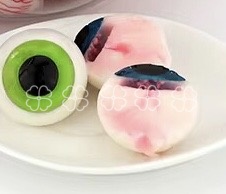
Halloween Big Eyeball Candy
Frequently Asked Questions About Halloween Candy Wholesale
1. What is the best Halloween candy for wholesale?
The best Halloween candy for wholesale depends on the target market, retail channel, consumer age group, packaging requirements, and expected sales volume. Supermarkets may prefer visually distinctive multipacks or larger bags, while convenience stores can benefit from smaller impulse-oriented packages and individually wrapped pieces. Party suppliers may prioritize bulk formats and high piece counts. Buyers should also consider shelf life, ingredient requirements, labeling, transportation conditions, and production lead time. Instead of selecting one candy category as universally superior, professional buyers should match product format and packaging with the actual purchasing occasion and distribution channel.
2. How do I find a reliable Halloween candy manufacturer?
A reliable Halloween candy manufacturer should be evaluated through production capacity, quality-control systems, food-safety documentation, product consistency, sampling procedures, MOQ, packaging capability, lead time, and export experience. Buyers should request product specifications, ingredient and allergen information, packaging details, sample approval procedures, and production schedules before placing a large seasonal order. It is also important to determine whether the manufacturer’s stated capacity can support peak Halloween demand rather than only normal production volumes. A factory that can clearly explain its manufacturing process, quality controls, traceability, packaging workflow, and shipment planning provides stronger evidence of operational reliability.
3. How early should I order Halloween candy wholesale?
There is no single ordering deadline that applies to every Halloween Candy wholesale project because lead time depends on the product, quantity, packaging, customization, destination, shipping method, and approval process. Standard products can usually move through the procurement process more quickly than custom shapes or private-label packaging. Buyers should work backward from the required retail launch date and include time for sampling, artwork approval, packaging production, candy manufacturing, quality inspection, transportation, customs clearance, and warehouse distribution. Seasonal buyers should also leave a reasonable buffer because production and logistics capacity can become more constrained as Halloween approaches.
4. What should I check before importing Halloween candy?
Before importing Halloween candy, buyers should verify the ingredient list, allergen declaration, net quantity, nutrition information where required, shelf life, storage conditions, packaging specifications, batch information, and destination-market labeling requirements. United States buyers should pay particular attention to the nine major food allergens recognized under current FDA requirements, including sesame. European Union buyers should review the mandatory information required under Regulation (EU) No 1169/2011, including ingredients, allergens, net quantity, date marking, operator information, and nutrition declaration for most prepacked foods. Product-specific claims and certifications should also be reviewed before final packaging artwork is approved.
5. Can I customize Halloween candy with my own brand and packaging?
Yes, private-label and OEM Halloween candy projects can often include customization of shapes, flavors, colors, textures, piece sizes, assortments, packaging formats, and printed artwork, depending on the manufacturer’s capabilities and minimum order requirements. The more customized the project, the earlier the buyer should begin because product development, sampling, mold preparation, packaging production, artwork approval, compliance review, manufacturing, and inspection all require time. Buyers should also confirm whether the customized formulation and packaging meet the requirements of the destination market before mass production begins. A clear written specification helps prevent misunderstandings about product appearance, ingredients, packaging, quantity, and delivery expectations.
Feature Product
-
 Gummy Candy
What Is Gummy Candy? Gummy Candy is one of the ...
-
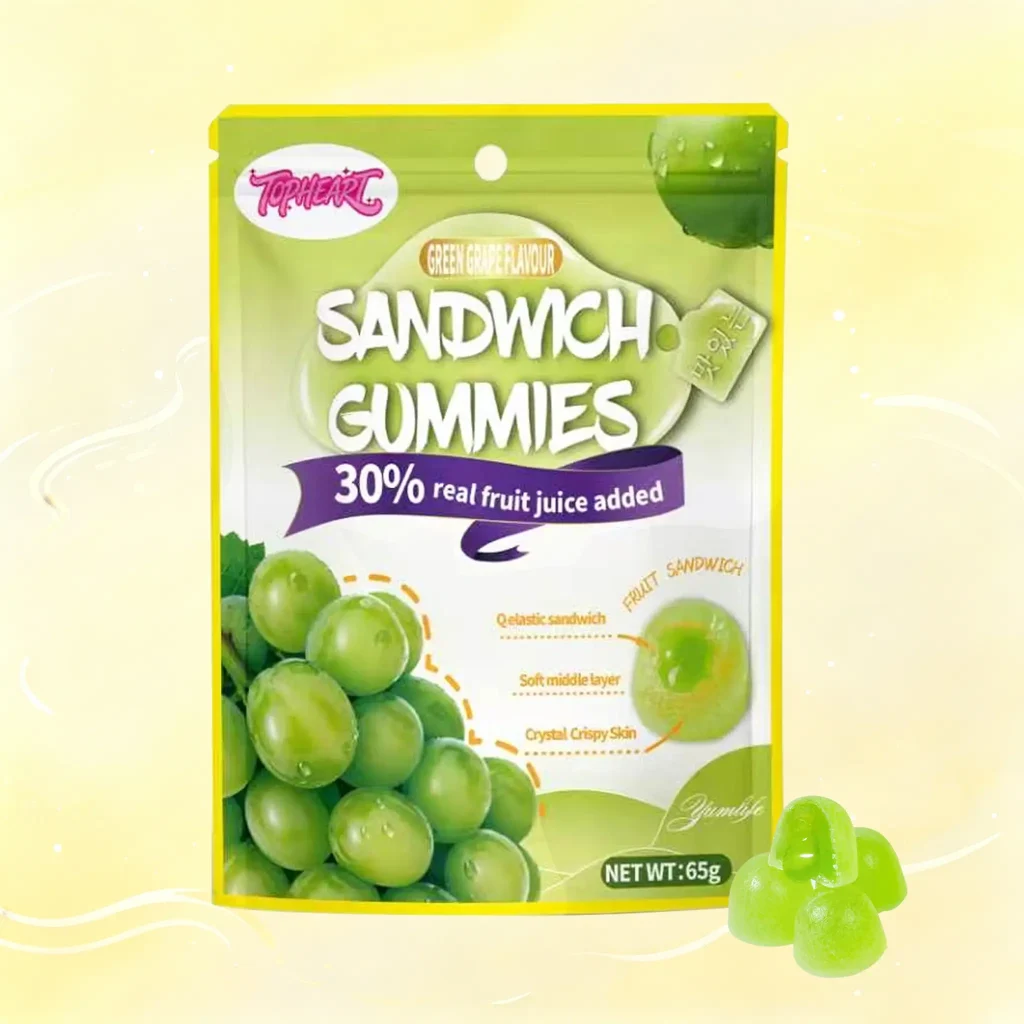 Crispy Gummy Candy
What Is Crispy Gummy Candy Crispy Gummy Candy i...
-
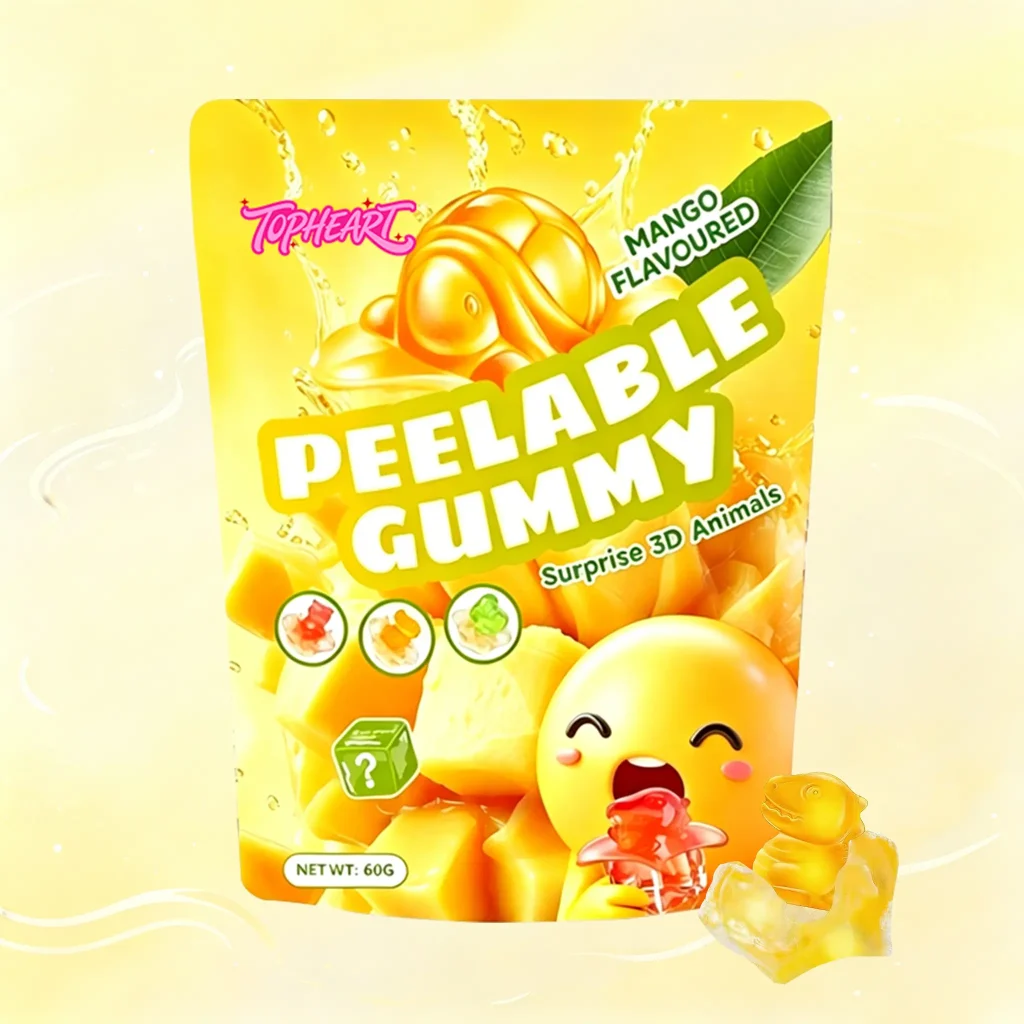 Peelable Gummy Candy
What Is Peelable Gummy Candy? Peelable Gummy Ca...