

A gummy candy can look simple on the retail shelf, but its texture, stability, ingredient positioning, and market suitability are controlled by a surprisingly complex formulation system. For a brand owner or importer, choosing between Gelatin Gummies and Pectin Gummies is therefore not simply a question of which ingredient is more popular. It is a product-development decision that can affect texture, labeling, consumer positioning, certification, manufacturing conditions, shelf-life planning, and even the type of customers a product can reach.
Consider two real-world purchasing scenarios. A distributor launching a traditional gummy bear range may want a highly elastic, familiar chew that consumers immediately recognize. A private-label brand targeting plant-based consumers may instead prioritize a pectin-based formulation and a different bite profile. Meanwhile, a Middle Eastern buyer may need to investigate gelatin source and certification, while a European retailer may be more interested in vegan or vegetarian positioning and transparent ingredient information.
This is why the right question is not simply “gelatin or pectin?” The better question is: Which gelling system best matches the target market, product format, texture expectation, regulatory environment, and commercial strategy?
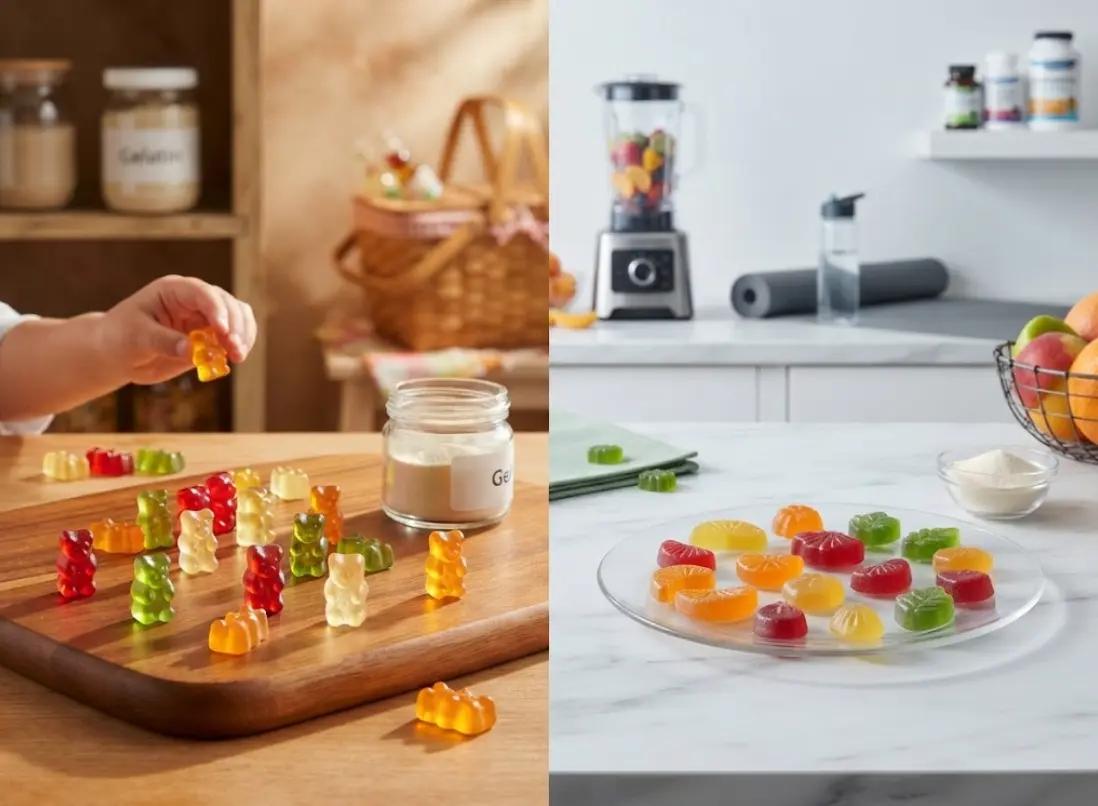
Gummies
What Are Gelatin Gummies and Pectin Gummies?
What Are Gelatin Gummies?
Gelatin Gummies are gummy confectionery products in which gelatin functions as an important structure-forming ingredient. Gelatin is a protein derived from collagen and is widely used in food systems because it can form thermoreversible gels with characteristic elasticity and chewiness.
One of the most important technical specifications associated with gelatin is Bloom strength. Commercial gelatin can span a broad range of Bloom values; a commonly cited range is approximately 30 to 300 Bloom, with higher Bloom values generally indicating stronger gel strength. However, Bloom value should never be considered independently because gelatin concentration, pH, temperature, molecular characteristics, sugar concentration, and processing history can all influence the final product.
This explains why two gummies that both use gelatin can still have very different textures. One may be soft and elastic, while another may be firm, dense, and highly chewy.
What Are Pectin Gummies?
Pectin Gummies use pectin as the principal structure-forming hydrocolloid. Pectin is a plant-derived polysaccharide commonly obtained commercially from citrus materials or apple pomace.
Pectin is not one single functional material. High-methoxyl pectin and low-methoxyl pectin have different gelation mechanisms and formulation requirements. High-methoxyl pectin generally relies on high soluble-solids conditions and acidity, while low-methoxyl pectin can form gels through calcium-mediated interactions.
For this reason, the phrase “pectin gummy” does not automatically describe one universal texture. The final bite depends on the pectin type, concentration, sugar or soluble-solids level, pH, temperature, calcium availability where relevant, and processing conditions.
Gelatin Gummies vs Pectin Gummies at a Glance
| Parameter | Gelatin Gummies | Pectin Gummies |
|---|---|---|
| Primary gelling material | Protein-based gelatin | Plant-based pectin |
| Common source | Animal collagen | Citrus or apple-derived plant material |
| Typical texture direction | Elastic, chewy, bouncy | Shorter, tender, clean or fruit-jelly-like bite |
| Vegan positioning | Generally not suitable | Can support vegan positioning when the full formula qualifies |
| Vegetarian positioning | Generally not suitable | Potentially suitable depending on full formulation |
| Gelation mechanism | Protein network formation | Pectin-specific network formation |
| Key technical variables | Bloom, concentration, temperature, pH, solids | Pectin type, pH, soluble solids, concentration, temperature |
| Product positioning | Classic gummy and elastic chew | Fruit-forward and plant-based concepts |
| Certification considerations | Gelatin source is important | Full ingredient and processing system still matters |
| Customization | High | High |
| Suitable for OEM | Yes | Yes |
The most important commercial takeaway is that neither material is universally superior. The better option depends on what the buyer is trying to achieve.
Why Gelatin Creates the Classic Gummy Texture
Gelatin has a distinctive role in confectionery because its protein chains can form a three-dimensional network as the system cools. This contributes to the elastic, resilient bite associated with many traditional gummies.
Food-science research has demonstrated how gelatin concentration and sugar concentration interact in confectionery gels. One study of concentrated-sugar gelatin systems examined formulations containing approximately 4–6% gelatin and found that sweeteners represented roughly 70–80% of total solids in the tested systems. The researchers also found that gelatin concentration, sugar concentration, viscosity, gelation behavior, and thermal history all influenced final texture.
This matters for a gummy candy manufacturer because simply specifying “gelatin gummy” is not enough to reproduce a particular product. A serious product specification should define the desired texture and process window rather than only naming the hydrocolloid.
Key Gelatin Parameters for Gummy Development
| Technical Parameter | Typical Industry Consideration | Product Impact |
|---|---|---|
| Bloom strength | Commercial gelatin can vary widely | Gel firmness and elasticity |
| Gelatin concentration | Formula-specific | Bite and structural strength |
| Temperature | Process-dependent | Solubilization and gel formation |
| pH | Formula-dependent | Gel performance and flavor balance |
| Sugar solids | Often high in gummy systems | Viscosity and texture |
| Moisture | Product-specific | Chewiness and stability |
| Cooling profile | Process-specific | Final gel structure |
For buyers, this means the right question is not “What Bloom gelatin do you use?” but rather “What texture, hardness, elasticity, and stability can you consistently deliver with the selected gelatin system?”
How Pectin Creates a Different Gummy Structure
Pectin behaves differently because its gel network is controlled by polysaccharide chemistry rather than a gelatin protein network.
High-methoxyl pectin generally requires an appropriate combination of soluble solids and acidity to form a stable gel. FAO technical material describes high-methoxyl pectin as typically requiring soluble solids above approximately 55% and a pH around 3.0 under the referenced conditions. Low-methoxyl pectin follows a different mechanism and can use calcium ions to create a network.
This makes formulation precision particularly important.
Key Pectin Parameters for Gummy Development
| Technical Parameter | Why It Matters |
|---|---|
| Pectin type | Determines gelation mechanism |
| Degree of methylation | Influences functionality |
| Pectin concentration | Influences firmness and structure |
| pH | Controls gel formation in many systems |
| Soluble solids | Important for many high-methoxyl systems |
| Calcium availability | Important for many low-methoxyl systems |
| Heating profile | Influences processing and setting |
| Cooling conditions | Influences final gel structure |
Scientific reviews emphasize that pectin gel properties depend on pectin structure, concentration, pH, soluble solids, temperature, and other environmental conditions. Small formulation changes can therefore produce meaningful changes in final texture.
For a buyer developing Pectin Gummies, this is an important risk-control point: “plant-based” does not mean “formulation is simple.” In some cases, pectin systems require very precise control of solids, acidity, setting conditions, and ingredient interactions.
Gelatin Gummies vs Pectin Gummies: Which Texture Fits Your Product?
Texture is one of the strongest reasons buyers should evaluate both systems through samples rather than making a purchasing decision from ingredient declarations alone.
Research comparing gelatin/pectin gummy systems found measurable changes in fracture behavior and sensory characteristics as pectin was introduced into gelatin-based formulations. The study reported that pectin-containing systems could become less chewy, more easily broken apart, smoother, and more fruity, sweet, or tart in sensory description.
That does not mean one texture is better. It means the two systems can create different consumer experiences.
Gelatin Texture Profile
A gelatin-based gummy may be selected when the brand wants:
- Elasticity
- Bounce
- Resilient chewing
- Traditional gummy characteristics
- Strong shape perception
- A familiar confectionery experience
This can be particularly useful for classic gummy bears, animal shapes, novelty gummies, and other products where consumers expect a pronounced chew.
Pectin Texture Profile
A pectin-based gummy may be attractive when the brand wants:
- A shorter bite
- A tender texture
- A fruit-jelly character
- Plant-based positioning
- A fruit-forward sensory profile
- A different premium confectionery experience
However, buyers should avoid assuming that every pectin gummy will automatically be soft. Pectin systems can be engineered toward different firmness and texture profiles depending on the formulation.
For brands developing custom gummy candy, the desired texture should therefore be written as a product specification rather than left as a vague description such as “soft” or “chewy.”
How Market Positioning Changes the Material Decision
The same gummy format can require a different formulation depending on where it will be sold.
A traditional candy distributor may prioritize a familiar chewy texture and cost-efficient high-volume production. A premium fruit brand may prioritize a clean bite and fruit-forward positioning. A vegan brand may prioritize the absence of animal-derived ingredients. A Middle Eastern buyer may place greater emphasis on gelatin source and Halal certification.
These are not ingredient questions alone. They are market strategy questions.
For confectionery buyers evaluating suppliers, the manufacturer’s broader product-development capability matters because material selection needs to connect with formulation, shape, flavor, packaging, quality control, and export requirements. A manufacturer with broader confectionery experience can also help buyers compare product formats rather than forcing every project into one standard formula.
For example, confectionery manufacturing experience can be especially valuable when a buyer is deciding whether a new product should use a classic elastic gummy structure, a fruit-style pectin structure, or another confectionery system.
Choosing the Right System for Mainstream Gummy Candy
For mainstream retail, the priority is often consistency.
A distributor may need thousands of retail packs to deliver a consistent consumer experience across different stores, regions, and production batches. In this situation, the formulation must be evaluated for:
- Texture consistency
- Shape retention
- Flavor consistency
- Color consistency
- Surface characteristics
- Packaging compatibility
- Storage stability
- Production repeatability
A familiar gelatin texture can be attractive for conventional gummy concepts, but the final decision should still be based on product testing.
For a buyer looking at gummy candy wholesale, a useful specification should therefore include texture targets, weight tolerance, dimensions, packaging configuration, shelf-life expectations, and storage conditions.
Choosing the Right System for Vegan and Vegetarian Products
Plant-based positioning changes the decision framework.
Pectin can support vegan and vegetarian product development because it is plant-derived. However, buyers should not assume that using pectin automatically makes a finished product vegan.
The complete formulation matters.
Other ingredients can include flavors, colors, coatings, processing aids, or other components that require separate review. Manufacturing controls and certification requirements can also matter when a brand makes a specific market claim.
This is why a professional Pectin Gummies project should begin with a complete ingredient and certification review rather than simply replacing gelatin with pectin.
Choosing the Right System for Halal Markets
Halal-oriented markets require particular attention to ingredient sourcing and certification.
Gelatin requires careful consideration because its source can vary. Depending on the formulation and target market, buyers may need documentation covering the gelatin source, supplier qualification, processing, and applicable Halal certification.
Pectin can provide another formulation route, but pectin alone does not automatically guarantee Halal compliance. The entire finished product and production system must satisfy the applicable requirements.
This is particularly important for exporters serving multiple regions. A product specification developed for one market may not automatically satisfy another market’s labeling, certification, or documentation requirements.
A buyer should therefore request the relevant certificates and ingredient documentation before mass production rather than attempting to solve compliance issues after packaging has already been printed.
For brands comparing gummy candy factory suppliers, this documentation stage is one of the easiest ways to identify whether a supplier can genuinely support international B2B projects.
Choosing a Gelling System for 3D, 4D and Novelty Gummies
Novelty gummies introduce another layer of complexity.
A three-dimensional or four-dimensional gummy is not judged only by flavor and chewiness. Buyers may also need:
- Fine shape definition
- Dimensional stability
- Clean demolding
- Surface appearance
- Layer integrity
- Color separation
- Packaging resistance
- Transport durability
In these applications, the best material is the one that delivers the required structure within a stable manufacturing process.
A supplier’s broader soft candy and gummy candy portfolio can help buyers evaluate different texture and shape concepts before selecting the final formulation.
The practical lesson is simple: a gummy’s shape and visual identity should be developed together with its gel system. A formula that tastes excellent but cannot consistently maintain a complex shape may create more commercial risk than value.
Gelatin Gummies vs Pectin Gummies: Manufacturing Process
Typical Gelatin Gummy Manufacturing Flow
A commercial gelatin gummy process may include:
- Raw material preparation
- Gelatin hydration
- Sugar and syrup preparation
- Controlled mixing
- Flavor and color addition
- Depositing
- Setting and cooling
- Demolding
- Surface treatment or oiling
- Packaging
- Quality inspection
The exact process varies by equipment and formula. Temperature control is particularly important because gelatin is thermoreversible and its gel behavior changes with thermal history.
Research on gelatin confectionery systems shows that sugar concentration can significantly influence gelation and melting behavior. In high-sugar systems, the transition behavior can differ substantially from simple gelatin-water systems.
Typical Pectin Gummy Manufacturing Flow
A pectin gummy process may include:
- Pectin preparation
- Sugar and syrup preparation
- Controlled heating
- Pectin incorporation
- Solids and pH adjustment
- Flavor and color addition
- Depositing
- Setting
- Demolding
- Coating or surface treatment
- Packaging
- Quality inspection
Pectin processing can require particularly careful control of pH, soluble solids, pectin characteristics, and setting conditions.
This is why pectin gummies manufacturing process should not be treated as a simple one-for-one replacement for gelatin processing. The equipment may look similar, but the formulation window and process controls can be different.
Scientific Parameters Buyers Should Compare
A serious B2B purchase should include measurable product specifications.
| Quality Parameter | Why It Matters | Buyer Application |
|---|---|---|
| Moisture | Influences texture and stability | Shelf-life and sensory control |
| Water activity | Indicates availability of water | Stability and microbiological risk assessment |
| pH | Influences gel system and flavor | Formula consistency |
| Soluble solids | Influences gel formation and texture | Batch control |
| Gel strength | Influences firmness | Texture specification |
| Hardness | Measures resistance to deformation | Product consistency |
| Elasticity | Measures recovery after deformation | Classic gummy texture |
| Weight | Controls commercial pack accuracy | Retail compliance |
| Dimensions | Controls appearance | Novelty and shaped gummies |
| Color | Controls visual consistency | Brand consistency |
| Flavor | Controls consumer experience | Batch consistency |
One important mistake is to treat moisture content and water activity as the same measurement. They are related, but they describe different aspects of the food system. For a professional shelf-life program, both may be useful together with microbiological testing, packaging evaluation, storage studies, and other product-specific controls.
Gelatin Bloom Strength and Pectin Type: What Buyers Should Actually Ask
When purchasing gelatin-based gummies, buyers may encounter specifications such as 180 Bloom, 200 Bloom, or 250 Bloom. Bloom is useful, but it should not be treated as a universal quality score.
Higher Bloom generally indicates stronger gelatin, but the final gummy still depends on concentration and the rest of the formulation.
For pectin, buyers should ask different questions:
- Is the pectin high-methoxyl or low-methoxyl?
- What degree of methylation is specified?
- What soluble-solids range is targeted?
- What pH range is used?
- Is calcium involved?
- What setting behavior is expected?
- What texture specification is required?
This difference is important because gelatin gummy manufacturer and pectin gummy manufacturer projects may require different technical documentation.
Regulation and Labeling: What Global Buyers Need to Check
Material selection should be completed together with market-specific regulatory review.
United States
For products sold in the United States, ingredient declarations and allergen requirements need to be evaluated against applicable FDA rules. FDA guidance states that foods with two or more ingredients generally need to declare ingredients by their common or usual names, while major food allergens must be identified according to applicable requirements.
For a gelatin product, the ingredient source and final labeling should therefore be reviewed before artwork approval.
European Union
For prepacked foods sold in the European Union, Regulation (EU) No 1169/2011 establishes mandatory food information requirements, including the name of the food, ingredient list, applicable allergen information, net quantity, date marking, storage conditions where applicable, food business operator information, and nutrition declaration.
EU nutrition declarations for most prepacked foods include energy and specified nutrient information per 100 g or 100 ml, with additional rules applying to presentation and voluntary information.
The key B2B lesson is that the gelling agent should be selected before final packaging development, because changing the formula late in the project can affect the ingredient declaration, nutrition information, claims, certifications, and artwork.

Small Love Heart Gummy Candy
Quality Control: The Risk Is Not Only the Gelling Agent
Many buyers focus too heavily on gelatin versus pectin while overlooking the wider manufacturing system.
A robust gummy candy manufacturer should be able to manage controls across:
- Incoming raw materials
- Ingredient identification
- Weighing accuracy
- Cooking conditions
- Temperature control
- pH control
- Soluble-solids control
- Depositing accuracy
- Setting conditions
- Foreign-material prevention
- Packaging integrity
- Batch traceability
- Finished-product inspection
Codex guidance describes HACCP as a science-based, systematic approach that identifies food-safety hazards and establishes controls, with seven principles covering hazard analysis, critical control points, critical limits, monitoring, corrective action, verification, and documentation.
For importers, this matters because supplier quality should be evaluated as a system rather than by a product sample alone.
Common Buyer Mistakes When Choosing Gelatin or Pectin
Mistake 1: Choosing Based Only on “Vegan” or “Traditional”
Ingredient positioning is important, but the final product still needs to meet texture, flavor, stability, packaging, and regulatory requirements.
Mistake 2: Comparing Ingredients Without Comparing Formulas
A 5% gelatin system cannot be directly compared with a particular pectin system simply by ingredient percentage. Different hydrocolloids have different mechanisms and functional concentrations.
Mistake 3: Assuming Pectin Always Means Soft
Pectin systems can be designed for different texture profiles. Pectin type, pH, solids, concentration, calcium, and processing conditions all matter.
Mistake 4: Assuming Gelatin Automatically Means Better Chew
Gelatin can provide a characteristic elastic texture, but concentration, Bloom strength, sugar system, moisture, temperature, and processing all influence the final bite.
Mistake 5: Ignoring Certification Until After Production
For international B2B projects, certification and ingredient-source requirements should be reviewed before mass production and packaging approval.
Mistake 6: Selecting a Supplier From a Sample Alone
A sample proves that a product can be made once. It does not necessarily prove that the same texture, color, weight, packaging performance, and documentation can be maintained across commercial batches.
How to Choose the Right Gummy System for Your Market
A practical decision framework can be reduced to six steps.
Step 1: Define the Consumer
Identify whether the product is targeting mainstream candy buyers, vegan consumers, vegetarian consumers, children, premium snack shoppers, functional-candy users, or another segment.
Step 2: Define the Texture
Choose measurable sensory objectives:
- Elastic
- Bouncy
- Soft
- Tender
- Firm
- Short bite
- Fruit-jelly-like
- Highly chewy
Step 3: Define Certification Requirements
Determine whether the project requires:
- Halal
- Vegan
- Vegetarian
- Market-specific food-safety documentation
- Ingredient-source documentation
- Export documentation
Step 4: Define the Product Format
Consider:
- Gummy bears
- Fruit gummies
- Sour gummies
- 3D gummies
- 4D gummies
- Peelable gummies
- Functional gummies
- Seasonal gummies
- Novelty gummies
Step 5: Run Sample and Stability Testing
Before mass production, compare:
- Texture
- Flavor
- Color
- Shape
- Packaging
- Storage behavior
- Transport resistance
- Consumer acceptance
Step 6: Approve the Commercial Specification
The final specification should include more than the name of the gelling agent. It should define the finished product’s weight, dimensions, texture, flavor, color, packaging, shelf life, storage requirements, certification documents, and quality standards.
What Wholesale and Private-Label Buyers Should Ask a Manufacturer
When evaluating private label gummy candy, ask the supplier:
- What gelling system do you recommend for my target market?
- What is the source of the gelatin or pectin?
- What certifications are available?
- Can you provide ingredient specifications?
- Can you develop custom texture?
- Can the shape, flavor, color, and packaging be customized?
- What quality parameters are checked during production?
- What is the expected shelf life?
- What storage conditions are recommended?
- Can you provide samples before mass production?
- What is the MOQ?
- What is the estimated production lead time?
- Can you support export documentation?
- Can the final product specification be approved before mass production?
For a global buyer, supplier communication is part of product quality. A technically capable factory should be able to explain not only what ingredient it uses, but why that ingredient is appropriate for the buyer’s market.
When a project reaches the stage where formulation, packaging, certification, MOQ, and production requirements need to be aligned, buyers can move from general research to a specific technical discussion with a gummy candy manufacturer.
Gelatin Gummies vs Pectin Gummies: Market Selection Matrix
| Buyer Requirement | Gelatin-Based Direction | Pectin-Based Direction |
|---|---|---|
| Classic elastic chew | Strong candidate | Possible with formulation adjustment |
| Traditional gummy positioning | Strong candidate | Possible |
| Vegan positioning | Generally unsuitable | Strong candidate |
| Vegetarian positioning | Generally unsuitable | Strong candidate |
| Fruit-forward texture | Suitable | Often attractive |
| Premium fruit concept | Suitable | Often attractive |
| Halal market | Requires source and certification review | Requires complete formula and certification review |
| 3D gummy | Suitable depending on formula | Suitable depending on formula |
| 4D gummy | Suitable depending on formula | Suitable depending on formula |
| Private label | Suitable | Suitable |
| Wholesale | Suitable | Suitable |
| Custom flavor | Suitable | Suitable |
| Custom shape | Suitable | Suitable |
| Plant-based product line | Limited | Strong candidate |
The matrix should be used as a starting point rather than a final technical specification. The final choice should always be validated through actual samples and market-specific requirements.
Final Decision: Gelatin Gummies or Pectin Gummies?
There is no universal winner between Gelatin Gummies and Pectin Gummies.
Gelatin can be a strong choice when a product requires a familiar elastic and chewy texture. Pectin can be an attractive option when plant-based positioning, fruit-oriented texture, or vegetarian and vegan market requirements are important.
But the most commercially successful products are not necessarily the ones that choose the “best” ingredient in isolation. They are the products in which the gelling system, flavor, texture, shape, packaging, certification, production process, and target market are designed as one system.
For B2B buyers, the strongest decision process is therefore:
Market → Consumer → Texture → Formula → Certification → Testing → Manufacturing → Packaging → Scale-Up
That sequence reduces the risk of selecting an ingredient first and discovering later that the product does not fit the target market.
Build the Gummy Around the Market, Not the Other Way Around
The choice between gelatin and pectin should begin with the market rather than the raw material.
If the objective is a classic elastic gummy, gelatin may be a logical formulation direction. If the objective is a plant-based product, pectin may provide a more appropriate starting point. If the product is intended for Halal, European, North American, or other international markets, the formulation must also be evaluated against the applicable ingredient, labeling, certification, and food-safety requirements.
For wholesalers and private-label brands, the safest commercial strategy is to request samples, define measurable texture targets, verify ingredient sources, review certification documents, test packaging and stability, and approve a complete product specification before mass production.
The best gummy candy wholesale product is therefore not simply the one with the lowest ingredient cost or the most fashionable ingredient. It is the one that delivers the right consumer experience, satisfies the target market, and can be manufactured consistently at commercial scale.
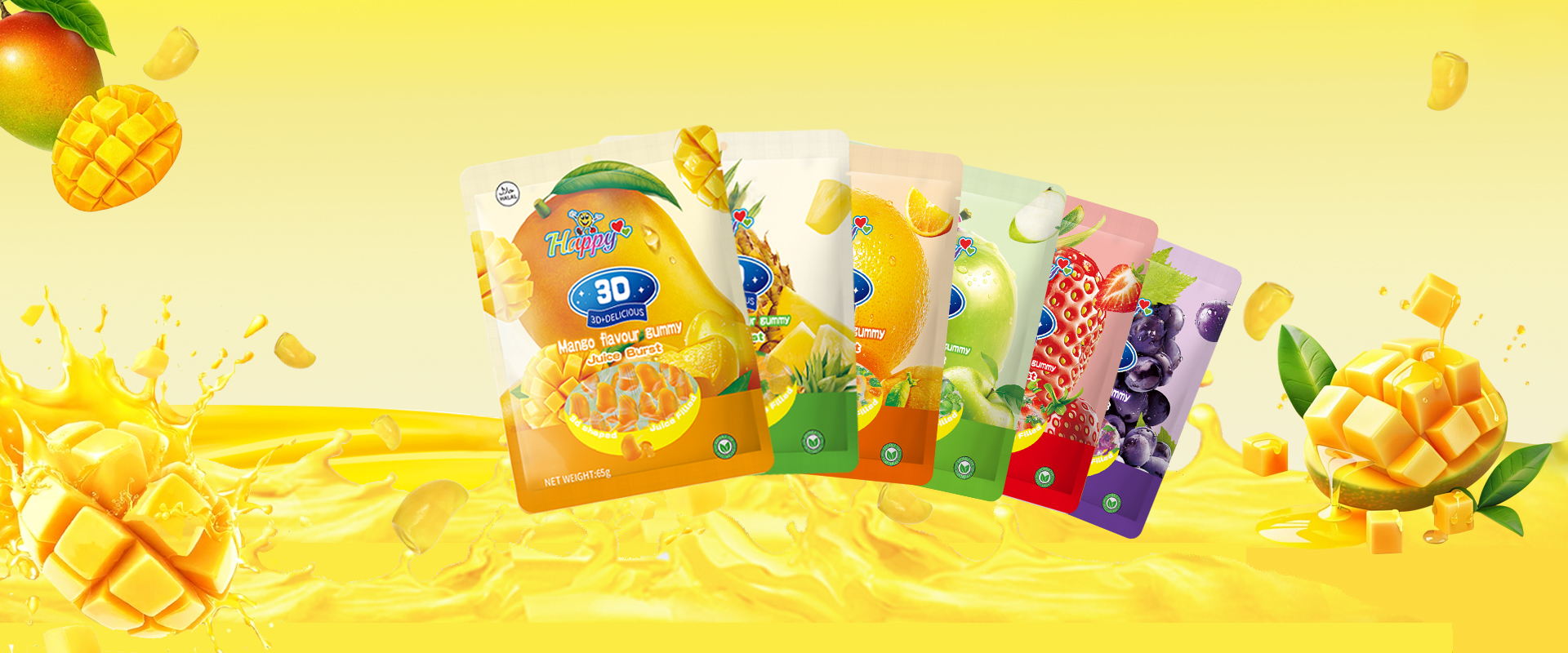
3D gummy candy banner
Frequently Asked Questions
1. Are Gelatin Gummies and Pectin Gummies the Same?
Gelatin Gummies and Pectin Gummies are both gelled confectionery products, but they use different primary structure-forming materials and can produce different texture characteristics. Gelatin is a protein derived from collagen and is commonly associated with an elastic, resilient, chewy gummy texture. Pectin is a plant-derived polysaccharide and can produce a shorter, tender, or fruit-jelly-like bite depending on the pectin type and formulation. The difference is not limited to ingredient origin. Gelatin and pectin also require different formulation controls involving concentration, temperature, pH, soluble solids, and setting conditions. For B2B buyers, the correct comparison should therefore consider the finished product specification rather than comparing the two ingredients in isolation.
2. Are Pectin Gummies Suitable for Vegan and Vegetarian Candy Products?
Pectin can be an appropriate starting point for vegan and vegetarian gummy products because it is a plant-derived gelling ingredient. However, using pectin alone does not automatically make the finished candy vegan or vegetarian. The complete formula must be reviewed, including flavors, colors, coatings, processing aids, and any other ingredients. Manufacturing and certification requirements may also need to be evaluated depending on the target market and the claims placed on the package. For private-label buyers, it is advisable to confirm the complete ingredient list and relevant certification documentation with the manufacturer before approving the final packaging artwork.
3. Which Has a Chewier Texture, Gelatin Gummies or Pectin Gummies?
Gelatin Gummies are commonly associated with an elastic, bouncy, and chewy texture, while Pectin Gummies can provide a shorter, more tender, or fruit-jelly-like bite. However, the final texture depends on much more than the choice of gelling agent. Gelatin Bloom strength, gelatin concentration, sugar solids, moisture, pH, heating, cooling, and processing history can all affect the final texture. Pectin products are similarly influenced by pectin type, concentration, degree of methylation, pH, soluble solids, calcium conditions where relevant, temperature, and setting time. Therefore, buyers should evaluate actual samples against a defined texture specification rather than assuming one ingredient always produces one fixed texture.
4. Which Gelling System Is Better for a Private-Label Gummy Candy Brand?
The better gelling system depends on the brand’s target consumers and product positioning. A traditional gummy brand seeking a familiar elastic chew may consider a gelatin-based formulation, while a plant-based or vegan-positioned brand may consider a pectin-based formulation. Buyers should also evaluate certification requirements, target-country labeling, product shape, flavor profile, packaging, shelf-life expectations, and manufacturing conditions. A professional private-label development process should include formulation samples, sensory evaluation, stability testing, packaging evaluation, and documentation review before commercial production. The objective should be to select the system that best supports the entire product concept rather than selecting a material based on a single marketing claim.
5. What Should Buyers Ask a Gummy Candy Manufacturer Before Placing a Wholesale Order?
Wholesale buyers should ask about the gelling system, ingredient sources, certifications, product specifications, MOQ, sampling process, production lead time, packaging options, shelf life, storage requirements, quality-control procedures, and export documentation. Buyers should also ask whether the manufacturer can customize texture, shape, flavor, color, and packaging. For international projects, certification and ingredient-source documentation should be reviewed before final artwork and mass production. A supplier should be able to explain how the selected formulation is controlled during production and how batch consistency is verified. This information helps buyers distinguish between a supplier that can provide a sample and a manufacturer that can support repeatable commercial production.
Feature Product
-
 Gummy Candy
What Is Gummy Candy? Gummy Candy is one of the ...
-
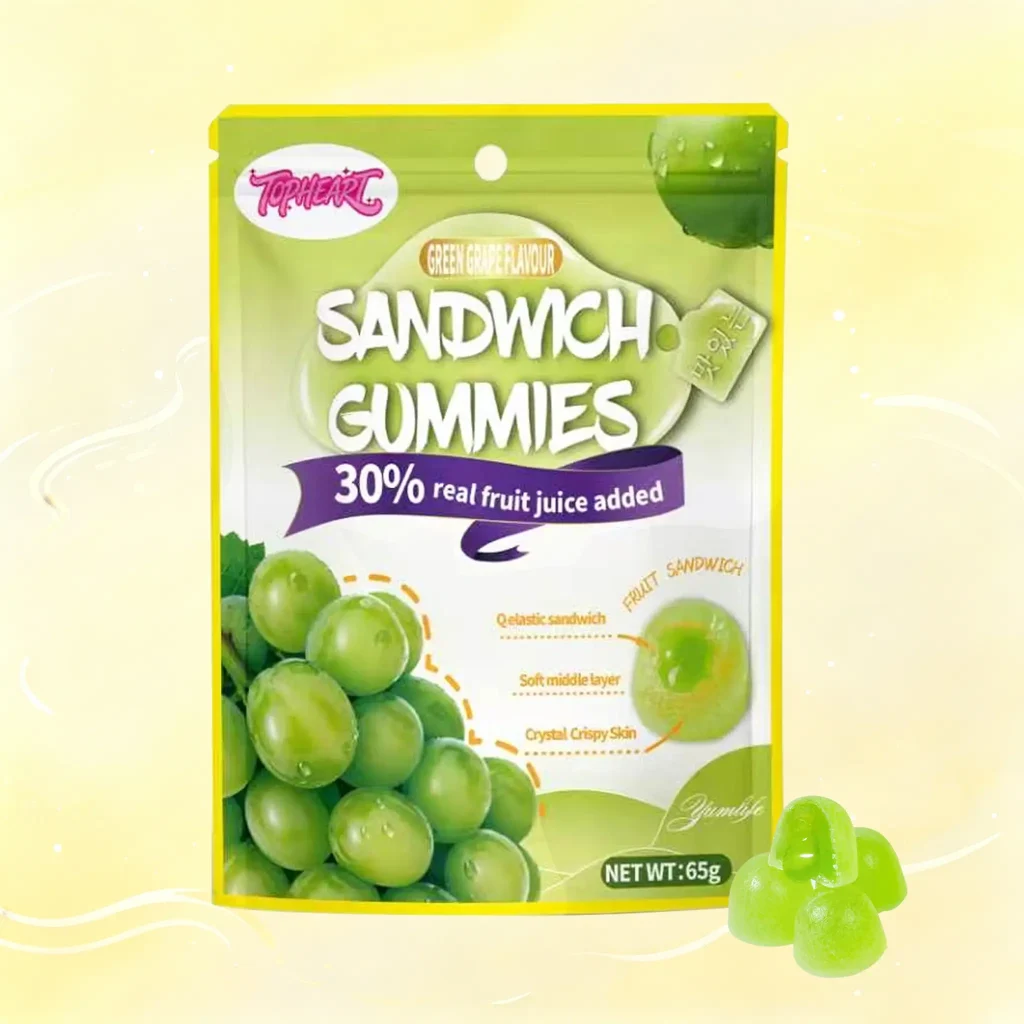 Crispy Gummy Candy
What Is Crispy Gummy Candy Crispy Gummy Candy i...
-
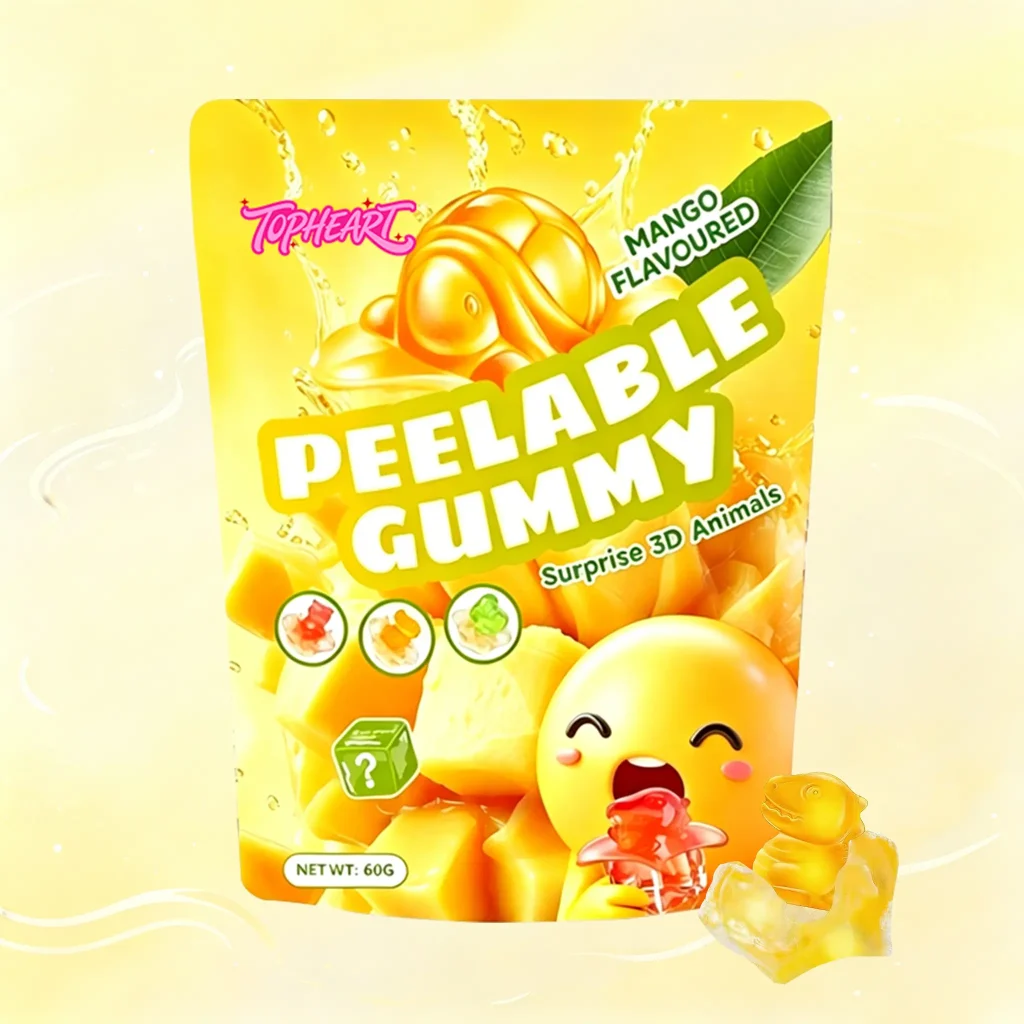 Peelable Gummy Candy
What Is Peelable Gummy Candy? Peelable Gummy Ca...