

Christmas is one of the most important seasonal opportunities in confectionery, but a successful seasonal product is not created simply by adding red and green colors to a standard candy package. For Christmas Cotton Candy, the product itself is highly visual, lightweight and sensitive to environmental conditions, so flavor selection and packaging development need to be considered together.
For retailers, wholesalers, importers and private label brands, the right combination can help a product communicate its seasonal identity before the consumer even opens the package. Classic fruit flavors, dessert-inspired profiles, peppermint concepts and colorful holiday combinations can all work, but each creates a different positioning opportunity.
Packaging is equally important. Cotton candy has a large surface area relative to its weight and can be affected by moisture, making barrier performance and sealing important technical considerations. Research on cotton candy has specifically highlighted the moisture sensitivity of spun sugar, while confectionery packaging research shows that packaging can influence food quality and shelf life.
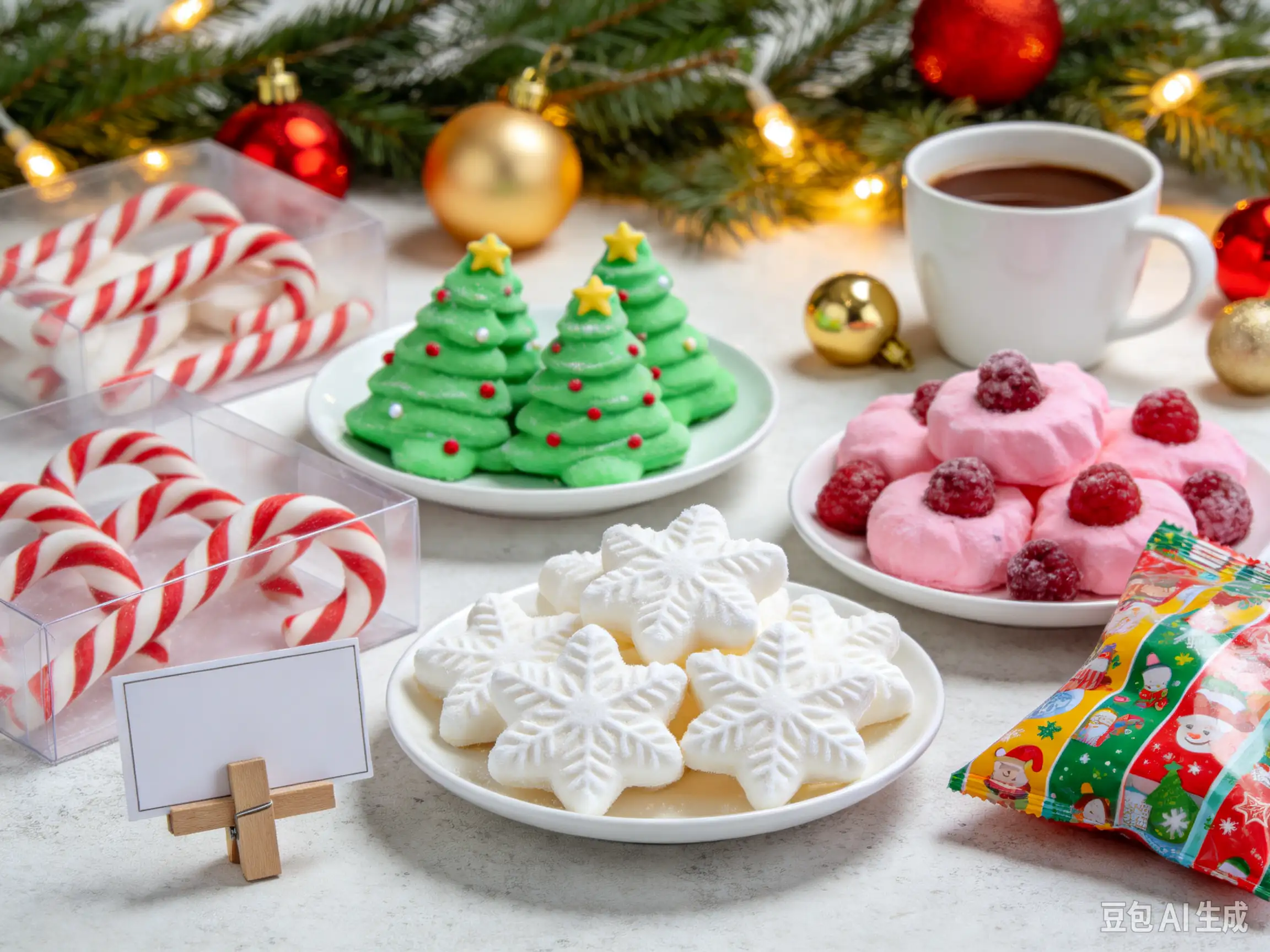
Christmas Cotton Candy
Why Christmas Cotton Candy Needs a Different Product Strategy
Christmas confectionery has a natural advantage: consumers are already looking for products that feel seasonal. The National Confectioners Association’s 2026 State of Treating research reports that 82% of surveyed consumers want holiday-specific confectionery items with special packaging, shapes and flavors. That finding is particularly relevant to cotton candy because the category naturally supports strong color, shape and visual presentation.
At the same time, seasonal products have a shorter commercial window than everyday confectionery. A buyer therefore needs to balance novelty with broad consumer acceptance. A flavor that is too experimental may create attention but limit repeat purchases, while a familiar flavor with a strong Christmas presentation can be easier to merchandise across different retail channels.
This makes Christmas cotton candy flavors and packaging part of the same product decision rather than two independent decisions.
How to Choose Christmas Cotton Candy Flavors
Start With the Target Consumer
The first question should not be “Which flavor sounds most Christmas-like?” It should be “Who is going to buy and consume this product?”
A children’s seasonal product may benefit from familiar fruit flavors and bright colors. A family-oriented retail product may need broader flavor acceptance. A premium gift-oriented product can support more sophisticated combinations such as vanilla, berry, peppermint or dessert-inspired profiles.
For wholesale buyers, this distinction matters because a flavor is not only a sensory choice. It influences the product name, artwork, color palette, packaging message, merchandising position and potentially the entire seasonal collection.
Classic Fruit Flavors for Broad Appeal
Fruit flavors are a practical starting point for Christmas Cotton Candy. Strawberry, raspberry, grape, blueberry, cherry and other berry profiles can provide recognizable taste cues while allowing strong visual differentiation.
For example, strawberry can support a bright red or pink Christmas design, while blueberry or blue raspberry can create a cool winter-oriented visual identity. Grape can provide a deeper purple tone, and raspberry can work well with red, burgundy or berry-themed packaging.
Fruit flavors also provide flexibility when creating a multi-flavor Christmas assortment. Instead of developing one complicated flavor, a manufacturer can create several familiar flavors under one seasonal visual system.
Peppermint and Candy Cane Inspired Flavors
Peppermint is closely associated with Christmas and candy cane traditions, making it a natural candidate for seasonal cotton candy. A peppermint concept can be positioned around freshness, winter imagery and classic Christmas associations.
However, peppermint should be evaluated carefully for the target market. Some consumers actively seek mint flavors, while others prefer fruit or creamy profiles. For mass retail, buyers may therefore consider peppermint as one flavor within a collection rather than the only flavor.
Vanilla, Cream and Dessert-Inspired Flavors
Vanilla and creamy profiles can create a warmer Christmas positioning. They can be connected with ideas such as Christmas cookies, frosting, vanilla desserts or sweet holiday treats.
These profiles may work especially well for premium-looking packaging because the flavor concept can support gold, cream, white, champagne or warm red design elements rather than relying exclusively on bright children’s colors.
Berry and Mixed-Fruit Christmas Flavors
Berry combinations are another useful direction for seasonal development. Raspberry, strawberry, cherry and mixed berry concepts can create a rich red color family that naturally connects with Christmas.
A mixed-flavor collection can also make the package look more abundant. Multiple colors inside a transparent or semi-transparent package can create a visual “Christmas candy assortment” effect.
However, buyers should confirm whether the actual cotton candy color matches the flavor identity and package artwork. A mismatch between flavor name, color and visual design can reduce product clarity at retail.
Christmas Cotton Candy Flavor Selection Guide
| Flavor Direction | Typical Color Direction | Christmas Positioning | Retail Consideration |
|---|---|---|---|
| Strawberry | Red / Pink | Classic festive fruit | Easy to understand and visually strong |
| Raspberry | Red / Berry | Rich berry Christmas | Suitable for colorful seasonal assortments |
| Blue Raspberry | Blue | Winter / snowy theme | Useful for contrasting red packaging |
| Grape | Purple | Premium or colorful festive theme | Good for multi-color collections |
| Peppermint | White / Red | Candy cane / classic Christmas | Strong seasonal association |
| Vanilla | White / Cream | Snow / dessert theme | Suitable for premium visual positioning |
| Mixed Berry | Red / Purple | Festive fruit assortment | Useful for collection-style packaging |
This table should be treated as a product-development framework rather than a fixed market rule. Flavor acceptance varies by country, retail channel, consumer age group and price positioning.
How to Choose Christmas Cotton Candy Packaging
Packaging Must Protect the Product First
The visual appearance of cotton candy is one of its greatest selling points, but its physical structure also creates a packaging challenge. Cotton candy is made from spun sugar fibers with a large exposed surface area. Sucrose readily interacts with moisture in the surrounding environment, which can cause the delicate structure to lose its characteristic airy form.
A published thermal study of cotton candy notes that commercially prepared cotton candy is typically sealed in moisture-proof bags because of its moisture sensitivity. This makes moisture protection one of the first packaging questions a buyer should address rather than treating it as a secondary design issue.
For buyers developing Christmas cotton candy packaging, the practical objective is therefore to balance three things: product protection, attractive presentation and efficient production.
Choose the Packaging Format Based on the Sales Channel
Different channels require different packaging priorities.
For supermarkets, a stand-up pouch or sealed bag can provide a large printable surface for Christmas artwork, product information and branding. For convenience stores, compact formats may be easier to display near checkout or seasonal confectionery sections. For gift shops and Christmas events, novelty shapes and decorative packaging can become more important.
For wholesale distribution, packaging also needs to work inside shipping cartons. A visually attractive package is not enough if the package is difficult to pack, vulnerable to crushing or inefficient for palletization.
For a manufacturer with experience in seasonal confectionery development, the product can be evaluated from formulation and production through packaging and export preparation. Buyers looking for a production partner can review the manufacturer’s candy factory and production capabilities before starting an OEM project.
For brands developing a complete seasonal range, Christmas cotton candy can also be positioned alongside other seasonal confectionery products rather than being sold as an isolated item.
Use Christmas Colors Without Overloading the Package
Red, green and white are the most recognizable Christmas color references, but using all three at maximum intensity can make packaging look crowded. A stronger approach is to establish one dominant color and use the other Christmas colors as supporting accents.
For example:
- Red and white can communicate classic Christmas and candy cane imagery.
- Green and gold can create a premium holiday appearance.
- Blue and white can emphasize snow, winter and cold-weather imagery.
- Pink and red can create a playful, younger-oriented Christmas look.
- White, cream and gold can support a premium dessert-inspired concept.
The color of the actual cotton candy should also be considered. If the product is naturally pale, the package should not rely on an extremely dark visual representation that makes the actual product appear inconsistent with the illustration.
Balance Transparency and Product Protection
Some buyers prefer transparent packaging because cotton candy is visually attractive. Consumers can immediately see the color, volume and texture of the product.
However, transparency should not automatically be treated as the best packaging solution. The packaging structure must still provide the moisture protection required by the product and the expected storage and transportation environment.
Confectionery packaging research emphasizes that packaging acts as an interface between food and the surrounding environment and can influence quality and shelf life. The appropriate packaging structure should therefore be selected according to the product’s sensitivity and distribution conditions.
A useful compromise may be a package with a controlled transparent area, strong printed branding and an appropriate moisture barrier rather than a completely open visual design.
Packaging Design Elements That Matter at Christmas
1. Seasonal Product Name
The product name should immediately communicate the seasonal concept. “Christmas Cotton Candy,” “Holiday Cotton Candy,” “Christmas Flavored Cotton Candy” and similar naming structures can make the product easier to understand.
2. Flavor Visibility
The flavor should be easy to identify without forcing consumers to read the entire package. A simple flavor name combined with a relevant color or fruit image can improve product clarity.
3. Christmas Visual Cues
Snowflakes, Christmas trees, stars, candy canes, Santa-inspired graphics, ornaments, gift boxes and winter scenes can all communicate the season. However, the design should still leave sufficient visual space for the brand name and product information.
4. Retail Shelf Impact
A seasonal product has to compete with many other Christmas products. Packaging should therefore be recognizable from a distance and remain visually clear when several units are displayed together.
This is particularly important for wholesale programs because buyers may not control the final retail display. The package needs to communicate its positioning independently.
Christmas Cotton Candy Wholesale: What Buyers Should Check
For importers and wholesalers, flavor and packaging are only two parts of the sourcing decision. A reliable wholesale program should also consider product consistency, packaging specifications, carton configuration, production lead time, quality control, documentation and shipping requirements.
Before placing a seasonal order, buyers should define:
- Target market and sales channel
- Flavor assortment
- Color requirements
- Net weight per unit
- Packaging format
- Primary packaging material
- Moisture protection requirements
- Carton dimensions and packing quantity
- Labeling and regulatory requirements
- Artwork approval process
- Production lead time
- Sample approval requirements
Seasonal production also requires additional planning because the product is tied to a specific selling window. A delay that might be manageable for an everyday candy product can become commercially significant for a Christmas product.
For a new seasonal program, buyers can first define the target product and then discuss samples, packaging and commercial requirements with the supplier through the Christmas candy wholesale and sourcing program available for seasonal confectionery development.
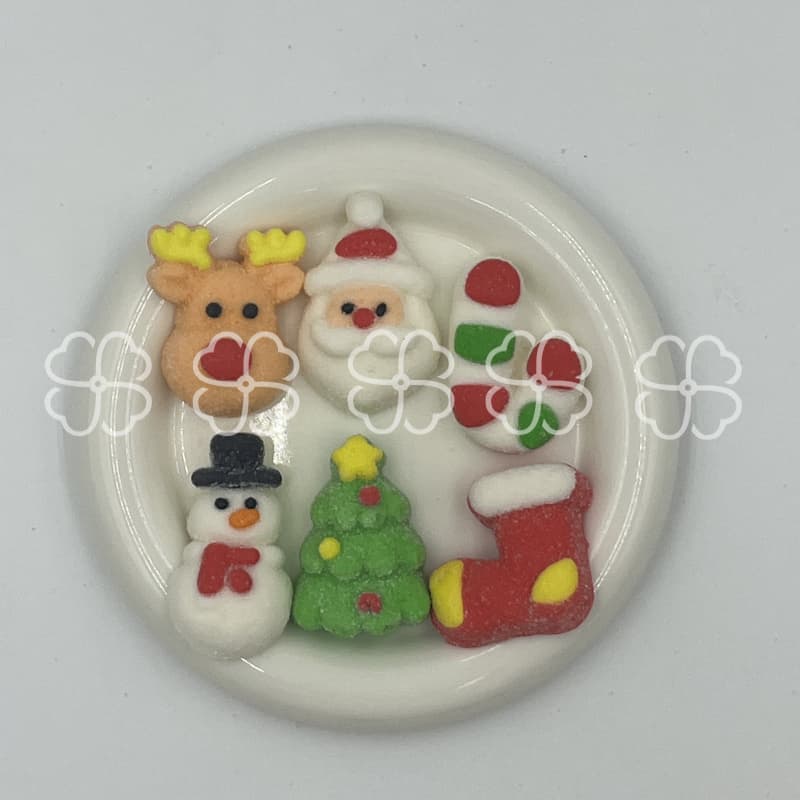
Christmas Marshmallows
How Packaging Affects Cotton Candy Shelf Life
Packaging should not be selected only by appearance. Cotton candy is particularly sensitive to humidity because its spun-sugar fibers provide a large surface area for interaction with the surrounding environment.
When moisture enters the package, the sugar structure can become less stable. Depending on environmental conditions and packaging performance, the product may lose volume, become sticky or develop a texture that no longer matches the intended consumer experience.
This is why the packaging development process should include storage and transportation testing. A package that performs well in a dry warehouse may behave differently when exposed to high humidity during international transportation or retail storage.
For this reason, buyers should avoid selecting a package solely because it is visually attractive or inexpensive. The correct packaging should be evaluated against the actual product, climate, distribution route and expected shelf-life target.
Labeling and Compliance Considerations
International buyers should develop packaging artwork according to the destination market rather than simply translating an existing package.
For products entering the United States, FDA requirements are particularly relevant to packaged food labeling. The FDA states that major food allergens must be properly identified on applicable packaged foods, and sesame is included among the nine major food allergens recognized under current U.S. requirements.
Nutrition labeling, ingredient declarations, allergen information, net quantity, manufacturer or distributor information and other mandatory statements should be reviewed according to the destination market and product formulation.
For Europe, Latin America, the Middle East and other export markets, buyers should confirm local requirements before final artwork approval. The exact requirements depend on the jurisdiction, product formulation, claims and packaging format.
In other words, Christmas cotton candy packaging should be developed in two layers: the consumer-facing seasonal design and the regulatory information required for the market.
Christmas Cotton Candy vs. Other Seasonal Confectionery
Cotton candy does not need to compete directly with every other Christmas candy. Instead, it can play a different role within a seasonal assortment.
Traditional hard candy can provide familiar formats and longer-lasting eating experiences. Gummies can provide shape innovation and chewy texture. Marshmallows can provide soft texture and holiday character. Cotton candy provides an especially visual, lightweight and nostalgic experience.
This makes it useful for seasonal collections that want more than one texture.
For example, a Christmas assortment could combine fruit gummies, holiday-shaped candy, cotton candy and marshmallow products. The visual identity can be unified through color, graphics and packaging while allowing each product to provide a different sensory experience.
For buyers researching a broader seasonal range, the dedicated Christmas candy collection can be used as a reference for building a wider holiday confectionery assortment.
Why Christmas Marshmallows Can Complement Cotton Candy
Marshmallows are another useful seasonal product direction because they provide a different texture and visual format. While cotton candy is airy and spun, marshmallows are soft, elastic and more structurally stable.
This difference can be useful when developing a Christmas collection for retailers. Cotton candy can attract attention through volume and color, while marshmallows can provide recognizable holiday shapes and additional flavor opportunities.
Christmas-themed marshmallow concepts may include snowman, Santa, Christmas tree or other festive shapes depending on the manufacturing process and target market.
When a buyer wants to build a multi-category seasonal candy program, Christmas marshmallows can therefore sit alongside cotton candy as a complementary product rather than as a direct replacement.
Common Mistakes When Developing Christmas Cotton Candy
Mistake 1: Choosing Flavor Before Defining the Market
A flavor should be selected based on the target consumer and sales channel. The most “Christmas-like” flavor is not automatically the most commercially suitable option for every market.
Mistake 2: Treating Packaging as Decoration Only
For cotton candy, packaging is part of product protection. Moisture management should be considered during package development, not after the artwork is completed.
Mistake 3: Using Too Many Visual Elements
Christmas packaging can easily become crowded. Too many snowflakes, characters, ornaments, colors and messages may reduce brand visibility.
Mistake 4: Ignoring Transportation Conditions
International shipments may experience changes in temperature and humidity. Packaging evaluation should therefore consider the actual supply chain rather than only factory or showroom conditions.
Mistake 5: Starting Seasonal Development Too Late
Christmas products require artwork approval, sample development, production, packaging, inspection and shipping. Buyers should work backward from the intended retail launch date.
A Practical Selection Framework for Buyers
A simple five-step framework can make the development process more efficient.
- Define the market: Identify the country, consumer group and retail channel.
- Select the flavor direction: Choose familiar fruit, peppermint, creamy, berry or mixed profiles according to positioning.
- Build the visual system: Match flavor color, Christmas graphics and brand identity.
- Validate packaging performance: Check sealing, moisture protection, transport resistance and retail presentation.
- Confirm compliance and production: Finalize ingredients, labels, packaging specifications, samples and production requirements.
This sequence helps prevent a common sourcing problem: approving attractive artwork before confirming whether the packaging format is technically suitable for the product.
Christmas Cotton Candy for OEM and Private Label
Private label buyers have more opportunities to differentiate the product because they can control the relationship between flavor, color, packaging and brand identity.
A private label Christmas cotton candy program can be developed around a single hero flavor or a seasonal collection. A single-flavor program is easier to communicate, while a multi-flavor assortment can create stronger shelf variety.
OEM development may involve flavor selection, color development, package format, artwork adaptation, unit weight, carton configuration and other project specifications.
For brands entering seasonal confectionery for the first time, it is useful to start with a clear product brief. The brief should define the desired flavor, target consumer, price positioning, package format and launch market before detailed design begins.
Suppliers with experience in seasonal confectionery can then evaluate whether the requested product direction is technically and commercially practical.
What Buyers Should Ask a Christmas Cotton Candy Manufacturer
A good supplier conversation should be specific enough to produce a meaningful quotation and sample.
Useful questions include:
- Which Christmas cotton candy flavors are currently available?
- Can the flavor and color be customized?
- What package formats are available?
- How is moisture protection addressed?
- Can packaging artwork be customized for private label?
- What product information is required before sampling?
- Can the supplier provide export documentation?
- What carton configuration is recommended?
- What are the production and sampling lead times?
- Can the product be developed as part of a wider Christmas candy collection?
These questions help transform a general inquiry into a defined OEM project.
How to Plan a Christmas Cotton Candy Collection
A collection can be structured around three layers: flavor, color and occasion.
For example, a classic collection could use red strawberry, white vanilla and green apple-inspired concepts. A winter collection could emphasize blue raspberry, white vanilla and berry flavors. A premium collection could focus on restrained colors, berry profiles, vanilla and peppermint.
The exact combination should depend on the target market. The objective is not to create the largest possible flavor list. It is to create a coherent collection where each SKU has a clear reason to exist.
Packaging should then unify the collection. The logo, typography, Christmas graphic language and basic product architecture should remain consistent, while flavor colors and illustrations provide differentiation.
The Role of Sustainability in Christmas Packaging
Seasonal packaging creates a sustainability challenge because products may use additional decorative elements, special colors and limited-edition formats for a relatively short selling period.
Confectionery packaging research emphasizes the importance of considering both food protection and packaging sustainability. Reducing packaging material is not automatically beneficial if it compromises product quality and increases food loss. Conversely, excessive packaging may create unnecessary environmental impact.
A practical approach is to evaluate the complete packaging system: product protection, material efficiency, production feasibility, transportation, retail presentation and end-of-life considerations.
For a private label project, buyers can discuss these priorities during the packaging development stage rather than attempting to redesign the package after production has already been finalized.
Final Buying Checklist
Before approving a Christmas cotton candy project, buyers should review the following checklist:
| Area | Key Question |
|---|---|
| Flavor | Does the flavor match the target consumer and market? |
| Color | Does the cotton candy color match the flavor and artwork? |
| Packaging | Does the package provide appropriate moisture protection? |
| Design | Is the Christmas theme immediately recognizable? |
| Labeling | Does the artwork contain the required market information? |
| Logistics | Can the package withstand the planned distribution process? |
| MOQ | Is the production quantity appropriate for the seasonal launch? |
| Timing | Is there sufficient time for samples, artwork, production and shipping? |
Conclusion: Choosing Christmas Cotton Candy with a Complete Product View
The best Christmas Cotton Candy product is not simply the one with the most festive artwork or the most unusual flavor. It is the product where flavor, color, texture, packaging, moisture protection, labeling, logistics and seasonal positioning work together.
For broad retail appeal, familiar fruit flavors can provide a practical foundation. Peppermint can strengthen classic Christmas positioning, while vanilla and dessert-inspired flavors can support a warmer or more premium concept. Mixed berry collections can provide strong visual variety.
Packaging should then be developed around the physical characteristics of spun sugar. Moisture protection, sealing performance, transport conditions and retail presentation all deserve attention before the final artwork is approved.
For wholesalers, importers and private label brands, the most efficient development process begins with a clear product brief and a defined target market. Once the flavor direction, package format and commercial requirements are established, the manufacturer can move toward sampling, packaging approval and production.
In this way, Christmas Cotton Candy becomes more than a seasonal novelty. It can become a structured retail product that fits into a broader Christmas confectionery strategy and gives buyers a flexible platform for OEM and private label development.
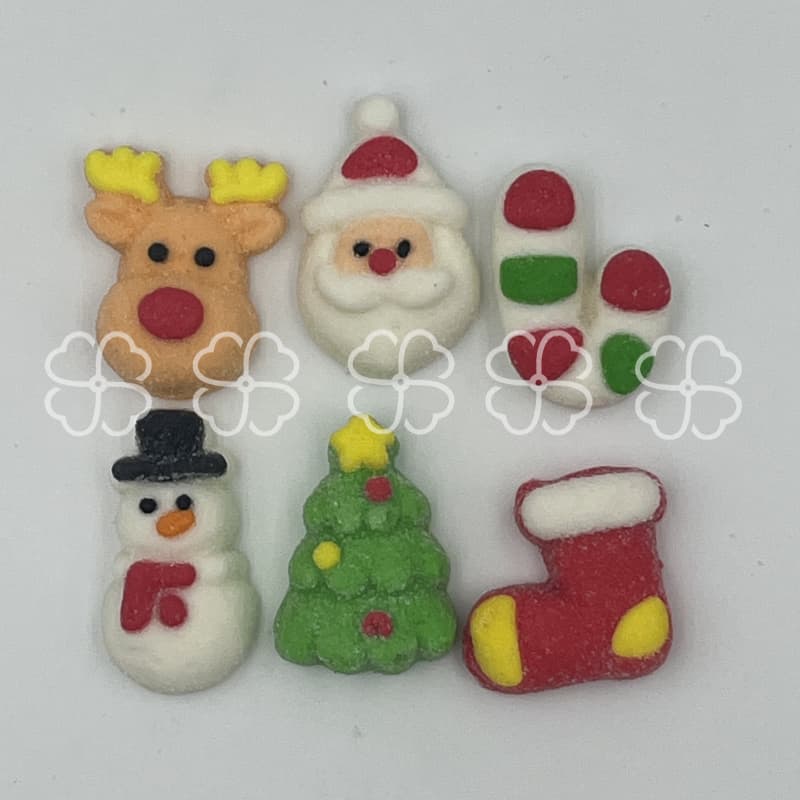
Christmas Marshmallows
Frequently Asked Questions
1. What are the best Christmas cotton candy flavors?
The best Christmas cotton candy flavors depend on the target market, consumer group and retail positioning. Strawberry, raspberry, grape, blueberry, vanilla and peppermint are practical directions because they can be connected with recognizable flavor expectations and strong seasonal colors. For a broad retail assortment, familiar fruit flavors can provide an accessible starting point, while peppermint can create a more traditional Christmas identity. A multi-flavor collection can combine fruit, mint and creamy profiles to create visual and sensory variety.
2. What packaging is best for Christmas cotton candy?
The most suitable packaging depends on the product specification, storage environment, transportation conditions and desired retail presentation. Because cotton candy is highly sensitive to moisture, the package should provide appropriate protection against humidity while maintaining a strong seal. Stand-up pouches, sealed bags and other moisture-conscious packaging formats can be considered. The final structure should be evaluated with the actual cotton candy rather than selected only for appearance or cost.
3. Can Christmas cotton candy be customized for private label?
Yes. Christmas cotton candy can be developed for private label programs with customization opportunities that may include flavor, color, package format, artwork, product weight and brand presentation. Buyers should provide the target market, preferred flavor direction, packaging concept and labeling requirements at the beginning of the project. This allows the manufacturer to evaluate the product direction before samples and final artwork are developed.
4. Is Christmas cotton candy suitable for wholesale?
Yes. Christmas cotton candy can be used for wholesale, retail, seasonal gift programs, specialty candy stores, supermarkets, convenience channels, events and private label collections. For wholesale purchasing, buyers should evaluate not only the candy itself but also packaging protection, carton configuration, production capacity, minimum order requirements, lead time and export documentation. Seasonal ordering should be planned early enough to allow sampling, artwork approval, production and transportation before the Christmas selling period.
5. How can Christmas cotton candy packaging prevent moisture problems?
Moisture control begins with selecting a packaging structure that is appropriate for the hygroscopic nature of spun sugar. The package should provide a suitable moisture barrier, reliable sealing and protection during storage and transportation. Buyers should also consider warehouse humidity, shipping conditions and the expected shelf-life target. Packaging performance should be confirmed through product-specific testing because actual results depend on the candy formulation, package structure, sealing process and distribution environment.
Feature Product
-
 Gummy Candy
What Is Gummy Candy? Gummy Candy is one of the ...
-
 Crispy Gummy Candy
What Is Crispy Gummy Candy Crispy Gummy Candy i...
-
 Peelable Gummy Candy
What Is Peelable Gummy Candy? Peelable Gummy Ca...