


Christmas is one of the most important seasonal opportunities for confectionery retailers, distributors, importers, supermarkets, party suppliers, and private-label brands. Yet successful Christmas Candy procurement is not simply about finding attractive red-and-green packaging or selecting a popular flavor. A professional buyer must coordinate product selection, packaging, quantity forecasting, production, quality control, compliance, international logistics, and the final retail launch date.
This becomes particularly important when products are manufactured internationally. A seasonal order may need to move from raw-material purchasing to production, packaging, inspection, export, customs clearance, warehousing, and retail distribution within a tightly controlled calendar. A delay of several days can have a much greater commercial impact on a Christmas product than on a conventional year-round SKU.
The most effective approach is therefore to treat Christmas Candy as a complete sourcing project. Buyers should first identify their target consumer and sales channel, then select the appropriate candy format, packaging configuration, formulation, order quantity, and supplier capability. This guide explains that process in detail for retailers, wholesalers, importers, distributors, e-commerce brands, and companies looking for a reliable Christmas Candy manufacturer.
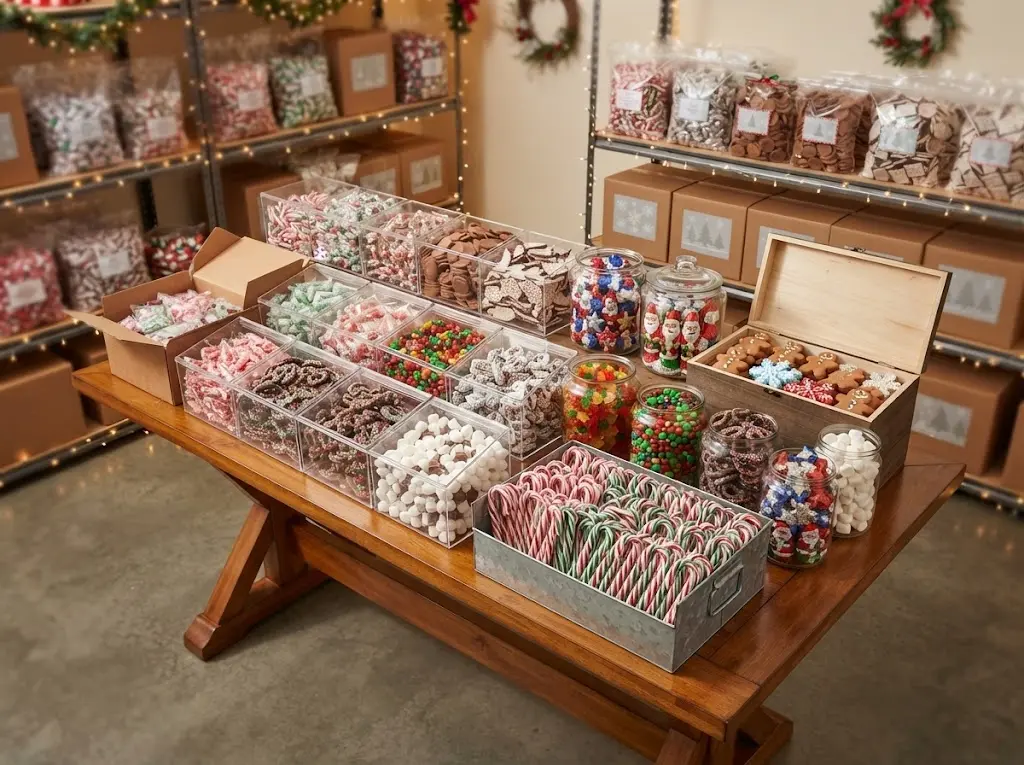
Christmas Candy manufacturer
What Is Christmas Candy Wholesale?
Christmas Candy wholesale refers to purchasing confectionery products in commercial quantities for resale, distribution, seasonal promotions, gifting, parties, events, or private-label programs. Unlike ordinary confectionery procurement, Christmas purchasing is strongly influenced by a fixed seasonal sales period and a high concentration of demand.
A year-round candy SKU may be replenished after a stockout. A Christmas product has a much narrower recovery window. If a supermarket receives its seasonal inventory after its Christmas promotion has already started, the product may lose valuable shelf time. If a distributor receives excess seasonal inventory after the holiday, it may face markdowns or additional storage requirements.
For this reason, professional buyers should evaluate Christmas Candy through several connected dimensions:
- Consumer and market positioning
- Candy category and product format
- Ingredients and texture
- Packaging and piece count
- Shelf life and storage requirements
- Order quantity and safety stock
- Food labeling and regulatory requirements
- Factory capacity and quality control
- Production and packaging lead time
- Shipping and delivery reliability
Who Buys Christmas Candy in Bulk?
The B2B buyer landscape is broader than traditional candy wholesalers. Christmas Candy can be sourced by supermarkets, hypermarkets, convenience stores, importers, distributors, online retailers, gift companies, event suppliers, corporate gifting businesses, and private-label brands.
A supermarket buyer may prioritize shelf-ready multipacks and attractive seasonal displays. A party supplier may care more about piece count and efficient bulk packaging. An e-commerce brand may need distinctive shapes and giftable packaging. A private-label retailer may prioritize customized formulas, packaging, and brand presentation.
These different requirements mean that there is no single product configuration that automatically represents the best commercial choice for every buyer.
Which Christmas Candy Categories Are Suitable for Wholesale?
A strong seasonal assortment can include multiple confectionery categories. The key is to match each category with the consumer occasion and retail channel.
For buyers building a broader seasonal assortment, a dedicated Festive Candy range can be useful because Christmas products can be planned alongside other seasonal confectionery formats instead of being treated as an isolated SKU.
| Candy Category | Typical Wholesale Format | Main Commercial Advantage | Suitable Channels |
|---|---|---|---|
| Gummy Candy | Bags, jars, multipacks | Flexible shapes, flavors, colors, and textures | Retail, supermarkets, parties |
| Chocolate Candy | Pieces, boxes, gift packs | Premium and gifting appeal | Supermarkets, gift stores, e-commerce |
| Hard Candy | Wrapped pieces, bags | Convenient distribution and extended consumption | Retail, events, promotional programs |
| Lollipops | Individual wrappers, multipacks | Interactive and visually recognizable | Parties, convenience stores, events |
| Marshmallow Candy | Bags, seasonal packs | Soft texture and festive shapes | Family retail, gift baskets |
| Sour Candy | Bags, individual pieces | Distinctive flavor positioning | Convenience, youth-oriented retail |
| Mixed Candy | Assorted bags or boxes | Variety and perceived value | Retail, parties, seasonal displays |
The product category should be selected according to expected consumer behavior. Christmas Candy can serve multiple occasions, including stocking fillers, party favors, gift baskets, family sharing, office celebrations, children’s events, and impulse purchases.
For example, a retailer selling Christmas gift baskets may prefer mixed products and decorative packaging, while a convenience chain may prefer individually wrapped pieces with smaller package sizes. The procurement strategy should begin with the selling occasion rather than with a generic product catalog.
How to Choose Christmas Candy for Different Sales Channels
Christmas Candy for Supermarkets
Supermarket buyers typically need strong shelf visibility and efficient inventory management. Larger multipacks, gift packs, seasonal jars, and colorful bags can help products communicate their Christmas positioning quickly.
Important parameters include package dimensions, net weight, piece count, barcode placement, carton quantity, shelf footprint, and promotional display compatibility.
Consider a supermarket group operating 80 stores. The buyer may need several thousand packs distributed to multiple warehouses before the seasonal promotion begins. In this environment, a product that looks attractive but has inefficient carton dimensions or an uncertain delivery schedule can create more operational difficulty than its retail appearance suggests.
Christmas Candy for Convenience Stores
Convenience stores generally benefit from easy-to-handle products and impulse-friendly formats. Smaller bags, individual wrappers, lollipops, and compact multipacks can be suitable when shoppers make quick purchasing decisions.
For these buyers, package visibility, easy shelf replenishment, piece count, and price-positioning architecture can be more important than elaborate gift packaging.
Christmas Candy for Party and Event Suppliers
Party suppliers may purchase large quantities for Christmas events, corporate celebrations, school activities, community gatherings, and holiday parties. Their priorities can include bulk efficiency, consistent piece count, simple distribution, and reliable delivery.
In this situation, individually wrapped candy or bulk formats may be more practical than premium gift boxes because the product is often distributed directly to a large number of participants.
Christmas Candy for E-Commerce Brands
E-commerce brands face a different challenge: the package must communicate its value through photographs and product descriptions before the consumer touches the product.
Distinctive shapes, mixed assortments, resealable packaging, gift-ready boxes, and customized Christmas designs can therefore become important differentiation tools. However, online brands should also avoid creating too many low-volume SKUs because every additional SKU increases forecasting and inventory complexity.
Popular Christmas Candy Formats for Wholesale Buyers
Individually Wrapped Christmas Candy
Individually wrapped Christmas candy is particularly suitable for trickle distribution, parties, gift baskets, promotional events, and environments where each piece is handled separately.
For wholesale buyers, the important specifications are not only the wrapper design but also individual piece weight, sealing quality, wrapper material, carton configuration, and storage performance.
Individual wrapping can also affect logistics. If the same net weight is divided into many smaller pieces, the number of handling units and packaging operations may increase. Buyers should therefore evaluate the complete cost and operational structure rather than considering the wrapper as a purely visual element.
Bulk Christmas Candy
Bulk Christmas candy can be useful for party companies, distributors, repacking operations, promotional programs, and institutional buyers.
Bulk formats can simplify secondary packaging, but they still require precise specifications. Buyers should confirm net weight, expected piece count, ingredient declaration, batch traceability, storage conditions, and minimum remaining shelf life at shipment.
Christmas Candy Gift Packs
Gift packs can support premium seasonal positioning because the packaging itself becomes part of the consumer experience.
However, gift packaging can also increase material costs, assembly complexity, dimensional weight, and transportation requirements. A buyer should compare the additional retail value with the additional packaging and logistics burden.
Mixed Christmas Candy
Assorted products can increase variety and allow buyers to combine multiple shapes, flavors, and textures in one package.
One important procurement consideration is assortment control. If a package is marketed as a mixed product, buyers should establish the expected ratio or acceptable range for the different components where consistency is commercially important.
Christmas Candy Ingredients and Material Selection
Ingredient selection influences taste, texture, processing, shelf stability, labeling, and market positioning. Gummy products, for example, can be formulated with different gelling systems, while chocolate products have their own requirements relating to cocoa ingredients, fat phase stability, and temperature control.
Common Ingredients Used in Christmas Confectionery
- Sugar
- Glucose syrup or other carbohydrate syrups
- Gelatin
- Pectin
- Citric or other permitted food acids
- Natural or artificial flavors where permitted
- Food colors
- Cocoa and chocolate ingredients
- Fruit preparations
- Other functional confectionery ingredients
The appropriate formulation depends on the desired texture, product type, target market, regulatory requirements, and manufacturing process.
Gelatin and Pectin in Christmas Gummies
Gelatin and pectin create different gel structures and therefore can produce different sensory profiles. Neither should be treated as universally better; the correct choice depends on the product objective.
| Parameter | Gelatin-Based System | Pectin-Based System |
|---|---|---|
| Material Type | Protein-based hydrocolloid | Plant-derived polysaccharide |
| Typical Texture Direction | Elastic, chewy, resilient | Firm, clean bite, potentially more fracture-oriented |
| Key Formulation Variables | Gelatin concentration, Bloom strength, temperature | Pectin type, pH, soluble solids, calcium depending on system |
| Market Positioning | Traditional gummy texture | Can support plant-based positioning |
| Buyer Focus | Chewiness and elasticity | Firmness, bite, and formulation requirements |
Scientific research illustrates why these ingredients should be evaluated through actual product testing. A Food Hydrocolloids study tested gelatin/high-methoxyl pectin gummy systems using 3.0%, 4.5%, and 6.0% gelatin and 0%, 0.5%, 1.0%, and 1.5% high-methoxyl pectin under a specific formulation. The researchers found measurable changes in fracture behavior and sensory texture, with sensory texture showing a correlation of r = 0.90 with strain at fracture in their analysis. These values describe experimental conditions rather than universal commercial recipes.
Another review explains that high-methoxyl pectin and low-methoxyl pectin use different gelation mechanisms. High-methoxyl pectin is generally associated with high co-solute concentration and acidic conditions, while low-methoxyl pectin can form gels through calcium-mediated ionic interactions.
Scientific Parameters Buyers Should Understand
| Parameter | Why It Matters | Buyer Application |
|---|---|---|
| Gelatin Bloom Strength | Influences gel strength and texture | Compare samples consistently |
| Gelatin Concentration | Changes firmness and chew | Evaluate texture targets |
| Pectin Degree of Methylation | Changes gelation mechanism | Match formulation with process |
| pH | Can influence gel formation and stability | Control formulation consistency |
| Soluble Solids | Influence confectionery structure and water availability | Support repeatable texture |
| Water Activity | Relates to microbial and physical stability | Support shelf-life evaluation |
These parameters should be interpreted as formulation variables, not fixed universal specifications. Commercial production requires product-specific validation under the actual recipe, equipment, packaging, and storage conditions.
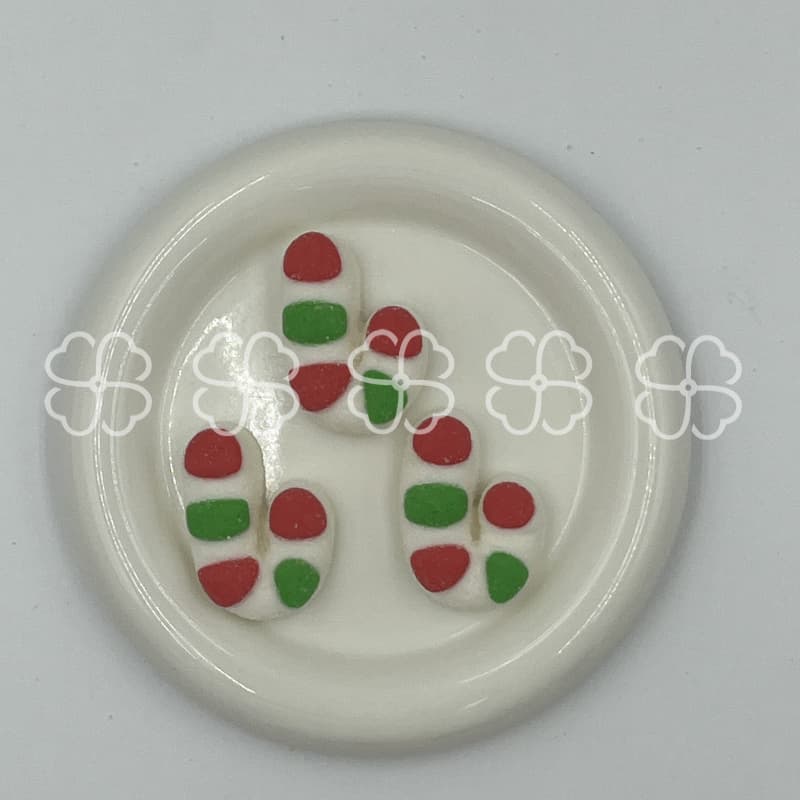
Christmas Candy Canes
Why Christmas Candy Texture Should Be Tested Before Bulk Production
A photograph cannot reveal whether a gummy is too firm, too soft, excessively sticky, insufficiently elastic, or unstable after storage. Sampling is therefore one of the most valuable steps in seasonal procurement.
A Practical Sample Evaluation Process
- Inspect shape, color, and surface appearance.
- Measure representative individual piece weights.
- Evaluate firmness and chewiness.
- Check flavor intensity and flavor release.
- Inspect surface tackiness.
- Review packaging seal integrity.
- Compare samples before and after defined storage.
- Document differences between approved and production samples.
Research on gelatin confectionery also demonstrates that sweeteners can significantly influence gel behavior. A 2022 Food Hydrocolloids study examined gelatin concentrations of 4–6% in systems where sweeteners represented approximately 70–80% of total solids, showing that both gelation and glass-transition behavior influenced rheology and texture. Surface tackiness was strongly associated with gel hardness under the tested conditions.
For buyers, this means that a formula cannot be evaluated by one ingredient in isolation. Sugar and syrup systems, hydrocolloids, acids, processing conditions, moisture, and storage all interact.
Christmas Candy Packaging: What Wholesale Buyers Should Check
Seasonal Packaging Versus Flexible Packaging
Fully seasonal packaging creates strong Christmas identity and can improve visual merchandising. However, it also creates a higher risk of obsolete printed materials if the product does not sell through the season.
Semi-seasonal or flexible packaging can provide greater reuse potential. It may be particularly useful for buyers who want to sell similar products across several months or adapt the same candy product to different holiday campaigns.
| Packaging Strategy | Main Advantage | Main Consideration |
|---|---|---|
| Fully Seasonal | Strong Christmas identity | Higher seasonal inventory risk |
| Semi-Seasonal | Greater flexibility | May require stronger merchandising |
| Generic Retail Packaging | Reusable across periods | Less immediate seasonal communication |
| Gift Packaging | Higher perceived value | Higher packaging and logistics complexity |
Packaging Formats for Christmas Candy
- Resealable pouches
- Individual wrappers
- Plastic or composite jars
- Gift boxes
- Display cartons
- Multipacks
- Seasonal bags
- Mixed assortment boxes
TOPHEART Food’s Christmas Candy range illustrates how seasonal confectionery can extend across different formats, including marshmallows, mint candy, peppermint gummies, and handmade twisted hard candy. The Christmas category also presents different shapes, colors, textures, and flavor concepts rather than relying on one product type.
Packaging Parameters Buyers Should Confirm
| Parameter | Why It Matters |
|---|---|
| Net Weight | Consumer quantity and labeling |
| Piece Count | Perceived value and portion planning |
| Individual Piece Weight | Portion consistency |
| Package Dimensions | Shelf and display planning |
| Carton Quantity | Warehouse and distribution planning |
| Carton Dimensions | Freight and container utilization |
| Seal Performance | Product protection during storage and transportation |
| Barrier Properties | Moisture and oxygen protection where relevant |
How Much Christmas Candy Should a Wholesale Buyer Order?
Demand forecasting is one of the most important parts of seasonal procurement. A buyer needs enough inventory to support the selling period without creating excessive post-season stock.
A Simple Christmas Candy Demand Forecast
A practical starting model is:
Expected order quantity = forecasted sales × selling period × safety factor
For example, assume a retailer operates 100 stores and expects each store to sell 10 packs per week during a five-week Christmas campaign.
100 stores × 10 packs × 5 weeks = 5,000 packs.
If the buyer adds a 15% safety stock:
5,000 × 1.15 = 5,750 packs.
This is a planning example rather than a universal recommendation. Historical sales, promotional activity, online demand, store traffic, replenishment speed, lead time, and warehouse capacity should all influence the final order.
What Should Increase or Decrease the Order Quantity?
| Demand Factor | Potential Procurement Effect |
|---|---|
| Strong historical Christmas sales | Higher forecast confidence |
| New product with no sales history | Greater forecasting uncertainty |
| Major promotional campaign | Potential demand increase |
| Fast supplier replenishment | May reduce required safety stock |
| Long international lead time | May require earlier and larger planning buffer |
| Short remaining shelf life | Requires tighter inventory control |
Christmas Candy Shelf Life and Seasonal Inventory Risk
Shelf life becomes especially important when candy is manufactured internationally. The product may spend weeks or months moving through production, packaging, ocean or air transportation, customs clearance, distribution centers, and retail warehouses before reaching consumers.
What Determines Confectionery Shelf Life?
- Water activity
- Moisture content
- Sugar and soluble-solids concentration
- Fat oxidation where relevant
- Packaging barrier properties
- Oxygen exposure
- Temperature
- Relative humidity
- Light exposure
- Product formulation
Buyers should not assume that every candy category has the same shelf-life behavior. Gummies, marshmallows, hard candy, chocolate, and filled products can respond differently to temperature and humidity.
Questions to Ask a Christmas Candy Supplier
- What is the declared shelf life?
- What storage temperature is recommended?
- What humidity conditions should be avoided?
- What is the minimum remaining shelf life at shipment?
- How is shelf life validated?
- How are production batches identified?
- What packaging is used to protect the product?
For seasonal products, the key question is not simply “How long is the shelf life?” It is “How much commercially usable shelf life remains when the product reaches the retail channel?”
Christmas Candy Manufacturing: From Raw Materials to Finished Product
Understanding the manufacturing process helps buyers identify where quality and delivery risks may occur.
Typical Manufacturing Workflow
- Raw-material receiving and inspection
- Ingredient preparation
- Mixing
- Cooking or processing
- Molding or depositing
- Cooling and setting
- Demolding
- Coating or finishing where applicable
- In-process quality inspection
- Packaging
- Finished-product inspection
- Carton packing
- Shipment preparation
Potential problems can occur at every stage. Texture may vary if processing parameters change. Color can shift if ingredient or temperature conditions vary. Packaging defects can occur during sealing or filling. Incorrect artwork can create labeling problems even when the candy itself is technically acceptable.
Therefore, buyers should evaluate both the confectionery production system and the packaging operation.
How to Evaluate a Christmas Candy Manufacturer or Factory
Production Capacity
Production capacity should be assessed in relation to the buyer’s actual deadline. A supplier may have substantial annual capacity but limited available production slots during the Christmas peak season.
Important questions include:
- How much seasonal production capacity is available?
- How many relevant production lines are operating?
- Can packaging capacity match candy production capacity?
- What is the MOQ?
- What is the normal production lead time?
- What happens if demand increases after the initial order?
TOPHEART Food states that it operates six production factories covering approximately 258,000 square meters, exports to more than 92 countries and regions, and has approximately 20 years of confectionery manufacturing experience. Its stated business structure includes production, research and development, customization, and export services.
Quality Control and Food Safety
A reliable Christmas Candy factory should be able to explain its raw-material inspection, in-process controls, finished-product inspection, traceability, packaging checks, and corrective-action procedures.
Codex identifies HACCP as a science-based and systematic approach for identifying specific hazards and establishing measures for their control. The current Codex General Principles of Food Hygiene also place greater emphasis on Good Hygiene Practices as the foundation of food safety systems.
For buyers, this means that a supplier should be evaluated based on the actual food-safety controls supporting the product, not merely on whether a certificate appears in a sales presentation.
Certifications and Market Documentation
Depending on the destination market and product, buyers may need to review food-safety certifications, HACCP documentation, Halal documentation, ingredient specifications, allergen information, laboratory testing, packaging specifications, and other market-specific records.
One important distinction is that a factory certification does not automatically prove that every product label or formulation satisfies every destination-market requirement. Product-specific compliance still needs to be reviewed.
Christmas Candy Regulations for International Buyers
United States Requirements
For packaged food sold in the United States, buyers should review ingredient declarations, allergen labeling, net quantity, nutrition information where applicable, and other requirements relevant to the product and claim structure.
The FDA currently recognizes nine major food allergens in the United States: milk, egg, fish, Crustacean shellfish, tree nuts, peanuts, wheat, soybeans, and sesame. Sesame became the ninth major allergen under the FASTER Act, with the labeling requirement effective January 1, 2023.
This is especially relevant when buyers develop private-label Christmas products. The ingredient statement and allergen declaration should be reviewed before packaging artwork is finalized.
European Union Requirements
Regulation (EU) No 1169/2011 establishes general principles and responsibilities for food information and labeling in the European Union. For prepacked foods, mandatory information can include the name of the food, ingredients, allergens, net quantity, date marking, storage conditions where applicable, food business operator information, and other required information.
Buyers should also verify nutrition-labeling requirements and any product-specific provisions applicable to the destination country. The exact requirements can depend on the product, claims, packaging, and market.
Why Christmas Packaging Artwork Should Be Approved Early
Packaging can become one of the critical paths in a seasonal project:
Product specification → Sampling → Artwork → Compliance review → Printing → Packaging delivery → Production → Inspection → Shipment.
If artwork approval is delayed, packaging production can be delayed. If packaging production is delayed, candy production may also be delayed. Seasonal buyers should therefore avoid treating artwork as a final administrative step.
Christmas Candy OEM and Private Label
Private label Christmas candy allows retailers and brands to build a seasonal confectionery line around their own brand identity without owning the complete manufacturing infrastructure.
What Can Be Customized?
- Shape
- Flavor
- Color
- Texture
- Piece size
- Assortment
- Filling
- Coating
- Selected formulation characteristics
Custom Christmas candy can be particularly useful when a brand wants a recognizable shape or flavor profile that competitors do not carry. However, custom development usually requires more time than selecting a standard catalog product.
Private Label Packaging Options
- Custom pouches
- Gift boxes
- Jars
- Individual wrappers
- Display cartons
- Multipacks
- Resealable bags
The more customized the package, the more important early planning becomes. Printed packaging, custom molds, sampling, compliance review, and production scheduling should all be incorporated into the project timeline.
Christmas Candy OEM Workflow
Concept → Product specification → Sample development → Sample approval → Artwork → Compliance review → Packaging production → Candy production → Quality inspection → Shipment.
Christmas Candy Wholesale Cost Drivers
Professional procurement should focus on total landed cost rather than factory unit price alone.
Product-Level Cost Drivers
- Ingredient composition
- Product weight
- Formula complexity
- Shape complexity
- Number of flavors
- Fillings and coatings
- Custom mold requirements
Packaging-Level Cost Drivers
- Packaging material
- Printing method
- Individual wrapping
- Gift box structure
- Display cartons
- Artwork requirements
Logistics-Level Cost Drivers
- Carton dimensions
- Gross weight
- Container utilization
- Shipping method
- Destination
- Seasonal logistics congestion
- Warehouse handling
A practical total-landed-cost model is:
Product Cost + Packaging + Freight + Customs-Related Costs + Warehousing + Relabeling Where Required + Inventory Risk.
This approach helps buyers avoid the common mistake of selecting a product because its factory price appears low while overlooking expensive packaging, inefficient cartons, urgent freight, or post-season inventory.
Common Christmas Candy Wholesale Buying Mistakes
Ordering Too Late
Christmas is a highly synchronized season. Multiple buyers may request similar products and packaging during the same period. Late ordering can reduce production-slot availability and packaging choices.
Better decision: work backward from the retail launch date and include sampling, packaging, manufacturing, inspection, transportation, customs, and warehouse buffers.
Choosing Only by Unit Price
Unit price is important, but it does not represent total procurement cost.
Better decision: compare total landed cost and operational risk.
Ignoring Packaging Lead Time
Custom packaging can require artwork approval, printing, inspection, and delivery before final production.
Better decision: treat packaging as part of the critical production schedule.
Ordering Too Many SKUs
Too many flavors and shapes can fragment inventory and increase MOQ pressure.
Better decision: establish a focused core assortment and add secondary SKUs only when forecast data supports them.
Not Testing Samples
Product images cannot reveal actual texture, flavor intensity, seal performance, or post-storage behavior.
Better decision: approve a physical sample and document its specifications.
Assuming One Label Works in Every Market
United States and European Union food-information requirements are not identical. A label designed for one market should not automatically be assumed to satisfy another.
Better decision: review destination-market requirements before final artwork approval.
Real-World Christmas Candy Buyer Scenarios
Scenario 1: A Supermarket Importer With 100 Stores
The buyer expects to sell 10 packs per store per week during a five-week campaign. Baseline demand is 5,000 packs. With a 15% planning buffer, the initial target becomes 5,750 packs.
The buyer should then compare packaging formats, carton quantities, warehouse capacity, lead time, and historical Christmas performance before finalizing the purchase.
Scenario 2: A European Private-Label Brand
The brand wants Christmas-shaped gummies with customized packaging. Because the project involves both product development and market-specific labeling, the buyer should begin with the product specification and sample rather than immediately ordering printed packaging.
The sequence should be formulation → sample → approval → regulatory review → artwork → packaging production → mass production.
Scenario 3: A U.S. Party Supplier
The buyer needs individually wrapped candy for multiple Christmas events. In this case, piece count, wrapper integrity, flavor consistency, storage conditions, and delivery reliability may be more important than premium gift-box presentation.
Scenario 4: An E-Commerce Christmas Brand
The brand wants visually distinctive candy for online gift sales. A focused assortment of two or three strong products may be easier to forecast and photograph than ten low-volume SKUs. Gift-ready packaging can then become part of the product differentiation strategy.
Christmas Candy Wholesale Buyer Checklist
Product Checklist
- Product category confirmed
- Flavor approved
- Shape approved
- Texture evaluated
- Ingredients reviewed
- Allergen information confirmed
- Shelf life confirmed
Packaging Checklist
- Net weight confirmed
- Piece count confirmed
- Packaging format approved
- Artwork reviewed
- Barcode confirmed
- Destination-market label requirements reviewed
- Master-carton configuration confirmed
Manufacturer Checklist
- Production capacity evaluated
- MOQ confirmed
- Sample process established
- Quality-control process reviewed
- Food-safety documentation reviewed
- Batch traceability confirmed
- Production lead time confirmed
Logistics Checklist
- Production schedule confirmed
- Packaging schedule confirmed
- Shipping method selected
- Delivery deadline documented
- Carton dimensions received
- Storage requirements confirmed
- Safety stock calculated
Christmas Candy Wholesale Decision Matrix
| Buyer Type | Main Priority | Recommended Direction |
|---|---|---|
| Supermarket | Shelf visibility | Multipacks, gift packs, seasonal displays |
| Convenience Store | Impulse purchasing | Small packs, individually wrapped candy |
| Party Supplier | Piece count | Bulk or assorted formats |
| E-Commerce Brand | Visual differentiation | Giftable and distinctive formats |
| Premium Retailer | Presentation | Custom packaging and premium formats |
| Private-Label Brand | Brand identity | OEM and custom packaging |
| Distributor | Scalability | Standardized high-volume SKUs |
| Plant-Based Brand | Formulation positioning | Suitable plant-based formulation options |
How to Select the Right Christmas Candy Wholesale Supplier
Eight Questions to Ask Before Ordering
- What is your production capacity during the Christmas peak season?
- What is the MOQ for standard Christmas Candy products?
- What is the MOQ for private-label products?
- What is the expected production lead time?
- Can physical samples be approved before mass production?
- What food-safety and quality-control systems are used?
- Can packaging and labeling be customized for the destination market?
- How are production and shipment deadlines controlled during the seasonal peak?
A professional Christmas Candy wholesale supplier should be able to provide product specifications, ingredient information, allergen information, packaging details, MOQ, sampling procedures, production schedules, quality documentation, and shipping information.
TOPHEART Food describes its seasonal candy business as offering customized solutions and a full-category confectionery service, while its Christmas Candy category includes multiple candy types and formats.
For buyers who need to discuss product specifications, customized packaging, samples, quantities, or seasonal production planning, direct supplier communication is an important part of reducing uncertainty before a purchase order is issued.
Why Factory Capability Matters for Seasonal Christmas Candy
A seasonal candy project requires coordination between formulation, production, packaging, inspection, warehousing, and transportation. A supplier may produce an excellent candy but still be unsuitable if its production schedule cannot meet the buyer’s launch date.
Factory capability should therefore be evaluated across the complete workflow:
- Raw-material sourcing
- Product development
- Production lines
- Packaging capability
- Quality inspection
- Batch traceability
- Export documentation
- Logistics coordination
TOPHEART Food states that its operations include an import and export service company, a logistics company, and six production factories. It also states that its products are exported to more than 92 countries and regions and that the business has approximately 20 years of confectionery manufacturing experience.
These details are relevant to B2B buyers because seasonal purchasing requires more than production alone. The ability to coordinate customization, manufacturing, export, and logistics can influence the overall reliability of the supply chain.
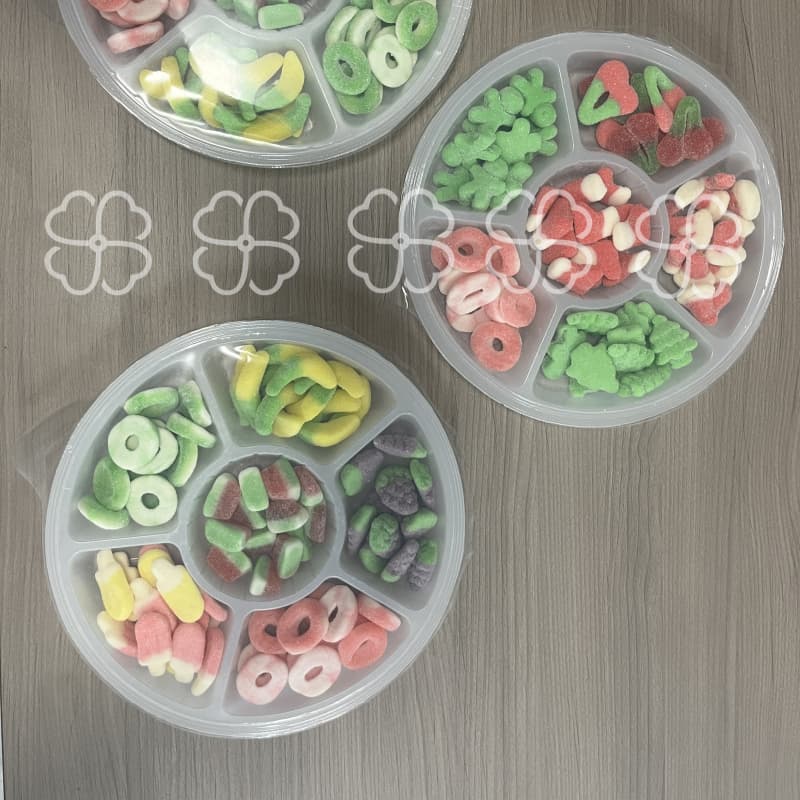
Christmas Series Soft Candy
Final Buying Strategy: Build Christmas Candy Around Market Fit
The strongest Christmas Candy purchasing strategy is not necessarily the one with the lowest factory price or the largest product catalog. It is the strategy that matches the product with the target consumer, retail channel, packaging requirements, regulatory environment, forecast volume, and delivery schedule.
Start by defining where the product will be sold. Then determine whether the buyer needs individual pieces, retail-ready bags, gift boxes, bulk formats, or customized private-label packaging. After that, confirm the formulation, ingredients, texture, shelf life, packaging specifications, and market compliance requirements.
Next, calculate expected demand and establish a reasonable safety stock. Buyers should then qualify the manufacturer based on production capacity, quality systems, sample approval, MOQ, customization capability, and seasonal delivery performance.
This sequence creates a more reliable procurement decision because each step supports the next. Product selection determines packaging. Packaging affects logistics. Forecasting determines quantity. Quantity affects production scheduling. Destination markets influence labeling. Factory capability determines whether the entire project can be delivered on time.
For B2B buyers, this integrated approach is more valuable than simply comparing product photographs or unit prices. Christmas Candy is a seasonal supply-chain project, and the strongest suppliers are those capable of supporting the complete journey from product concept to finished shipment.
Frequently Asked Questions About Christmas Candy Wholesale
1. What is the best Christmas candy for wholesale?
The best Christmas candy for wholesale depends on the target market, sales channel, consumer profile, packaging requirements, and expected order volume. Supermarkets may prefer multipacks, gift boxes, and visually distinctive seasonal products, while convenience stores may benefit from smaller packages and individually wrapped candy. Party suppliers can prioritize bulk formats and piece count, while e-commerce brands may focus on giftable packaging and distinctive shapes. Buyers should also consider ingredients, texture, shelf life, labeling, transportation, and production lead time. The strongest product is therefore the one that provides the best overall fit with the intended commercial application rather than one universal candy format.
2. How do I find a reliable Christmas candy manufacturer?
A reliable Christmas candy manufacturer should be evaluated through production capacity, seasonal availability, quality-control systems, food-safety documentation, product consistency, sampling procedures, MOQ, packaging capability, customization options, lead time, and export experience. Buyers should request clear product specifications, ingredient and allergen information, packaging details, sample procedures, and production schedules before committing to a large seasonal order. It is also important to determine whether the supplier can support peak Christmas production rather than only normal annual capacity. A professional factory should be able to explain how it controls raw materials, production parameters, packaging, batch traceability, quality inspection, and shipment timing.
3. How early should I order Christmas candy wholesale?
There is no universal ordering deadline because lead time depends on the candy type, order quantity, packaging format, customization, destination market, transportation method, and approval process. Standard products generally require less development time than customized shapes and private-label packaging. Buyers should work backward from the required retail launch date and allow time for sampling, artwork approval, packaging production, candy manufacturing, quality inspection, transportation, customs clearance, and warehouse distribution. Seasonal buyers should also consider a reasonable buffer because factory production slots, packaging capacity, and transportation services can become more constrained as Christmas approaches.
4. What should I check before importing Christmas candy?
Before importing Christmas candy, buyers should verify the ingredient declaration, allergen information, net quantity, nutrition information where required, shelf life, storage conditions, packaging specifications, batch information, and destination-market labeling requirements. United States buyers should pay particular attention to the nine major food allergens recognized by the FDA, including sesame. European Union buyers should review the mandatory food-information requirements under Regulation (EU) No 1169/2011, including ingredients, allergens, net quantity, date marking, operator information, and applicable nutrition information. Buyers should also verify product-specific claims and documentation before final packaging artwork is approved.
5. Can I customize Christmas candy with my own brand and packaging?
Yes, private-label and OEM Christmas candy programs can often include customization of shapes, flavors, colors, textures, piece sizes, assortments, fillings, coatings, packaging formats, and printed artwork, depending on the manufacturer’s capabilities and minimum order requirements. Customized projects should begin earlier than standard catalog purchases because product development, sampling, custom molds, packaging production, artwork approval, compliance review, manufacturing, and inspection all require time. Buyers should confirm the exact product specification and destination-market requirements before mass production. A written specification covering ingredients, dimensions, weight, packaging, artwork, quantity, and delivery expectations can significantly reduce the risk of misunderstandings.
Feature Product
-
 Gummy Candy
What Is Gummy Candy? Gummy Candy is one of the ...
-
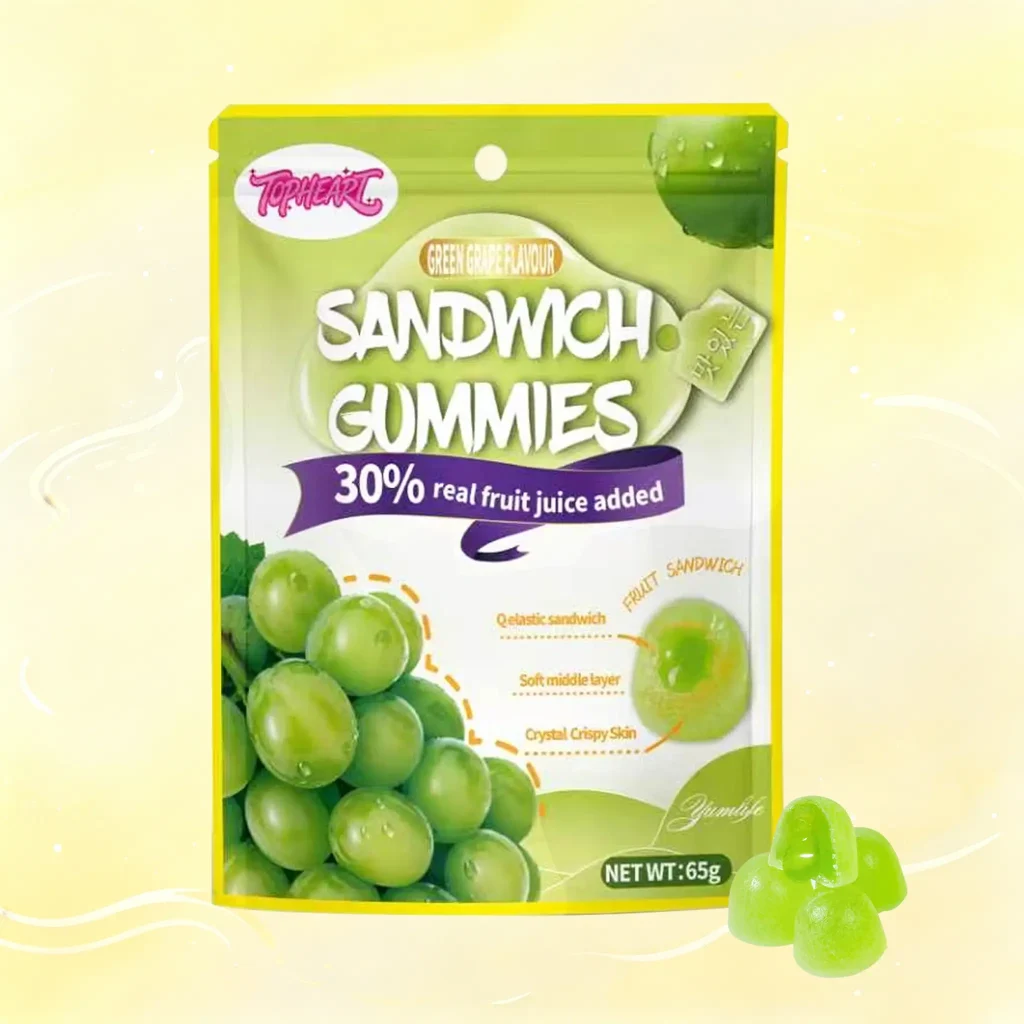 Crispy Gummy Candy
What Is Crispy Gummy Candy Crispy Gummy Candy i...
-
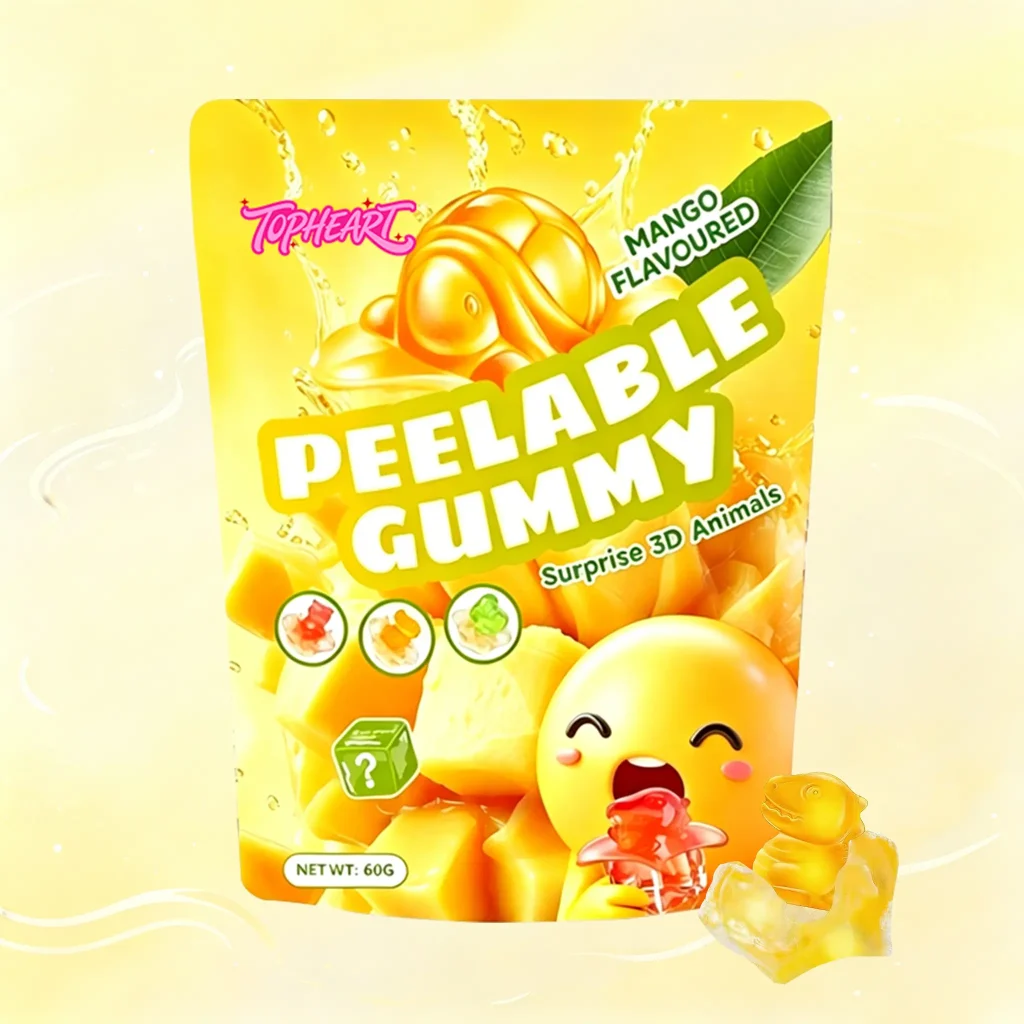 Peelable Gummy Candy
What Is Peelable Gummy Candy? Peelable Gummy Ca...