
This guide explores how these two chocolate formats differ in composition, manufacturing, sensory characteristics, quality control, and commercial applications. It also explains what buyers should consider when selecting products for retail distribution, wholesale purchasing, and private-label development.
chocolate filled candy-10
1. What Is Chocolate Filled Candy and What Is Solid Chocolate?
The most fundamental difference between these products is their internal structure. Solid chocolate generally consists of a continuous chocolate formulation throughout the piece. Filled candy, by comparison, contains a center or filling that is surrounded by chocolate or incorporated into a multi-layer confectionery structure.
Understanding Chocolate Filled Candy
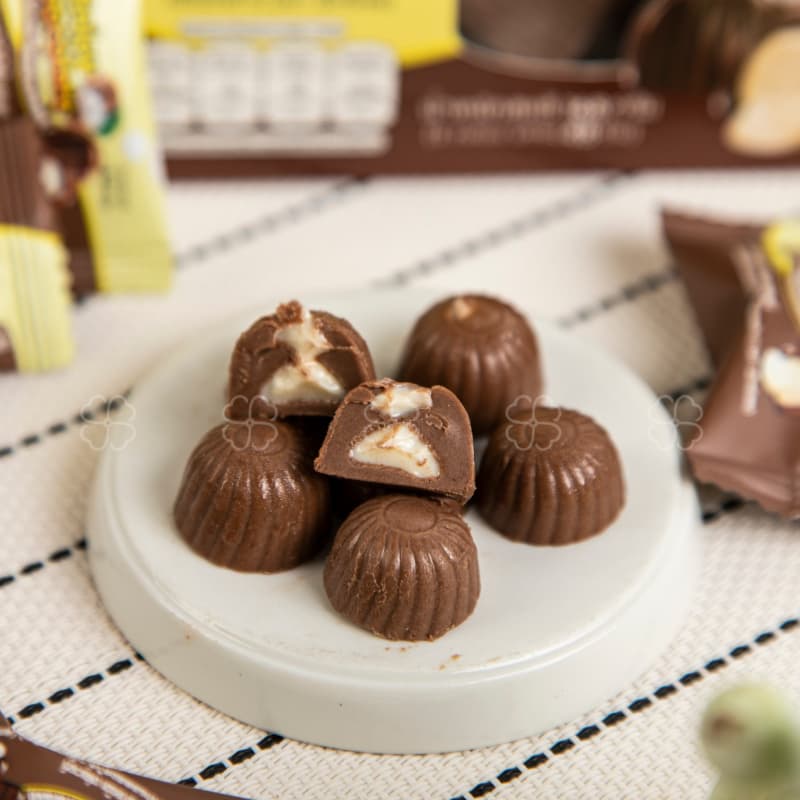
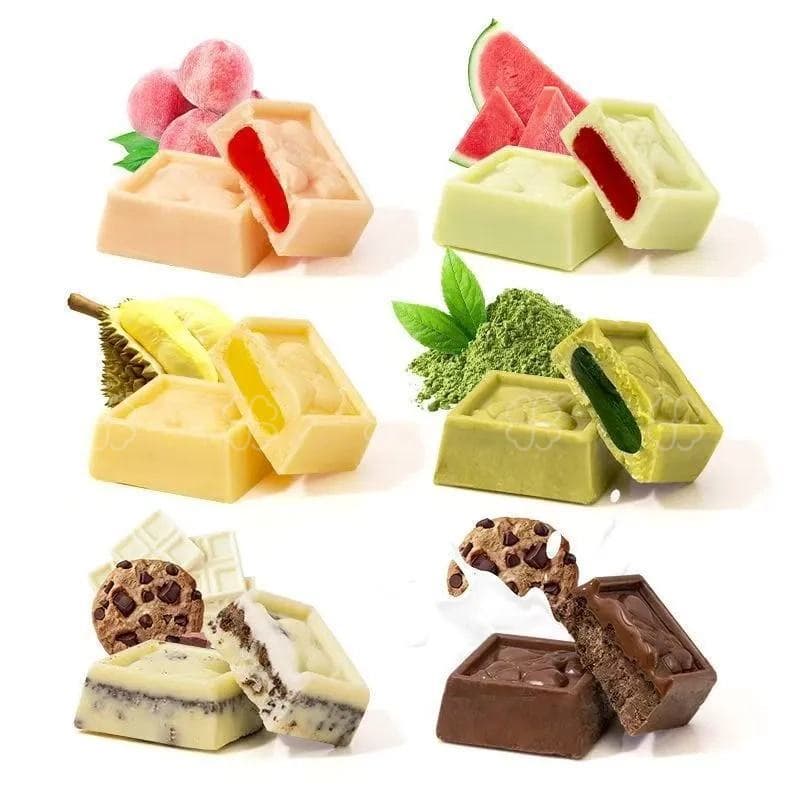
Chocolate filled candy combines an outer chocolate layer with an inner component that introduces another flavor, texture, or sensory characteristic. The filling may be creamy, soft, chewy, crunchy, or liquid-like, depending on the formulation and manufacturing method.
Common filling concepts include:
- Caramel filling: Adds a sweet, buttery flavor and a soft or chewy texture.
- Hazelnut and nut fillings: Provide roasted notes, richness, and a creamy or slightly crunchy mouthfeel.
- Milk cream filling: Creates a smooth, mild, and familiar flavor profile.
- Fruit filling: Introduces fruity sweetness and, depending on the formulation, a contrasting flavor.
- Wafer or crisp filling: Adds a crunchy element inside the chocolate structure.
- Cookie or biscuit filling: Combines chocolate with baked or crumb-based ingredients.
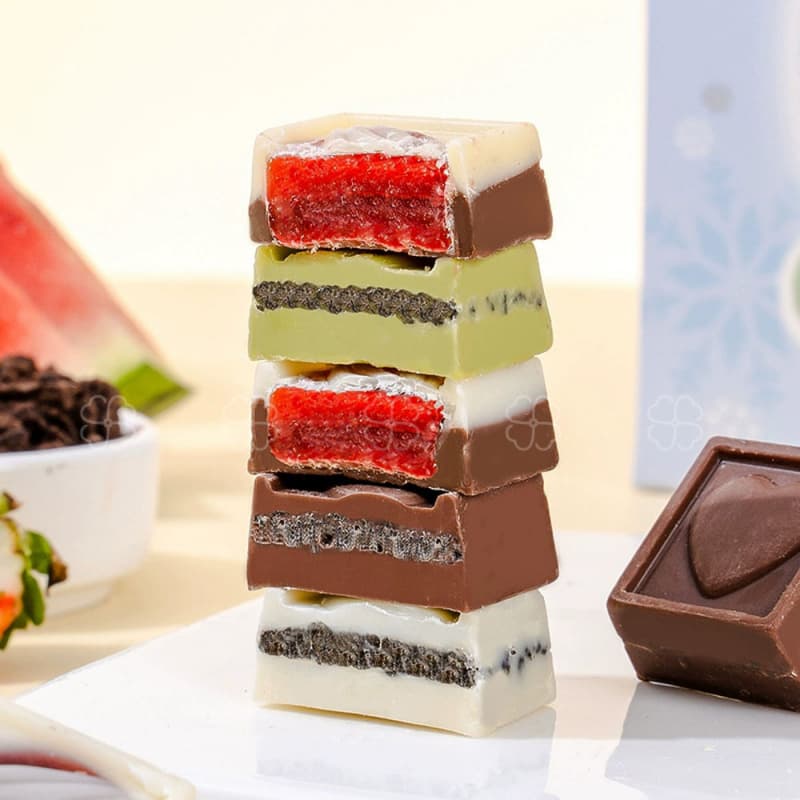
The outer chocolate layer and the center work together to create a combined sensory experience. Consumers may first notice the chocolate coating, then discover the filling as they bite through the product. This layered experience is one reason filled confectionery can support a wide range of flavor concepts.
Understanding Solid Chocolate
Solid chocolate is made from a chocolate formulation distributed throughout the product without a separate central filling. It may be molded into bars, squares, buttons, coins, chips, or decorative shapes. Its flavor and texture depend on the ingredients, cocoa content, milk solids, sugar, fat composition, and processing conditions.
Solid chocolate can be produced in different varieties, including:
- Milk chocolate with a creamy and sweet profile.
- Dark chocolate with varying levels of cocoa solids and cocoa intensity.
- White chocolate made with cocoa butter, milk ingredients, and sugar.
- Compound chocolate made with vegetable fats instead of, or in place of part of, cocoa butter, depending on the formulation.
For buyers evaluating a supplier’s experience and product development background, reviewing its chocolate manufacturing company profile can provide useful context about its confectionery business and product focus.
The Main Structural Difference
The distinction can be summarized simply: solid chocolate provides a continuous chocolate structure, whereas filled products combine chocolate with an additional center or layer. This structural difference affects ingredient selection, manufacturing steps, texture, storage considerations, and the way consumers experience each product.
2. Chocolate Filled Candy vs Solid Chocolate A Comparison of Ingredients and Structure
Although both product categories may share cocoa ingredients, their formulations are not necessarily the same. Filled products require the chocolate component and filling component to work together. Solid chocolate is generally formulated around the characteristics of the chocolate itself.
Ingredient Composition
Solid chocolate commonly contains cocoa mass or cocoa solids, cocoa butter or other permitted fats, sugar, and, in milk chocolate, milk ingredients. Emulsifiers and flavoring ingredients may also be included according to the recipe and applicable regulations.
Filled products may contain these chocolate ingredients plus a separate filling formulation. For example, a hazelnut-filled product may combine a chocolate shell with a nut-based center containing sugar, nut ingredients, fats, and other formulation components.
This means that the ingredient list of a filled product can be more complex. Buyers should review the composition of both the outer chocolate and the center, particularly when evaluating allergens, nutritional information, ingredient declarations, and destination-market labeling requirements.
Product Structure and Layer Design
Solid chocolate typically has a relatively uniform internal structure. A filled product may contain several distinct layers, such as an outer chocolate shell, an intermediate barrier layer, and a center filling.
The thickness of the shell and the proportion of filling can influence the eating experience. A thicker shell may create a more noticeable chocolate bite, while a larger filling proportion may emphasize the center flavor. These proportions should be selected according to the intended product concept rather than a universal formula.
Comparison of Key Product Characteristics
| Comparison Factor | Chocolate Filled Candy | Solid Chocolate |
|---|---|---|
| Internal Structure | Chocolate shell with a separate filling or layered center | Continuous chocolate structure |
| Ingredient Composition | Chocolate ingredients plus filling ingredients | Primarily chocolate formulation ingredients |
| Flavor Experience | Can combine chocolate with contrasting center flavors | Focuses on the flavor of the chocolate formulation |
| Texture | May combine smooth, creamy, chewy, or crunchy textures | Usually more uniform throughout the piece |
| Manufacturing | May require filling preparation, shell formation, and sealing | Generally involves chocolate preparation, molding, and cooling |
| Product Development | Offers multiple filling and layer combinations | Offers variations in chocolate type, cocoa level, and shape |
For businesses comparing different confectionery categories, these structural differences help determine which format better matches their product positioning and target customers.
3. How Texture and Flavor Influence the Consumer Experience
Consumers do not evaluate chocolate only by its ingredients. They also respond to aroma, appearance, texture, sweetness, melting behavior, and the sequence in which flavors are experienced. The structure of a chocolate product influences how these sensory elements interact.
The Layered Experience of Filled Chocolate
One distinctive feature of filled confectionery is the contrast between the chocolate exterior and the center. The shell may provide a firm initial bite, followed by a softer filling that releases a different flavor or texture.
For example, a chocolate piece with a caramel center may combine a firm outer layer with a chewy interior. A hazelnut-filled product may offer a smooth chocolate shell and a creamy nut-based center. A crisp-filled variety may create a more noticeable contrast between the chocolate and crunchy inclusions.
These combinations allow manufacturers to develop products for different sensory preferences without changing the basic concept of chocolate.
The Consistent Experience of Solid Chocolate
Solid chocolate provides a more continuous sensory profile. Its flavor develops as the piece melts in the mouth, and consumers experience the same general formulation throughout the product.
This consistency can be important for people who prefer a straightforward chocolate taste. It also makes solid chocolate suitable for applications such as baking, chocolate chips, decorative pieces, and products where a uniform chocolate structure is required.
Sweetness and Flavor Balance
In filled products, sweetness comes from both the chocolate component and the filling. If the center is highly sweet, the outer chocolate may need to provide a balancing cocoa profile. A dark chocolate shell, for example, can be paired with a sweet caramel or cream center to create a contrast.
Solid chocolate formulation focuses more directly on balancing cocoa solids, sugar, milk ingredients, and fat composition. The ideal profile depends on the target consumer and the intended use.
Neither approach is inherently superior. The most suitable flavor design depends on whether consumers are looking for a single chocolate profile or a combination of complementary flavors.
4. The Science Behind Chocolate Quality and Filling Stability
Food science plays an important role in both filled and solid chocolate production. Cocoa butter crystallization, temperature control, moisture management, ingredient compatibility, and packaging conditions can influence the final product’s appearance, texture, and stability.
Chocolate Tempering and Cocoa Butter Crystals
Cocoa butter can crystallize into different polymorphic forms. The crystal structure affects chocolate hardness, gloss, snap, and melting behavior. Proper tempering encourages the formation of a desirable stable crystal structure, helping the chocolate develop a consistent finish.
Incorrect tempering can contribute to surface dullness, poor contraction, texture defects, and fat bloom. Fat bloom appears as a pale or grayish surface deposit caused by changes in fat distribution and crystallization. It can affect product appearance and consumer acceptance.
For filled products, tempering is particularly relevant to the outer shell because the shell must provide sufficient structure to protect the filling while maintaining a pleasant bite.
General Chocolate Tempering Reference Temperatures
The following values are commonly used approximate reference ranges for conventional chocolate tempering. Actual processing temperatures depend on the formulation, cocoa butter composition, equipment, and manufacturing conditions. They are not fixed specifications for every chocolate product or manufacturer.
| Chocolate Type | Melting Range | Cooling Range | Working Range |
|---|---|---|---|
| Dark Chocolate | 45–50°C | 27–28°C | 31–32°C |
| Milk Chocolate | 40–45°C | 26–27°C | 29–30°C |
| White Chocolate | 40–45°C | 25–26°C | 28–29°C |
These ranges provide a general understanding of chocolate processing. Manufacturers should establish working parameters through formulation-specific trials and appropriate process controls.
Water Activity and Filling Stability
Water activity is an important parameter when evaluating filled confectionery. It describes the availability of water in a food product rather than simply measuring its total moisture content.
Different fillings can have different water activity characteristics. A low-moisture nut-based center may behave differently from a fruit-based or cream-style filling. If moisture migrates between the filling and chocolate shell, it can affect texture, structure, and product stability.
For example, moisture migration may soften a crisp component or change the texture of a filling over time. The formulation, water activity of individual layers, packaging barrier properties, and storage conditions should therefore be evaluated together.
Quality Control Parameters for Different Chocolate Structures
| Quality Parameter | Evaluation Method | Relevance to Filled Chocolate | Relevance to Solid Chocolate |
|---|---|---|---|
| Water Activity | Water activity meter | Helps assess filling stability and moisture migration risks | Supports product stability evaluation |
| Moisture Content | Validated moisture analysis | Useful for evaluating filling composition | Supports formulation consistency |
| Texture | Texture analyzer and sensory assessment | Evaluates shell strength and filling texture | Evaluates hardness, snap, and mouthfeel |
| Color and Surface | Visual inspection or colorimeter | Checks shell appearance and surface defects | Checks gloss, color consistency, and bloom |
| Shell or Piece Dimensions | Dimensional measurement | Helps maintain filling coverage and piece consistency | Supports consistent product size and weight |
The table lists general evaluation parameters rather than measured results or universal acceptance limits. Specific testing requirements should be determined according to the product formulation, food safety plan, intended shelf life, and applicable regulations.
Chocolate Filled Candy-2
5. Manufacturing Differences Between Filled Candy and Solid Chocolate
Manufacturing methods vary according to product design, ingredients, equipment, and production scale. Solid chocolate generally follows a more direct process, while filled products may require additional steps to prepare, deposit, enclose, and stabilize the center.
How Solid Chocolate Is Manufactured
Conventional chocolate production commonly involves several stages:
- Ingredient preparation: Cocoa ingredients, sugar, milk ingredients, and other formulation components are selected and prepared.
- Mixing and refining: Ingredients are combined and processed to develop the required particle size and texture.
- Conching: The chocolate mass is processed to improve flavor development, moisture removal, and flow characteristics.
- Tempering: The chocolate is heated and cooled under controlled conditions to encourage desirable cocoa butter crystallization.
- Molding: Tempered chocolate is deposited into molds or formed into the intended product shape.
- Cooling and demolding: The chocolate is stabilized and removed from molds before inspection and packaging.
The exact process depends on the type of chocolate and the intended application. Some products may use additional finishing or coating operations.
How Chocolate Filled Candy Is Manufactured
Filled products require the chocolate and filling components to be coordinated. Depending on the design, the manufacturing process may include:
- Filling preparation: The center formulation is prepared to achieve the intended viscosity, texture, flavor, and stability.
- Chocolate shell formation: A chocolate layer is deposited or formed to create an outer structure.
- Filling deposition: The center is added while maintaining appropriate space for sealing.
- Shell closure: Additional chocolate may be applied to enclose the filling.
- Cooling and stabilization: The product is cooled under controlled conditions to establish its structure.
- Inspection and packaging: Products are checked for appearance, filling distribution, sealing, and other quality characteristics.
Not all filled candies use the same method. Some are produced through molding, while others may use enrobing, depositing, or other confectionery techniques. The suitable method depends on the filling’s physical properties and the final product design.
Why Filling Compatibility Matters
The filling must be compatible with the chocolate shell in terms of texture, fat composition, moisture, and processing conditions. A filling that is too fluid may create sealing or leakage challenges. A filling that is too firm may not deliver the intended eating experience.
Manufacturers must also consider ingredient interactions during storage. Fat migration, moisture migration, and temperature fluctuations can influence the interface between the shell and center. Product testing should therefore consider the complete filled structure rather than evaluating the chocolate coating alone.
For buyers exploring different chocolate product varieties, understanding the manufacturing process can help clarify why different formats may require different specifications, processing controls, and packaging solutions.
6. Which Product Is Better for Different Consumer Needs and Market Segments?
The choice between filled and solid chocolate should be based on consumer needs and commercial positioning. Different markets may respond to different flavor profiles, product sizes, packaging styles, and price points. It is more useful to match the format to the intended use than to assume one category is always more attractive.
When Chocolate Filled Candy May Be a Suitable Choice
Filled products may be particularly relevant when a brand wants to offer multiple flavors or a more layered eating experience. They can be suitable for:
- Assorted confectionery selections: Different centers can create variety within one product range.
- Premium-style treats: Layered flavors and carefully designed fillings can support a more elaborate product concept.
- Gift assortments: Multiple fillings can make mixed chocolate boxes more varied.
- Novelty products: Unexpected centers can create a discovery element for consumers.
- Flavor-focused retail ranges: Caramel, nut, cream, fruit, and crisp centers allow different product variations.
Filled candy may also help brands differentiate their assortment when consumers are interested in trying new combinations. The actual market opportunity depends on local taste preferences, product quality, pricing, and retail positioning.
When Solid Chocolate May Be a Suitable Choice
Solid chocolate may be more appropriate when the intended product emphasizes a consistent chocolate profile or a straightforward format. Common applications include:
- Everyday chocolate bars and snack portions.
- Chocolate chips and baking ingredients.
- Chocolate decorations and molded shapes.
- Products designed around cocoa percentage or chocolate type.
- Simple chocolate assortments with consistent flavor profiles.
For some consumers, the appeal of solid chocolate is precisely its simplicity. It allows the chocolate formulation itself to remain the central feature.
Retail Positioning and Consumer Expectations
Retailers should consider how each product fits into their existing assortment. Filled products may create opportunities for flavor variety, while solid chocolate may serve consumers looking for familiar chocolate formats.
Product presentation also influences purchasing decisions. Filled candy packaging may highlight the center through product photography or cross-section images. Solid chocolate packaging may focus on cocoa type, flavor notes, shape, or portion size.
Retailers can evaluate both formats through sales testing, customer feedback, product sampling, and category performance rather than relying only on general assumptions about consumer preferences.
7. Wholesale Purchasing and Private Label Considerations
For importers, distributors, wholesalers, and private-label brands, choosing between filled and solid chocolate involves more than product taste. Commercial decisions should account for formulation, packaging, product specifications, transportation, labeling, and market requirements.
Product Specifications and Sample Evaluation
Before purchasing, buyers should request clear product information. For filled products, useful details include the type of chocolate shell, filling ingredients, filling proportion where available, product dimensions, piece weight, allergen information, and storage instructions.
For solid chocolate, buyers may focus on chocolate type, cocoa content where applicable, ingredient composition, product dimensions, weight, texture, and intended application.
Samples should be evaluated under consistent conditions. Buyers can compare appearance, flavor, aroma, texture, packaging, and handling characteristics. For filled products, the shell and center should be examined separately as well as together.
Packaging and Distribution Requirements
Packaging plays an important role in protecting chocolate products during storage and transportation. Both filled and solid chocolate can be sensitive to heat, moisture, odors, and unsuitable handling conditions.
Potential packaging formats include:
- Individual flow-wrap packaging for portioned products.
- Retail pouches for convenience and everyday distribution.
- Resealable bags for multi-serving formats.
- Boxes and trays for assorted chocolate products.
- Bulk packaging for wholesale and repacking operations.
Filled products may require additional attention to center stability and shell protection. The filling formulation and packaging barrier properties should be considered together when establishing storage and distribution conditions.
OEM and Private Label Development
Private-label buyers may explore different chocolate types, filling flavors, product sizes, shapes, and packaging concepts. A brand may choose to develop a familiar caramel-filled product, a nut-based center, or a multi-flavor assortment according to its target market.
Solid chocolate customization may focus on cocoa profiles, shapes, piece sizes, and packaging design. Filled products offer additional possibilities through the selection and development of the center.
When evaluating wholesale chocolate filled candy, buyers should confirm available product options, sample arrangements, customization capabilities, order requirements, lead times, packaging specifications, and export documentation directly with the manufacturer.
Regulatory and Labeling Considerations
Chocolate products sold internationally must meet the applicable food regulations in their destination markets. Requirements may cover ingredient declarations, allergen labeling, nutrition information, net quantity, date marking, packaging materials, and other product-specific information.
Filled products may contain additional allergens or ingredients from the center, such as nuts, milk, soy, or cereals. These ingredients should be accurately reflected in product documentation and labeling where required.
Importers should verify the relevant requirements before confirming commercial production. A product label suitable for one country may not automatically satisfy the rules of another market.
8. How to Select the Right Chocolate Format for Your Business
Choosing a suitable chocolate format begins with understanding the intended customer and sales channel. Rather than selecting a product only because it is popular in another market, buyers should evaluate how it fits their own product portfolio.
Define the Target Consumer
Consider whether the target customer prefers familiar chocolate flavors, layered textures, multiple filling options, or simple snack formats. Consumer age groups, purchasing occasions, local tastes, and price expectations may all influence the decision.
Match the Product to the Sales Channel
Different sales channels may require different formats. Supermarkets may prioritize clear product positioning and convenient packaging. Specialty retailers may focus on flavor variety and distinctive presentation. Foodservice and bakery businesses may need chocolate ingredients suited to specific applications.
Compare Total Product Requirements
Product selection should consider the full commercial picture, including formulation, packaging, storage, shipping, labeling, order quantities, and expected retail positioning. A product with a suitable flavor profile may still need packaging or formulation adjustments before it can be distributed effectively.
Discuss Customization with the Supplier
Buyers should communicate their target product concept clearly. Useful information includes preferred chocolate type, filling flavor, texture, piece size, package format, target market, and labeling language.
For sample requests, product inquiries, or private-label discussions, businesses can contact the chocolate supplier to clarify available options and commercial requirements before moving forward with a project.
9. Choosing the Right Chocolate Experience for the Right Market
The difference between chocolate filled candy and solid chocolate is not simply a matter of which product tastes better. It is a difference in structure, formulation, sensory experience, and product application.
Filled chocolate combines an outer chocolate component with a center that can introduce additional flavors and textures. This format is suitable for brands looking to develop layered confectionery experiences, assorted flavors, and distinctive product concepts. Solid chocolate offers a more uniform structure and allows the chocolate formulation itself to remain the main focus.
For consumers, the best choice depends on personal taste and the occasion. For retailers and distributors, it depends on customer demand, category positioning, packaging, and product range strategy. For manufacturers and private-label brands, both formats provide opportunities for formulation development and market differentiation.
By evaluating product structure, ingredient compatibility, quality parameters, manufacturing requirements, and distribution conditions, businesses can make more informed decisions. The goal is not to choose one format over the other, but to select the chocolate experience that best meets the needs of the intended market.
Chocolate Filled Candy-2
Frequently Asked Questions About Chocolate Filled Candy and Solid Chocolate
1. What is the main difference between chocolate filled candy and solid chocolate?
The main difference is the internal structure. Chocolate filled candy contains a chocolate exterior with a separate center or filling, such as caramel, cream, hazelnut, fruit, or crisp ingredients. Solid chocolate has a continuous chocolate structure throughout the piece. Filled products can offer contrasting flavors and textures, while solid chocolate provides a more uniform chocolate experience. The right format depends on consumer preferences, product applications, and market positioning.
2. Is chocolate filled candy made with real chocolate?
Chocolate filled candy can be made with real chocolate, but the exact composition depends on the product formulation. Some products use a cocoa-butter-based chocolate shell, while others may use compound coatings or different confectionery formulations. The filling may contain separate ingredients such as nuts, caramel, milk components, or fruit preparations. Buyers should review the ingredient declaration and product specification to confirm the chocolate type and composition rather than relying on the product name alone.
3. Which has more flavor options chocolate filled candy or solid chocolate?
Both formats can offer a wide range of flavors, but they provide different approaches to product development. Solid chocolate can vary through cocoa content, milk ingredients, flavor additions, and inclusions. Chocolate filled candy can combine an outer chocolate layer with different centers, including caramel, cream, nuts, fruit, and crunchy ingredients. This layered structure creates additional opportunities for flavor contrasts and assorted product ranges. The best option depends on the target audience and desired eating experience.
4. Does chocolate filled candy require different storage conditions from solid chocolate?
Both products should generally be protected from excessive heat, moisture, strong odors, and sudden temperature changes. However, filled chocolate may require additional evaluation because the center can have different moisture, fat, and texture characteristics from the outer shell. Moisture migration or fat migration between components may affect product quality during storage. The correct storage conditions and shelf life must be established according to the specific formulation, packaging system, and appropriate product testing.
5. What should wholesalers check when buying chocolate filled candy in bulk?
Wholesalers should review the chocolate type, filling ingredients, product dimensions, piece weight, flavor profile, allergen information, packaging format, storage instructions, and shelf-life documentation. They should also request samples to evaluate the shell, center, taste, and texture. For international purchasing, buyers should confirm labeling and food regulatory requirements in the destination market. If private-label customization is required, the product specifications and packaging artwork should be approved before commercial production.