
This guide explores the main types of boxed mixed-flavor gummy candy, popular flavor combinations, packaging options, important food science considerations, and practical purchasing factors. It also explains how buyers can evaluate suppliers and develop customized gummy candy assortments for different markets.
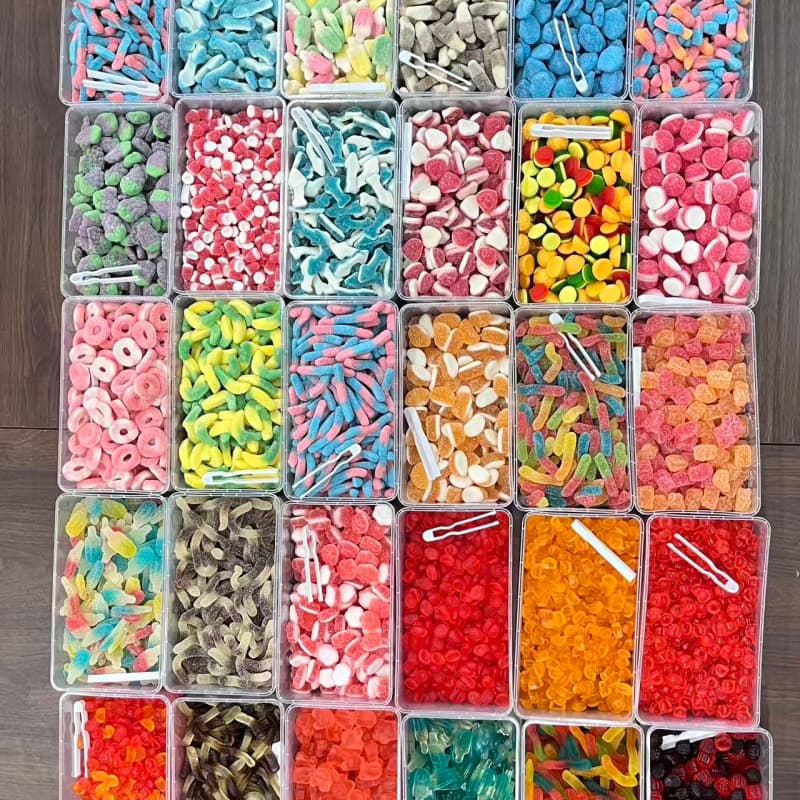
Boxed Gummy Candy – Mixed Flavors
1. What Is Boxed Gummy Candy Mixed Flavors?
Boxed gummy candy mixed flavors refers to a packaged confectionery product containing multiple gummy candy flavors, colors, shapes, or textures in one retail box. Instead of offering only strawberry, apple, orange, or another individual flavor, this format combines several varieties to create a more diverse selection.
The assortment can be arranged in separate compartments, individual inner bags, mixed-color layers, or a shared package. Some boxes contain gummies with the same shape but different flavors, while others combine fruit-shaped gummies, animal-shaped gummies, rings, bears, bottles, and other novelty designs.
For candy manufacturers and brand owners, the format offers several product-development possibilities:
- Flavor variety: Multiple fruit flavors make the product more interesting and provide consumers with different taste choices.
- Color diversity: Different colors help create a visually attractive assortment.
- Shape combinations: Several gummy shapes can be combined to build a distinctive product theme.
- Flexible portioning: Boxes can contain individually wrapped servings or larger shared portions.
- Retail adaptability: Different box sizes and designs can serve supermarkets, convenience stores, gift shops, and e-commerce channels.
From a B2B perspective, the product is also suitable for seasonal collections, promotional gift boxes, children’s confectionery ranges, and private-label development. Buyers can work with a manufacturer to adjust the flavor selection, candy shapes, package structure, and visual identity according to their target customers.
2. Popular Types of Mixed-Flavor Gummy Candy Boxes
Not every mixed-flavor box needs to follow the same product structure. The best assortment depends on the intended retail channel, consumer preferences, price positioning, and packaging format. Understanding the available product types helps importers and distributors choose an assortment that matches their sales strategy.
2.1 Assorted Fruit Flavor Gummy Candy
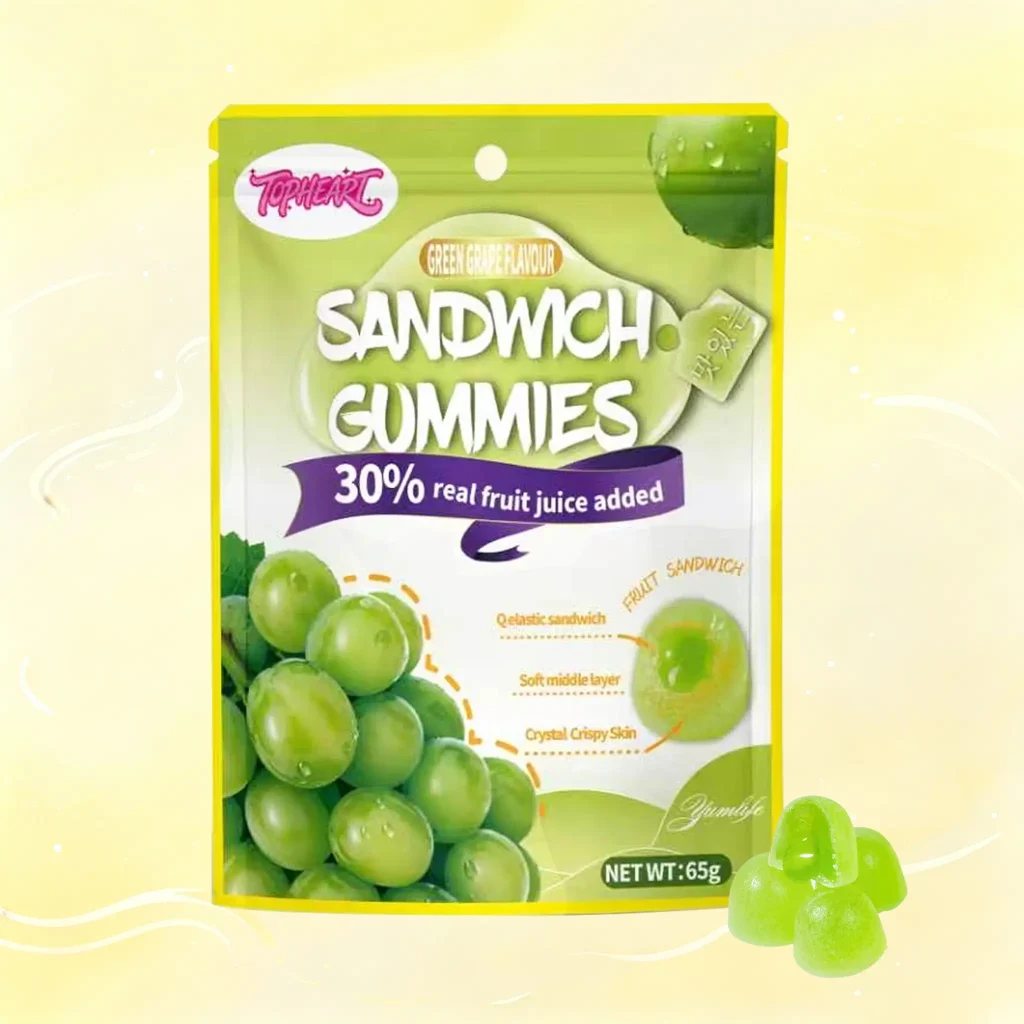
Fruit-flavored gummies are among the most recognizable options for mixed candy assortments. A typical box may combine strawberry, apple, orange, grape, lemon, peach, watermelon, pineapple, and blueberry flavors.
The advantage of a fruit assortment is its broad appeal. Familiar fruit profiles make it easier for consumers to understand the product, while a combination of sweet, tangy, and refreshing notes creates variety within one package.
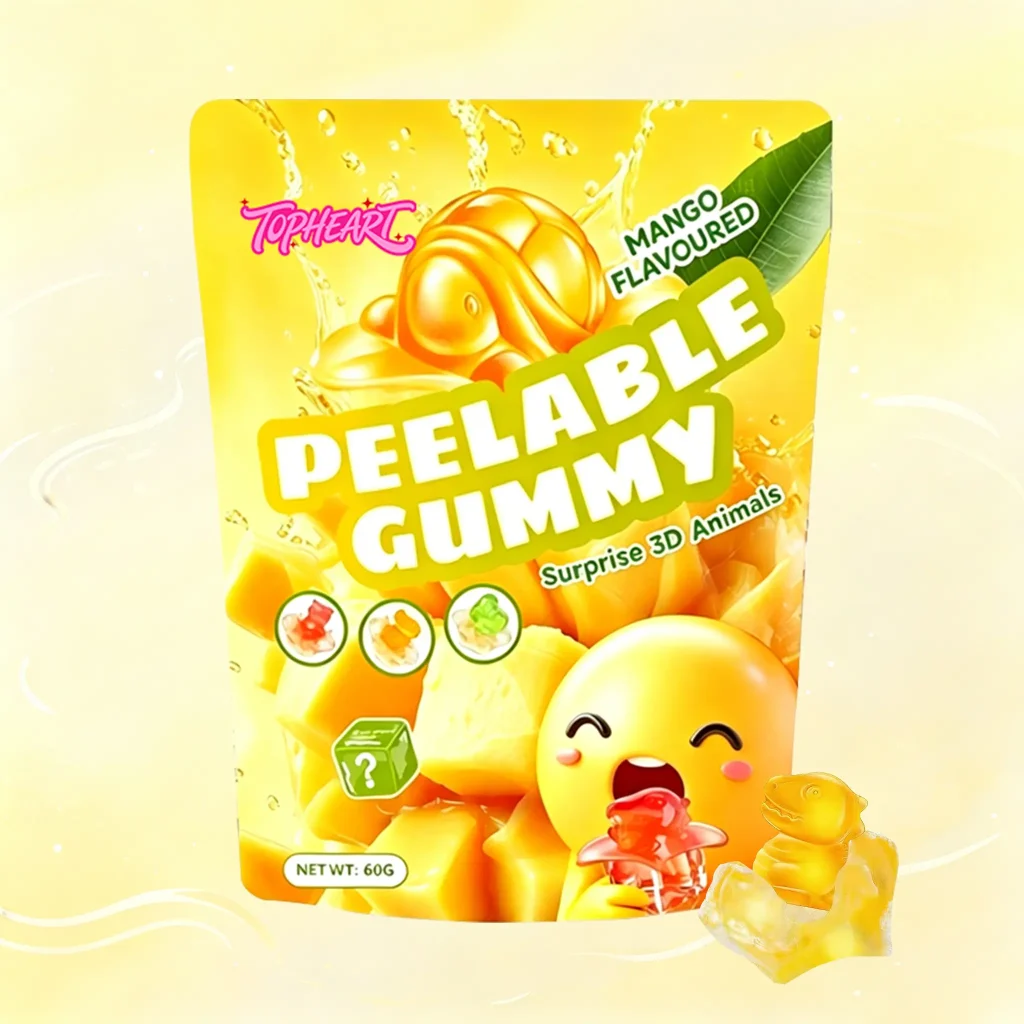
Manufacturers can also develop a more distinctive flavor arrangement by combining traditional fruit profiles with tropical options. For example, mango, passion fruit, lychee, and pineapple can create a tropical-themed collection. A berry assortment may include strawberry, raspberry, blueberry, and blackcurrant.
For wholesale buyers, it is useful to confirm whether the box contains equal quantities of each flavor or a mixed distribution. Consistent assortment ratios help maintain product presentation and make retail specifications easier to communicate.
2.2 Sour and Sweet Gummy Candy Assortments
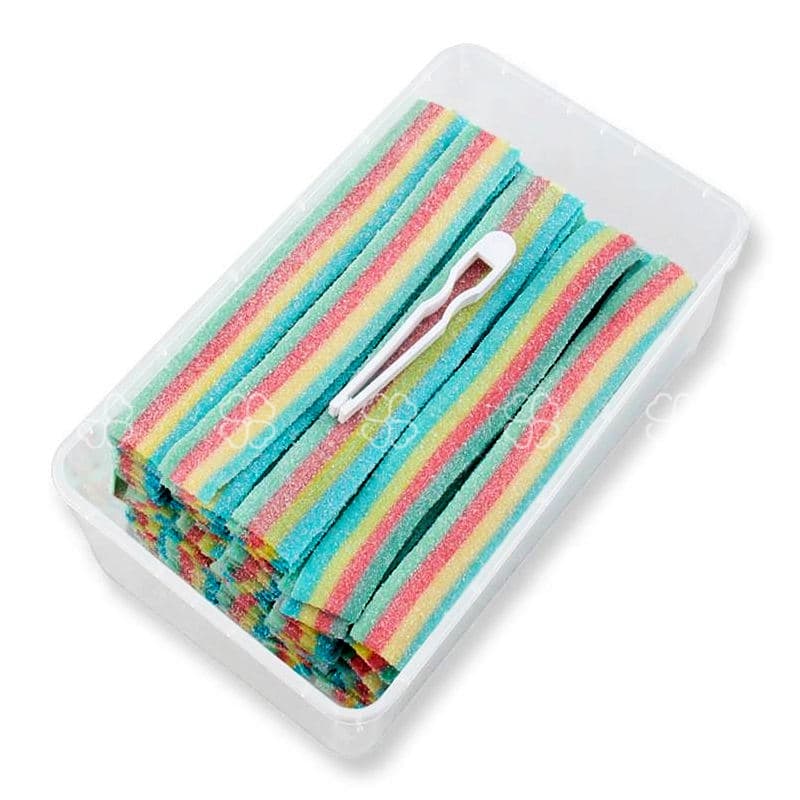
Sweet-and-sour combinations offer a different taste experience from conventional fruit gummies. These boxes may include sour-coated strips, sour fruit shapes, sugar-coated gummies, and regular sweet gummies.
The contrast between an acidic outer coating and a sweet gummy center creates a layered sensory experience. Sour products can also be positioned toward consumers who prefer stronger flavor sensations and more adventurous confectionery choices.
When developing a sour assortment, buyers should consider the intensity of the sour coating, the balance between acidity and sweetness, and the stability of the coating during storage. Excessive surface moisture or unsuitable packaging can affect the appearance and handling characteristics of coated gummies.
2.3 Gummy Candy Boxes with Different Shapes
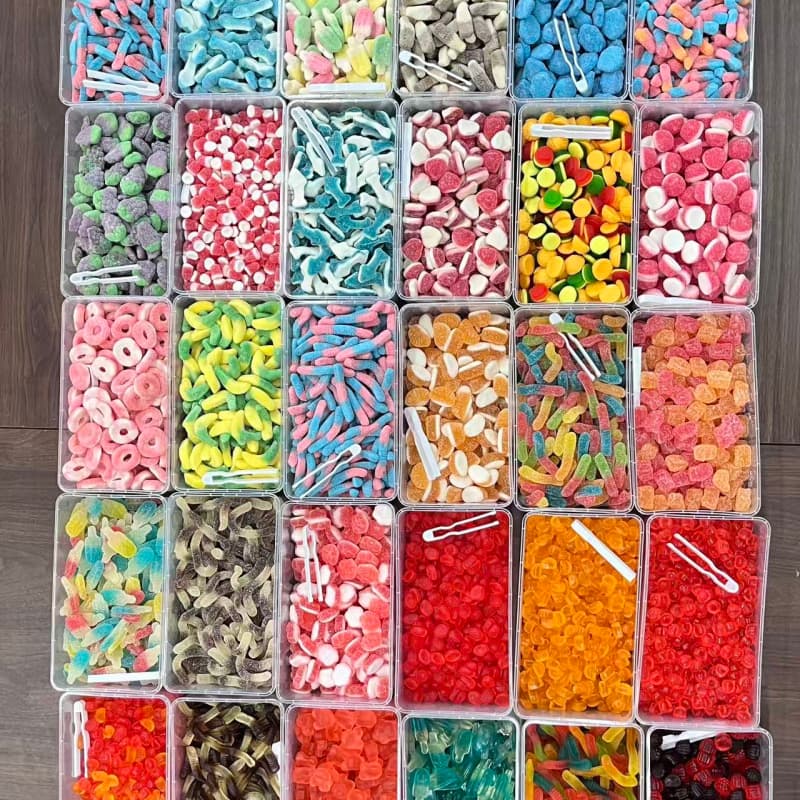
Shape variety can make a mixed-flavor box more visually distinctive. Common options include gummy bears, fruit shapes, rings, bottles, stars, hearts, animals, and other novelty designs.
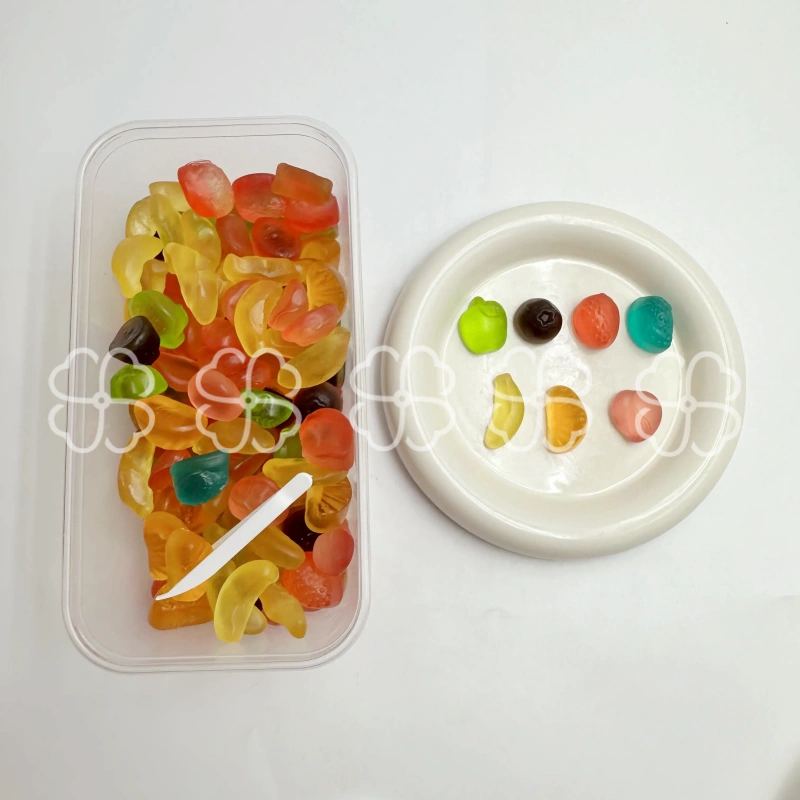
Some assortments use one flavor for each shape, while others combine several colors and flavors within the same shape category. A fruit-themed box, for example, may contain strawberry-shaped, orange-shaped, apple-shaped, and grape-shaped gummies.
For children’s products and gift-oriented collections, recognizable shapes can strengthen the product theme. For supermarkets and convenience stores, a colorful assortment may help create a noticeable shelf presentation.
2.4 Mixed Texture Gummy Candy Boxes
Another product-development direction is to combine gummies with different textures. A box may include soft and elastic gummies, firmer chewy pieces, sugar-coated gummies, sour-coated gummies, and filled or layered varieties where suitable.
Texture diversity can make an assortment feel more complete because consumers experience differences beyond flavor alone. However, combining products with significantly different moisture characteristics requires careful formulation and packaging evaluation. If moisture moves between candy pieces during storage, some products may become softer while others may dry out.
2.5 Themed and Seasonal Gummy Candy Gift Boxes
Themed assortments provide opportunities for seasonal promotions and customized retail programs. Examples include summer fruit collections, holiday-themed candy boxes, birthday assortments, tropical flavor selections, and colorful party mixes.
For private-label brands, a themed box can combine specific colors, shapes, and flavor profiles with customized artwork. The product can be designed around a particular consumer group, promotional event, or retail campaign.
When reviewing a potential manufacturing partner, buyers should examine its product range, customization capabilities, and experience with confectionery development. Reviewing the supplier’s gummy candy manufacturer background and company information can help buyers understand its business focus and whether its product categories match their sourcing requirements.
3. How to Create a Balanced Mixed-Flavor Selection
A successful mixed-flavor assortment should provide variety without making the overall product feel random. Flavor planning is therefore an important part of product development.
3.1 Combine Familiar and Distinctive Flavors
Strawberry, orange, apple, and grape are familiar choices that can help make a product accessible to a broad consumer base. Mango, watermelon, peach, passion fruit, and lychee can add variety and create a more distinctive assortment.
A practical strategy is to use familiar flavors as the foundation and introduce a smaller number of more unusual options. This approach gives consumers recognizable choices while allowing the product to stand out from standard single-flavor candy boxes.
3.2 Balance Sweet, Sour, and Fruity Notes
Flavor diversity should consider taste intensity as well as the number of flavors. If every gummy has a similar sweetness level, the assortment may not feel very varied even when it contains many colors.
Combining sweet fruit profiles with lightly acidic or sour varieties can create a more noticeable contrast. However, the overall assortment should still have a coherent taste direction. A tropical fruit collection, for example, may combine mango, pineapple, and passion fruit rather than mixing unrelated flavor themes without a clear concept.
3.3 Consider Color and Shape Coordination
Visual variety is especially important when consumers can see the candy through a transparent window or when the box is opened for sharing. Colors should be distributed in a way that makes the assortment look balanced rather than dominated by one shade.
Shape coordination can also reinforce the product concept. Fruit-shaped gummies are suitable for fruit collections, while bears, stars, and other novelty shapes can support a playful mixed-candy theme.
3.4 Define the Assortment Ratio
Before production, buyers should confirm the number of flavors and the quantity of each variety. An assortment with six flavors could contain equal proportions, or it could emphasize two popular flavors while including smaller quantities of four additional options.
The final ratio may depend on ingredient availability, production planning, packaging capacity, and target-market preferences. A clear assortment specification helps prevent misunderstandings during sampling, quotation, and bulk production.
4. Packaging Options for Boxed Gummy Candy Mixed Flavors
Packaging affects more than product appearance. It also influences convenience, product protection, storage, transportation, and retail positioning. For Boxed Gummy Candy Mixed Flavors, the package should accommodate the selected assortment while helping maintain the condition of the gummies.
4.1 Folding Carton Boxes
Folding cartons are a common option for retail confectionery. They provide a printable surface for product branding, flavor descriptions, ingredient information, and regulatory labeling.
Carton packaging can be developed in different dimensions and structures according to the quantity and shape of the gummies. It is suitable for standard retail products, promotional collections, and gift-oriented assortments.
4.2 Boxes with Inner Bags
Individual inner bags can help separate portions and make the candy easier to distribute or share. They may also reduce direct exposure of the entire assortment to the environment each time the outer box is opened.
For products containing different flavors or coatings, individual packaging can help limit direct contact between pieces. Buyers should confirm the material structure, sealing performance, and compatibility with the product’s moisture characteristics.
4.3 Compartmentalized Packaging
Boxes with multiple compartments can keep different gummy varieties separated. This format is useful when the assortment includes different shapes, colors, coatings, or flavor groups.
Compartmentalized packaging can also improve presentation because each variety has a defined position. However, the internal structure should be designed around the actual candy dimensions. Oversized compartments may allow excessive movement during transportation, while overly tight spaces can deform softer gummies.
4.4 Transparent Window Boxes
A transparent window allows consumers to see the product before purchasing. This can be particularly useful for colorful mixed-flavor assortments because the visual variety becomes part of the product’s appeal.
Window designs can be combined with printed cartons to balance product visibility and brand communication. The window material should be securely attached and suitable for the intended food packaging application.
4.5 Resealable and Family-Size Packaging
For larger boxes intended for sharing or repeated consumption, resealable packaging can improve convenience. The outer carton may contain a resealable inner pouch, or the product may use a suitable closure system designed for repeated opening.
When selecting a resealable format, buyers should evaluate how effectively the package limits moisture exchange after opening. The closure should also be easy to use and remain functional throughout the expected usage period.
Multicolor Sour Strip Gummy Candy-3
5. Food Science Factors That Influence Gummy Candy Quality
Although consumers often evaluate gummy candy through flavor, color, and texture, several measurable food science properties influence the final product. For manufacturers and wholesale buyers, understanding these parameters can make product evaluation more systematic.
5.1 Moisture Content and Water Activity
Moisture content describes the amount of water present in a product. Water activity, written as aw, describes the availability of water for chemical, physical, and microbiological processes. These two measurements are related, but they are not interchangeable.
Gummy candies are moisture-sensitive products. Changes in moisture can influence elasticity, firmness, stickiness, and storage stability. Water activity is also important when evaluating microbial stability and the possibility of moisture migration between candy pieces and their surrounding environment.
Published confectionery literature commonly reports moisture contents of approximately 8%–22% and water activity values around 0.50–0.75 for gummies and jellies. Actual values vary according to formulation, gelling system, processing conditions, and storage requirements.
5.2 pH and Acidity
pH is an important formulation parameter for fruit-flavored and sour gummy candies. It can influence the perception of tartness, the behavior of certain gelling agents, and the stability of some color ingredients.
However, pH does not provide a complete measurement of perceived sourness. Titratable acidity is another useful parameter because it measures the amount of acid that can be neutralized under a defined test method. Two products with similar pH values may still produce different taste sensations.
5.3 Texture and Elasticity
Gummy texture is influenced by the type and concentration of gelling agents, sugar composition, moisture content, acidity, and processing conditions. Gelatin, pectin, and other hydrocolloid systems can produce different bite characteristics.
Texture profile analysis can be used to evaluate hardness, springiness, cohesiveness, and chewiness. These measurements help manufacturers compare batches and assess whether a product maintains its intended texture.
5.4 General Scientific Reference Data for Gummy Candy
| Quality Parameter | General Reference | Why It Matters | Common Evaluation Method |
|---|---|---|---|
| Moisture Content | Approximately 8%–22% | Influences softness, elasticity, and storage behavior | Oven drying or validated moisture analysis |
| Water Activity (aw) | Approximately 0.50–0.75 | Helps evaluate microbial stability and moisture migration | Water activity meter |
| pH | Formulation-dependent; published fruit gummy examples include approximately 2.2–3.1 | Affects acidity perception and ingredient behavior | Calibrated pH meter |
| Total Soluble Solids | Often monitored around 75–78 °Brix in gummy processing studies | Helps assess syrup concentration and process consistency | Refractometer |
| Texture | No universal target; product-specific specification required | Determines bite, chewiness, and consumer experience | Texture analyzer and sensory evaluation |
Technical note: These figures are general literature-based references for gummy confectionery, not TOPHEART product specifications or guaranteed manufacturing targets. Different recipes and processing systems require their own validated acceptance criteria. Buyers should request product-specific test results where these measurements are relevant to a purchasing agreement.
Research on gummy candy formulation has demonstrated that fruit juice concentrates and other ingredient substitutions can affect pH, water activity, density, color, and texture. This is one reason why a flavor change should be evaluated as a formulation decision rather than simply a change in flavor name.
6. Manufacturing and Quality Considerations
Producing a consistent mixed-flavor assortment requires coordination between formulation, candy processing, drying or setting, finishing, inspection, and packaging. Each stage can influence the final product.
6.1 Ingredient and Flavor Consistency
Different flavors may require different flavoring systems, colors, acids, or fruit-derived ingredients. Manufacturers should evaluate ingredient compatibility and maintain appropriate formulation controls so that the final assortment has a consistent taste and appearance.
Buyers should also clarify ingredient declarations, allergen information, color requirements, and any market-specific restrictions before confirming a production specification.
6.2 Shape and Weight Control
When a box contains multiple gummy shapes, each variety should meet its agreed dimensions and weight tolerances. Significant differences in piece size can affect the number of gummies per box and the overall visual balance.
For products sold by net weight, the packaging process should be designed to achieve the declared quantity consistently. For products sold by piece count, the counting method and assortment ratio should be clearly defined.
6.3 Drying, Setting, and Surface Treatment
Gummy products may require controlled setting, drying, or surface treatment depending on their formulation and intended texture. Inadequate process control can lead to excessive stickiness, inconsistent firmness, or surface changes.
For sugar-coated or sour-coated varieties, the finishing process should be evaluated together with the packaging material. Coatings can be affected by humidity, friction, and contact with other pieces during distribution.
6.4 Packaging and Storage Validation
Packaging should be evaluated for its ability to protect the gummies from moisture exchange, contamination, and physical damage. Seal integrity, material suitability, and storage conditions are important considerations.
Mixed-flavor boxes may contain products with different surface treatments or moisture characteristics. Where necessary, individual inner packaging or compartmentalized structures can help reduce direct contact and limit unwanted changes between varieties.
7. How to Choose a Reliable Gummy Candy Supplier
For importers and distributors, supplier selection affects product quality, communication efficiency, customization possibilities, and long-term sourcing stability. A competitive quotation is useful, but it should not be the only factor in the decision.
7.1 Review Product Range and Manufacturing Experience
Buyers should check whether the supplier can provide the gummy categories required for the project, including fruit gummies, sour gummies, shaped gummies, and other soft confectionery products. A broader product range may provide more flexibility when developing a mixed assortment.
It is also helpful to understand whether the supplier can coordinate different shapes, flavors, and packaging formats within one product-development project. A clear overview of its soft candy and gummy candy product range can help buyers identify suitable product directions before requesting samples.
7.2 Request Samples Before Confirming Bulk Orders
Samples allow buyers to evaluate flavor, sweetness, sourness, texture, shape accuracy, color, and packaging presentation. For mixed-flavor products, the evaluation should cover every variety rather than relying on one representative sample.
Buyers should also check whether the sample assortment reflects the proposed bulk-production formula. If the final product will use different ingredients, shapes, or packaging materials, these changes should be reviewed before mass production.
7.3 Confirm Customization Capabilities
Private-label buyers may need customized flavor combinations, gummy shapes, colors, box artwork, inner bags, and product labels. Before placing an order, clarify which elements can be customized and whether the proposed design is technically suitable for production.
It is useful to prepare a written product brief containing the target market, preferred flavors, approximate piece size, net weight, packaging structure, artwork requirements, and expected sales channel.
7.4 Check Export and Documentation Requirements
International buyers should confirm the documentation required for their destination market. Depending on the country and product category, this may include ingredient declarations, allergen information, nutrition labeling, packaging details, product specifications, and relevant food safety documentation.
Labeling requirements should be checked before artwork approval. Translations, ingredient order, allergen declarations, date coding, and other mandatory information may differ between markets.
7.5 Evaluate Communication and Production Coordination
Clear communication helps reduce misunderstandings about samples, flavor ratios, packaging artwork, production schedules, and shipping arrangements. Buyers should establish who is responsible for confirming each specification and how changes will be approved.
For new projects, it is helpful to work through a structured quotation and sampling process. Buyers can share their proposed assortment and packaging requirements through the supplier’s candy manufacturer contact page to begin discussing product details, customization options, and sourcing needs.
8. A Practical Buying Checklist for Wholesale and Private-Label Buyers
Before confirming an order for Boxed Gummy Candy Mixed Flavors, buyers should prepare a specification sheet that covers the product, packaging, quality requirements, and commercial details.
| Item | Questions to Confirm |
|---|---|
| Flavor Assortment | Which flavors are included? What is the quantity ratio for each flavor? |
| Candy Shapes | Will the box contain one shape or multiple shapes? |
| Texture | Should the gummies be soft, firm, elastic, sugar-coated, or sour-coated? |
| Net Weight | What is the required net weight per box and the expected piece count? |
| Inner Packaging | Are individual bags, compartments, or a shared inner pouch required? |
| Outer Packaging | Is a folding carton, window box, gift box, or custom structure preferred? |
| Branding | Will the order use existing packaging or private-label artwork? |
| Quality Requirements | Which product specifications, tests, and acceptance criteria are required? |
| Market Compliance | What language, ingredient, allergen, and nutrition labeling rules apply? |
| Commercial Terms | What are the MOQ, lead time, payment terms, shipping terms, and quotation validity? |
These details help both parties understand the project before sampling and production. They also make it easier to compare quotations because buyers can evaluate suppliers against the same product requirements instead of comparing prices for different specifications.
9. Market Opportunities for Mixed-Flavor Gummy Candy Boxes
Mixed-flavor gummy boxes can serve several retail and distribution channels. Their flexible assortment structure makes them suitable for different product positions, from everyday confectionery to seasonal gift collections.
9.1 Supermarkets and Convenience Stores
Retailers can use mixed-flavor boxes to offer consumers a convenient selection without requiring them to purchase multiple separate packages. Compact cartons can fit into standard confectionery shelves, promotional displays, and checkout areas.
9.2 Online Candy Stores
For e-commerce sellers, mixed assortments provide an opportunity to present multiple flavors in one product listing. Clear photographs showing the candy varieties, box contents, and package dimensions can help consumers understand what they are purchasing.
9.3 Gift and Seasonal Retail
Colorful gummy assortments can be developed for holidays, birthdays, celebrations, and promotional campaigns. Customized packaging, themed artwork, and special flavor selections can help create a more distinctive gift product.
9.4 Wholesale Distribution and Private Labels
Distributors may prefer mixed-flavor products because one SKU can offer several consumer choices. Private-label brands can also use the format to introduce a new gummy range without developing a separate retail package for every flavor.
For buyers entering a new market, the assortment should be adapted to local taste preferences, labeling requirements, retail price positioning, and distribution conditions. A product that performs well in one market may require changes in flavor balance, sweetness, package size, or visual design before being introduced elsewhere.
Mixed Fruit Flavored Peelable Gummy
10. Frequently Asked Questions About Boxed Gummy Candy Mixed Flavors
1. What flavors are commonly included in boxed gummy candy mixed flavors?
Common mixed-flavor gummy candy boxes include strawberry, apple, orange, grape, lemon, peach, watermelon, pineapple, and blueberry. Some assortments also include tropical flavors such as mango, passion fruit, and lychee. The final selection depends on the product concept, target market, and buyer preferences. Wholesale buyers can request a combination of familiar fruit flavors, sour varieties, or themed selections to create a more distinctive assortment.
2. Can manufacturers customize the flavors and shapes in mixed gummy candy boxes?
Yes. Depending on the manufacturer’s product range and production capabilities, mixed gummy candy boxes can be developed with customized flavor combinations, colors, shapes, textures, and assortment ratios. Buyers may choose fruit-shaped gummies, bears, rings, novelty shapes, or a combination of different designs. For private-label projects, it is important to confirm the available customization options, sample requirements, packaging specifications, and production conditions before approving the final product.
3. What packaging is best for boxed mixed-flavor gummy candy?
The most suitable packaging depends on the product structure, sales channel, and storage requirements. Folding cartons are useful for retail branding, while individual inner bags can separate portions and reduce direct contact between different varieties. Compartmentalized boxes help organize gummies with different shapes or coatings, and transparent windows allow consumers to see the assortment. Buyers should also evaluate sealing performance, moisture protection, packaging material suitability, and transportation conditions before selecting a final format.
4. How should buyers evaluate the quality of mixed-flavor gummy candy before placing a wholesale order?
Buyers should request samples and evaluate every flavor in the proposed assortment. Important factors include taste balance, aroma, color consistency, texture, elasticity, shape accuracy, piece weight, and packaging presentation. Where relevant, buyers can also request product specifications and test information covering moisture content, water activity, pH, and other agreed quality parameters. The sample should represent the intended bulk-production formula as closely as possible, and any changes should be confirmed before production approval.
5. What information should importers provide when requesting a quotation for boxed mixed-flavor gummy candy?
Importers should provide the preferred flavors, number of varieties, assortment ratio, gummy shapes, texture requirements, target net weight, packaging structure, and estimated order quantity. They should also explain whether they need standard packaging or private-label customization. Destination-market information is useful because ingredient declarations, allergen statements, nutrition labels, and packaging requirements may vary by country. Providing these details at the beginning helps manufacturers prepare a more relevant quotation and reduces unnecessary revisions during sampling and order confirmation.
Build a More Competitive Gummy Candy Assortment
Boxed Gummy Candy Mixed Flavors combines product variety, visual appeal, and flexible packaging in one confectionery format. By bringing different fruit flavors, colors, shapes, and textures together, brands can develop products for everyday retail, online sales, seasonal promotions, and private-label collections.
For wholesale buyers and importers, the key is to evaluate the complete product rather than focusing only on the number of flavors. Flavor balance, gummy texture, moisture stability, packaging protection, assortment ratios, labeling, and supplier coordination all contribute to a successful product.
A clear product specification and a well-organized sampling process can help buyers move from an initial concept to a commercially suitable assortment. With the right combination of product development, packaging design, and manufacturing coordination, mixed-flavor gummy candy boxes can become a flexible addition to a competitive confectionery portfolio.