

The global seasonal confectionery market is undergoing a structural paradigm shift driven by evolving consumer behaviors and retail demands. Traditional single-flavor sugar candies and uniform gelatin blocks are rapidly losing their competitive edge on modern retail shelves. Today’s consumers, heavily influenced by global specialty café culture, premium tea trends, and experiential food rituals, demand far more than basic sweetness from their snacks. They actively seek sophisticated flavor profiles and engaging physical mechanics that turn consumption into a memorable, multi-sensory event. This evolution has left many high-volume distribution brands and big-box retail importers stuck in intense price wars over low-margin products. To break out of this cycle and capture higher profits, forward-thinking procurement directors are shifting their sourcing budgets toward products that offer clear differentiation and strong pricing power. If you want to discover how our specialized manufacturing facility designs these high-tier products to transform your seasonal sales performance, we encourage you to learn more wholesale bulk premium sweets designed for high-turnover retail environments.
Among the most promising innovations disrupting the market today, the premium combination of authentic green tea and vibrant berry flavors stands out as an exceptionally lucrative option. This unique pairing provides the ideal foundation for the groundbreaking peelable candy concept, a product category that blends the earthy, rich tones of Japanese green tea with the bright, sweet acidity of real fruit. This dual-layered treat does not simply offer an appealing taste; it introduces an entirely new interactive format where consumers physically peel away the outer layer before consuming the inner core. For international distribution brands, stocking this type of premium inventory provides a reliable path to bypass conventional, low-margin products and secure an exclusive market segment. Sourcing a highly complex, co-extruded product line requires working closely with an experienced partner who understands the strict requirements of international shipping and food regulations. To request custom flavor samples, secure direct container-load pricing, or discuss a tailored distribution strategy for your region, you can easily connect with a trending confectionery wholesaler through our dedicated global corporate outreach channels.
Mass-producing this interactive treat requires profound expertise in advanced hydrocolloid mechanics and precise climate-controlled drying protocols. The outer matcha skin must remain exceptionally flexible and strong enough to peel cleanly without tearing, while the inner core must maintain a rich, high-juice fluid consistency. Achieving this balance is impossible on standard candy production lines, making it vital to collaborate with a specialized facility that possesses cutting-edge co-extrusion technologies. Each production run must face rigorous laboratory testing to verify that moisture does not migrate between layers during long-distance maritime transit. Importers who include this item in their portfolio safely elevate their brand identity, offering a high-demand confection that standard candy factories cannot replicate. For comprehensive technical data, custom packaging options, and minimum order requirements for this breakthrough line, you can access the full specifications provided for our premium Strawberry Matcha Peeling Gummy on our central product portal.
The Economics of the Interactive Gummy Market
Shifting from Commodity Candy to Premium Experiential Confectionery
The global sugar confectionery market is witnessing a clear bifurcation. On one side, commodity sweets face shrinking margins as raw sugar prices fluctuate and retail buyers squeeze suppliers. On the other side, experiential confectionery is commanding significant retail premiums. The physical act of peeling a candy creates a sensory bridge that justifies a higher price-per-gram ratio. In major metropolitan markets, brand owners utilizing a verified **strawberry matcha peeling gummy manufacturer** report retail price tolerances up to 150% higher than traditional solid gelatin gummies. This premium pricing structure insulates importers from rising logistics costs and establishes a highly defensible market position.
Demographic Demand: Catering to Gen Z and Millennial Retailing Trends
The consumer profile driving the growth of peeling candies is deeply centered on younger cohorts who prioritize food gamification and multi-sensory feedback. The distinct color contrast between the deep olive-green matcha skin and the bright crimson strawberry core provides immediate visual satisfaction. When consumers film the clean separation of these two layers, the resulting content generates substantial organic traffic on short-form video platforms. By sourcing from an experienced **bulk peelable gummy candy supplier**, global brands can tap into this free, user-generated marketing loop. This structural consumer alignment results in faster inventory turns and reduced reliance on traditional paid advertising campaigns for retail launches.
Technical Evaluation: What Makes a High-Quality Peeling Gummy?
Hydrocolloid Matrix Mechanics: Pectin Shell vs. Gelatin Core
The engineering of a peelable candy relies on precise macromolecular manipulation. The outer matcha shell must possess specific tensile strength and elasticity to slide away from the inner core without tearing into fragments. This physical property is achieved by deploying a specialized high-methoxyl (HM) pectin network. HM pectin forms a rigid, clear gel structure when cross-linked under controlled acidic conditions, creating a peelable jacket. Conversely, the inner strawberry core relies on a low-bloom porcine or bovine gelatin matrix blended with real clarified fruit juice concentrate. This hybrid approach ensures that while the outer shell remains firm and interactive, the inner core provides a soft, melting texture that maximizes flavor release upon consumption.
Rheology and Advanced Co-Extrusion Deposition
Industrial mass production requires complete control over the fluid dynamics (rheology) of both candy masses at the exact millisecond of deposition. A leading **private label peeling gummy factory** utilizes custom-engineered, multi-nozzle co-extrusion depositors. The outer matcha mass must be maintained at a strict thermal threshold of $85^\circ\text{C}$ to preserve its flowing viscosity, while the inner strawberry mass is injected at a slightly lower temperature ($78^\circ\text{C}$) to prevent thermal blending at the interface boundary. If the viscosity of either mass deviates by more than 5%, the layers will merge prematurely, resulting in a defective, non-peelable product that fails quality control standards.
Sourcing Pitfalls: Critical Risks in Transcontinental Supply Chains
Managing Water Activity and Interlayer Migration
The most frequent failure found in low-tier peeling candies is layer fusion, an issue that typically emerges several weeks after production during ocean freight transit. This defect is driven by osmotic pressure when there is an imbalance in water activity ($a_w$) between the two layers. If the inner core contains excess unbound water, that moisture will naturally migrate outward into the pectin shell. This moisture transfer weakens the pectin bonds, causing the outer skin to dissolve or fuse permanently with the inner center. To eliminate this risk, professional food scientists strictly limit the inner strawberry core to a maximum water activity ($a_w$) of 0.60, while maintaining the outer shell at $a_w = 0.65$, establishing a stable thermodynamic equilibrium.
Preventing Catechin Oxidation and Chlorophyll Degradation
Authentic matcha powder contains high levels of sensitive polyphenols, specifically epigallocatechin gallate ($EGCG$), and natural chlorophyll. When exposed to residual oxygen inside retail packaging or UV light on store shelves, these compounds undergo rapid photo-oxidation. This chemical breakdown turns a premium, vibrant green candy into an unappealing, brownish product. Advanced manufacturing lines combat this aesthetic degradation by integrating inline nitrogen gas flushing systems right before final sealing, driving residual oxygen levels below 0.5%. Additionally, incorporating natural botanical antioxidants such as plant-derived ascorbic acid shields the delicate green tea molecules without compromising clean-label ingredient statements.
Commercial Performance and Manufacturing Comparison Matrix
Data-Driven Selection: Technical and Financial Sourcing Metrics
For global supply chain directors, choosing the right product tier requires clear, quantifiable data. The matrix below contrasts the technical formulations, processing demands, and financial yields of different gummy formats, demonstrating why the premium strawberry matcha combination delivers superior commercial resilience.
| Technical & Commercial Parameters | Standard Mass-Market Gummy | Mid-Tier Fruit Peeling Gummy | Premium Strawberry Matcha Gummy |
| Primary Gelling Architecture | Medium-Bloom Gelatin | Standard Bovine Gelatin | HM Pectin Shell / Hybrid Gelatin Core |
| Real Fruit Juice Concentration | 0% – 5% (Synthetic Extracts) | 8% – 12% Juice Concentrates | > 20% Clarified Strawberry Juice |
| Botanical Inclusions ($EGCG$) | 0.00% | 0.00% | 1.5% – 2.2% Pure Culinary Matcha |
| Dehumidification Drying Protocol | 12 – 18 Hours (Static) | 24 – 36 Hours (Standard) | 60 – 72 Hours (Gradient Humidity) |
| Average Importer Gross Margin | 18% – 25% | 35% – 42% | 65% – 72% (Premium Tier) |
| Water Activity ($a_w$) Stabilization | Not Regulated ($>0.70$) | 0.64 – 0.68 (Variable) | Strictly Bound ($\le 0.60$ Core) |
This comparative overview shows that while the premium variety requires extended drying protocols and highly monitored raw materials, the financial returns are significantly higher. This wide margin buffer helps global importers safely absorb fluctuating ocean freight rates while maintaining excellent bottom-line profitability.
Evaluating a Sourcing Partner: Vendor Checklist for Global Importers
Production Capacity and Dehumidification Infrastructure
When auditing a potential **bulk gummy candy factory**, procurement managers must look beyond basic extrusion volumes and focus on drying room capacity. The structural setting of a peelable gummy cannot be rushed using accelerated high-heat drying, which degrades the gelatin core. Instead, finished candies must undergo a long 72-hour gradient curing process where ambient humidity is slowly stepped down from 55% to 25% at a constant $20^\circ\text{C}$. Importers must ensure their chosen **wholesale peelable gummy candy** partner operates automated, climate-controlled cleanrooms that can handle large production volumes without cutting down on these essential stabilization times.
Global Regulatory Compliance and Clean-Label Formulation
Navigating international food safety laws is critical to avoid costly border rejections or product recalls. Premium manufacturing facilities operate under strict global food safety frameworks, including BRCGS (Grade AA) and FSSC 22000. When exporting products containing authentic tea extracts to North American or European markets, the raw matcha must be verified via independent laboratory testing to confirm it complies with strict regulations regarding heavy metals and pesticide residue limits. Furthermore, while certain Asian markets accept synthetic brighteners, European buyers require natural color alternatives. A competent **custom gummy candy manufacturer** must be capable of substituting synthetic dyes with plant-based colors, such as natural spirulina extract, ensuring smooth customs clearance worldwide.
Packaging Engineering and Shelf Life Optimization
High-Barrier Films for Delicate Botanical Inclusions
The final defense line for a premium co-extruded confection is its packaging material. Standard clear poly-bags are insufficient for protecting sensitive green tea and high-juice candies, as they permit the transmission of moisture and UV light. To guarantee a stable 12-month shelf life across varying climate zones, brands must specify high-barrier, multi-layer laminated films like PET/VMPET/PE. The internal micro-layer of vacuum-metallized aluminum provides an exceptionally low Moisture Vapor Transmission Rate (MVTR), isolating the candy from humid shipping environments and blocking destructive UV rays from altering the product’s color and flavor.
Strategic Private Label Design and B2B Procurement Timelines
Because the manufacturing setup for advanced co-extruded treats requires precise machinery calibrations and prolonged curing windows, scheduling orders requires a proactive timeline. Global procurement teams should initiate sourcing discussions at least two full quarters ahead of their targeted retail launch. This timeline provides ample room for custom flavor adjustments, regional ingredient compliance verification, and packaging cylinder engraving. Partnering early with an established **gummy candy wholesale supplier** ensures your brand secures dedicated production slots, bypasses peak shipping bottlenecks, and executes a flawless, high-margin product rollout.
Securing Long-Term Market Dominance Through Targeted Sourcing
The shifting dynamics of the international confectionery market present a clear choice for global brand managers: continue competing in low-margin price wars or take the lead with high-value, experiential products. The strawberry and matcha combination is far more than a passing viral trend; it represents a major advancement in candy engineering that perfectly satisfies the modern consumer’s desire for flavor sophistication and interactive snacking. By choosing a technologically advanced partner, global brands can secure their supply chains, satisfy strict international food safety standards, and achieve unparalleled shelf performance. Sourcing innovative, high-margin confections today ensures your brand will capture the highest retail segments and set the standard for the future of confectionery retail.
Frequently Asked Questions on Sourcing Peeling Gummy
1. What are the standard minimum order quantities (MOQs) for private label peelable confections?
Because co-extrusion technology requires highly specialized machinery setups, custom multi-nozzle cleaning protocols, and extended drying room usage, production runs carry higher baseline operational costs. For a fully customized private label project involving bespoke flavor balancing or regional adjustments, standard minimum order quantities typically range from 50,000 to 100,000 retail pouches per SKU. Smaller trial volumes may occasionally be accommodated using standard stock formulations with custom over-packaging labels.
2. How can an importer verify that a factory uses authentic matcha rather than synthetic green colorants?
Importers should require their manufacturing partner to provide a comprehensive Certificate of Analysis (CoA) for each raw material batch, alongside complete traceability documentation back to the tea cultivation source. True culinary matcha can be verified in a laboratory setting by testing for the specific presence of natural tea catechins, particularly epigallocatechin gallate ($EGCG$), and L-theanine amino acids. If a supplier is unable to provide clear HPLC (High-Performance Liquid Chromatography) testing data confirming these natural botanical markers, the product likely relies on synthetic green food dyes.
3. What temperature boundaries can these interactive candies safely withstand during maritime transit?
When properly cured via a professional 72-hour humidity-gradient process, a high-quality peeling gummy can comfortably withstand ambient temperatures up to $38^\circ\text{C}$ ($100^\circ\text{F}$) without experiencing structural melting or layer fusion. However, prolonged exposure to excessive thermal spikes inside closed shipping containers can still accelerate flavor degradation and softening. For transcontinental transit across tropical routes, procurement directors are strongly advised to specify high-barrier aluminum laminated retail films and utilize reefer (refrigerated) containers maintained at a steady $18^\circ\text{C}$ to $22^\circ\text{C}$.
4. How long does the complete B2B sourcing cycle take from initial contact to final delivery?
The standard procurement timeline for a custom co-extruded peeling candy line spans approximately 60 to 90 days. This comprehensive cycle includes 14 days for initial recipe adjustment and custom sample approval, 21 days for high-definition packaging design layout and rotogravure cylinder plate engraving, 30 days for mass extrusion deposition and extended drying room stabilization, and roughly 7 to 14 days for final laboratory safety screening and customs clearance documentation. Importers should plan their orders at least two quarters ahead of key retail sales windows.
5. What certifications should a global brand look for to ensure compliance in the US and EU markets? To ensure seamless customs clearance and retail distribution in major Western markets, importers must prioritize manufacturers holding GFSI-recognized food safety certifications, such as BRCGS (Grade AA) or FSSC 22000. These certifications verify that the factory maintains rigorous HACCP protocols, allergen management, and total supply chain traceability. Furthermore, for botanical-infused products, the manufacturer should be capable of providing country-specific compliance documentation—such as MRL (Maximum Residue Limit) reports for pesticides in green tea and non-GMO certification—to meet the strict regulatory requirements of the FDA (US) and EFSA (EU). Partnering with a factory that proactively manages these international standards is the most effective way to eliminate the risk of border delays or costly product recalls.
Feature Product
-
 Gummy Candy
What Is Gummy Candy? Gummy Candy is one of the ...
-
 Crispy Gummy Candy
What Is Crispy Gummy Candy Crispy Gummy Candy i...
-
 Peelable Gummy Candy
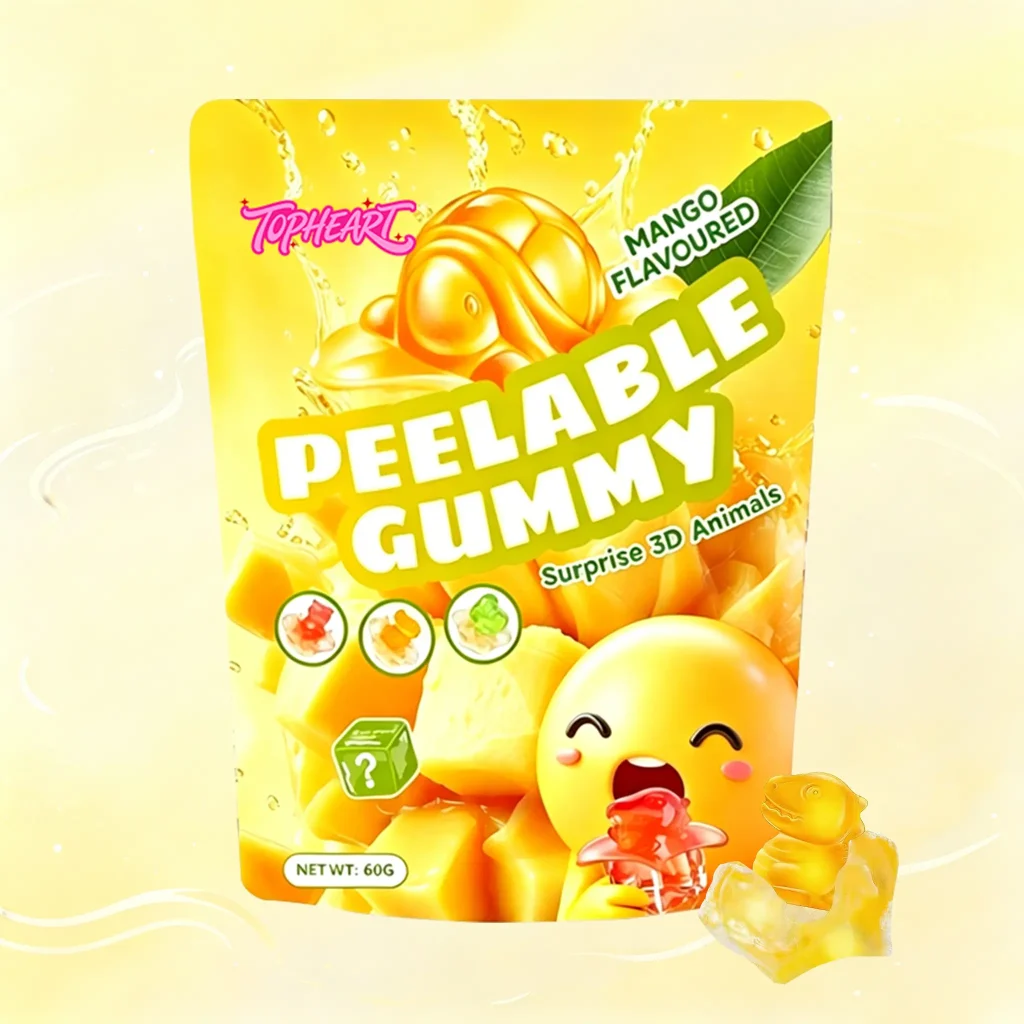
What Is Peelable Gummy Candy? Peelable Gummy Ca...