

Why 4D Gummy Is Becoming a High-Value Product Format
The confectionery market is moving beyond conventional shapes and flavors toward products that create a stronger visual and sensory experience. 4D Gummy represents one of the most distinctive developments in this category because it combines three-dimensional shapes, multiple colors, layered structures, detailed designs, and, in some products, different textures or centers within one piece of candy. For importers, distributors, supermarkets, candy brands, and private-label retailers, this creates an opportunity to build products that are easier to differentiate than standard gummy candy.
For B2B buyers, however, choosing a 4D gummy manufacturer is not simply about finding the lowest unit price. Product consistency, mold-development capability, texture control, food-safety systems, packaging performance, minimum order quantity, export experience, and the ability to customize a product can have a much greater impact on the total commercial value of an order.
A strong 4D gummy program should therefore be evaluated from both consumer and manufacturing perspectives. The most successful products combine an attractive shape with stable texture, consistent color, reliable production, compliant labeling, practical packaging, and a clear retail positioning.
For buyers researching suppliers, a manufacturer’s production background and quality-management approach are important starting points. A supplier with experience in confectionery development can generally provide more useful guidance on mold complexity, formulation, packaging, and production feasibility than a company that simply resells finished products.
For more information about the company’s background, capabilities, and product-development approach, buyers can explore the Candy-Food company profile through About Us.
4D Gummy
What Is 4D Gummy?
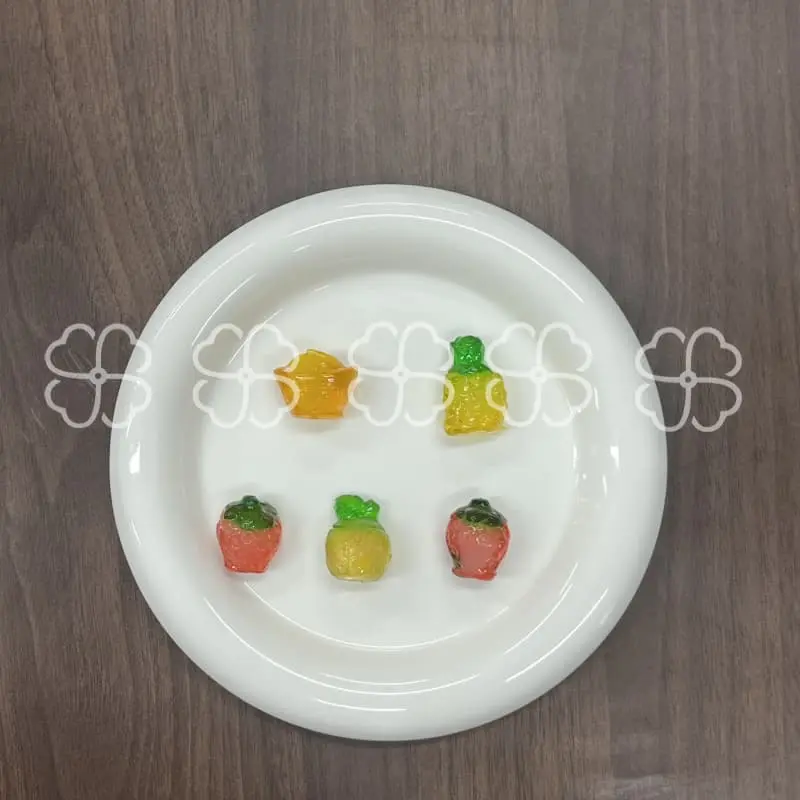
A 4D gummy is a highly detailed gummy candy format designed to provide more than the conventional flat or simple three-dimensional gummy experience. The term “4D” is used commercially rather than as a literal scientific fourth spatial dimension. Depending on the manufacturer, it may describe gummies incorporating multiple components, colors, layers, textures, fillings, or highly detailed three-dimensional construction.
Compared with ordinary gummy candy, a 4D product can provide significantly more room for visual storytelling. A single piece may resemble a fruit, animal, character, food item, seasonal symbol, or other recognizable object. Different sections can use different colors and flavors, allowing brands to create a more distinctive sensory experience.
This makes 4D gummy candy particularly attractive for brands that want products to stand out on crowded supermarket shelves. Instead of competing only through flavor or price, the product can compete through shape, novelty, collectability, packaging, and social-media-friendly visual appeal.
How Is 4D Gummy Different From Traditional Gummy Candy?
Traditional gummies are often manufactured in relatively simple shapes with a single color or flavor. Three-dimensional gummies increase the visual detail by giving the candy a more sculptural appearance. A 4D gummy can take this concept further by incorporating multiple sections, colors, layers, or textural characteristics.
The exact definition varies between manufacturers, so buyers should always request a product specification rather than assuming that every product marketed as “4D” has the same construction.
A practical comparison is:
| Feature | Traditional Gummy | 3D Gummy | 4D Gummy |
|---|---|---|---|
| Basic Shape | Flat or simple | Three-dimensional | Highly detailed 3D structure |
| Visual Detail | Low to medium | High | Very high |
| Multiple Colors | Possible | Common | Highly customizable |
| Layered Structure | Limited | Sometimes | More commonly used |
| Texture Options | Moderate | Moderate | High |
| Customization | Medium | High | Very high |
| Mold Complexity | Lower | Medium | Medium to high |
| Shelf Appeal | Moderate | High | Very high |
| Product Storytelling | Limited | Strong | Strong |
A buyer interested in evaluating actual product formats can review the 4D Gummy product range at 4D Gummy.
Why Are 4D Gummies Attractive to Modern Candy Brands?
One of the strongest commercial advantages of 4D gummy products is their ability to create immediate visual recognition. Consumers often encounter dozens of confectionery products in one retail environment. A distinctive three-dimensional animal, fruit, seasonal character, or food-inspired gummy can communicate its concept before the customer reads the packaging.
This matters particularly for products marketed through visual channels. Product photography, short-form video, online marketplaces, social media, and unboxing content all benefit from candy products that are visually recognizable.
Visual Novelty Creates Product Differentiation
A standard strawberry gummy can compete with hundreds of similar products. A highly detailed strawberry-shaped 4D gummy with multiple color layers, a flavored center, or a distinctive texture gives the brand additional points of differentiation.
This does not mean that visual complexity automatically creates a successful product. The design still needs to be manufacturable, stable during transportation, attractive after packaging, and appropriate for the target market.
Texture Can Strengthen the Experience
A successful gummy product is not only about appearance. Texture influences whether consumers perceive the candy as soft, chewy, elastic, juicy, or firm.
For manufacturers, moisture content is one of the important variables affecting gummy texture and stability. The following figures can be used as practical product-development reference ranges rather than universal specifications:
| Gummy Category | Indicative Moisture Range | Typical Texture Direction |
|---|---|---|
| Low-Moisture / Crunchy Gummy | 1.5–3.0% | Crisp or brittle |
| Traditional Chewy Gummy | 14.0–18.0% | Soft and chewy |
| Aerated / Soft Gummy | 16.0–20.0% | Soft and lighter |
Actual moisture targets should always be established according to the specific formulation, ingredients, processing conditions, packaging system, and shelf-life requirements.
What Are the Most Popular 4D Gummy Shapes?
Shape selection should begin with the target market rather than manufacturing capability alone. A distributor selling children’s novelty candy may prioritize animals and characters, while a supermarket private-label brand may prefer fruit-based products with a more premium visual identity.
Popular concepts include:
- Strawberries
- Watermelons
- Mangoes
- Peaches
- Oranges
- Grapes
- Bears
- Sharks
- Dinosaurs
- Fish
- Frogs
- Pandas
- Flowers
- Ice cream
- Hamburgers
- Seasonal characters
Seasonal products are particularly useful because brands can create limited editions without changing their overall confectionery positioning.
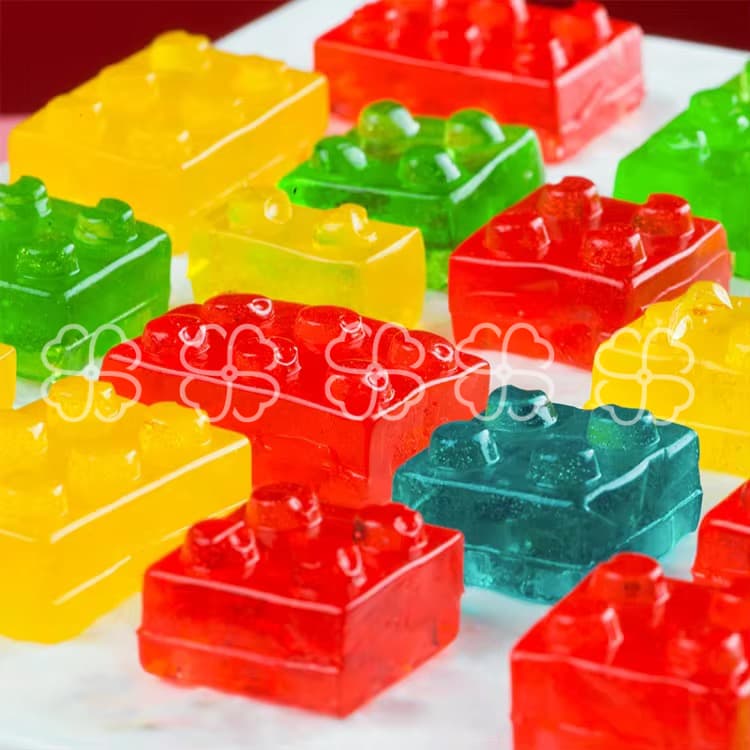
For example, Easter-themed shapes can turn an ordinary gummy into a seasonal merchandising opportunity. A product featuring lambs, bunnies, and chicks demonstrates how Easter 4D gummy concepts can combine recognizable seasonal imagery with the visual appeal of three-dimensional candy. Easter 4D Lamb Bunny Chick Gummies
How Are 4D Gummies Manufactured?
Manufacturing a 4D gummy generally requires more development work than producing a simple single-color gummy. The exact production process varies according to the recipe and design, but a commercial development process commonly includes several stages.
Product Concept and 3D Design
The process begins with a product brief. The buyer should define:
- Shape
- Approximate piece weight
- Dimensions
- Colors
- Flavors
- Texture
- Filling requirements
- Packaging
- Target market
- Desired shelf life
For complex shapes, a digital model or physical prototype may be developed before mold production.
Mold Development
The mold is one of the most important components of 4D gummy development. Fine details must be sufficiently deep and clear to reproduce consistently without creating unnecessary production difficulties.
A technically impressive shape may not be commercially practical if:
- Very thin sections break easily
- Deep cavities trap material
- Small details disappear after processing
- Multiple components are difficult to align
- The finished candy is too fragile for transportation
An experienced 4D gummy factory should therefore evaluate manufacturability before final mold approval.
Gummy Formulation
A typical gummy formulation may contain combinations of sugar, glucose syrup, water, gelling agents such as gelatin or pectin, acids, flavors, and permitted colors. The exact recipe depends on the target texture, market requirements, product positioning, and desired shelf life.
For brands seeking vegan or vegetarian positioning, pectin-based formulations may be considered where technically and commercially appropriate.
Multi-Color and Multi-Component Production
4D products can require separate preparation of different colors or components. The production process must control consistency between these components so that the finished piece maintains the intended appearance.
For example, an animal-shaped gummy may use one color for the body, another for facial details, and a third component for an internal center.
Cooling, Setting and Finishing
After forming, gummies undergo controlled cooling or setting. Depending on the product, finishing may involve oil polishing, sugar coating, sour coating, or other surface treatments.
These stages influence:
- Surface appearance
- Stickiness
- Texture
- Color stability
- Handling performance
Final Quality Inspection
Finished gummies should be checked for:
- Shape
- Weight
- Color
- Flavor
- Texture
- Surface defects
- Packaging integrity
- Foreign-material control
- Applicable microbiological requirements
This is particularly important for 4D products because their visual complexity creates more opportunities for noticeable defects.
Why Manufacturing Experience Matters for 4D Gummy Development
A manufacturer should not simply accept every design specification without evaluating the production consequences. A good development team should be able to explain whether a requested shape is practical, whether a certain detail will survive mass production, and whether the chosen texture is compatible with the packaging and transportation environment.
The commercial objective is not maximum complexity. It is maximum consumer impact at a commercially sustainable production cost.
This distinction is important for B2B buyers. A slightly simpler shape that maintains 98–100% visual consistency across a production run may create more value than a highly complicated design with a high rejection rate.
The growing interest in interactive and visually distinctive confectionery is also influencing how brands approach product development. For additional background on the concept and market direction, the discussion of 4D gummy innovation provides useful context. Interactive Delight: Why 4D Gummy Is the Future of Creative Candy
Easter 4D Gummy Blocks
OEM vs Private Label vs Wholesale 4D Gummies
B2B buyers generally approach a 4D gummy manufacturer through one of three commercial models: OEM development, private label production, or wholesale purchasing.
4D Gummy OEM
OEM is suitable when a brand wants a highly customized product.
The manufacturer may support:
- Custom shape
- Custom mold
- Custom flavor
- Custom colors
- Custom formula
- Custom weight
- Custom packaging
- Product development
OEM usually requires more development time because the product must pass through design, sampling, mold approval, packaging development, and production validation.
Private Label 4D Gummy
Private label is generally more efficient when the buyer wants to build its own brand without developing every aspect of the candy from zero.
The buyer may select an existing product concept while customizing:
- Brand identity
- Packaging
- Flavor combinations
- Pack size
- Label
- Retail positioning
For supermarket and e-commerce brands, private label 4D gummy products can provide a balance between differentiation and development efficiency.
Wholesale 4D Gummy
Wholesale is more appropriate when the buyer wants established SKUs for distribution.
Typical buyers include:
- Candy wholesalers
- Importers
- Distributors
- Supermarkets
- Convenience stores
- Specialty retailers
- Online sellers
Wholesale orders normally involve fewer product-development variables than OEM projects.
| Factor | OEM | Private Label | Wholesale |
|---|---|---|---|
| Customization | Very High | High | Low to Medium |
| Custom Mold | Common | Optional | Usually No |
| Packaging | Fully Custom | Brand Custom | Standard |
| Development Complexity | High | Medium | Low |
| MOQ | Usually Higher | Medium to High | Lower or Standard |
| Best For | New Product Development | Brand Expansion | Distribution |
How Much Does 4D Gummy Manufacturing Cost?
There is no reliable universal price for a 4D gummy because the final cost depends on multiple variables.
Important cost drivers include:
- Piece weight
- Raw-material formula
- Shape complexity
- Number of colors
- Number of layers
- Filling technology
- Custom mold requirements
- Packaging format
- Order volume
- Certification and testing requirements
- Destination-market requirements
A buyer should therefore avoid comparing suppliers solely on quoted unit price.
The more useful calculation is total landed and commercial cost.
For example:
Total Cost = Product Cost + Packaging + Inspection + Logistics + Duties/Taxes + Potential Quality Losses
A supplier offering a slightly higher factory price may provide better overall value if it reduces rejection rates, packaging failures, production delays, or inconsistent product quality.
What Is the MOQ for 4D Gummies?
MOQ varies significantly according to the project.
Standard products can generally be easier to purchase in smaller quantities than fully customized products because they already have established molds, formulations, production procedures, and packaging systems.
| Product Type | MOQ Consideration |
|---|---|
| Standard SKU | Lower |
| Private Label | Medium |
| Custom Shape | Higher |
| Fully Customized OEM | Highest |
For a custom project, buyers should ask the manufacturer to separate the MOQ requirements for the candy, packaging, and custom mold. This makes the quotation easier to evaluate.
How to Choose a 4D Gummy Factory
Selecting the right supplier requires more than reviewing a product catalog.
Check Customization Capability
Ask whether the factory can actually manufacture the requested design rather than simply outsource the product.
Review Quality-Control Procedures
Ask how the factory controls:
- Raw materials
- Production parameters
- Piece weight
- Shape
- Color
- Texture
- Packaging
- Finished goods
Confirm Export Experience
An experienced export supplier should understand that packaging, labeling, documentation, and shipping requirements vary between markets.
Evaluate Communication and Sample Approval
Before mass production, the buyer should approve a clearly defined reference sample. The approved sample should ideally document:
- Weight
- Dimensions
- Color
- Texture
- Flavor
- Packaging
- Product tolerance
This prevents disagreements later.
For buyers who want to discuss product development, private-label requirements, sampling, or wholesale projects directly, the manufacturer’s contact and inquiry service can be accessed through Contact the Supplier.
What Certifications and Food-Safety Requirements Should Buyers Check?
Food regulations depend on the destination market, but B2B buyers should generally evaluate the manufacturer’s food-safety management system, traceability procedures, ingredient controls, allergen management, sanitation practices, and applicable certifications.
For the United States, FDA guidance explains that food facilities manufacturing, processing, packing, or holding food intended for consumption in the United States generally have food-facility registration obligations unless an exemption applies.
U.S. labeling also requires attention to ingredient declarations, Nutrition Facts requirements, food additives, and major food allergens. FDA’s current allergen guidance identifies nine major food allergens, including milk, eggs, fish, crustacean shellfish, tree nuts, peanuts, wheat, soybeans, and sesame.
For the European Union, Regulation (EU) No 1169/2011 establishes general requirements for food information. Most prepacked foods require a nutrition declaration, including energy, fat, saturates, carbohydrate, sugars, protein, and salt.
Therefore, a buyer should not assume that a label compliant in one market is automatically compliant in another.
A Practical 4D Gummy Buyer Checklist
Before placing a large purchase order, buyers can use the following checklist:
| Question | Why It Matters |
|---|---|
| Can you manufacture custom 3D shapes? | Determines design flexibility |
| Can you produce multiple colors? | Supports detailed visual designs |
| Can you customize flavors? | Creates product differentiation |
| Can you develop custom molds? | Enables proprietary products |
| What is the MOQ? | Determines project feasibility |
| What is the sample process? | Reduces development risk |
| What food-safety certifications are available? | Supports supplier qualification |
| How is moisture controlled? | Influences texture and stability |
| How is finished-product QC performed? | Reduces quality risk |
| Can packaging be customized? | Supports private-label branding |
| Can you support export documentation? | Reduces international purchasing friction |
Common Mistakes When Buying 4D Gummies
Comparing Suppliers Only by Unit Price
The lowest price does not necessarily represent the lowest total cost. Buyers should consider quality consistency, packaging, lead time, rejection risk, and service.
Choosing a Shape Before Confirming Manufacturing Feasibility
Some designs look excellent in a digital rendering but perform poorly in mass production. Always confirm mold feasibility before finalizing packaging.
Ignoring Texture and Moisture
A gummy can have an excellent appearance but still fail commercially if it becomes too sticky, too hard, too soft, or unstable during storage.
Approving Samples Without Written Specifications
A sample should become a commercial reference rather than simply a visual example. Weight, size, color, texture, flavor, and packaging should be documented.
Designing Packaging Before Finalizing Product Weight
Packaging dimensions should follow the final product rather than the other way around. Changes in gummy weight or dimensions can affect filling quantities, bag dimensions, carton packing, and shipping efficiency.
How Can Brands Use 4D Gummies to Build a Strong Product Line?
A strong product range should have a recognizable theme rather than simply collecting random shapes.
A tropical fruit range could combine:
- Mango
- Pineapple
- Watermelon
- Strawberry
- Peach
An animal range could include:
- Dinosaur
- Shark
- Panda
- Frog
- Bear
A seasonal range can then provide limited-edition opportunities for:
- Easter
- Halloween
- Christmas
- Valentine’s Day
The objective is to create a product architecture that allows one successful concept to expand into multiple flavors, shapes, colors, and pack sizes.
2026 Trends in 4D Gummy Manufacturing
Several trends are likely to remain important for 4D gummy development.
More Detailed Shapes
Improved design and mold-development capabilities allow manufacturers to create increasingly recognizable shapes.
Multi-Color Products
Color segmentation can make the product more visually expressive without necessarily requiring a completely new formulation.
Sour and Flavor-Contrast Products
Combining sweet and sour profiles with complex shapes can increase sensory differentiation.
Seasonal Limited Editions
Seasonal products allow retailers to create urgency without permanently expanding their core product portfolio.
Private-Label Product Development
Retailers increasingly need products that look exclusive rather than identical to products already available from competitors. Custom shapes and packaging can support this strategy.
AI-Assisted Product Development
AI can help brands analyze trends, generate product concepts, organize consumer preferences, and explore packaging directions. However, final product feasibility still requires professional formulation, manufacturing, food-safety, and regulatory evaluation.
How to Reduce Commercial Risk When Ordering 4D Gummies
A structured purchasing process can significantly reduce risk.
| Buyer Risk | Recommended Control |
|---|---|
| Product inconsistency | Approved golden sample |
| Color variation | Defined color reference |
| Shape defects | Mold approval and inspection |
| Texture changes | Defined formulation and moisture target |
| Packaging damage | Packaging validation |
| Regulatory problems | Destination-market compliance review |
| Delivery delays | Confirmed production schedule |
| Large MOQ risk | Sample and pilot validation |
The most important principle is to move uncertainty upstream. It is much cheaper to identify a mold problem during sampling than after mass production.
What Makes a Good 4D Gummy Product Commercially Successful?
A successful product generally needs to satisfy five conditions simultaneously:
Visual appeal: The consumer understands the concept immediately.
Sensory quality: The texture, flavor, and aroma match the product promise.
Manufacturing stability: The factory can reproduce the product consistently.
Commercial feasibility: The cost, MOQ, packaging, and logistics fit the buyer’s business model.
Regulatory suitability: Ingredients and labeling meet the requirements of the destination market.
This is why choosing a 4D gummy manufacturer should be treated as a product-development decision rather than a simple sourcing exercise.
Frequently Asked Questions About 4D Gummies
1. What Is a 4D Gummy?
A 4D gummy is a highly detailed gummy candy format that uses three-dimensional visual construction and may incorporate multiple colors, layers, components, textures, or fillings. The term “4D” is a commercial product description rather than a literal scientific fourth spatial dimension. Compared with a conventional gummy, a 4D gummy is generally designed to create a stronger visual and sensory experience. Common examples include fruit, animal, food-inspired, character-style, and seasonal shapes. The exact structure can vary between manufacturers, so buyers should request a product specification covering shape, weight, formulation, texture, colors, flavors, and packaging before placing an order. For B2B buyers, the main value of the format is its ability to combine product differentiation with customization, making it suitable for private-label brands, supermarkets, distributors, novelty candy programs, and e-commerce products.
2. What Is the Difference Between 3D and 4D Gummies?
A 3D gummy typically focuses on creating a three-dimensional shape, while a 4D gummy generally emphasizes a more complex combination of visual and structural elements. Depending on the manufacturer, a 4D product may contain multiple colors, layers, components, textures, or an internal filling. This additional complexity can make the product more visually distinctive and suitable for premium or novelty confectionery programs. However, the terms are not governed by a single universal technical standard, so buyers should compare actual specifications instead of relying only on the product name. When evaluating suppliers, ask for samples and confirm the number of components, piece weight, dimensions, texture, flavor profile, mold construction, and production tolerances. A well-designed 4D gummy should provide additional consumer appeal without creating unnecessary manufacturing instability or excessive production costs.
3. How Are 4D Gummies Made?
The manufacturing process normally begins with product concept development and shape design. A three-dimensional model may then be created and reviewed for manufacturing feasibility before a custom mold is produced. The gummy formulation is prepared using ingredients selected for the desired texture, flavor, color, and shelf-life requirements. Depending on the product, multiple colors or components may be prepared separately and combined during the forming process. The gummies then undergo cooling and setting, followed by finishing processes such as polishing or coating when required. Finished products are inspected for weight, appearance, color, texture, flavor, packaging integrity, and applicable food-safety requirements. More complex 4D gummy designs require closer control because small variations can become visible on the finished product. Buyers should therefore confirm the sample, specifications, production process, quality-control procedures, and packaging requirements before approving mass production.
4. Can I Order Custom 4D Gummies for My Brand?
Yes. Custom 4D gummies can be developed through OEM or private-label manufacturing programs, depending on the supplier’s capabilities. Customization can include shape, mold, color, flavor, texture, piece weight, filling, packaging, and branding. OEM projects are normally more flexible because the manufacturer develops the product according to a specific buyer brief. Private-label projects can be more efficient when the buyer selects an existing product concept and customizes the brand identity, packaging, flavor selection, or pack size. Before starting a project, buyers should provide the target market, product concept, preferred shape, estimated piece weight, flavor direction, packaging format, expected annual volume, and destination country. This allows the manufacturer to evaluate feasibility, MOQ, development requirements, and compliance considerations before the project moves to sampling and mass production.
5. What Should I Look for in a 4D Gummy Manufacturer?
A qualified 4D gummy manufacturer should be evaluated across product development, manufacturing, quality control, food safety, customization, packaging, and export capabilities. Buyers should ask whether the factory can create custom molds, manufacture multi-color products, develop different textures, customize flavors, and support private-label packaging. Quality-control procedures should cover raw materials, production, finished products, packaging, and traceability. Buyers should also review relevant food-safety certifications and verify that the certification scope applies to the manufacturing site and product category. For international orders, export experience is another important consideration because documentation and labeling requirements can vary by destination. Finally, do not evaluate a supplier only by price. Sample consistency, communication, production reliability, MOQ flexibility, packaging quality, and the ability to solve technical problems can have a greater effect on the long-term profitability of a B2B candy program.
Feature Product
-
 Gummy Candy
What Is Gummy Candy? Gummy Candy is one of the ...
-
 Crispy Gummy Candy
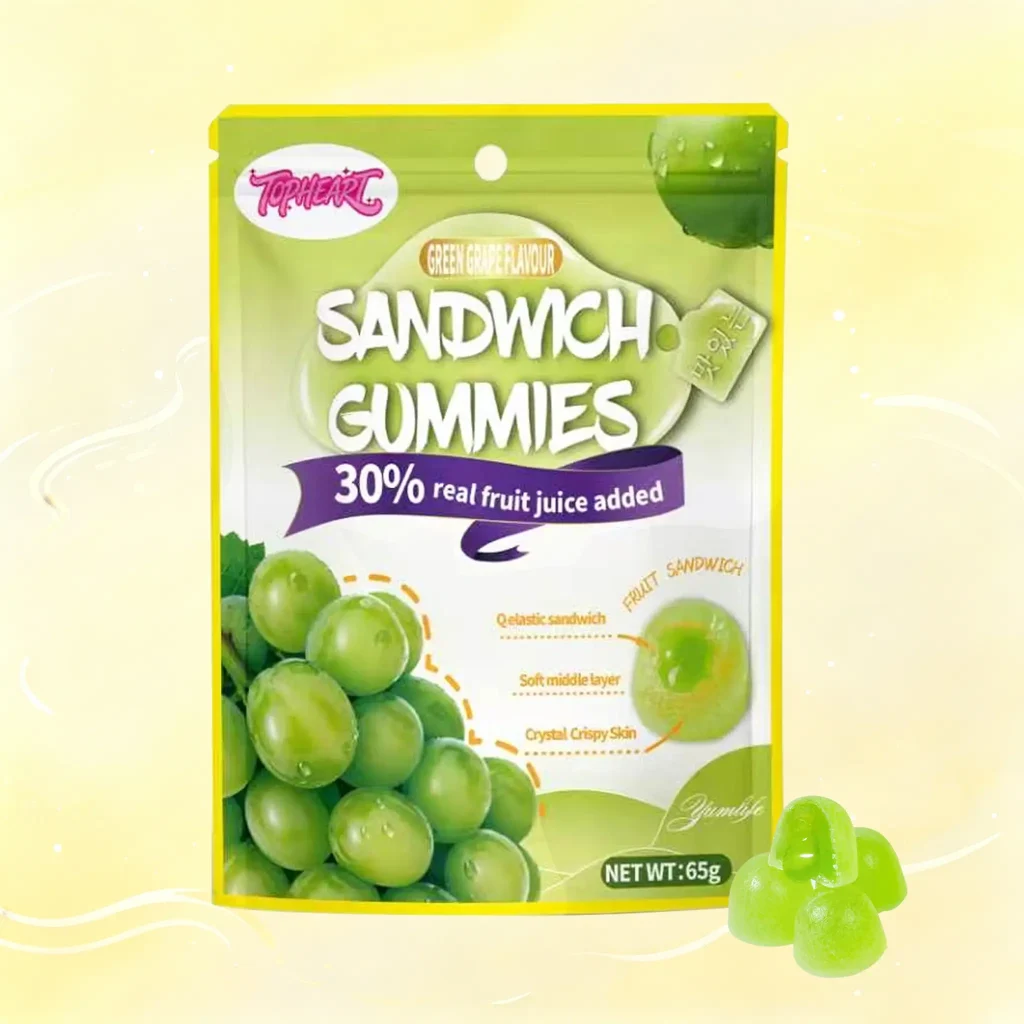
What Is Crispy Gummy Candy Crispy Gummy Candy i...
-
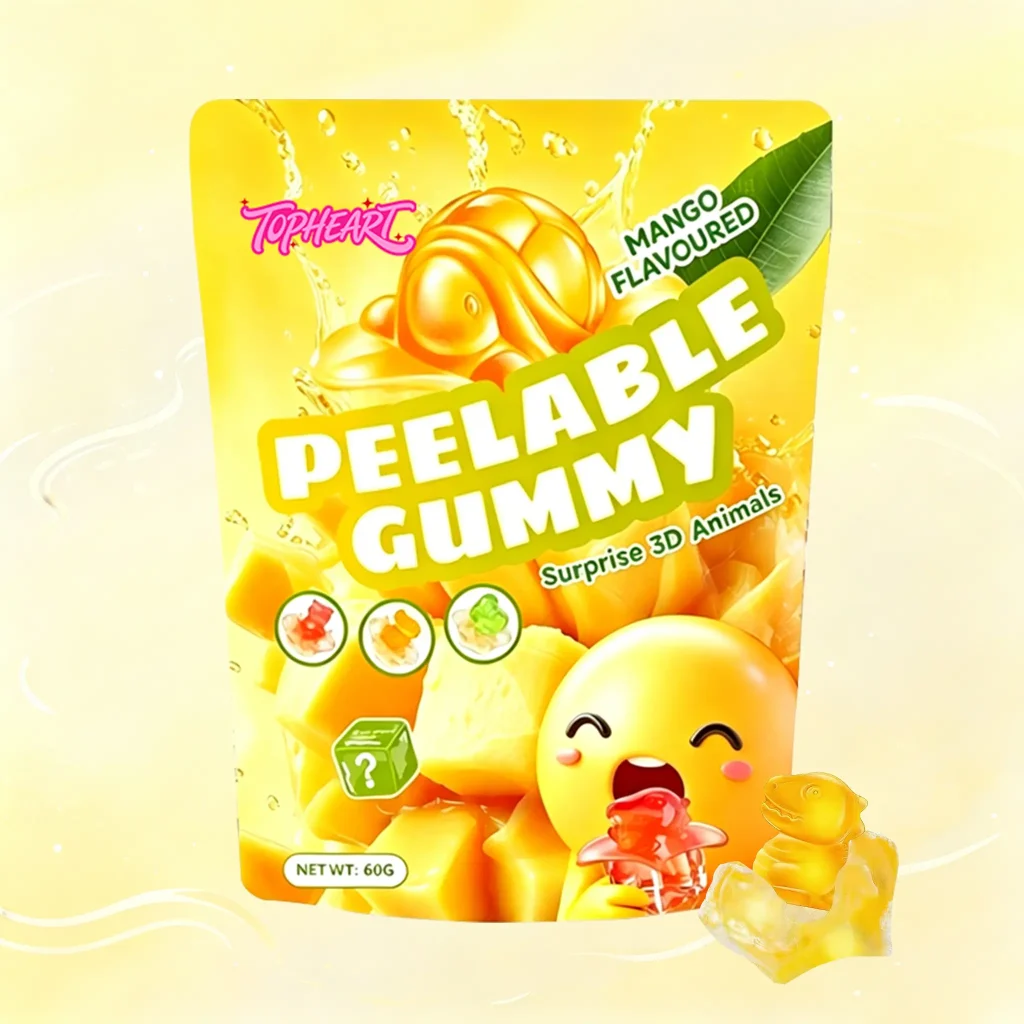 Peelable Gummy Candy
What Is Peelable Gummy Candy? Peelable Gummy Ca...