


Choosing a soft candy for international wholesale is not simply a matter of selecting a flavor and a package size. Texture, surface finish, moisture balance, oil application, packaging protection, shelf-life stability, production consistency, and transportation conditions can all affect the final product experience.
The 360g oil-mixed tray soft candy format is designed around a practical combination of portion size, tray presentation, soft-chewy texture, and surface oil treatment. For importers, distributors, retailers, and private-label brands, this format can provide a flexible platform for developing confectionery products for different retail and wholesale channels.
This guide explains what 360g oil-mixed tray soft candy means, how oil treatment affects the product, which quality factors buyers should evaluate, and how to approach OEM, private-label, and wholesale sourcing.
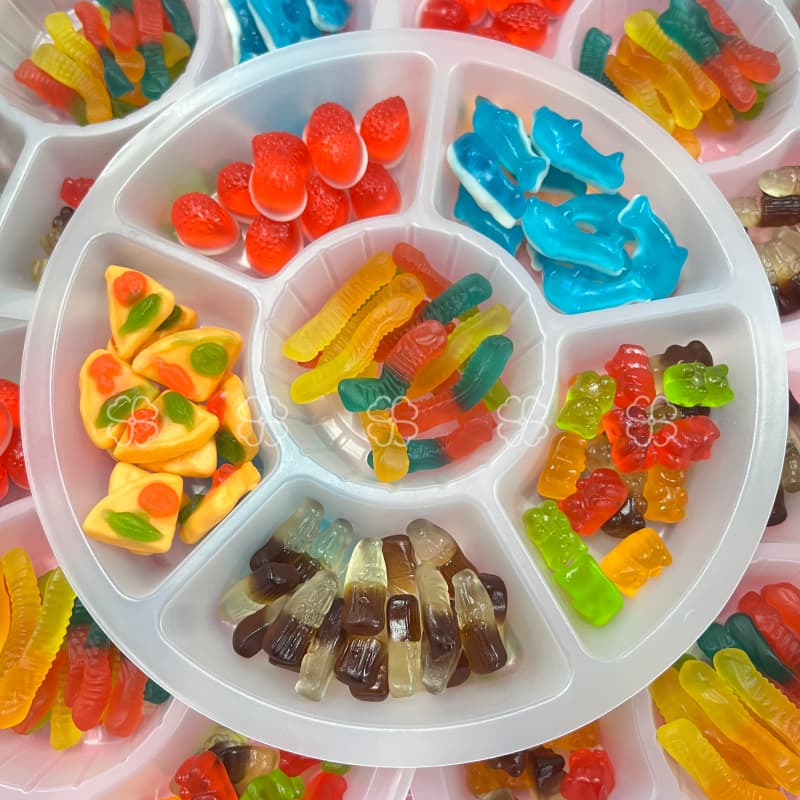
360g Oil-Mixed Tray Soft Candy
What Is 360g Oil-Mixed Tray Soft Candy?
A 360g oil-mixed tray soft candy is a soft confectionery product supplied in a tray-style retail or bulk presentation with a nominal net weight of 360 grams. The phrase “oil-mixed” generally refers to the controlled use of edible oil or a suitable surface treatment during processing or finishing to help manage stickiness, separation, appearance, and handling characteristics.
The exact formulation can vary according to the candy type, target market, texture requirements, coating system, and manufacturing process.
For B2B buyers, the most important point is that “360g” describes the package weight, while “oil-mixed” describes an important aspect of the product formulation or finishing process. These two specifications should therefore be evaluated separately.
A buyer should confirm the following before placing an order:
- Net weight and acceptable filling tolerance
- Number of pieces per tray
- Individual piece weight
- Candy dimensions
- Flavor and color
- Oil type and application method
- Surface appearance
- Texture profile
- Packaging material
- Shelf-life specification
- Storage requirements
- Carton configuration
A well-defined product specification reduces misunderstandings between buyers and manufacturers and makes future repeat orders easier to manage.
Why the 360g Tray Format Works for Wholesale Candy
Package size influences how a confectionery product is positioned in the market. A 360g format sits between small impulse packs and very large family or foodservice formats, making it potentially useful for retailers that want a more substantial package without moving into industrial bulk packaging.
For wholesalers and distributors, tray packaging can also simplify product presentation and merchandising. The format can be adapted to different candy shapes, flavors, colors, and visual themes depending on the target market.
For buyers evaluating a candy manufacturer, it is useful to consider the complete product system rather than focusing only on the 360g weight.
Candy-Food’s manufacturing background and product development capabilities can be explored through our candy manufacturer profile, where international buyers can learn more about the company and its confectionery business.
A commercial product should ultimately balance consumer appeal with manufacturing repeatability. A visually attractive tray is valuable, but it also needs to protect the candy during transportation, resist excessive moisture exchange, and remain practical for warehouse handling.
What Does Oil Mixing Do in Soft Candy?
Oil treatment can serve several technical and commercial functions in soft confectionery.
One important function is reducing unwanted surface adhesion. Soft candy contains a combination of sugars, syrups, gelling components, water, and other ingredients. Depending on the formulation and environmental conditions, the surface can become sticky.
A controlled edible-oil treatment may help reduce direct candy-to-candy contact and improve handling.
Oil can also influence surface appearance. A suitable finishing system may create a smoother or slightly glossy appearance, depending on the formulation and application method.
However, more oil is not automatically better.
Excessive oil can create problems such as:
- An overly greasy mouthfeel
- Uneven surface appearance
- Oil migration into packaging
- Reduced coating uniformity
- Changes in flavor perception
- Packaging contamination
- Inconsistent product presentation
The objective should therefore be controlled application rather than maximum oil content.
For a commercial 360g oil-mixed tray soft candy, the formulation, oil selection, dosage, mixing conditions, cooling stage, and packaging environment should be developed as one connected system.
Texture Is a Key Quality Factor
Soft candy texture is influenced by multiple variables rather than one ingredient.
The balance among sugar solids, syrup composition, gelling system, water content, acids, processing temperature, cooling conditions, and storage environment can affect chewiness, firmness, elasticity, and stickiness.
For product development, manufacturers often evaluate texture using instrumental measurements alongside sensory testing. The exact values depend on the candy formulation and testing method, so buyers should not treat one universal hardness number as a mandatory specification.
The following table provides an illustrative development framework, not a universal industry standard.
| Quality Attribute | Typical Development Focus | Buyer Relevance |
|---|---|---|
| Moisture | Controlled according to formulation | Affects softness and storage stability |
| Water activity | Often monitored during shelf-life development | Helps assess microbial and physical stability |
| Texture | Soft, chewy, elastic, or firm depending on target | Directly affects consumer experience |
| Surface oil | Uniform and controlled | Helps manage sticking and appearance |
| Piece weight | Consistent within agreed specification | Supports net-weight and cost control |
| Color | Consistent between production batches | Important for visual merchandising |
| Flavor | Stable and clearly defined | Supports repeat purchase |
| Surface condition | Smooth, clean, minimally tacky | Important for packaging and presentation |
These values should be established through actual product trials and validated against the final formulation, packaging, storage conditions, and intended shelf life.
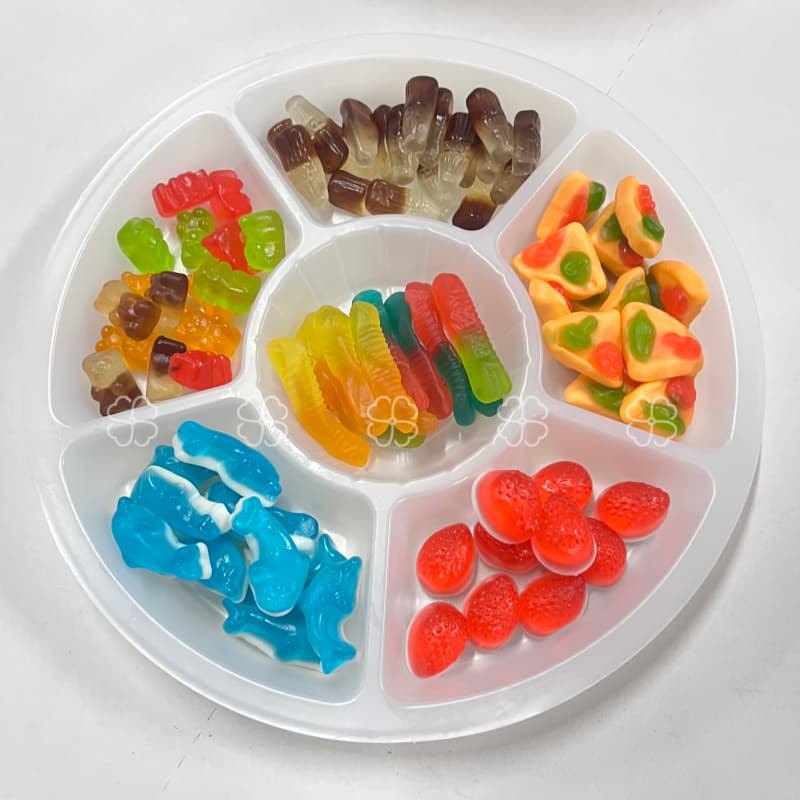
360g Oil-Mixed Tray Soft Candy Supplier
Moisture, Water Activity and Shelf-Life Considerations
Moisture management is one of the most important technical considerations for soft candy.
Water activity is not the same as moisture content. Moisture describes how much water is present, while water activity describes how available that water is for chemical, physical, and microbiological processes.
For a soft confectionery product, both can be relevant.
A development team may monitor moisture content, water activity, texture, color, surface condition, flavor, and packaging performance during accelerated and real-time shelf-life studies.
Packaging for 360g Oil-Mixed Tray Soft Candy
Packaging has a direct relationship with product quality.
Soft candy can be sensitive to temperature, humidity, oxygen exposure, physical pressure, and moisture migration. Oil-treated products may also require packaging materials that provide appropriate resistance to grease or oil migration.
For a 360g tray product, packaging development should consider both the primary package and the shipping carton.
Primary Packaging
The primary package should protect the candy from environmental exposure while maintaining an attractive retail appearance.
Potential considerations include:
- Moisture barrier
- Grease resistance
- Seal integrity
- Mechanical strength
- Food-contact suitability
- Printing quality
- Retail presentation
- Opening and resealing requirements
Secondary Packaging
The outer carton should protect individual trays during transportation.
Buyers should confirm:
- Trays per carton
- Carton dimensions
- Gross weight
- Net weight
- Carton stacking requirements
- Pallet configuration
- Shipping marks
- Outer-carton labeling
A packaging design that looks attractive in a product photograph may still require modification after actual transportation testing.
OEM Options for 360g Oil-Mixed Tray Soft Candy
OEM development allows buyers to create a product based on their own commercial requirements instead of selecting a completely standardized item.
For a 360g oil-mixed tray soft candy OEM project, buyers can potentially discuss:
- Candy shape
- Flavor
- Color
- Texture
- Piece size
- Oil finishing
- Tray design
- Package material
- Graphic artwork
- Brand identity
- Carton configuration
- Market-specific labeling
OEM development normally works best when buyers provide a clear product brief.
A useful brief should include the target market, expected retail positioning, preferred flavor profile, approximate target price, package size, desired appearance, estimated order volume, and regulatory or labeling requirements.
The more clearly these factors are defined, the easier it becomes for a manufacturer to evaluate feasibility.
Private Label 360g Soft Candy
Private-label confectionery allows a distributor, retailer, or brand owner to sell a product under its own brand identity.
For a private-label 360g tray soft candy, packaging is often one of the most visible customization areas. However, successful private-label development should go beyond artwork.
A complete project can include:
- Product selection
- Flavor confirmation
- Texture evaluation
- Weight specification
- Packaging development
- Label review
- Sample approval
- Pre-production confirmation
- Mass production
- Quality inspection
- Export preparation
Buyers should also establish who is responsible for artwork approval, regulatory review, translation, barcode information, ingredient declarations, allergen information, and final packaging compliance.
For international food products, labeling requirements can vary significantly between destination markets. Codex provides international food standards and guidance, while national legislation remains the controlling requirement for individual markets.
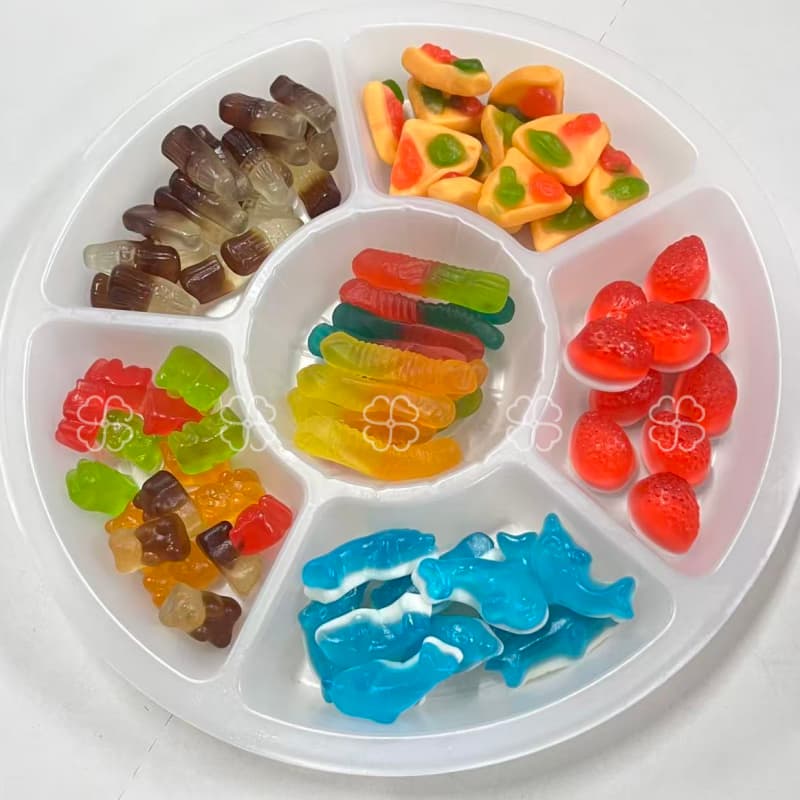
Wholesale 360g Oil-Mixed Tray Soft Candy
How to Choose a 360g Oil-Mixed Tray Soft Candy Manufacturer
The manufacturer should be evaluated on more than price.
A reliable sourcing process normally examines five areas.
1. Product Development Capability
Can the manufacturer adjust flavor, texture, shape, oil treatment, and packaging according to the project?
2. Quality Control
Can the manufacturer define measurable specifications for weight, texture, appearance, packaging integrity, and batch consistency?
3. Production Consistency
Can the product remain consistent from the first commercial order to subsequent repeat orders?
4. Export Experience
Does the supplier understand international packaging, documentation, shipping, and destination-market requirements?
5. Communication
Can the manufacturer respond clearly to technical questions, sample feedback, artwork changes, and production schedules?
Food hygiene and HACCP-based systems are important parts of international food manufacturing. Codex identifies Good Hygiene Practices as the foundation of food hygiene systems and provides HACCP guidance for identifying and controlling food safety hazards.
Common Buyer Mistakes
Even experienced importers can encounter avoidable problems when developing a new soft candy.
Focusing Only on Price
A lower quoted price does not necessarily represent a lower total sourcing cost. Packaging failures, inconsistent texture, damaged trays, high defect rates, or poor shelf-life performance can increase the actual cost of the project.
Treating 360g as the Complete Specification
The weight alone does not define the product. Buyers should also specify piece size, count, texture, flavor, oil treatment, packaging, and tolerance.
Approving Packaging Before Product Testing
Packaging should be evaluated together with the actual candy. Oil migration, moisture exchange, sealing performance, and transportation conditions can affect the final result.
Skipping Sample Comparison
At least one approved reference sample should normally be established before mass production.
Assuming Every Market Has the Same Labeling Rules
Food labeling requirements vary by market. For example, European Union prepacked-food rules include requirements for food information and allergen presentation. Buyers exporting to the European Union should review the applicable requirements rather than assuming another market’s label is sufficient.
Wholesale Considerations for 360g Oil-Mixed Tray Soft Candy
Wholesale buyers should evaluate the product at three levels: consumer appeal, operational practicality, and commercial economics.
At the consumer level, consider flavor, texture, appearance, pack size, and brand presentation.
At the operational level, consider carton dimensions, pallet utilization, storage conditions, shelf life, and transportation.
At the commercial level, consider unit cost, minimum order quantity, packaging cost, customization cost, freight, import requirements, and expected retail positioning.
The 360g format can be particularly useful when a buyer wants a product with a meaningful package size while maintaining a retail-friendly presentation.
However, the right package size depends on the target market and channel. A supermarket, convenience store, candy shop, online retailer, and wholesale club may have different requirements.
How to Reduce Sourcing Risk
A structured sourcing process can reduce avoidable mistakes.
Start with a product brief rather than requesting a price alone.
Then compare samples based on measurable criteria.
Next, confirm packaging and labeling requirements before final artwork approval.
After that, establish a written product specification covering the key quality characteristics.
Finally, confirm production, inspection, documentation, shipping, and after-sales communication.
For buyers ready to discuss specifications, samples, OEM development, or wholesale requirements, the Candy-Food contact team can be approached with the project details.
Providing the manufacturer with a clear brief can make the initial discussion more efficient and help both sides identify whether the product is suitable before moving into deeper customization.
What Buyers Should Confirm Before Ordering
Before placing an order for 360g oil-mixed tray soft candy, buyers should have clear answers to the following questions:
What is the exact product specification?
Confirm the candy weight, tray weight, piece dimensions, flavor, color, texture, and oil treatment.
What packaging will be used?
Confirm food-contact material, barrier properties, sealing method, artwork, labeling, and carton configuration.
How will quality be measured?
Define acceptable ranges for weight, appearance, texture, flavor, surface condition, and packaging integrity.
How will shelf life be validated?
Ask how the manufacturer evaluates product stability under the intended storage conditions.
What is customized and what is standardized?
Clearly separate existing specifications from newly developed elements.
What is the commercial order structure?
Confirm minimum order quantity, sample process, production lead time, payment terms, inspection arrangements, and shipping requirements.
These questions can help buyers distinguish between a simple price inquiry and a professionally managed confectionery sourcing project.
A Practical OEM Development Path
A successful OEM project does not need to begin with dozens of complicated specifications.
A practical approach is to start with the commercial objective.
If the buyer wants a fruit-flavored 360g retail tray, the first stage can define the target flavor, texture, appearance, package format, and consumer group.
The second stage can involve sample development.
The third stage can compare samples against the agreed product brief.
The fourth stage can finalize packaging and labeling.
The fifth stage can establish the final production specification.
The final stage can move into commercial production and export.
This step-by-step approach gives both parties opportunities to identify problems before they become expensive production issues.
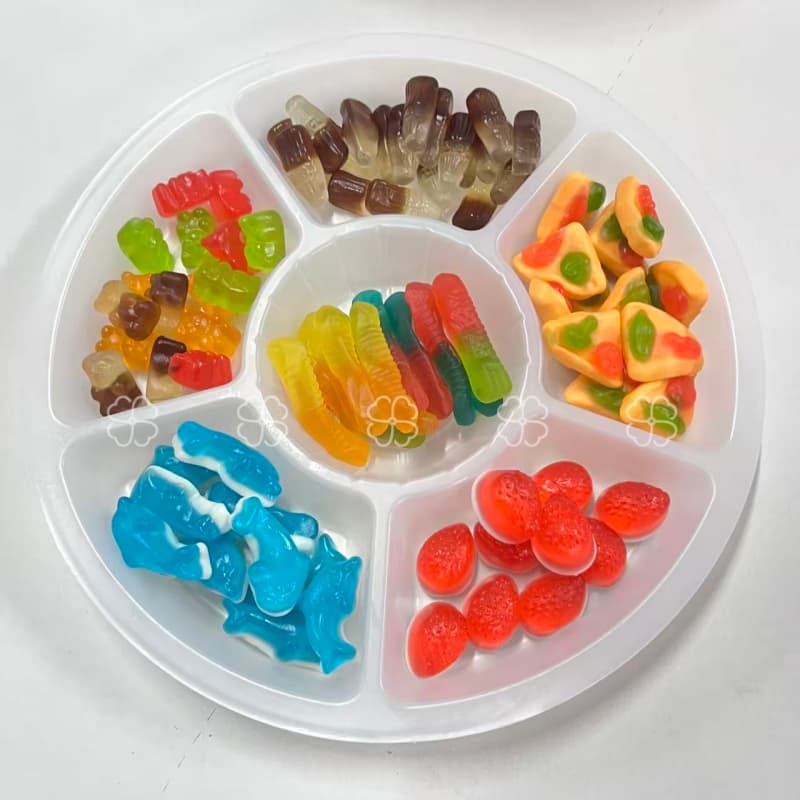
360g Oil-Mixed Tray Soft Candy – Mixed Flavor
Building a Better 360g Soft Candy Project
A successful 360g oil-mixed tray soft candy is more than a 360g package of soft candy. It is a combination of formulation, texture, oil finishing, packaging, quality control, shelf-life management, logistics, and commercial positioning.
For wholesale buyers, the most important decision is not simply finding the lowest quotation. The better sourcing process is to define the product clearly, compare samples objectively, confirm packaging compatibility, establish measurable quality specifications, and work with a manufacturer capable of maintaining consistency.
For OEM and private-label buyers, customization can extend from flavor and shape to packaging and brand presentation. The earlier these requirements are defined, the easier it becomes to control development time and production risk.
Candy-Food can work with international buyers to discuss soft candy concepts, customized specifications, packaging requirements, OEM development, and private-label projects.
If you are developing a new 360g soft candy product for retail, wholesale, or private-label distribution, a detailed product brief is a practical starting point. Share your target market, preferred flavor, package concept, expected order quantity, and customization requirements so the next stage can focus on a realistic product solution.
Frequently Asked Questions
1. What is 360g oil-mixed tray soft candy?
360g oil-mixed tray soft candy is a soft confectionery product supplied in a tray-style package with a nominal net weight of 360 grams. The term “oil-mixed” generally refers to controlled edible-oil treatment used as part of the formulation or finishing process. The exact formulation, texture, oil system, and packaging can vary according to the manufacturer’s product design and the buyer’s requirements.
2. Why is oil used in soft candy?
Controlled oil treatment can help manage surface adhesion and improve handling characteristics in certain soft-candy formulations. It may also contribute to the visual appearance of the finished product. However, the amount and type of oil need to be carefully controlled because excessive oil can create an overly greasy mouthfeel, affect packaging cleanliness, or influence flavor perception. The appropriate system should therefore be determined through product testing.
3. Can 360g oil-mixed tray soft candy be customized for private label?
Yes. Depending on the manufacturer’s capabilities, private-label projects can include customized flavors, colors, shapes, texture targets, tray formats, packaging artwork, branding, and outer cartons. Buyers should provide a clear product brief and confirm which elements are existing specifications and which elements require new development.
4. What should buyers check when choosing a 360g soft candy manufacturer?
Buyers should evaluate product development capability, quality-control procedures, production consistency, export experience, packaging capability, communication, sample management, and documentation. They should also confirm the manufacturer’s ability to establish measurable specifications for net weight, texture, appearance, flavor, oil finishing, packaging integrity, and shelf-life performance.
5. What information should I provide when requesting a 360g soft candy quotation?
A useful quotation request should include the target product, 360g package requirement, preferred flavor, candy shape, texture, oil finish, packaging format, private-label requirements, destination market, estimated order quantity, and any specific certification or labeling requirements. Providing this information helps the manufacturer prepare a more accurate commercial and technical proposal.
Feature Product
-
 Gummy Candy
What Is Gummy Candy? Gummy Candy is one of the ...
-
 Crispy Gummy Candy
What Is Crispy Gummy Candy Crispy Gummy Candy i...
-
 Peelable Gummy Candy
What Is Peelable Gummy Candy? Peelable Gummy Ca...